Russian Ballet
Max Weber

Brooklyn Museum photograph
Object Label
In 1912 Max Weber wrote of his creative process:
We shall not be bound by visible objects. . . only the essence we as humans get out of them. . .Memories are visible things. Weber saw a performance of the famous Russian Ballet in New York in 1914 and shortly afterward executed a watercolor recording his impressions of the dancers (see below). Two years later he painted this oil, which shows the crystallization of this memory in even greater abstraction.
Caption
Max Weber (American, born Russia, 1881–1961). Russian Ballet, 1916. Oil on canvas, 30 x 36in. (76.2 x 91.4cm) frame: 39 1/4 h x 45 1/2 x 3 3/8 in. (99.7 x 115.6 x 8.6 cm). Brooklyn Museum, Bequest of Edith and Milton Lowenthal, 1992.11.29. (Photo: Brooklyn Museum)
Gallery
Not on view
Collection
Gallery
Not on view
Collection
Artist
Title
Russian Ballet
Date
1916
Medium
Oil on canvas
Classification
Dimensions
30 x 36in. (76.2 x 91.4cm) frame: 39 1/4 h x 45 1/2 x 3 3/8 in. (99.7 x 115.6 x 8.6 cm)
Signatures
Signed lower right: "Max Weber 1916"
Credit Line
Bequest of Edith and Milton Lowenthal
Accession Number
1992.11.29
Frequent Art Questions
This reminds me of Kandinsky's work. Would Weber's style be considered similar?
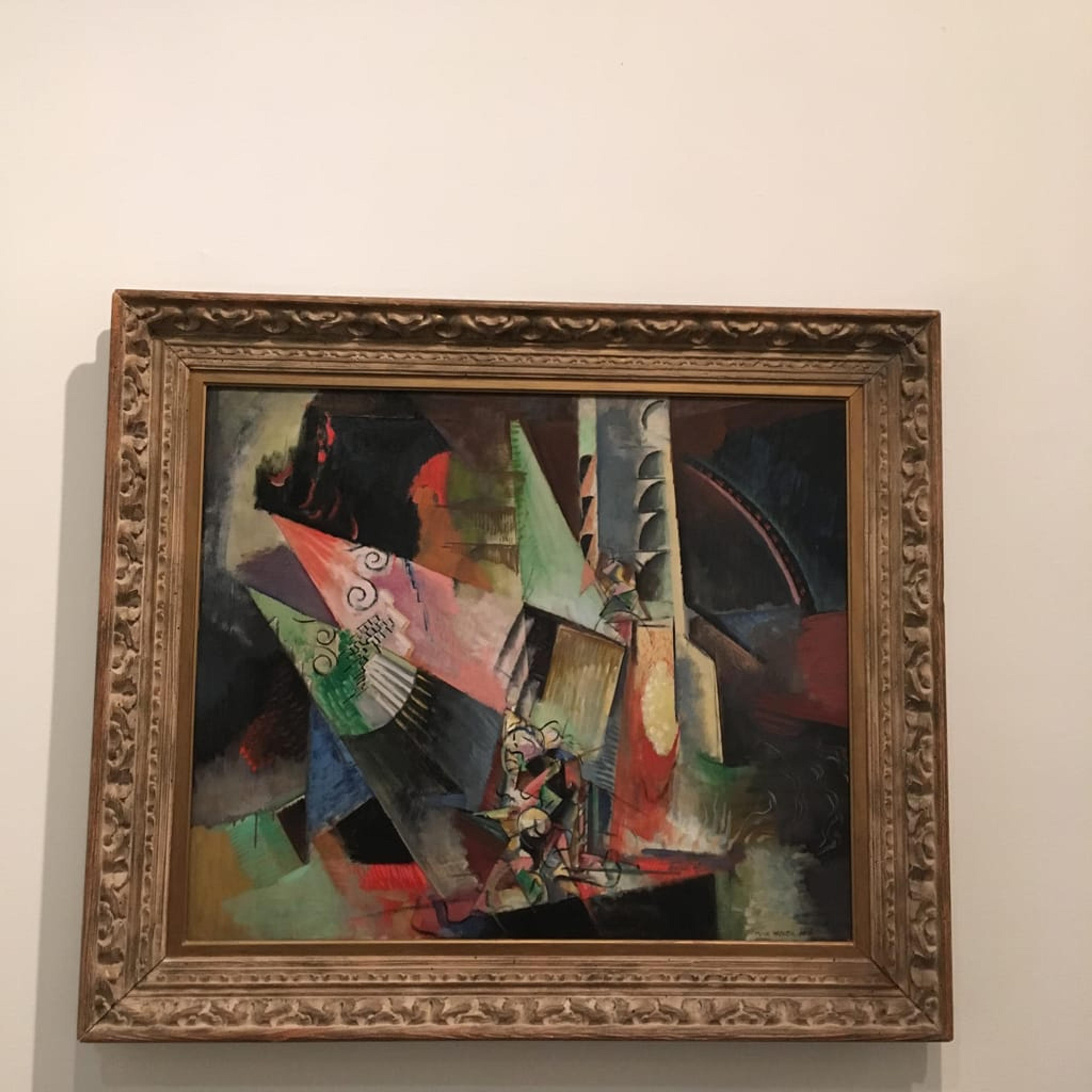 Yes! They definitely both work with abstract, brightly colored geometric forms. As the title suggests, this painting is inspired by a performance and Kandinsky was often inspired by performance, music especially. Plus, both artists got their start in the Russian avant garde movement at the turn of the 20th century.Thanks!
Have information?
Have information about an artwork? Contact us at