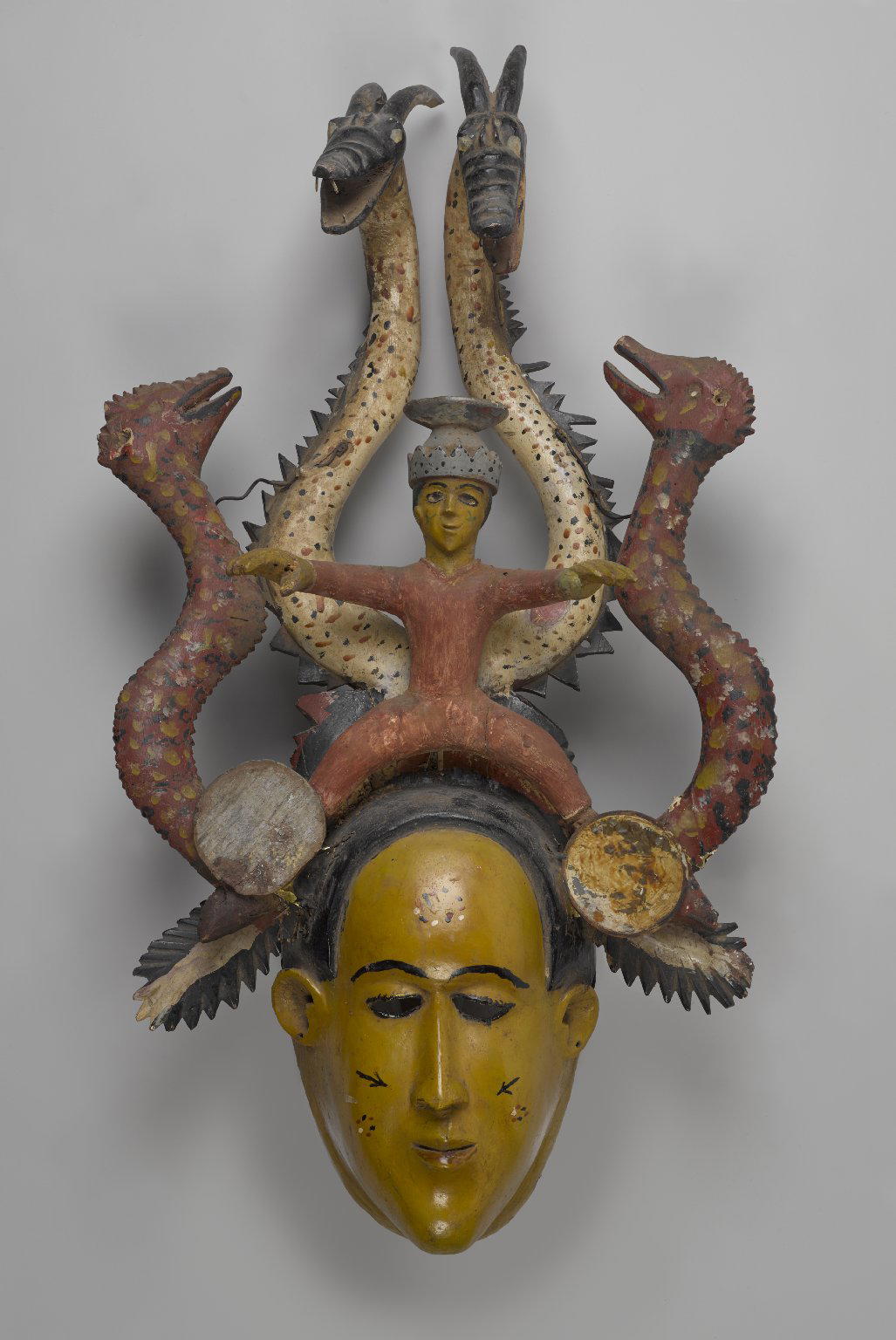
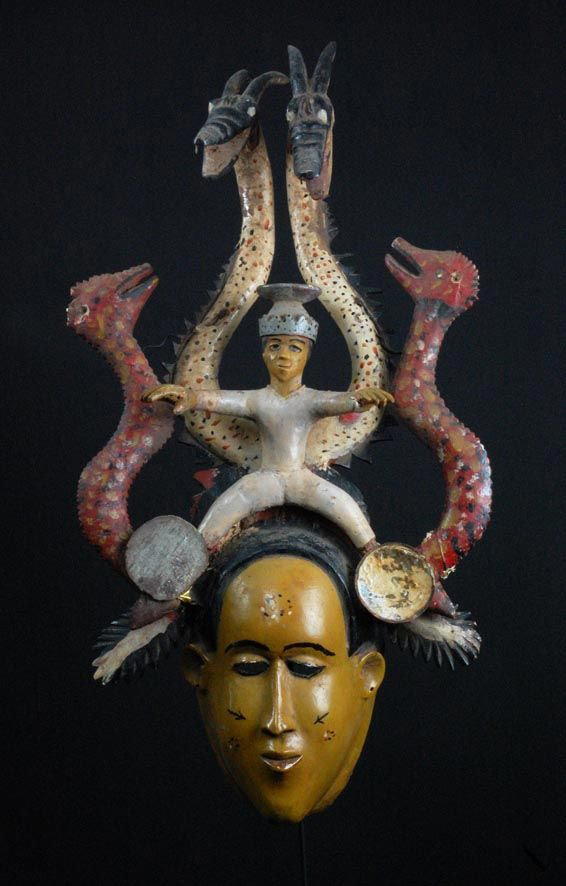
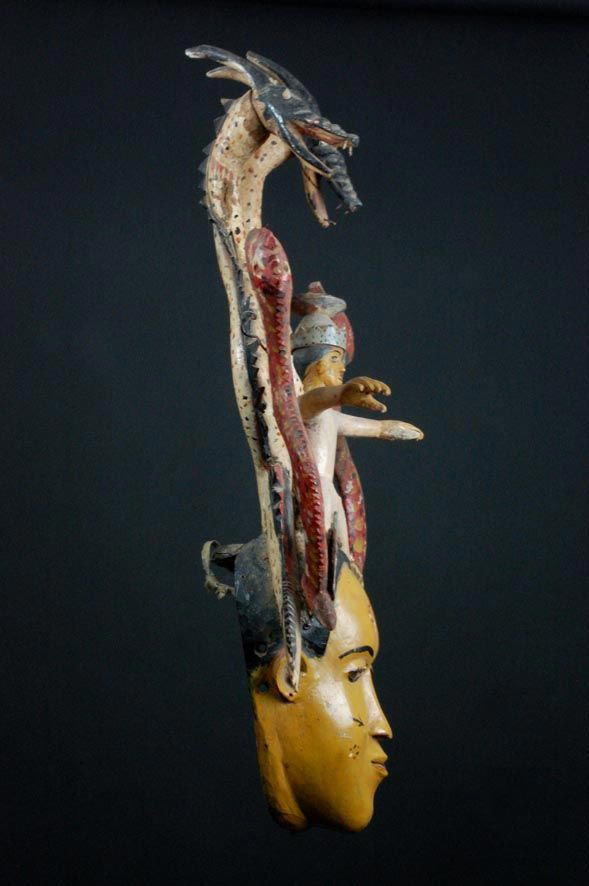
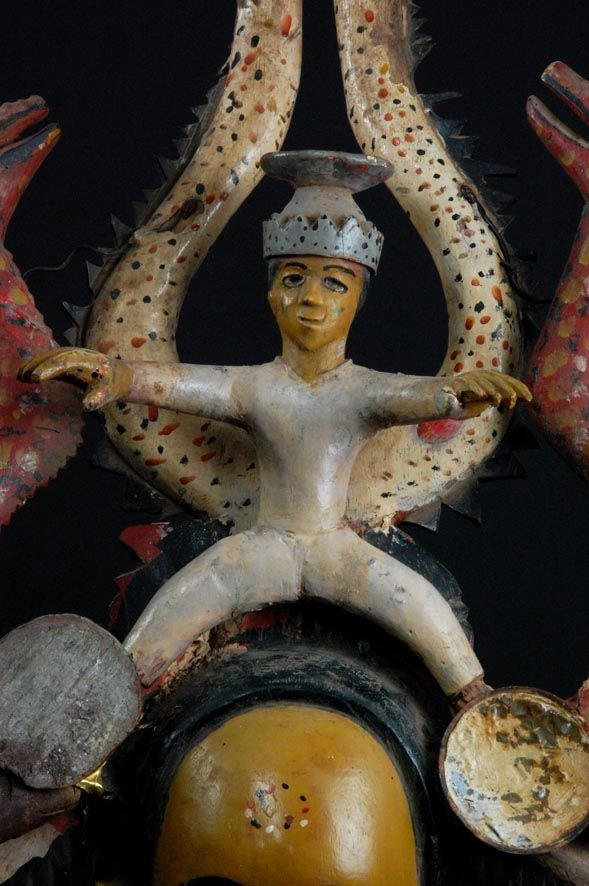
Mask for the Ordehlay (Ode-Lay) or Jollay Society


1 of 6
Object Label
Caption
Temne artist; Krio artist. Mask for the Ordehlay (Ode-Lay) or Jollay Society, mid–20th century. Wood, paint, plastic, metal, 29 1/2 x 16 15/16 x 8 1/4 in. (75 x 43 x 21 cm) with mount approx: 34 in. (86.4 cm). Brooklyn Museum, Gift of Dr. and Mrs. Milton Gross, by exchange, 2013.25. (Photo: Brooklyn Museum)
Gallery
Not on view
Collection
Gallery
Not on view
Collection
Cultures
Title
Mask for the Ordehlay (Ode-Lay) or Jollay Society
Date
mid–20th century
Geography
Place made: Freetown, Sierra Leone
Medium
Wood, paint, plastic, metal
Classification
Dimensions
29 1/2 x 16 15/16 x 8 1/4 in. (75 x 43 x 21 cm) with mount approx: 34 in. (86.4 cm)
Credit Line
Gift of Dr. and Mrs. Milton Gross, by exchange
Accession Number
2013.25
Frequent Art Questions
What's the story here?
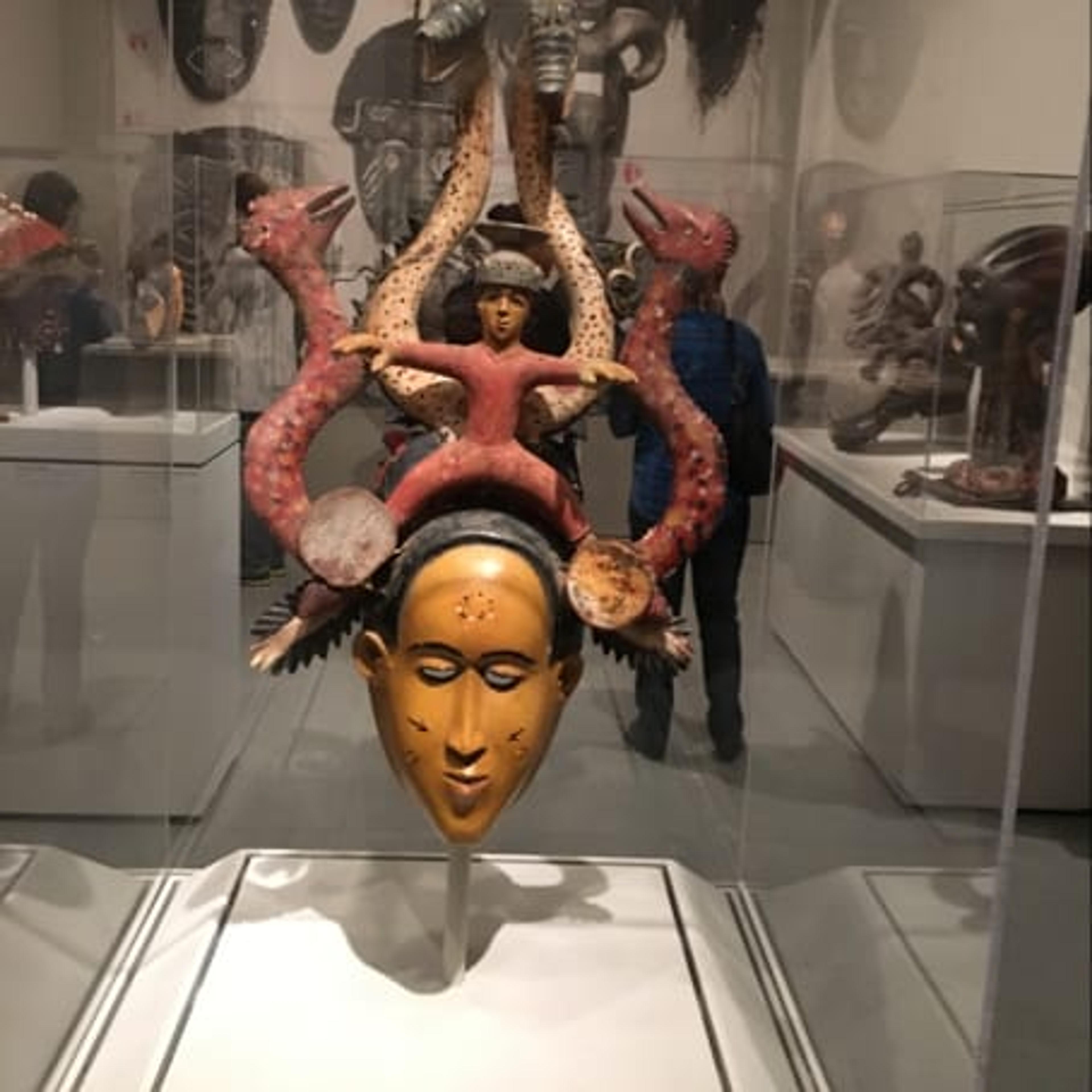 Hello! This Ode-Lay Mask by a Temne artist dates to the 1970s. It comes from the city of Freetown in Sierra Leone. At that time, kung-fu movies were a new and very popular genre, and likely captivated the artist responsible for this mask. Ode-Lay masquerade is rooted in contemporary urban culture, which is surprising to many visitors.It's a great example of how masquerade is a living, constantly evolving tradition!
Have information?
Have information about an artwork? Contact us at