Armchair (Egyptian Revival style)


1 of 14
Object Label
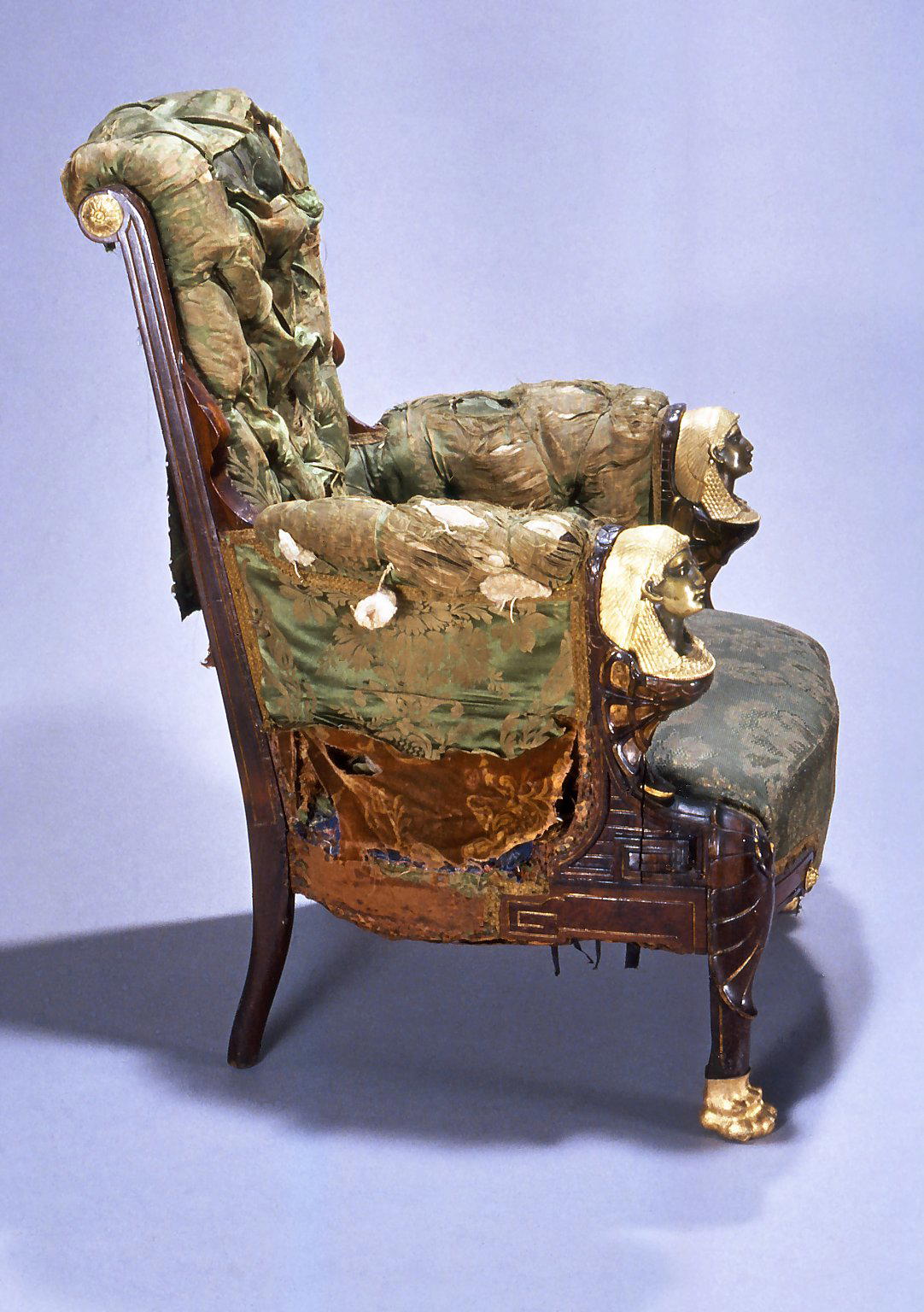
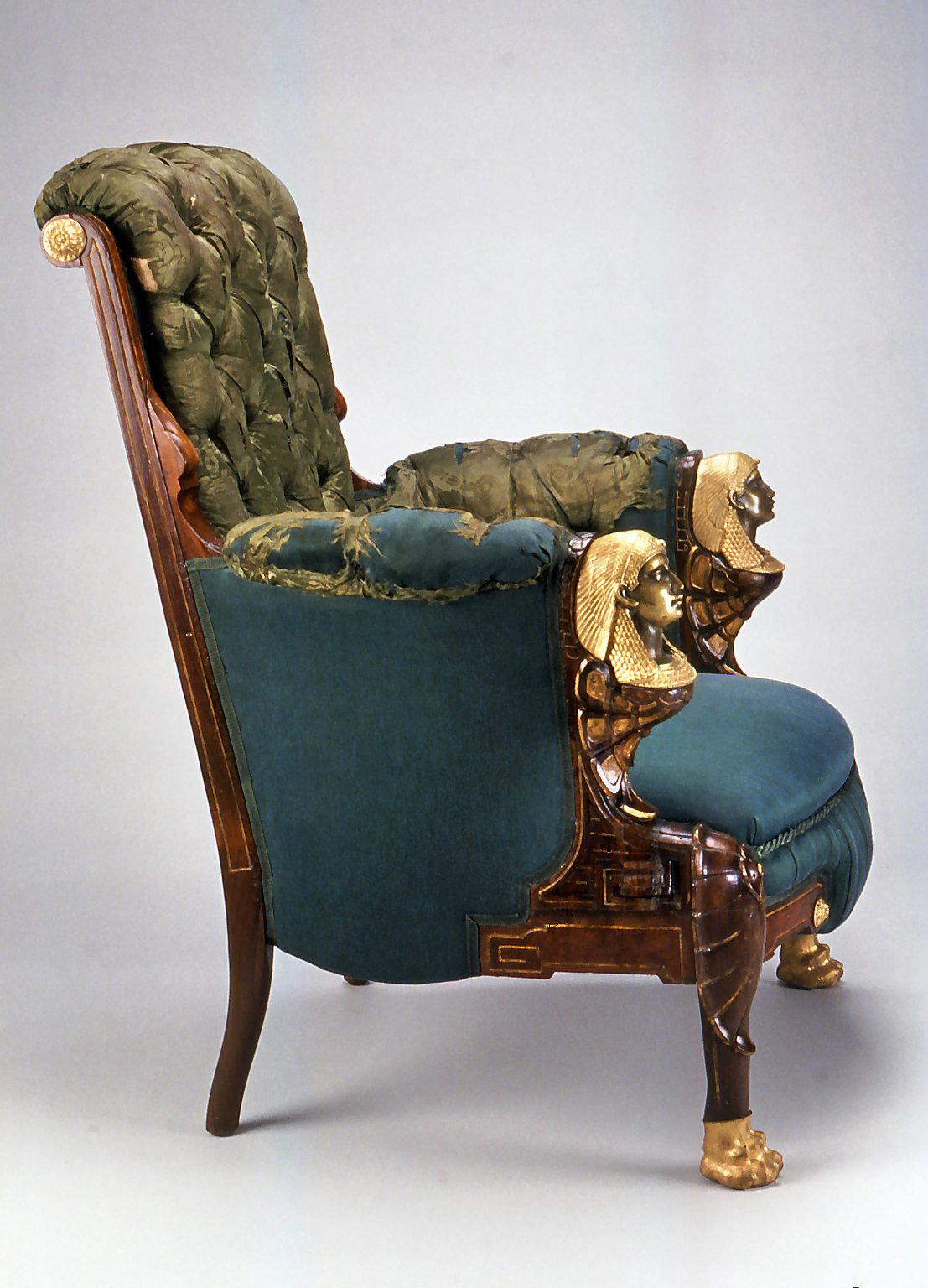
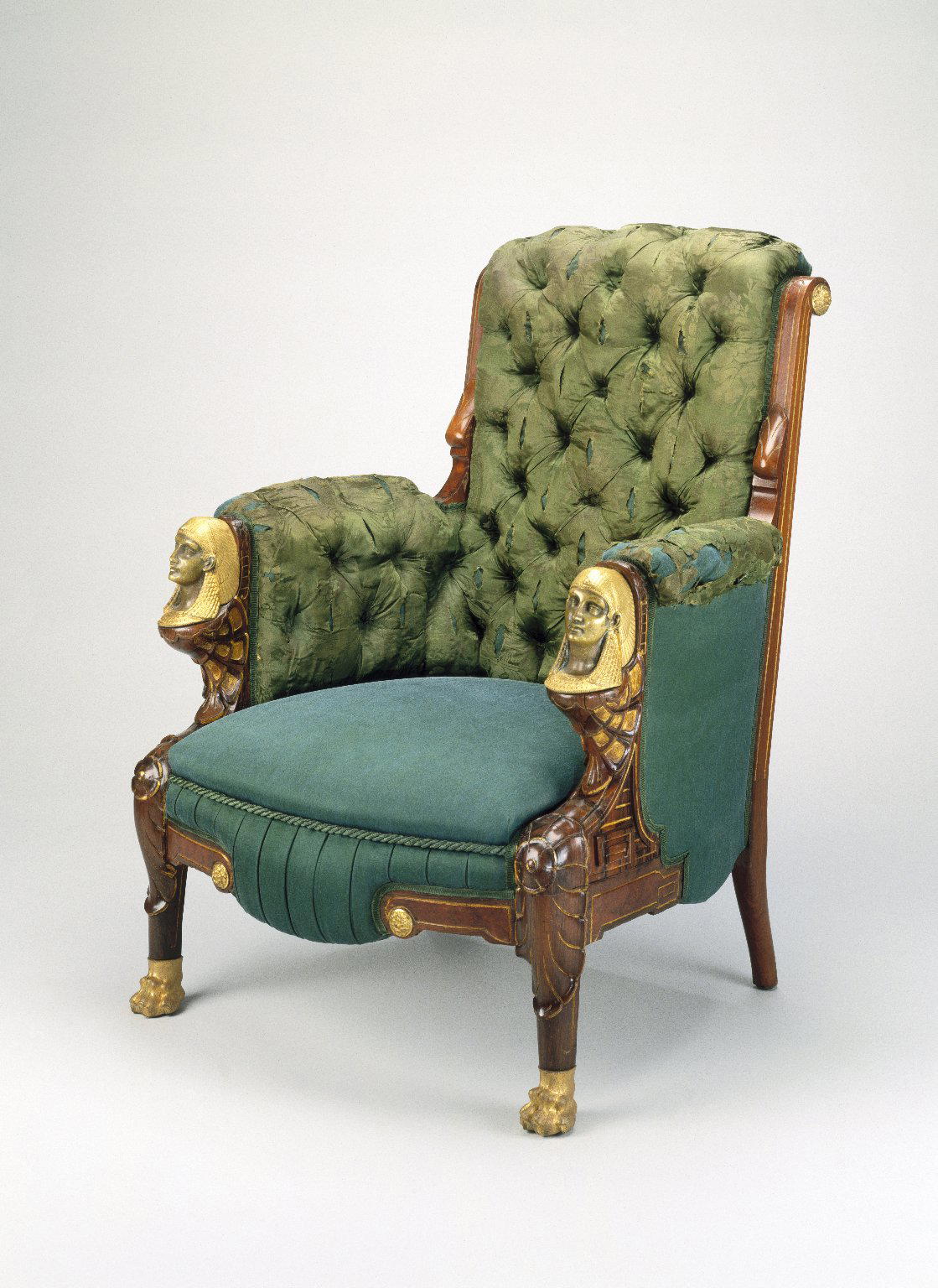
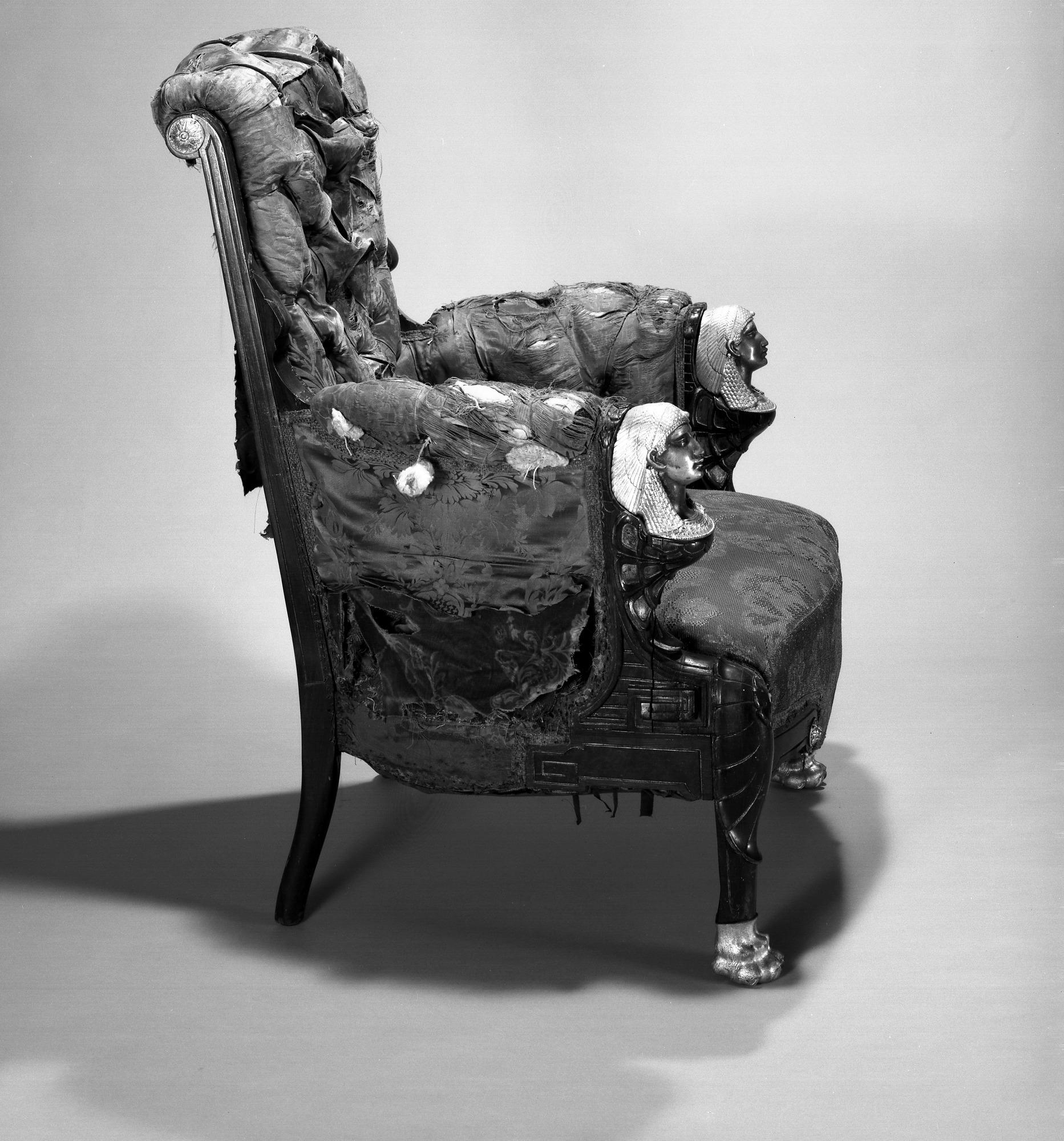
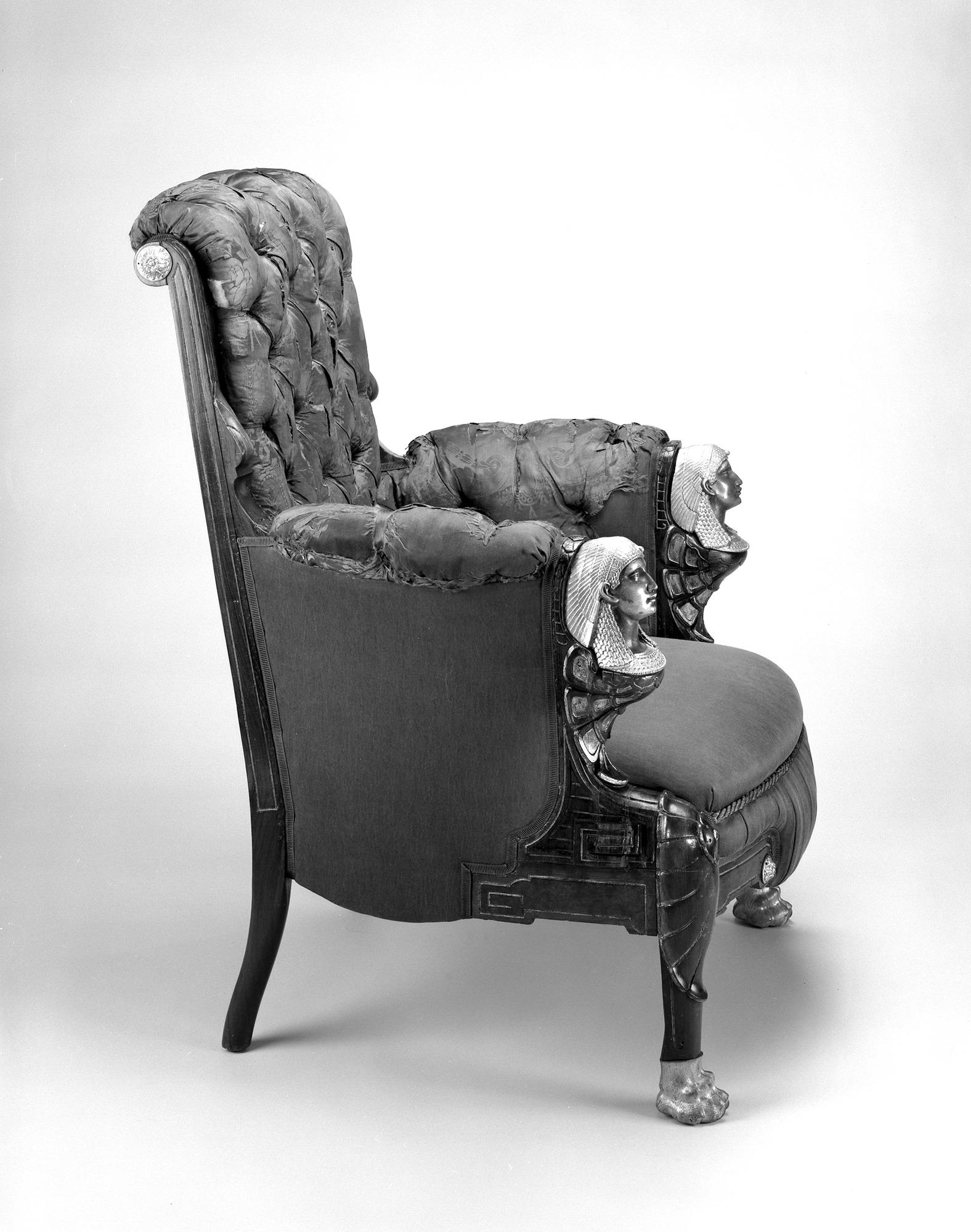
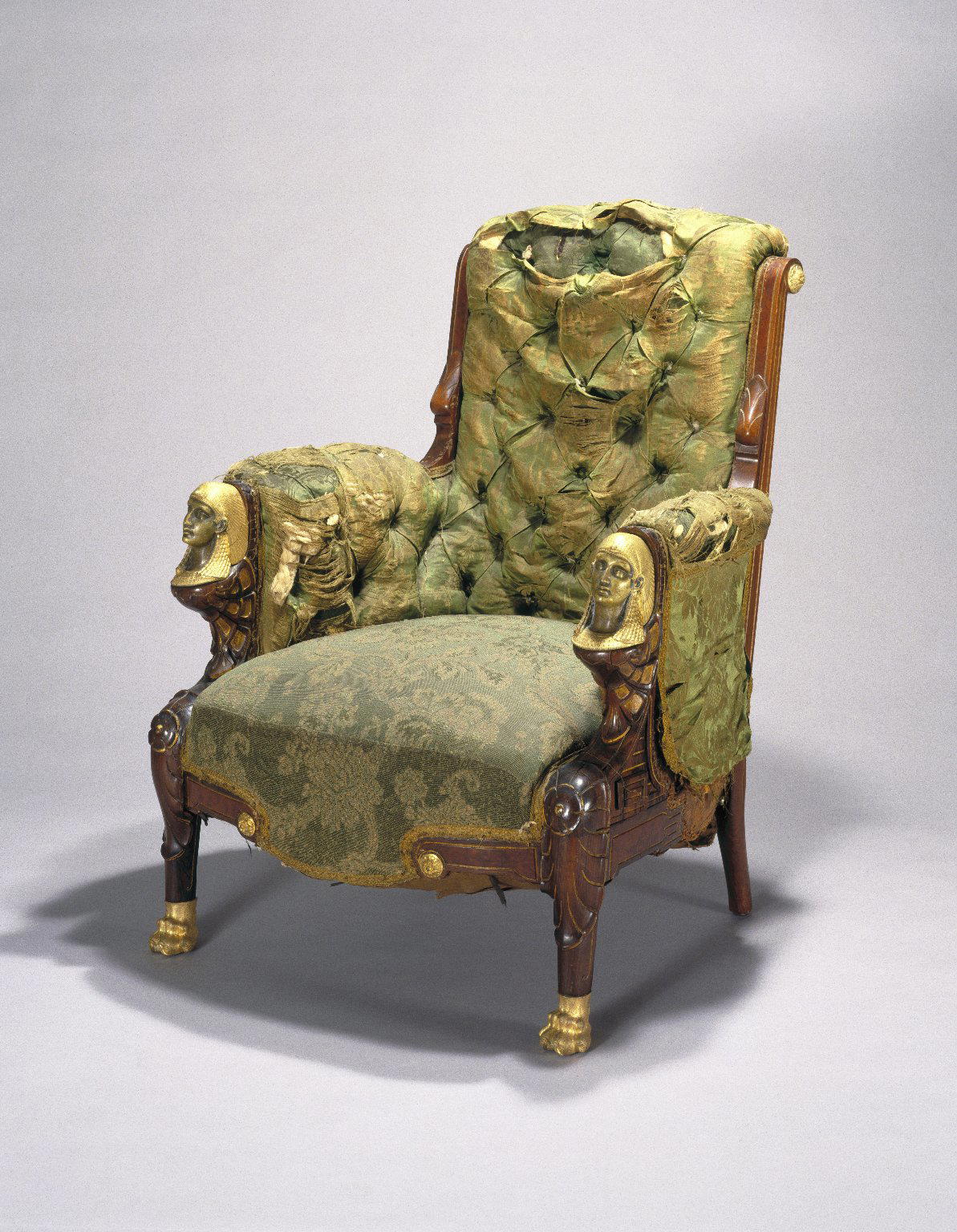
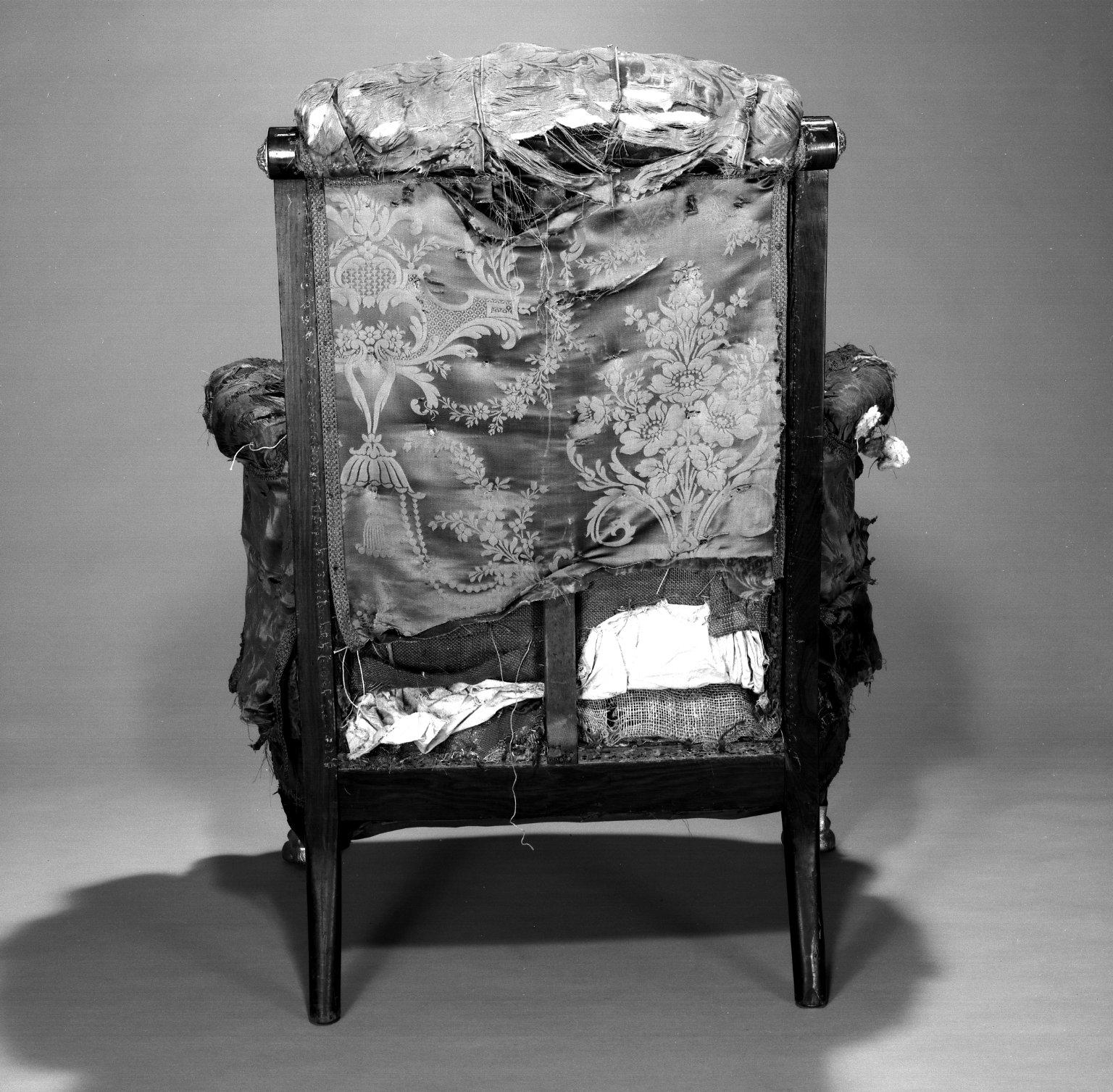
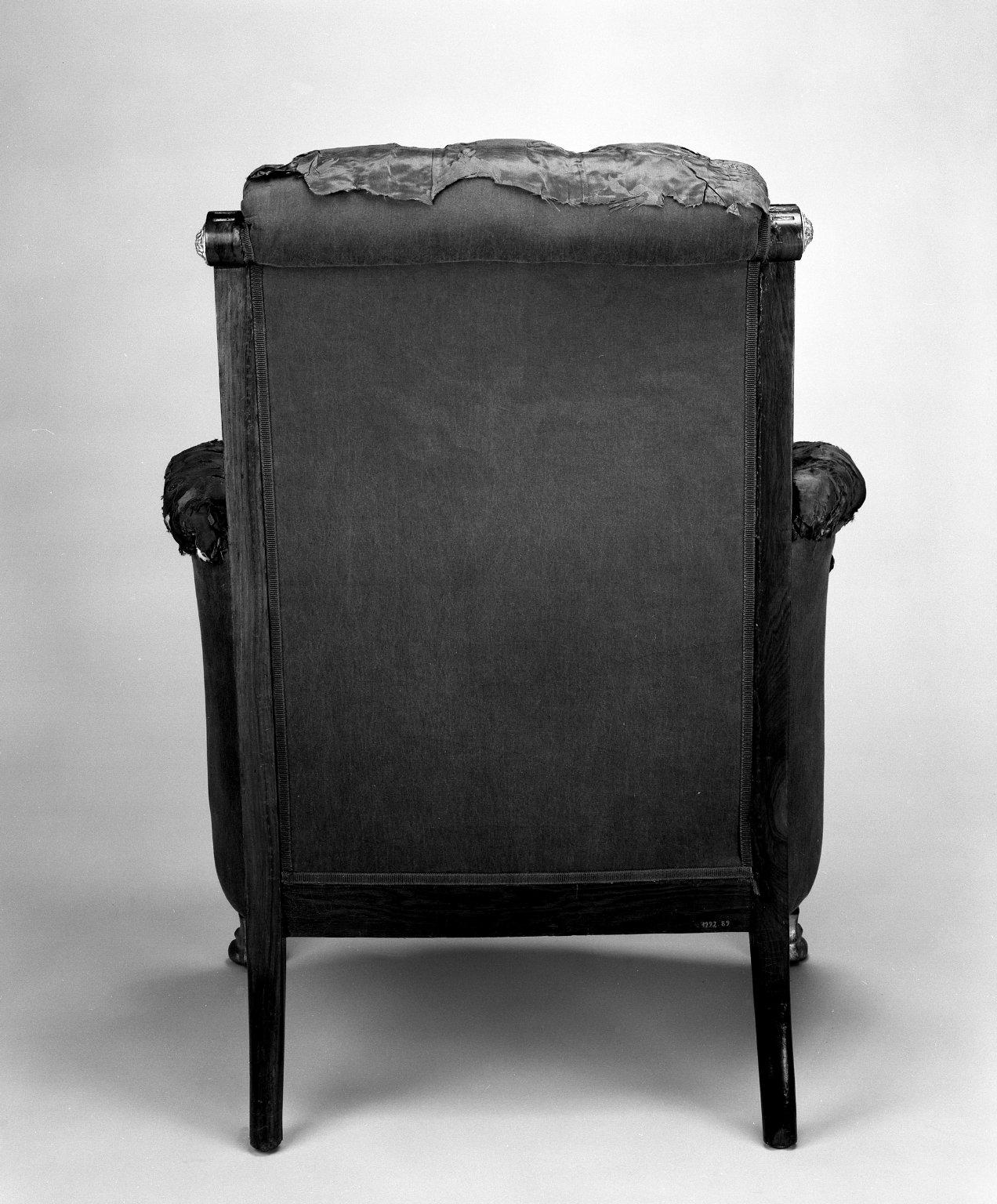
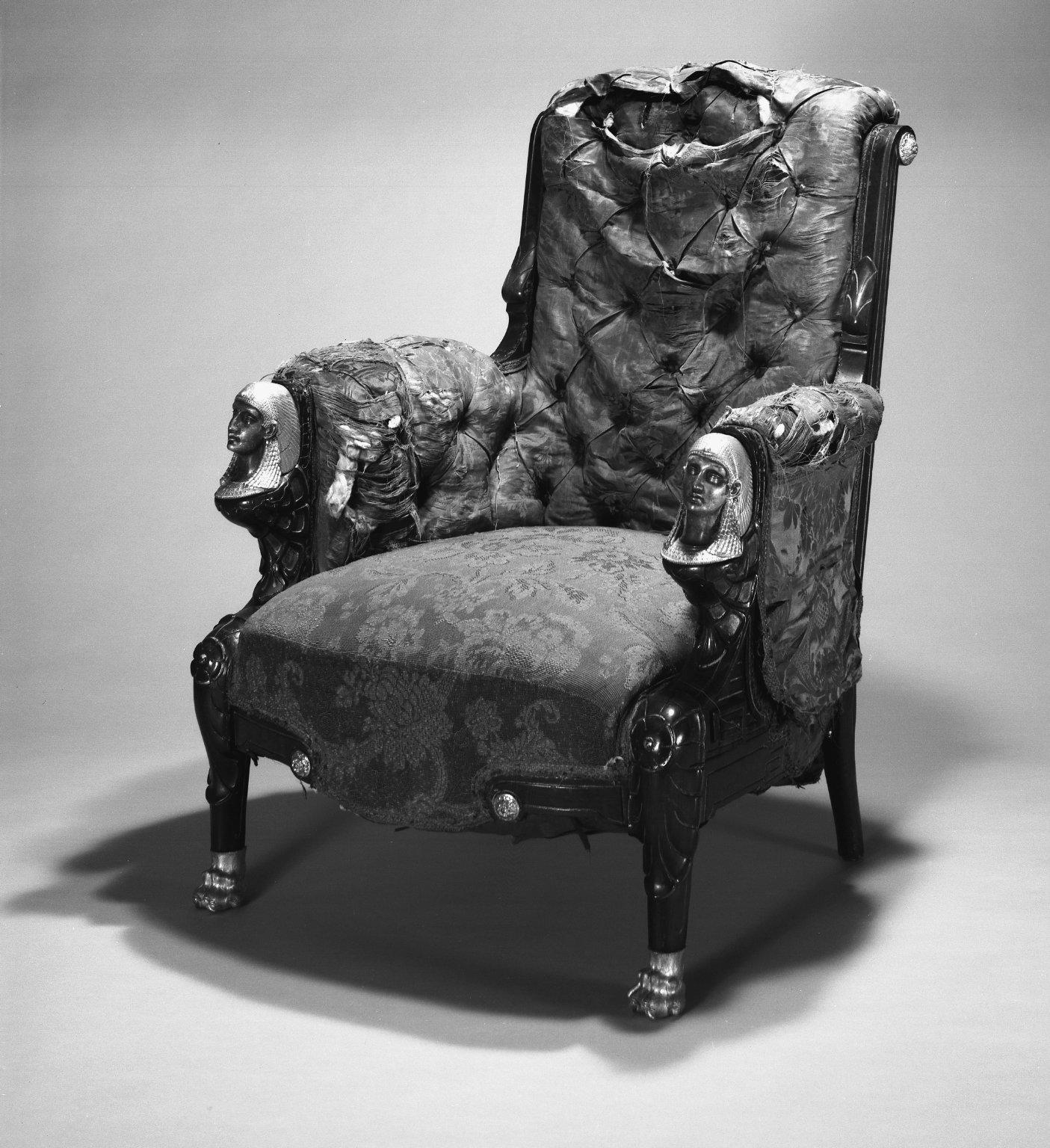
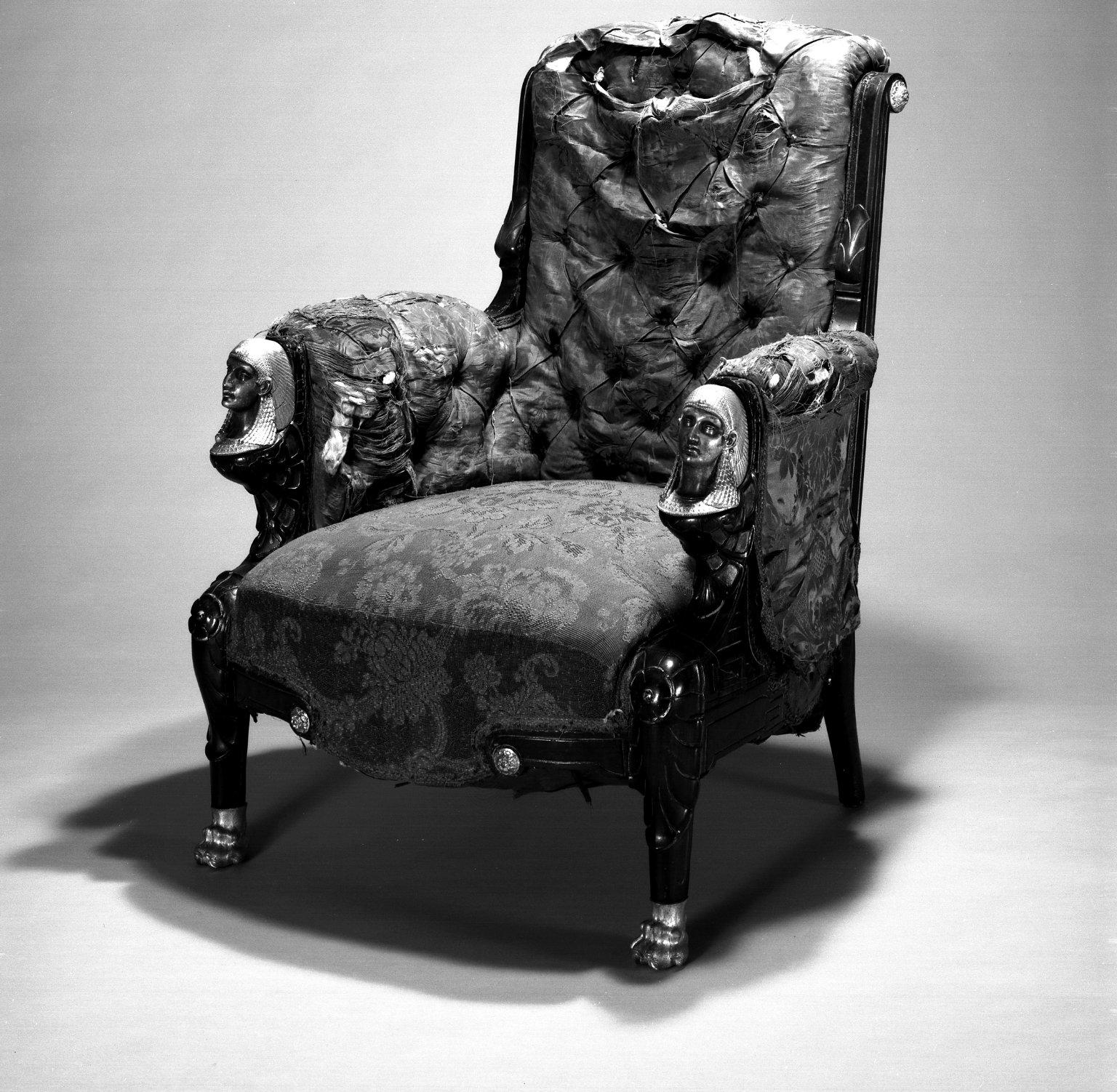
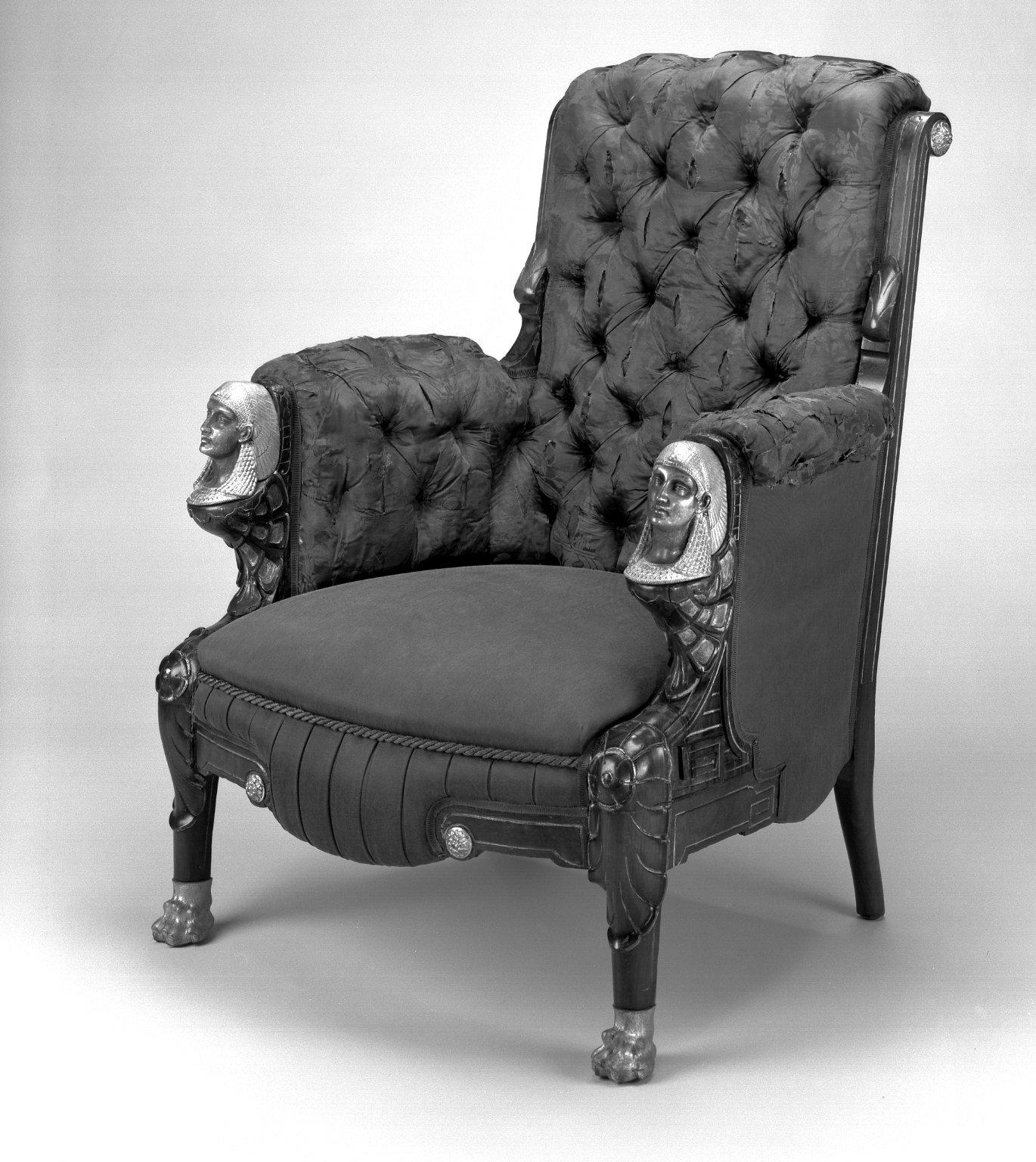
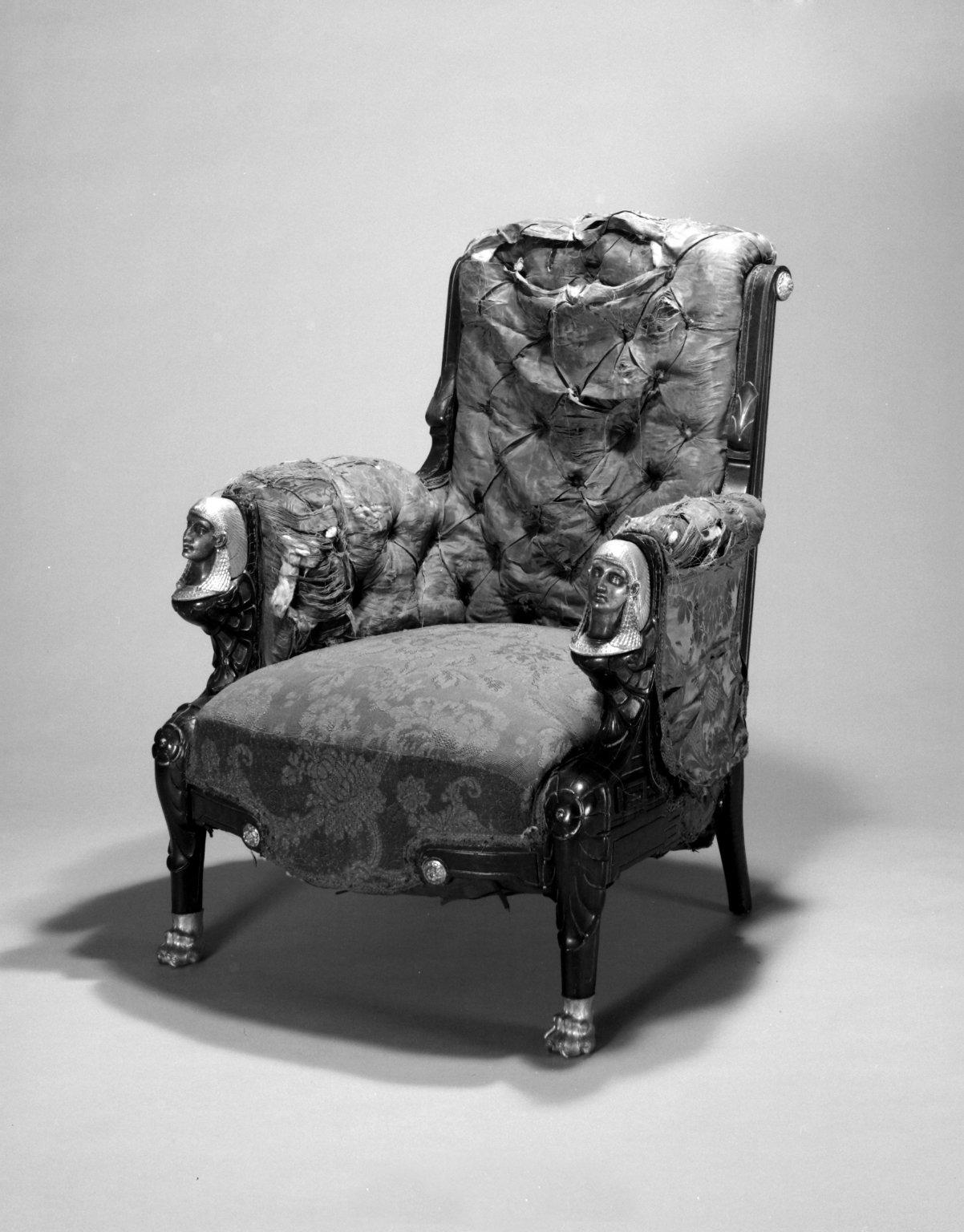
The form of this easy chair, or bergère in French, was introduced in France in about 1725 and has remained popular. To preserve the chair as a rare original upholstery document, later layers of upholstery and padding (see illustration) were removed to uncover the original upholstery on the back and arms. The original green silk damask upholstery was cleaned in place. A modern, unfigured, green silk was used to cover the seat and front of the chair, and was set behind the original damask to compensate for losses on the back and arms. All the trim on the chair is modern, but it approximates what was originally used.
Caption
Pottier & Stymus Manufacturing Company (United States, New York, active ca. 1859–1910); P. E. Guerin (founded 1857). Armchair (Egyptian Revival style), ca. 1870. Rosewood, burl walnut, gilt and patinated metal mounts, original upholstery, 38 1/4 x 30 x 29 in. (97.2 x 76.2 x 73.7 cm). Brooklyn Museum, Bequest of Marie Bernice Bitzer, by exchange and anonymous gift, 1992.89. (Photo: Brooklyn Museum)
Title
Armchair (Egyptian Revival style)
Date
ca. 1870
Geography
Possible place made: New York, United States
Medium
Rosewood, burl walnut, gilt and patinated metal mounts, original upholstery
Classification
Dimensions
38 1/4 x 30 x 29 in. (97.2 x 76.2 x 73.7 cm)
Markings
Unmarked
Credit Line
Bequest of Marie Bernice Bitzer, by exchange and anonymous gift
Accession Number
1992.89
Frequent Art Questions
Why does this chair have Egyptian pharaohs in the arm rests?
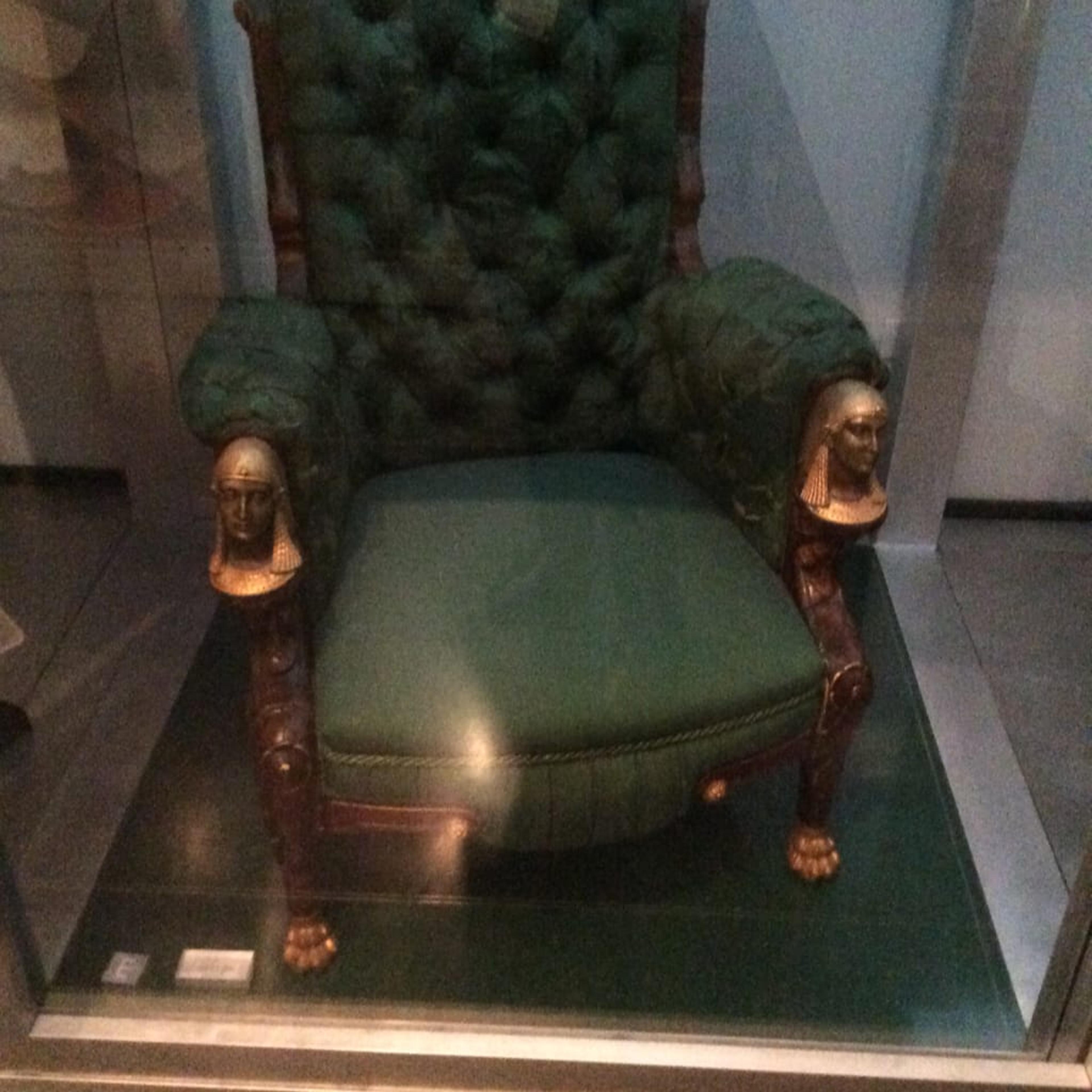 This was made in the late 19th century, a time when Western designers took inspiration from a range of so-called "exotic" cultures. In the galleries you can see the influence of Japan, Greece, India, etc. Egyptian motifs became especially fashionable in New York after Verdi's opera "Aida" debuted in NYC in 1873.Was this made in America?Yes, in fact it was made in New York City! This was probably part of a larger suite of furniture in the Egyptian Revival style. By the time this chair was made in the 1870s, Pottier and Stymus employed hundreds of workers and had many distinguished clients including President Ulysses Grant and Thomas Edison.
Did a king or queen sit on this throne?
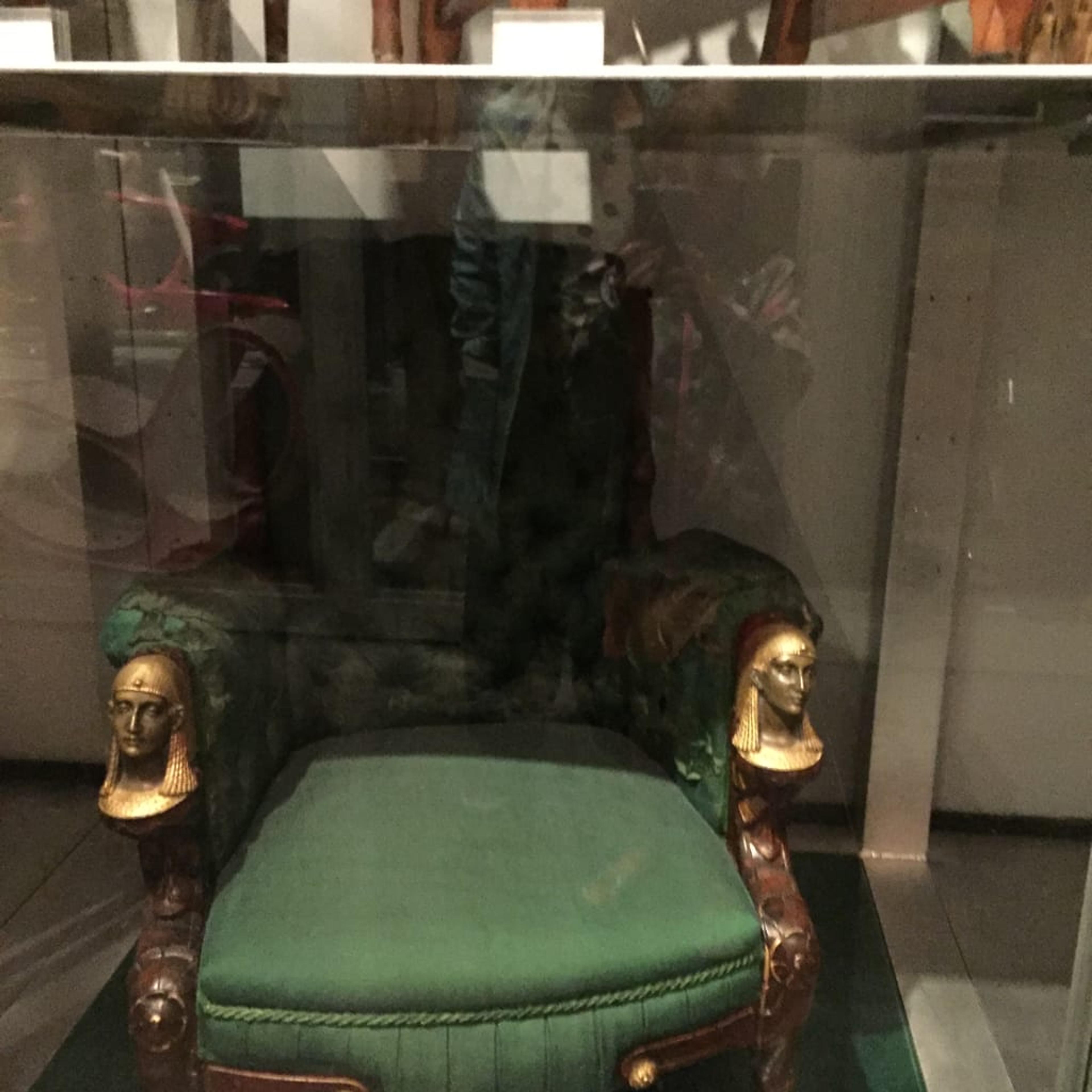 That chair is very beautiful, but no, it did not belong to a king or queen. It is a late 19th century example of Egyptian Revival. It would have been part of a suite of seating furniture in the parlor of an exceedingly rich person.
Have information?
Have information about an artwork? Contact us at