Beaded Pouch
Object Label
As northeastern tribes were forced onto reservations and their traditional lifestyles were threatened, Haudenosaunee (Iroquois) women looked for new sources of income for their families. They had always been proficient in quillwork and beadwork, so they began to create handbags (as seen here), needle cases, pincushions, watch fobs, and other items for the non-Native tourists who flocked to state fairs and other northeastern tourist spots. Haudenosaunee women set up booths and sold their arts featuring motifs of northeastern flora and fauna directly to eager customers.
Caption
Hodinöhsö:ni’. Beaded Pouch, ca. 1880–1890. Velvet, silk, glass beads, Excluding strap: 7 5/16 x 7 7/16 x 3/4 in. (18.6 x 18.9 x 1.9 cm). Brooklyn Museum, Gift of the Edward J. Guarino Collection in memory of Josephine M. Guarino, 2015.68.24.
Gallery
Not on view
Collection
Gallery
Not on view
Collection
Culture
Title
Beaded Pouch
Date
ca. 1880–1890
Medium
Velvet, silk, glass beads
Classification
Dimensions
Excluding strap: 7 5/16 x 7 7/16 x 3/4 in. (18.6 x 18.9 x 1.9 cm)
Credit Line
Gift of the Edward J. Guarino Collection in memory of Josephine M. Guarino
Accession Number
2015.68.24
Frequent Art Questions
The label says that this object was created for the tourist market. Does that mean it (or something similar) was not used by the Iroquois people pre-Columbus?
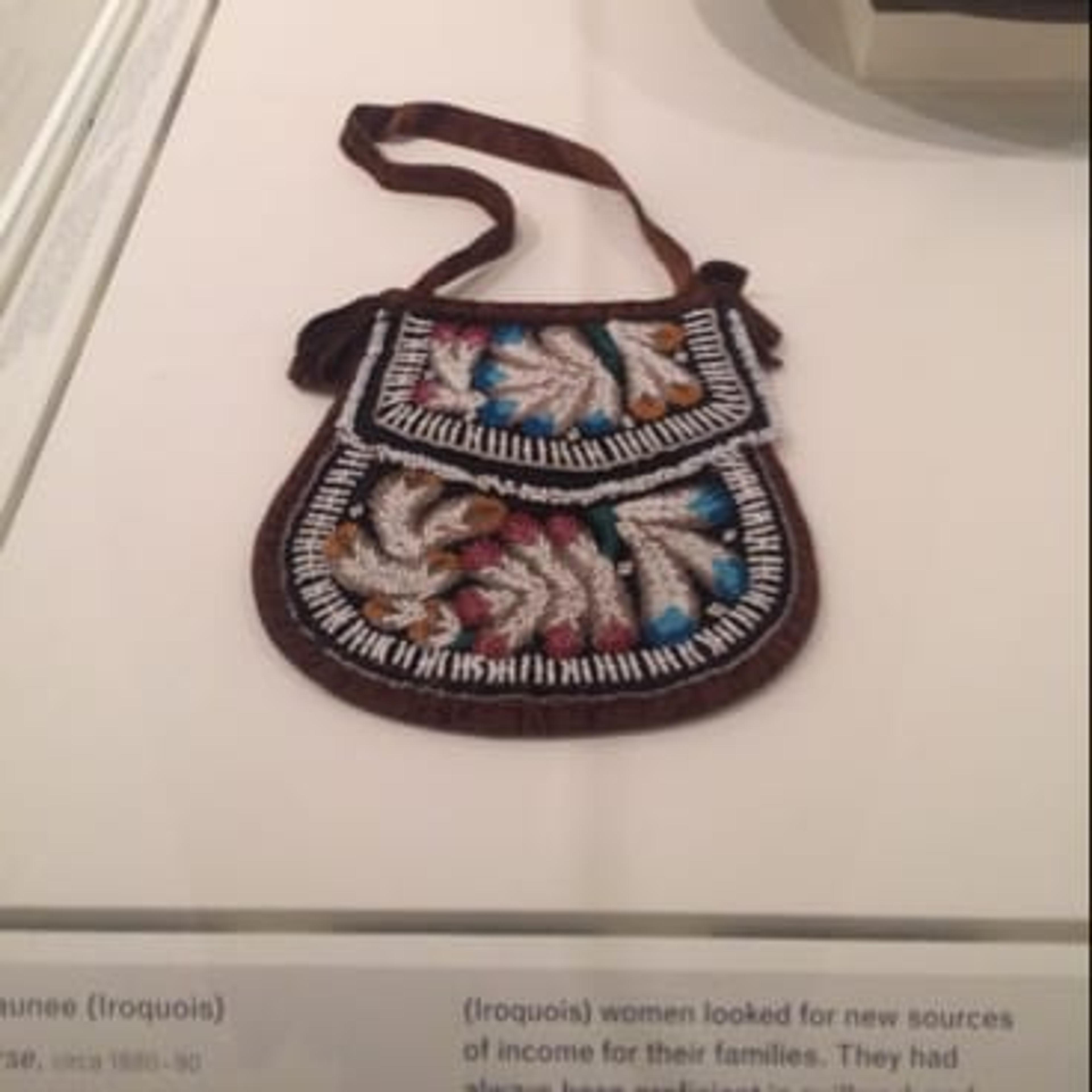 Great question! You're right, objects like these aren't exactly tradition to the Iroquois before European contact. Beadwork certainly was traditional, and the Iroquois developed and honed that craft for the market, developing specific patterns and motifs that could appeal to European Americans.For instance velvet, silk and glass beads weren't materials these people would have used prior to European contact. Likely they chose silk and velvet because European Americans enjoyed and treasured those materials more so than traditional suede or animal materials, thus making a product easier to sell.
Have information?
Have information about an artwork? Contact us at