Tapestry of Paradise
Miriam Schapiro

Object Label
A trailblazing feminist artist, Miriam Schapiro established the Feminist Art Program at the California Institute of the Arts in 1971 with Judy Chicago; founded the Pattern and Decoration movement in 1976; and wrote, with Melissa Meyer, the influential text “Waste Not, Want Not: An Inquiry into What Women Saved and Assembled—Femmage,” published in Heresies in 1977. Setting out to remedy the lack of visibility for women artists, Schapiro posited that femmage—decorative and domestic elements traditionally considered “women’s work,” most often excluded from museums and found in vernacular, everyday environments—had great potential for subversion and aesthetic influence. Schapiro’s visually dense and diverse Tapestry of Paradise shows the application of femmage as artistic expression: accumulative and writ large against art history’s diminished view of women artists’ achievements.
Caption
Miriam Schapiro (American, 1923–2015). Tapestry of Paradise, 1980. Acrylic and collage on canvas, 60 1/8 × 50 1/16 × 2 in. (152.7 × 127.2 × 5.1 cm) frame: 64 × 54 × 4 in. (162.6 × 137.2 × 10.2 cm). Brooklyn Museum, Gift of Robert Sugar, 2017.16.
Gallery
Not on view
Gallery
Not on view
Artist
Title
Tapestry of Paradise
Date
1980
Medium
Acrylic and collage on canvas
Classification
Dimensions
60 1/8 × 50 1/16 × 2 in. (152.7 × 127.2 × 5.1 cm) frame: 64 × 54 × 4 in. (162.6 × 137.2 × 10.2 cm)
Credit Line
Gift of Robert Sugar
Accession Number
2017.16
Frequent Art Questions
Tell me more.
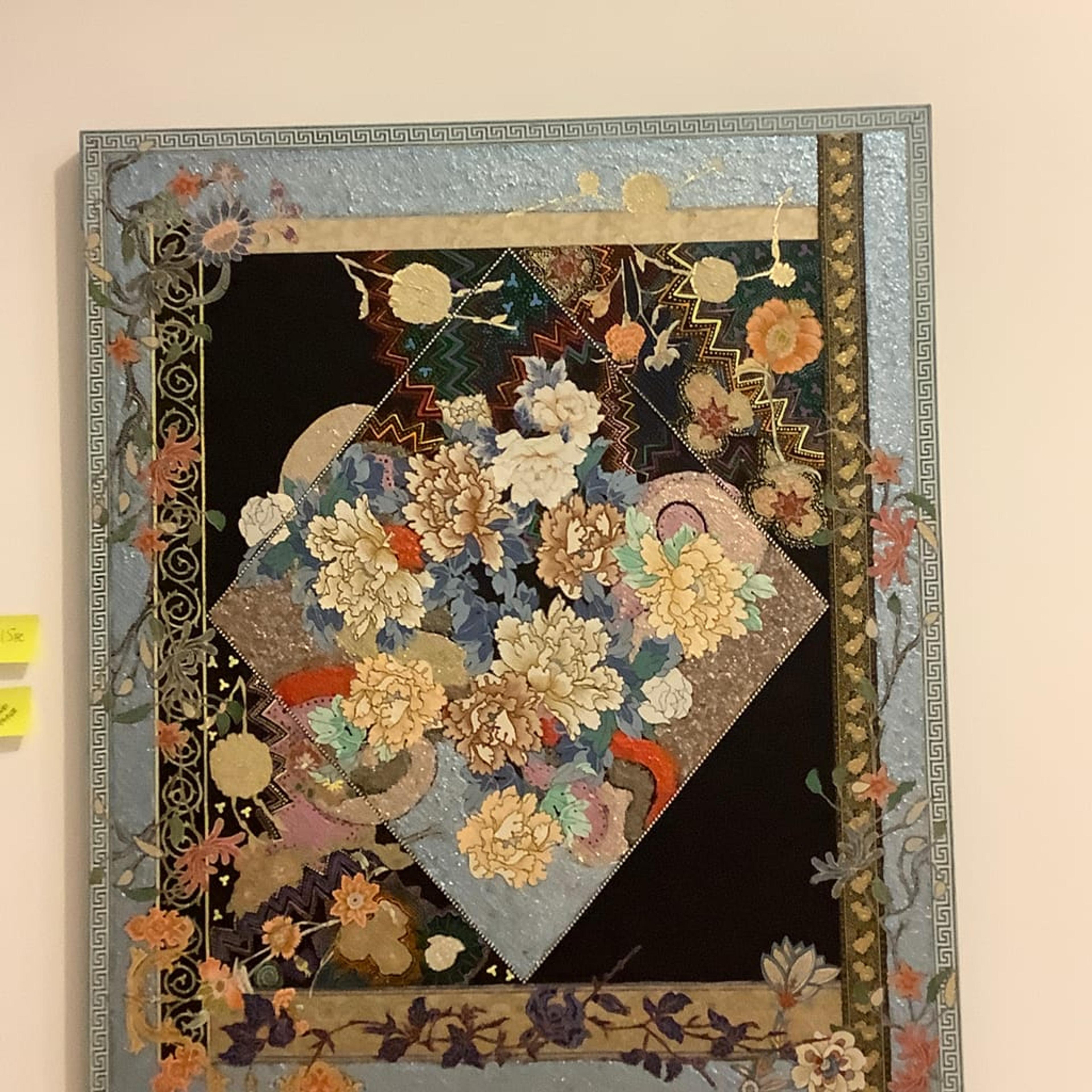 Isn't this a beautiful piece? It is by Miriam Schapiro, a trailblazing feminist artist who established the Feminist Art Program at the California Institute of the Arts in 1971 along with Judy Chicago -- whose work "The Dinner Party" is at the center of this gallery!Schapiro believed that the decorative and domestic elements you see here, often considered only "women's work," were great elements to use aesthetically and for subversion.I was just looking at The Dinner Party!
Tell me more.
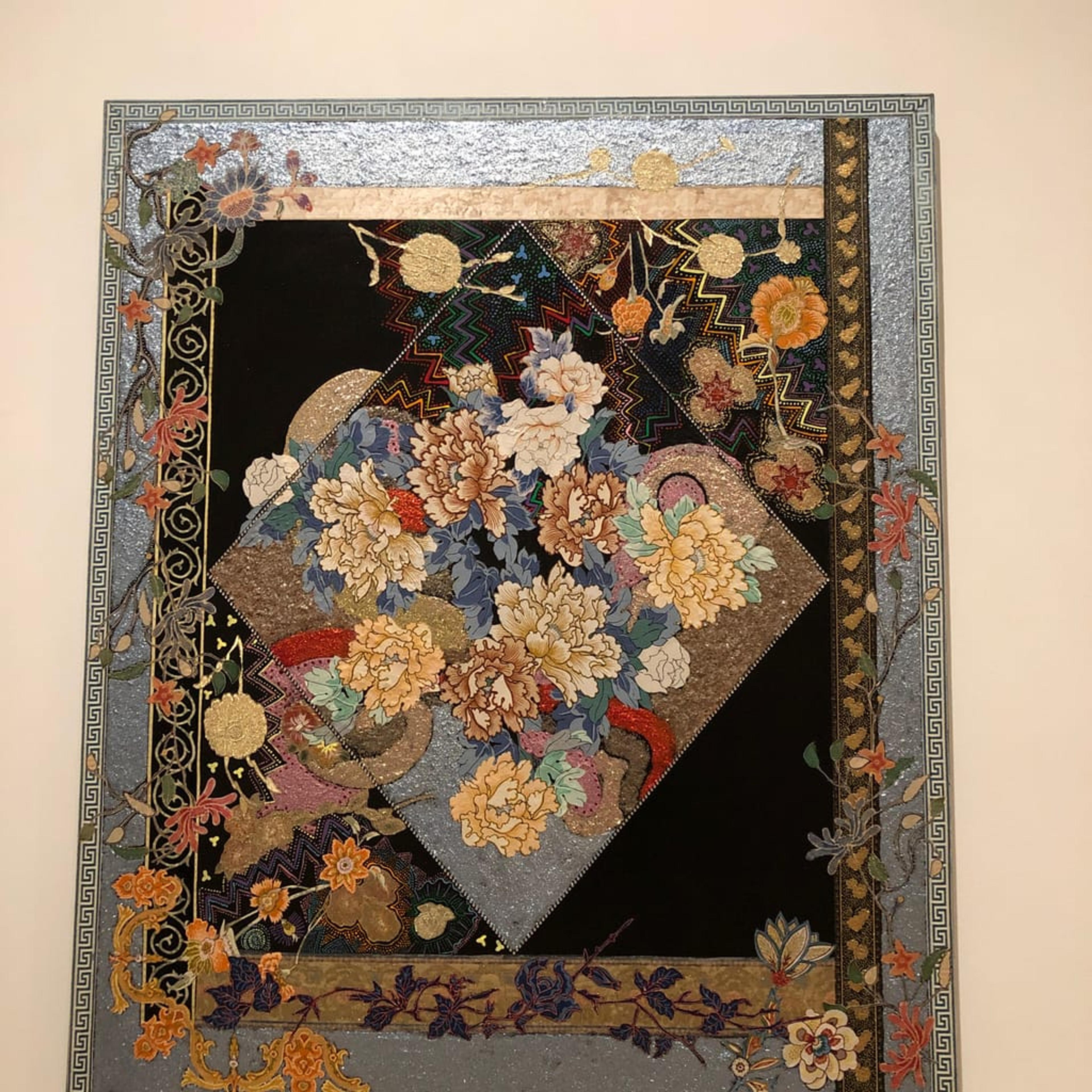 The Pattern and Decoration movement began in the 1970s as a reaction against Minimalism and Conceptualism. It sought to elevate art-making practices that were being demoted in the contemporary art hierarchy, like materials and elements typically considered to be domestic or "women's work."Miriam Schapiro went on to found the Feminist Art Program with Judy Chicago, creator of The Dinner Party!
Have information?
Have information about an artwork? Contact us at