Side Chair


1 of 3
Object Label
Ray Komai's molded plywood chair was manufactured in Brooklyn in 1949, using the latest American technology. Although European designers such as Marcel Breuer and Alvar Aalto designed plywood furniture in the 1930s, it was the Americans Charles and Ray Eames, in the years immediately after World War II, who realized the full potential of this material and bent one sheet of plywood in several directions. Komai's chair adds a sophisticated anthropomorphic twist. If you look closely, the chair's design suggests a human face.
Caption
Ray Komai (American, 1918–2010). Side Chair, ca. 1949. Walnut plywood, chromed metal, and rubber, 30 1/2 x 22 x 22 1/4 in. (77.5 x 55.9 x 56.5 cm). Brooklyn Museum, Alfred T. and Caroline S. Zoebisch Fund, 1994.156.1. (Photo: Brooklyn Museum)
Collection
Collection
Designer
Manufacturer
Title
Side Chair
Date
ca. 1949
Geography
Place manufactured: Brooklyn, New York, United States
Medium
Walnut plywood, chromed metal, and rubber
Classification
Dimensions
30 1/2 x 22 x 22 1/4 in. (77.5 x 55.9 x 56.5 cm)
Credit Line
Alfred T. and Caroline S. Zoebisch Fund
Accession Number
1994.156.1
Frequent Art Questions
This chair is chic!
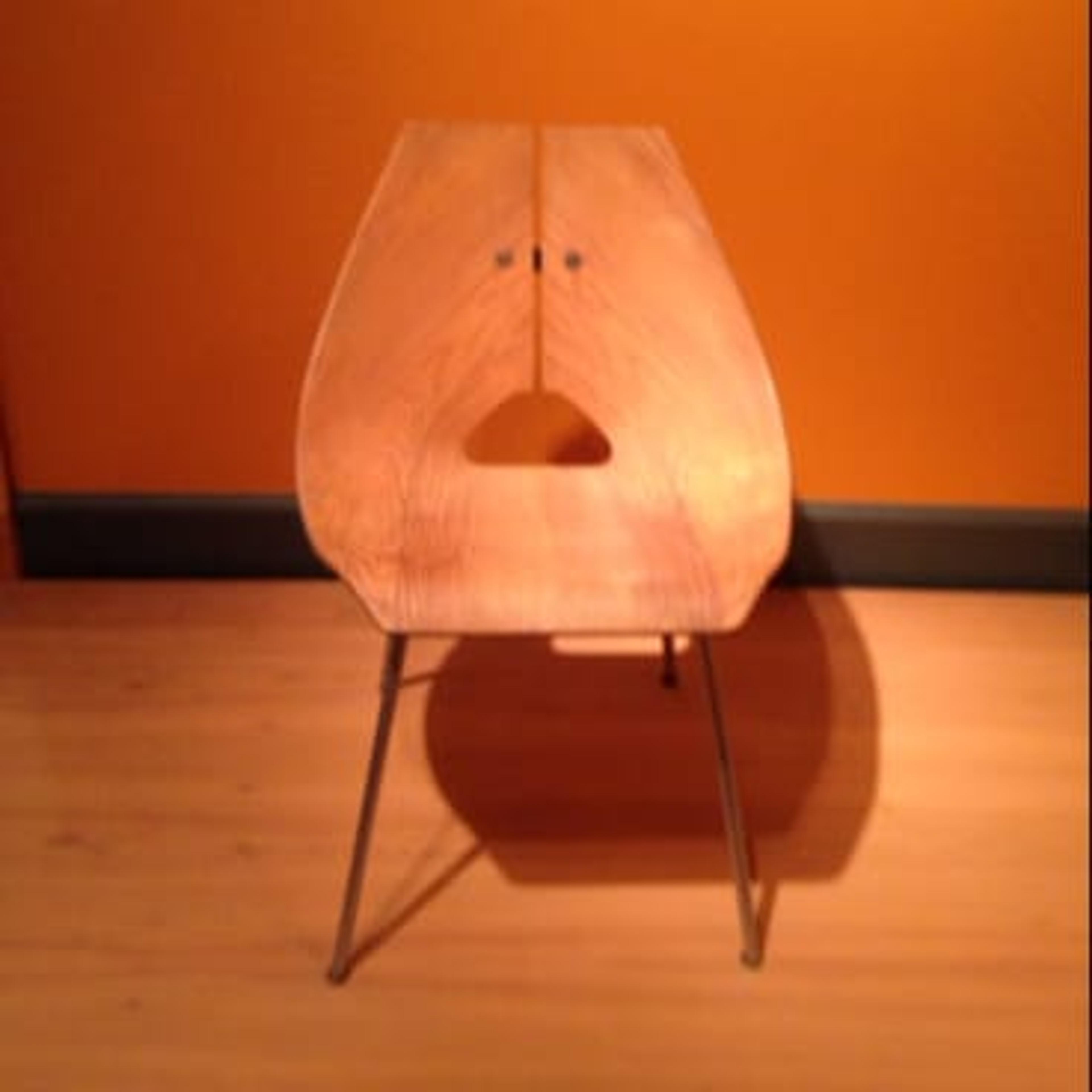 It has simple forms but a lot of personality! The label copy may even mention this but if you look straight at it, there's a "face" from the two screws and the opening below them. It was made in Brooklyn and it's placed near Georgia O'Keeffe's painting of the Brooklyn Bridge, which also has strong, simple shapes. Although European designers such as Marcel Breuer and Alvar Aalto designed plywood furniture in the 1930s, it was the Americans Charles and Ray Eames, in the years immediately after World War II, who realized the full potential of this material and bent one sheet of plywood in several directions.
Was Komai Japanese-American? Is this a face he is depicting?
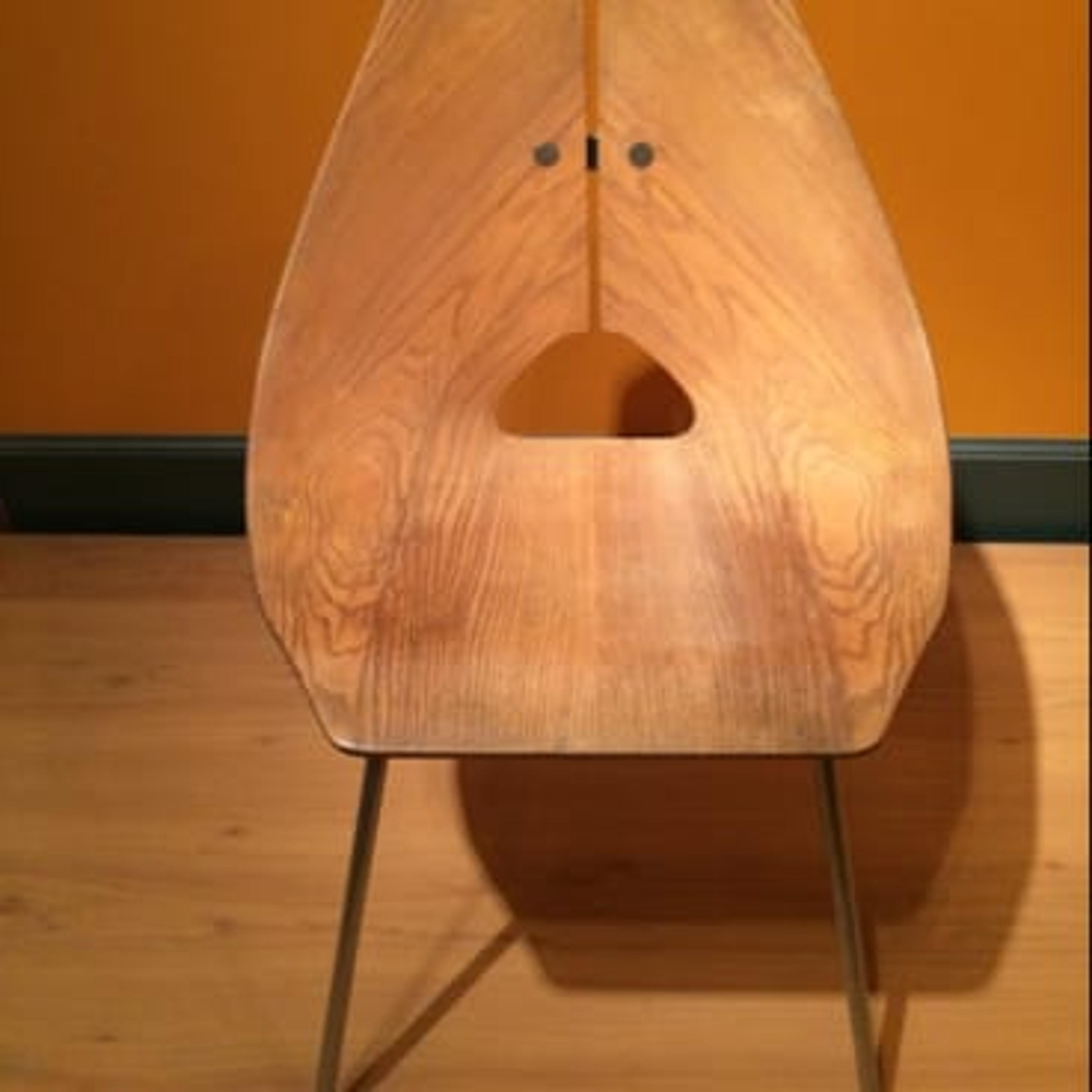 Yes, Komai was Japanese American. In fact, in the 40s, he spent time in a Japanese internment camp. And, yes, the anthropomorphic chair is indeed designed to suggest a human face!
This is interesting.
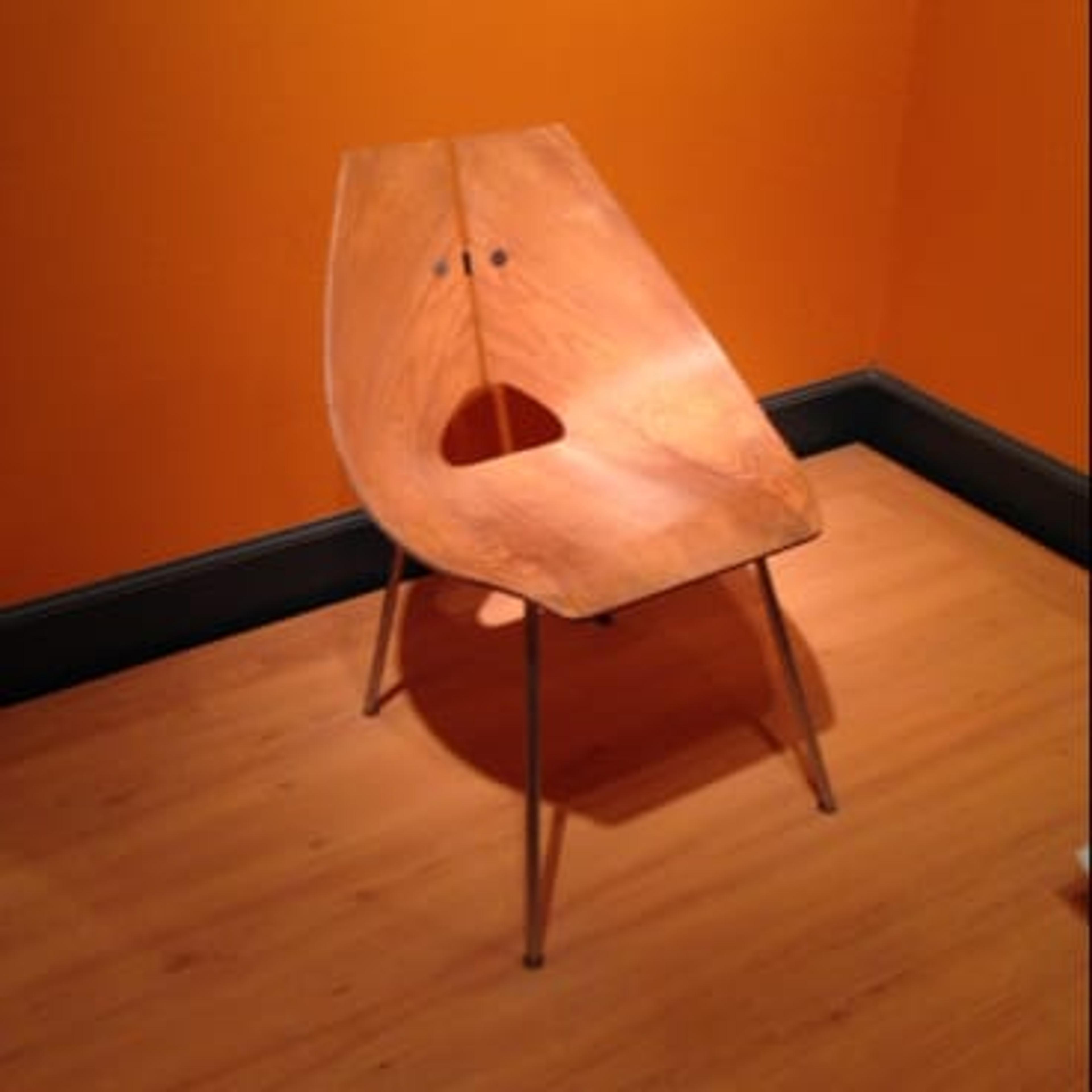 Did you notice that the hardware and opening in the back of that chair form a human-like face? It has simple forms but a lot of "personality." And it's placed near Georgia O'Keeffe's painting of the Brooklyn Bridge, which also has strong, simple forms. The two works were created around the same time.Oh, I see that now! Thank you.
Have information?
Have information about an artwork? Contact us at