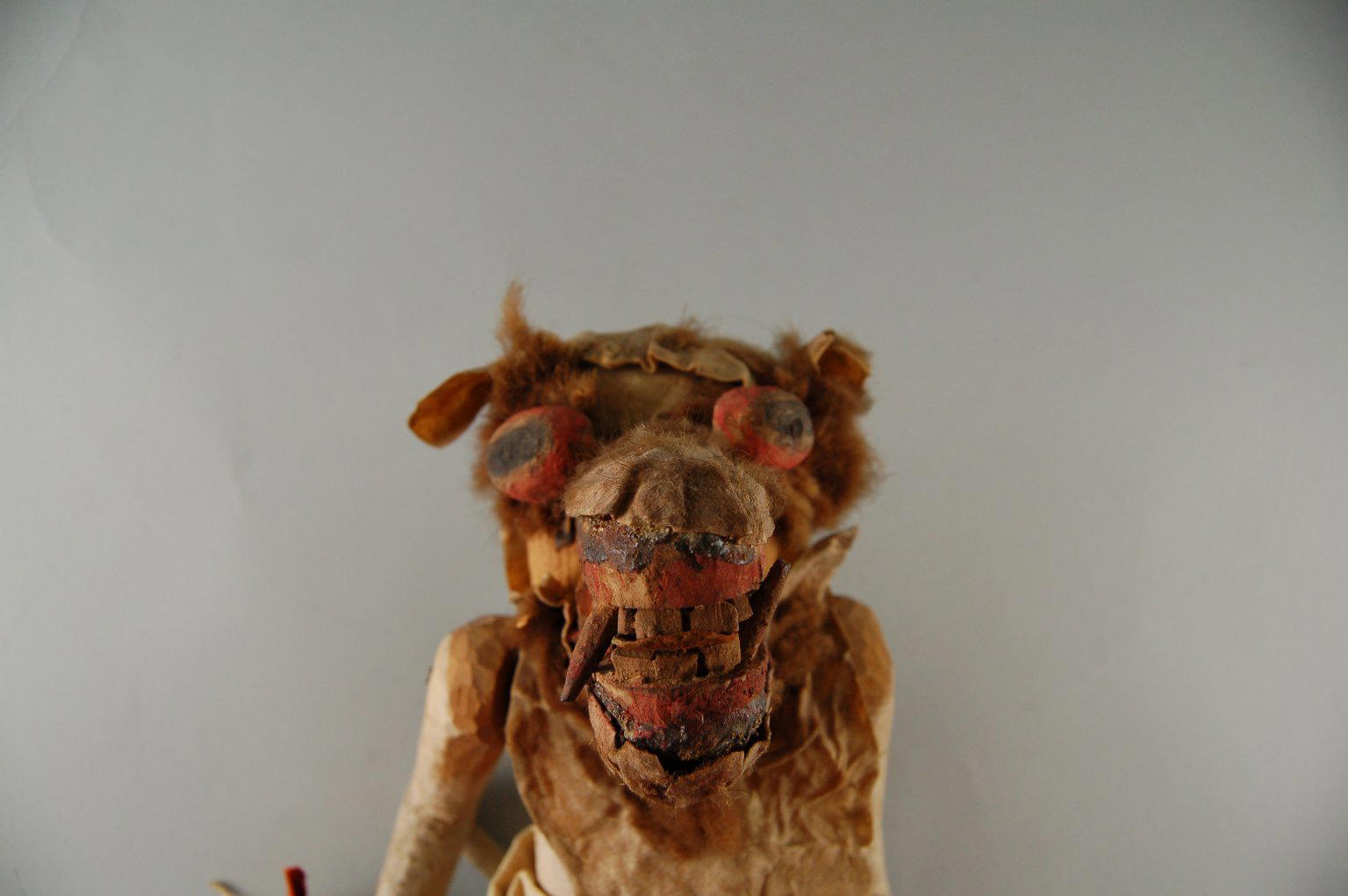
Kachina Doll (Ainshi Koko)
A:shiwi (Zuni Pueblo)
1 of 5
Object Label
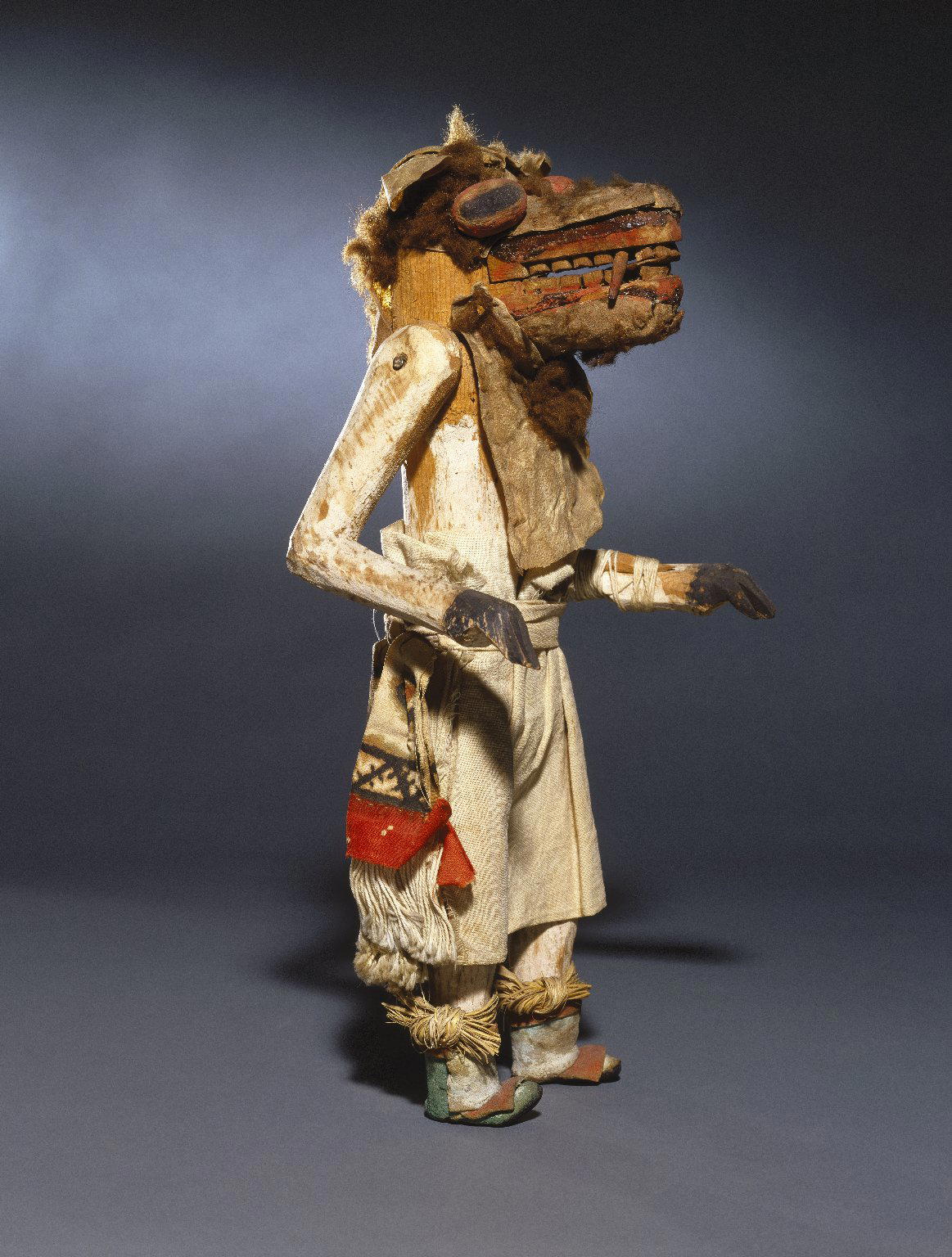
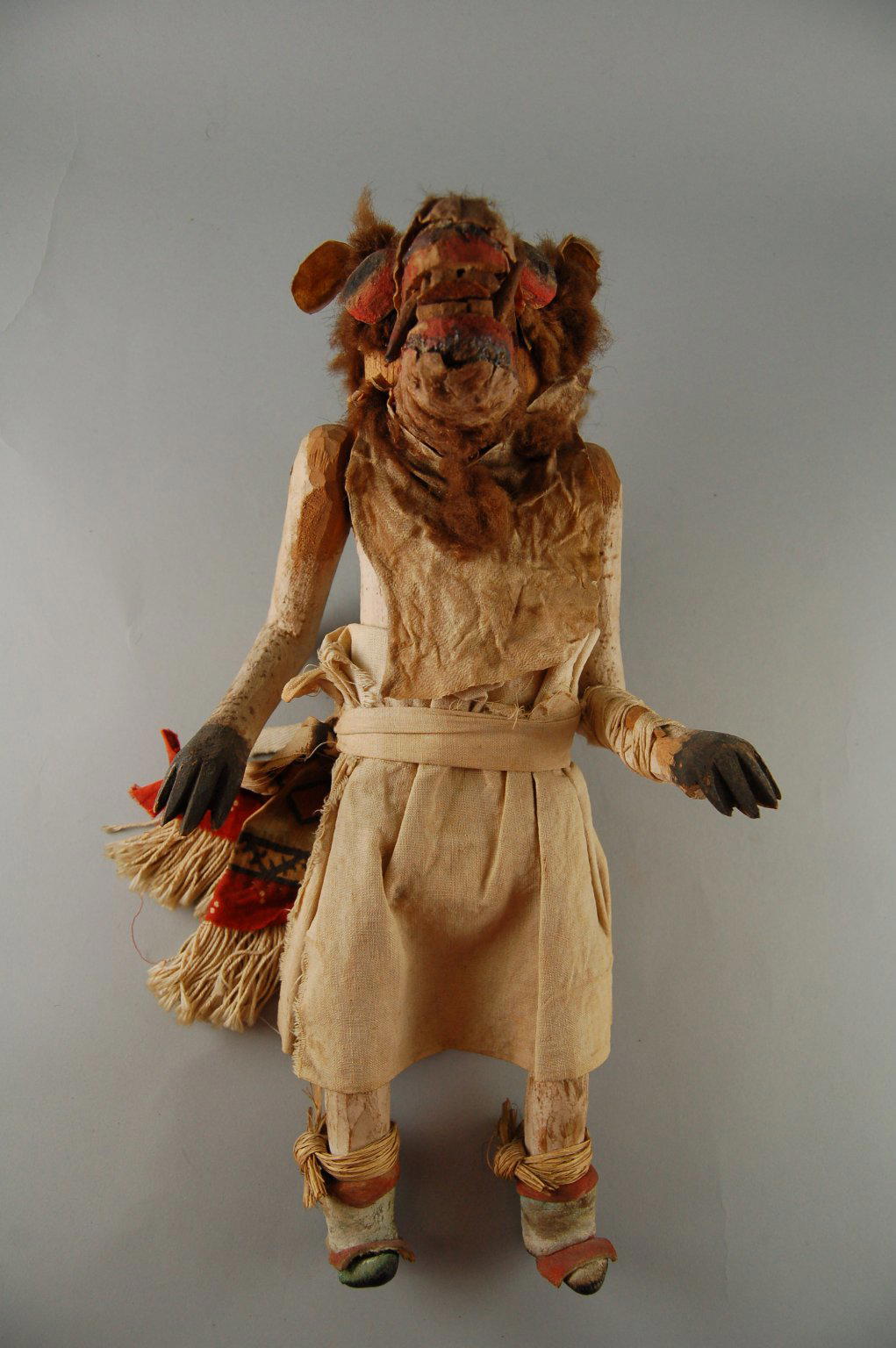
In the southwestern United States, a supernatural being that represents a life-force or embodies a natural phenomenon such as the sun, the moon, a plant, or an animal is called a koko by the Zuni and a katsina (commonly anglicized as “kachina”) by the Hopi. Such beings have the power to control rainfall, crop growth, and fertility; to cure and protect; and to act as messengers between the gods and human beings. Carved kachina figures, also known as kachina dolls, are representations of these spirits and can have a sacred or an educational purpose. During some ceremonies, the carvings are given to community members to reward virtuous behavior, recognize a recent marriage, or teach children about religion. In the 1800s, a lively market for the carvings developed among non-Native collectors and tourists, giving rise to the elaborate art form that flourishes today.
Caption
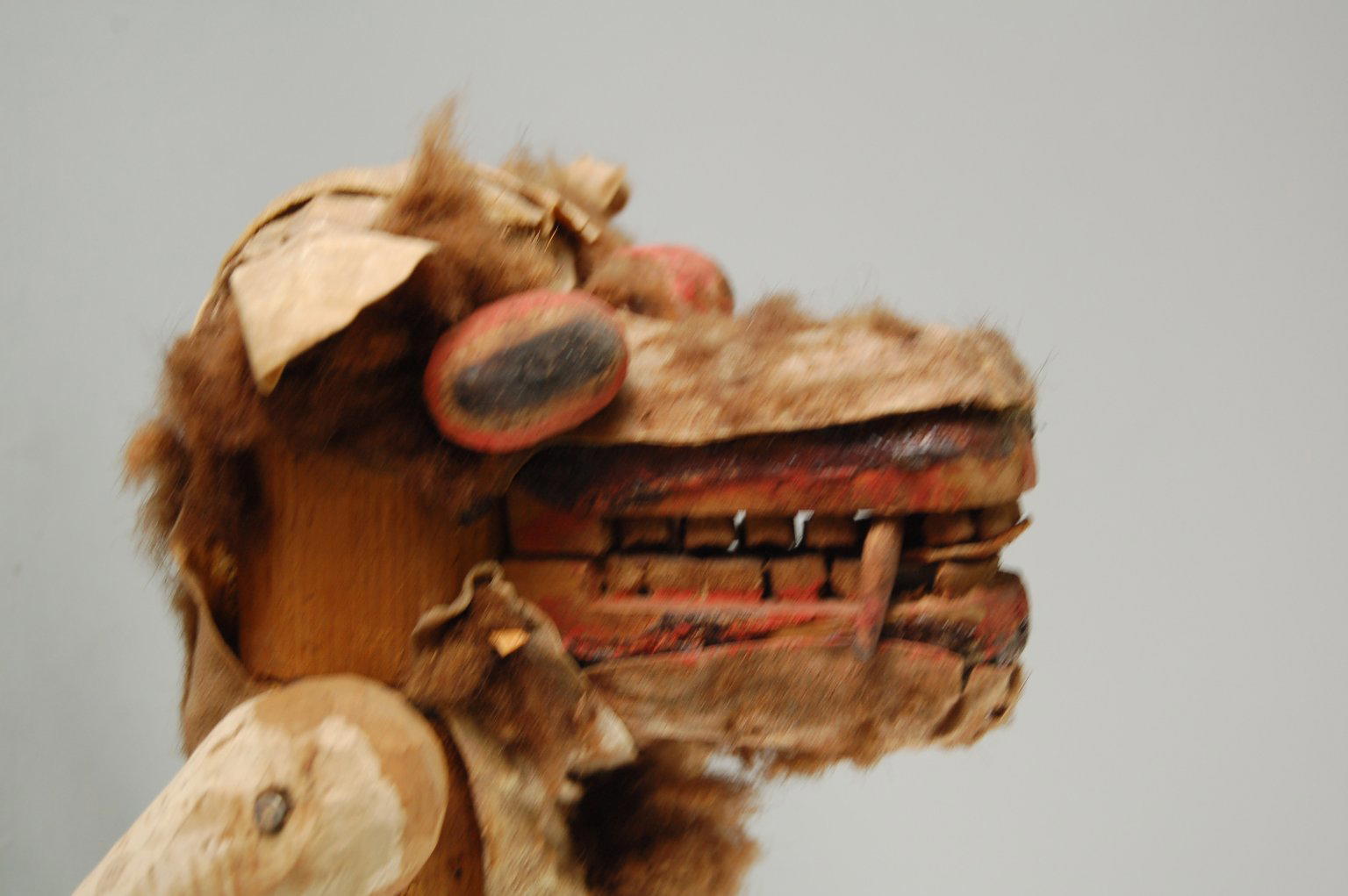
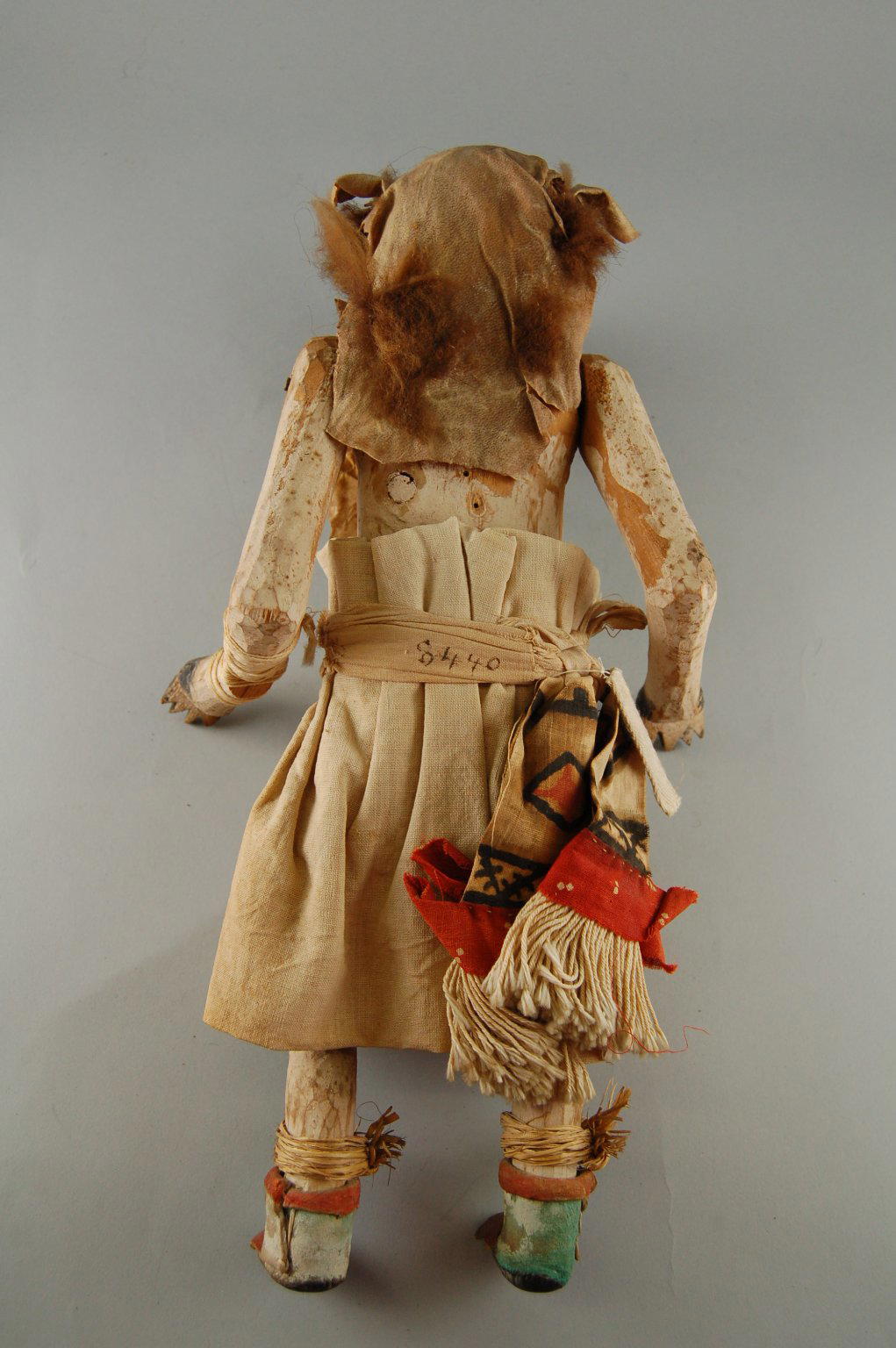
A:shiwi (Zuni Pueblo). Kachina Doll (Ainshi Koko), late 19th century. Wood, pigment, cotton, hair, hide, yucca, resinous material, 14 1/2 x 7 x 5 1/2 in. (36.8 x 17.8 x 14 cm). Brooklyn Museum, Museum Expedition 1907, Museum Collection Fund, 07.467.8440. (Photo: Brooklyn Museum)
Gallery
Not on view
Collection
Gallery
Not on view
Collection
Culture
Title
Kachina Doll (Ainshi Koko)
Date
late 19th century
Geography
Place made: Zuni, New Mexico, United States
Medium
Wood, pigment, cotton, hair, hide, yucca, resinous material
Classification
Dimensions
14 1/2 x 7 x 5 1/2 in. (36.8 x 17.8 x 14 cm)
Credit Line
Museum Expedition 1907, Museum Collection Fund
Accession Number
07.467.8440
Have information?
Have information about an artwork? Contact us at