Study for Homage to the Square "High Tenor"


1 of 2
Object Label
Caption
Josef Albers (American, 1888–1976). Study for Homage to the Square "High Tenor", 1959. Oil on masonite, 18 × 18 in. (45.7 × 45.7 cm) frame: 18 1/4 × 18 1/4 × 1 in. (46.4 × 46.4 × 2.5 cm). Brooklyn Museum, Gift of The Josef and Anni Albers Foundation, 1995.197.2. (Photo: Brooklyn Museum)
Gallery
Not on view
Collection
Gallery
Not on view
Collection
Artist
Title
Study for Homage to the Square "High Tenor"
Date
1959
Geography
Place made: United States
Medium
Oil on masonite
Classification
Dimensions
18 × 18 in. (45.7 × 45.7 cm) frame: 18 1/4 × 18 1/4 × 1 in. (46.4 × 46.4 × 2.5 cm)
Signatures
Recto: initialed and dated lower right: A 59 Verso: marked, "diminuenda" in chalk with title, signature, date, dimensions, and color notes
Credit Line
Gift of The Josef and Anni Albers Foundation
Accession Number
1995.197.2
Frequent Art Questions
What is going on here?
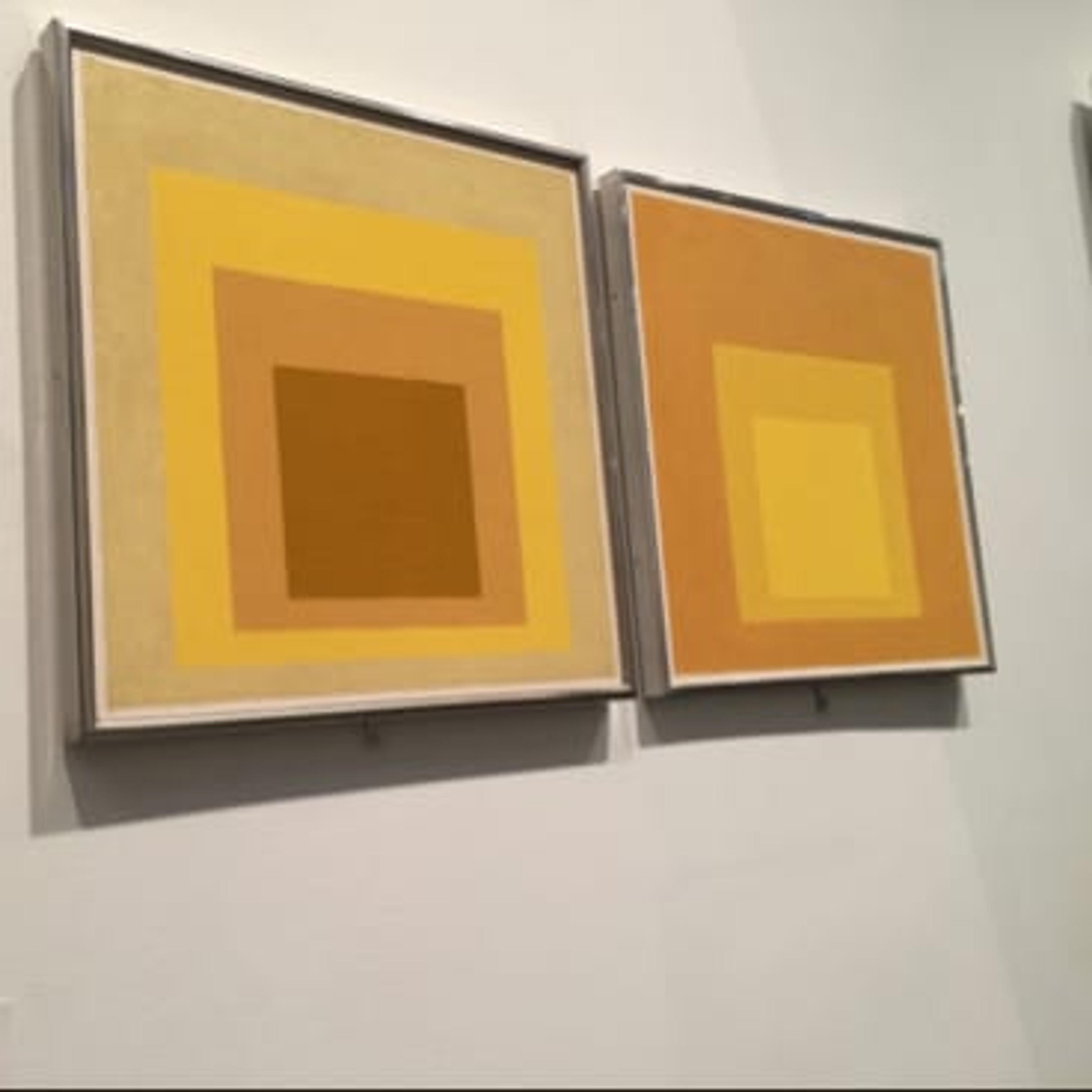 The artist did a whole series of canvases titled "Homage to the Square" exploring different color groupings and the ways the colors interact with each other. So, you can see that although these are both ranges of yellows, the different arrangements of light and dark tones create different visual effects. It was a very experimental approach to art at the time.He was a very influential teacher, too. He encouraged artists to work through "defamiliarization," basically, starting from scratch and looking at everything in a new way, while being very precise and logical. Almost like a scientist as well as an artist.Interesting, thank you!
Have information?
Have information about an artwork? Contact us at