Old Trombola


1 of 2
Object Label
Caption
Boris Grigoriev (Russian, 1886–1939). Old Trombola, 1924. Oil on canvas, 29 × 23 1/2 in. (73.7 × 59.7 cm) frame: 34 5/8 × 28 7/8 × 2 1/2 in. (87.9 × 73.3 × 6.4 cm). Brooklyn Museum, Gift of Mrs. W. Murray Crane, Morton E. Goldsmith, Boris Grigoriev, and The New Gallery, 25.90. (Photo: Brooklyn Museum)
Gallery
Not on view
Gallery
Not on view
Artist
Title
Old Trombola
Date
1924
Medium
Oil on canvas
Classification
Dimensions
29 × 23 1/2 in. (73.7 × 59.7 cm) frame: 34 5/8 × 28 7/8 × 2 1/2 in. (87.9 × 73.3 × 6.4 cm)
Signatures
Signed and dated lower right: "Boris Grigoriev/1924"
Credit Line
Gift of Mrs. W. Murray Crane, Morton E. Goldsmith, Boris Grigoriev, and The New Gallery
Accession Number
25.90
Frequent Art Questions
What is this style of art called?
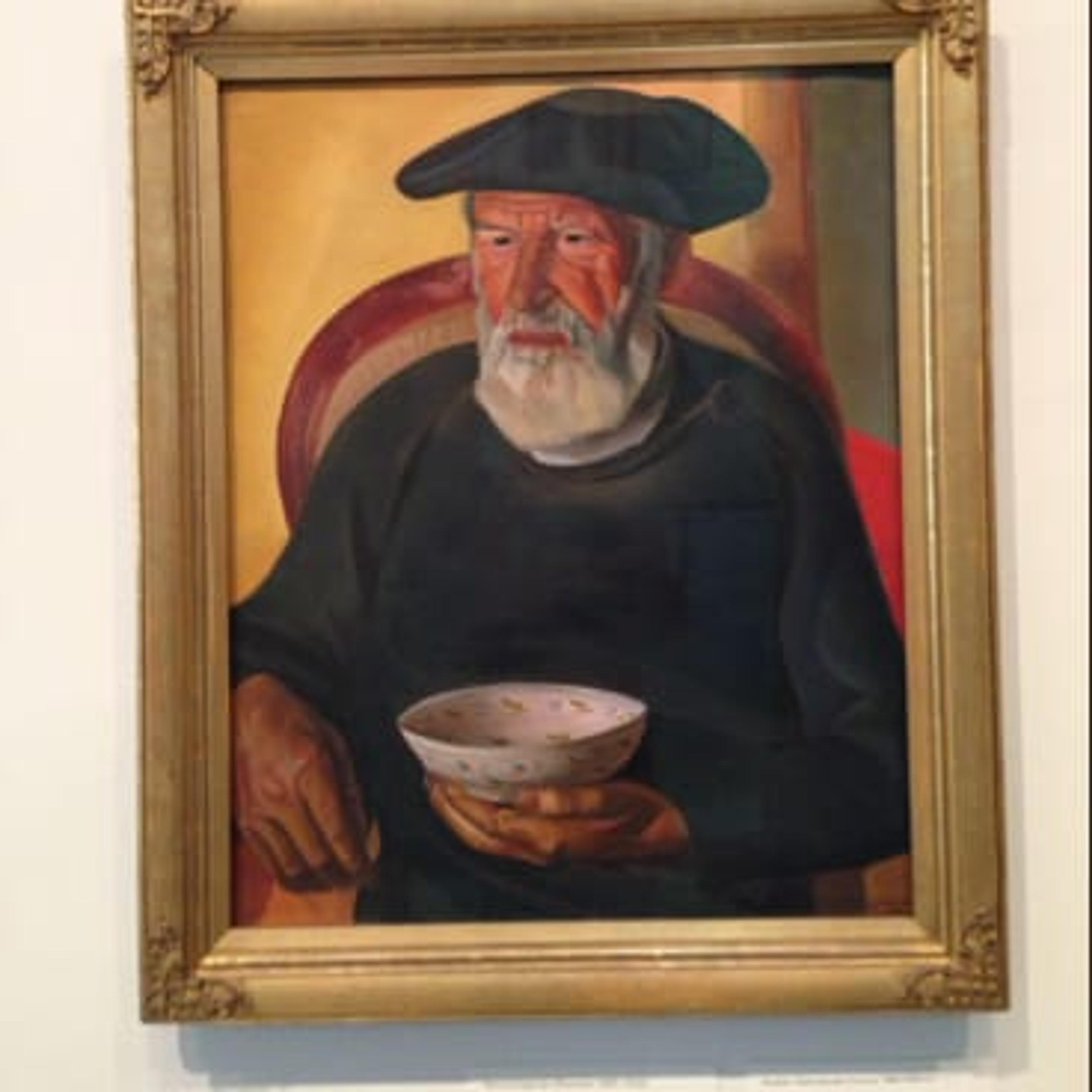 It's an early twentieth-century version of Realism.In the 1920s, some artists continued to work in the abstract avant-garde styles that emerged in Europe at the turn of the 20th century. (See the completely non-objective painting by Kandinsky nearby.) But in the wake of World War I, many artists returned to a more realist style in which objects and people were shown more naturalistically. This post-war trend is sometimes called "the return to order" and it took on different configurations in different places. The Russian artist Boris Grigoriev traveled and lived in many countries after the war. His work is often associated with the German brand of post-WWI realism known as the New Objectivity movement and its key exponent, Otto Dix.
Have information?
Have information about an artwork? Contact us at