Ceremonial Vessel (Paqcha)
Inca


1 of 2
Object Label
This ceramic paqcha, or ritual vessel, was used to make offerings of chicha (a fermented maize beer) to Pachamama, or Mother Earth. The liquid was poured into the llama’s head and then flowed down an interior chamber to the ground below.
Caption
Inca. Ceremonial Vessel (Paqcha), 1470–1532. Ceramic, 5 3/4 x 4 x 9 13/16 in. (14.6 x 10.2 x 24.9 cm). Brooklyn Museum, Museum Collection Fund, 30.884. (Photo: Brooklyn Museum)
Gallery
Not on view
Collection
Gallery
Not on view
Collection
Culture
Title
Ceremonial Vessel (Paqcha)
Date
1470–1532
Period
Pre-Spanish
Geography
Place found: North Coast, Peru
Medium
Ceramic
Classification
Dimensions
5 3/4 x 4 x 9 13/16 in. (14.6 x 10.2 x 24.9 cm)
Credit Line
Museum Collection Fund
Accession Number
30.884
Frequent Art Questions
How were these used?
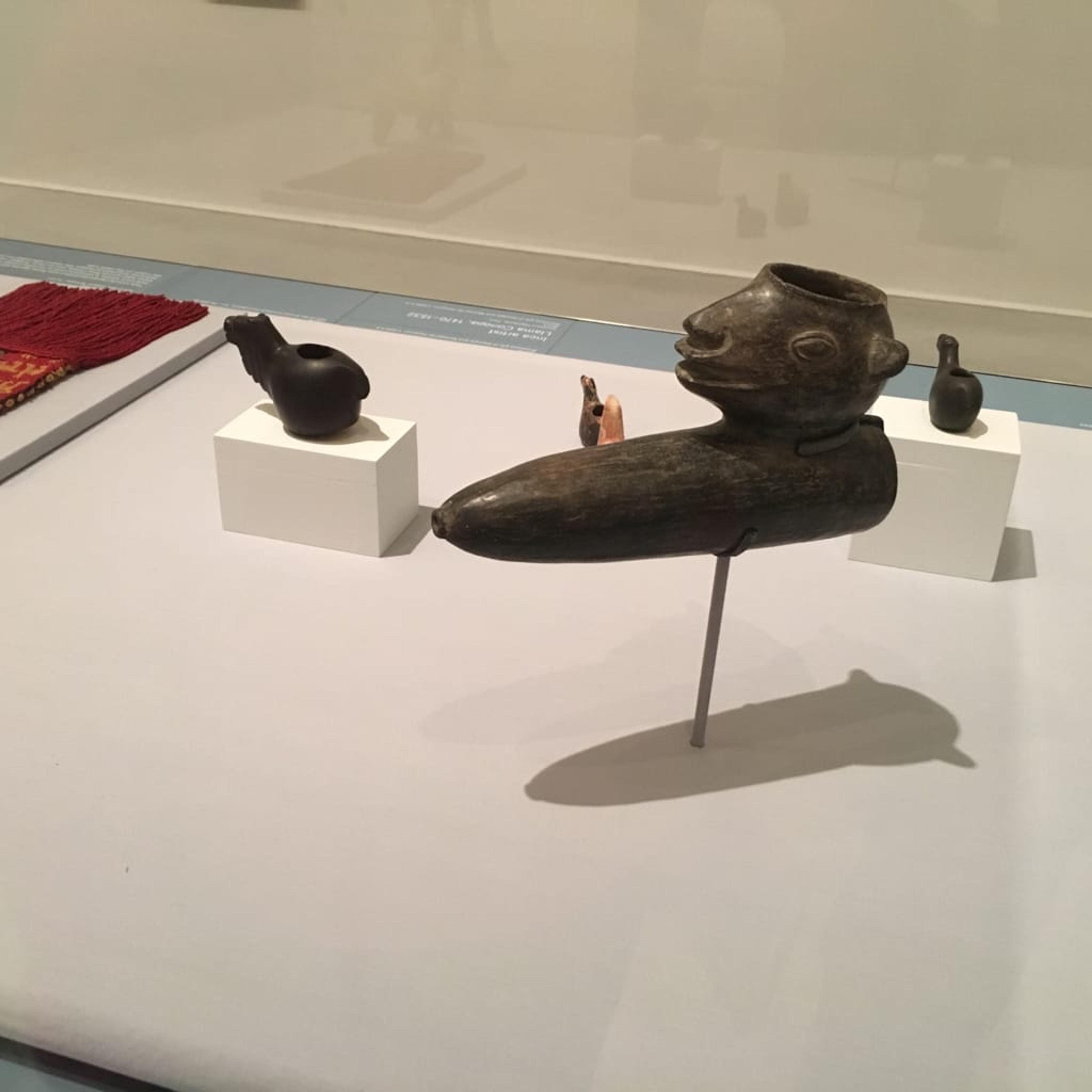 These vessels by the Inca were all intended for ceremonial purposes. Rituals for fertility and protection occurred throughout the Andes, where farming, herding, and trade were key aspects of life. These ritual vessels were filled with offerings of llama fat, shells, coca leaves, etc. and buried in animal corrals to promote animal fertility. All of these vessels come from the Inca, who built an empire that encompassed nearly the entirety of the Andean highlands and coast until the arrival of the Spanish.
Have information?
Have information about an artwork? Contact us at