Stela of Lady Horemheb
ca. 1938–1759 B.C.E.


1 of 2
Object Label
Not all funerary stelae made for women were as modest as this one, which was not carved but decorated only with paint. The stela is shaped like a shrine, with an architectural molding and cornice, and an offering sign consisting of a loaf of bread on a mat. A pair of wedjat-eyes, signifying wholeness and protection, surmounts this composition underneath a short prayer to Osiris, god of the dead, for the “Mistress of the House,” Horemheb.
Caption
Stela of Lady Horemheb, ca. 1938–1759 B.C.E.. Limestone, pigment, 24 7/16 x 15 5/8 x 5 11/16 in. (62 x 39.7 x 14.5 cm). Brooklyn Museum, Museum Collection Fund, 14.669. (Photo: Brooklyn Museum)
Title
Stela of Lady Horemheb
Date
ca. 1938–1759 B.C.E.
Dynasty
Dynasty 12
Period
Middle Kingdom
Geography
Place excavated: Haraga, Egypt
Medium
Limestone, pigment
Classification
Dimensions
24 7/16 x 15 5/8 x 5 11/16 in. (62 x 39.7 x 14.5 cm)
Credit Line
Museum Collection Fund
Accession Number
14.669
Frequent Art Questions
Tell me more.
This is a relatively simple funerary stela. It was excavated in the tomb of a woman named Horemheb; the inscription includes her name and a request for offerings addressed to the king of the afterlife, Osiris. The Eyes of Horus are symbols of protection and they sit on top of a larger version of the hieroglyph hetep, which can mean offerings.What are these?
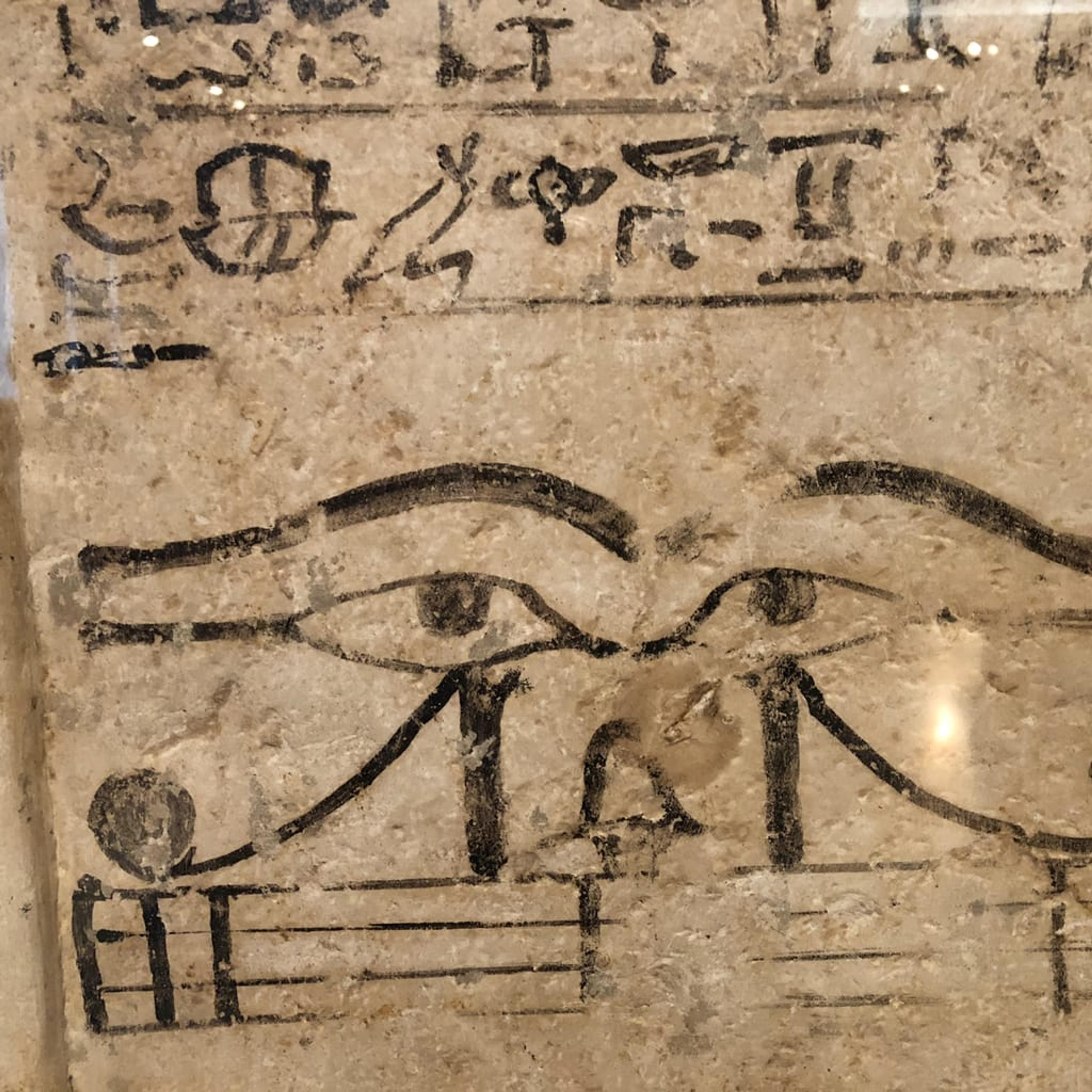 These are known as Eyes of Horus or wedjats, they are symbols of protection and health and can also provide a way for the deceased to see. This stela was designed for the tomb of a woman named Horemheb and asks for offerings. The eyes are sitting on top the sign hetep which can also mean offerings.
Have information?
Have information about an artwork? Contact us at