Shabty of Pinudjem I


1 of 2
Object Label
Later, Chapter 6 began appearing more frequently on funerary figurines. The text mentions that they do agricultural tasks for the dead person: irrigating the fields, cultivating crops, and clearing away sand that blew in from the nearby desert.
As substitutes for the deceased, these figurines were sometimes given their own sarcophagi (see no. 6). To emphasize the agricultural function of the figurines, hoes and grain baskets were added to them (no. 8).
Wood (nos. 9–11), stone (nos. 12–14, 16), faience (no. 17), metal, and other materials were used beginning in Dynasty 18. By the end of the New Kingdom, statuettes for a single person were often mold-made by the hundreds and even thousands. Faience became the medium of choice, first in blue and later in light green or light blue (nos. 17, 20, 21).
Caption
Shabty of Pinudjem I, ca. 1025–1007 B.C.E.. Faience, 4 × 1 7/16 × 7/8 in. (10.2 × 3.6 × 2.2 cm). Brooklyn Museum, Gift of Evangeline Wilbour Blashfield, Theodora Wilbour, and Victor Wilbour honoring the wishes of their mother, Charlotte Beebe Wilbour, as a memorial to their father, Charles Edwin Wilbour, 16.190. (Photo: Brooklyn Museum)
Gallery
Not on view
Gallery
Not on view
Title
Shabty of Pinudjem I
Date
ca. 1025–1007 B.C.E.
Dynasty
Dynasty 21
Period
Third Intermediate Period
Geography
Reportedly from: Thebes (Deir el-Bahri), Egypt
Medium
Faience
Classification
Dimensions
4 × 1 7/16 × 7/8 in. (10.2 × 3.6 × 2.2 cm)
Credit Line
Gift of Evangeline Wilbour Blashfield, Theodora Wilbour, and Victor Wilbour honoring the wishes of their mother, Charlotte Beebe Wilbour, as a memorial to their father, Charles Edwin Wilbour
Accession Number
16.190
Frequent Art Questions
What is this?
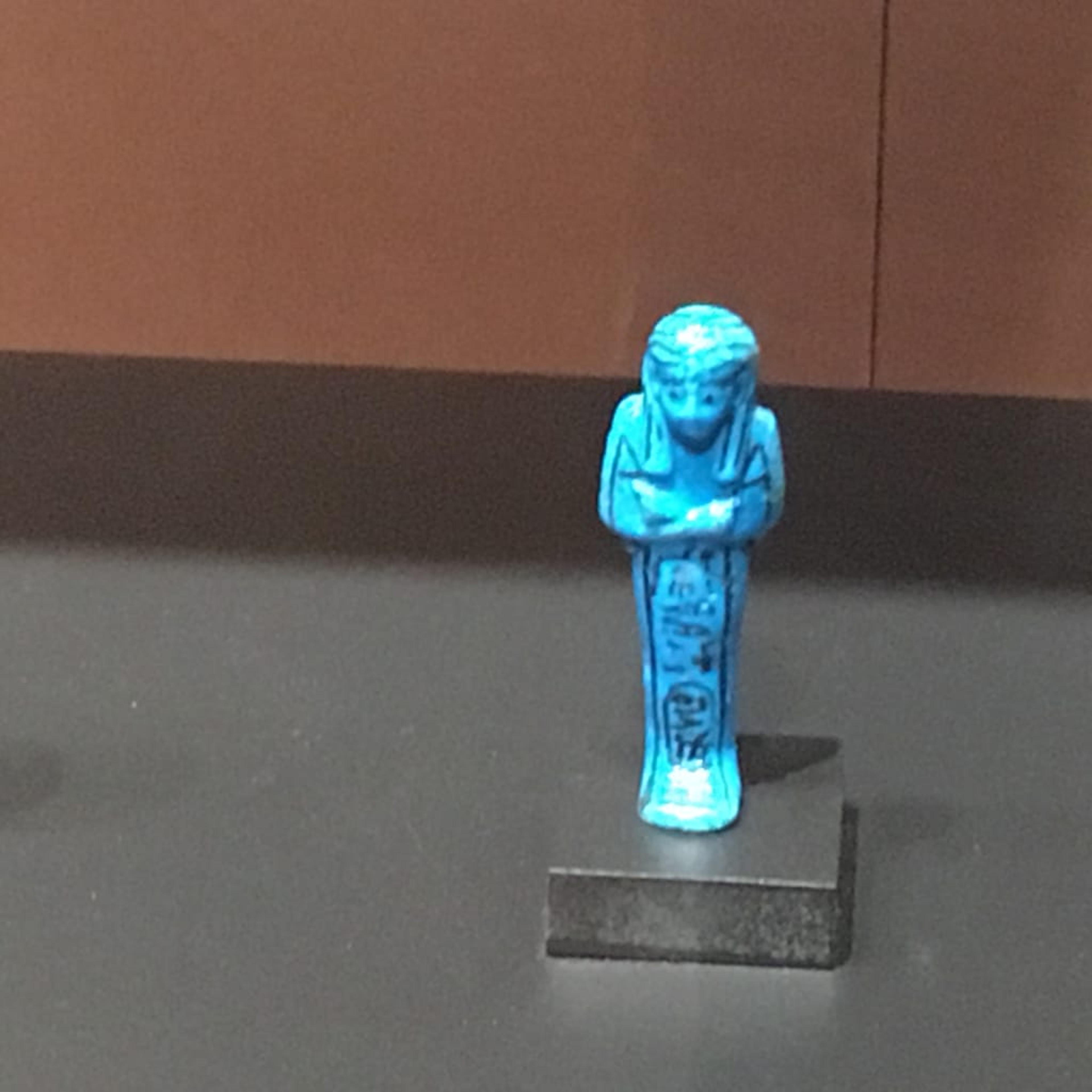 This is what is called a shabty. They were buried with an individual to help with work in the afterlife, almost like servants.
Why are their hands around their chest?
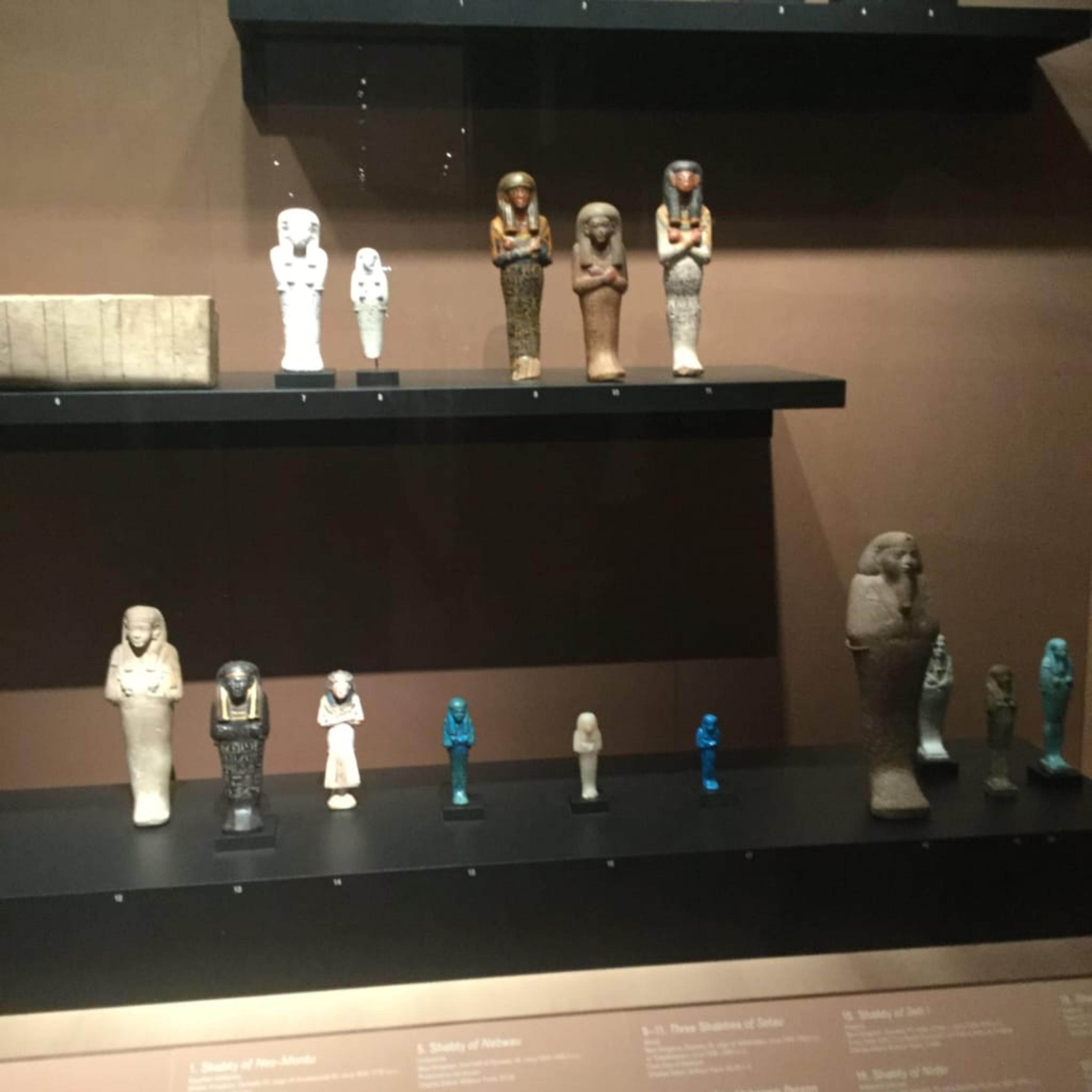 This pose indicates that they represent the dead and served to identify them with the god Osiris, the king of the afterlife. The is referred to by Egyptologists as mummiform--mummy shaped--or, especially in the case of a king, Osiride--Osiris-like.Shabties like these would be placed in the tomb. They're essentially servants to the deceased, who would perform tasks like farming for them in the afterlife.
Any idea what material makes this blue?
Yes! This is made of faience, a material made of a quartz based paste that could be molded and fired to create small sculptures like this. The ancient egyptians added a copper compound to the paste to create the blue color.How was it preserved so well to retain its color?Faience is fired like clay, and then glazed. It is a very stable material!Tell me more.
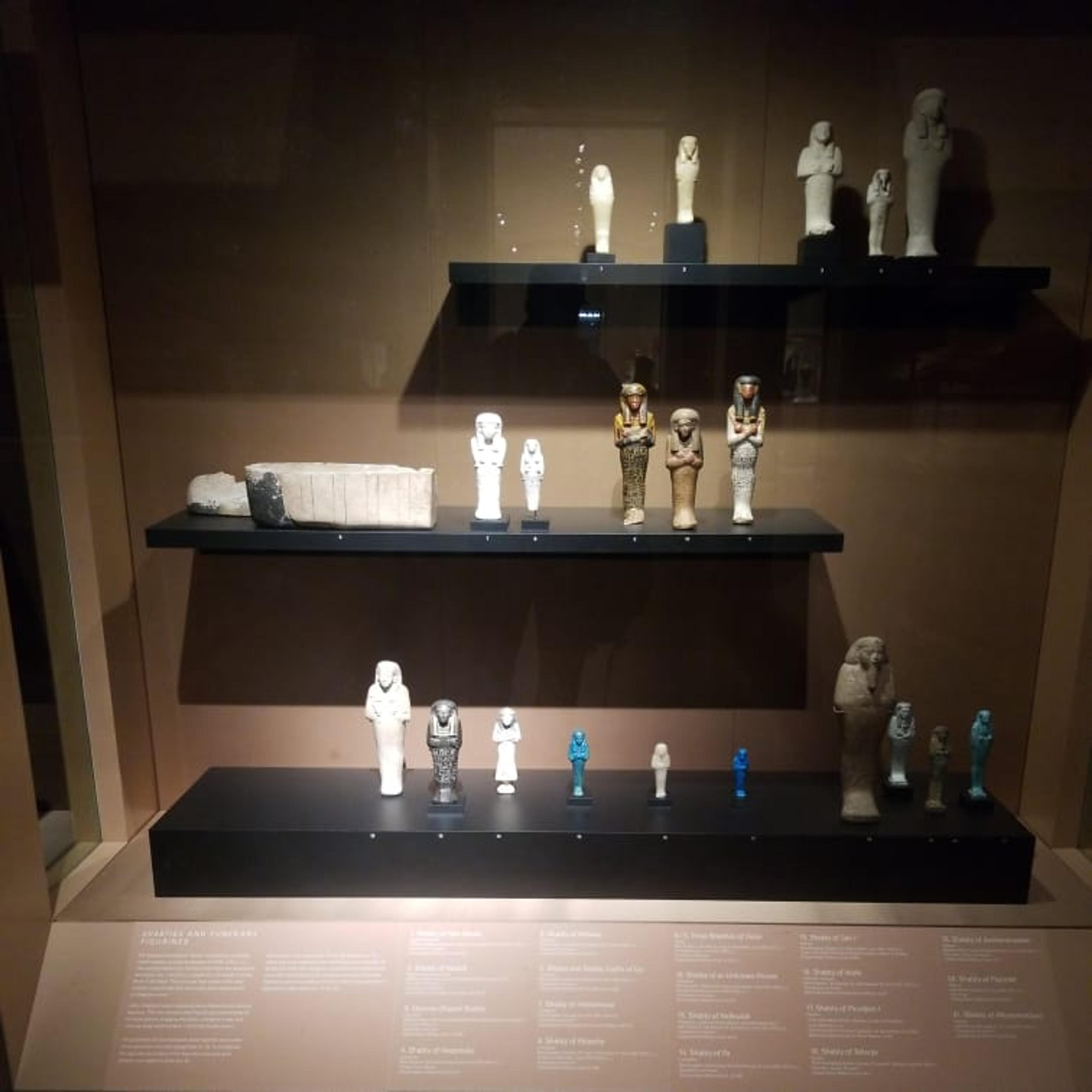 These figurines were inscribed to the person they were buried with and were thought to come to life in order to help with chores, especially agricultural tasks.They came in a wide range of qualities, from customized and individualized (the most expensive) to mold made and mass produced.
Have information?
Have information about an artwork? Contact us at