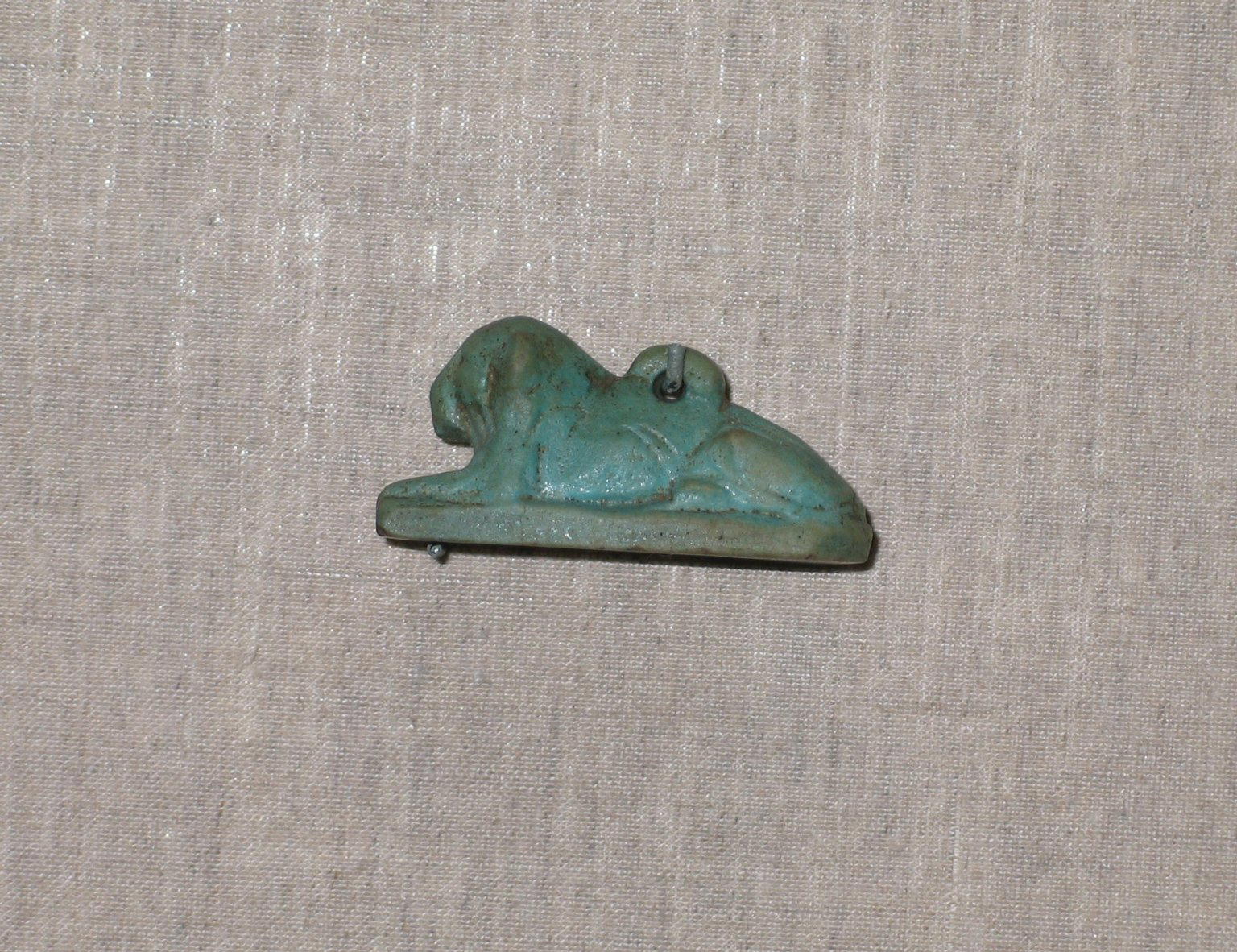
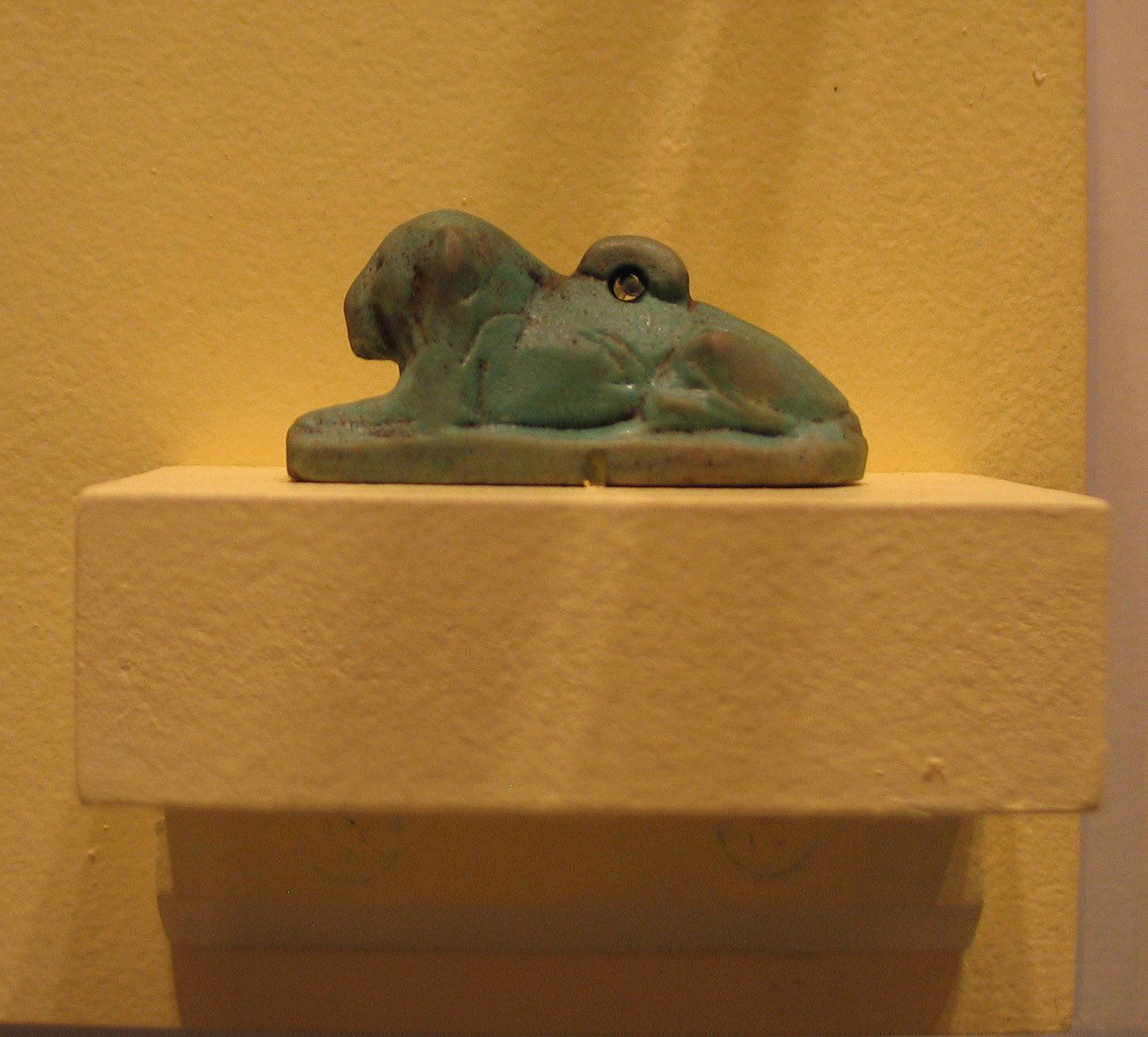
Tefnut as a Lioness
1 of 2
Object Label
The Egyptians represented the relationship between sky and earth by showing the body of Nut rising in a majestic arc over the figure of the dark, fecund earth god, Geb. To prevent them from further sexual union after the birth of Osiris, Isis, Seth, and Nephthys, they were separated eternally by Shu, the god of air.
Shu represented the eternal patterns of change the ancient Egyptians associated with cyclical time (neheh). His sister, the leonine goddess Tefnut, was related to the eternal sameness of linear time (djet).
Tefnut, shown here as a lioness, had many different aspects. Among her most significant was the "Eye of Re" an aspect of the sun that could be either beneficial or damaging.
Caption
Tefnut as a Lioness, ca. 664–332 B.C.E.. Faience, 13/16 x 5/8 x 1 9/16 in. (2 x 1.6 x 3.9 cm). Brooklyn Museum, Charles Edwin Wilbour Fund, 05.364. (Photo: Brooklyn Museum)
Gallery
Not on view
Gallery
Not on view
Have information?
Have information about an artwork? Contact us at