Outer Coffin of Pasebakhaienipet






1 of 32
Object Label
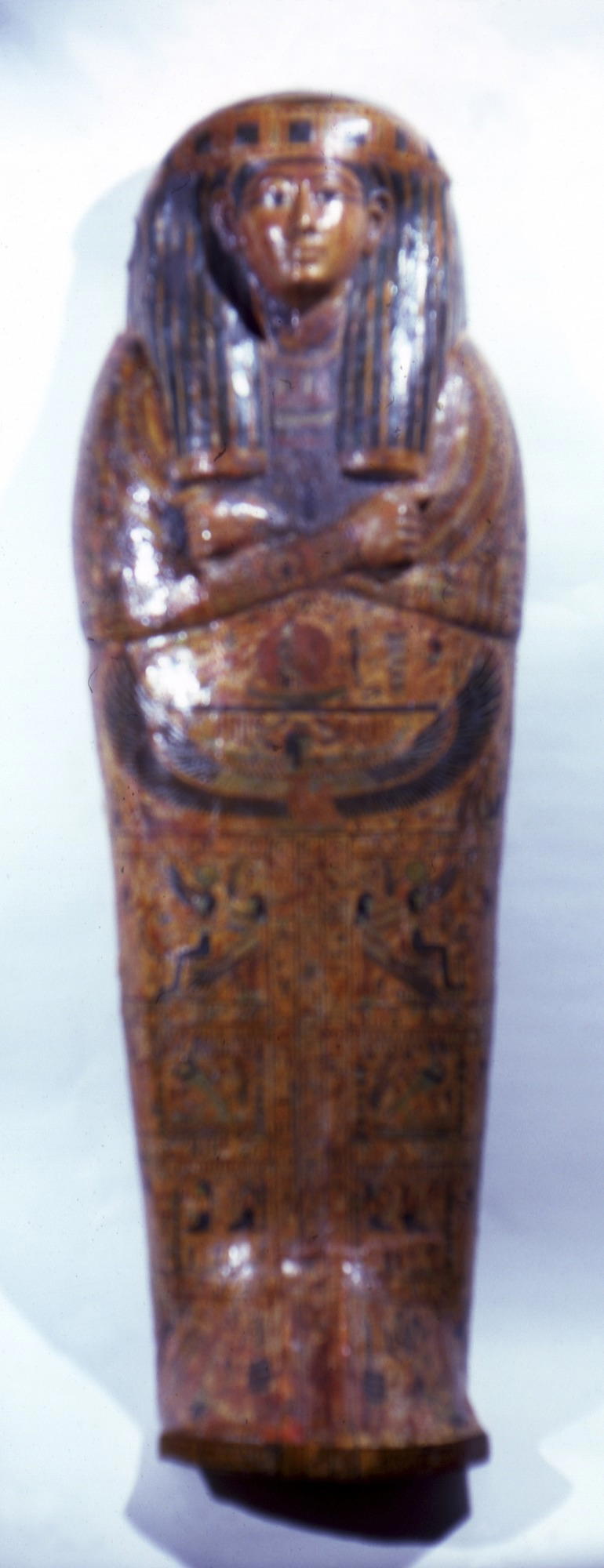
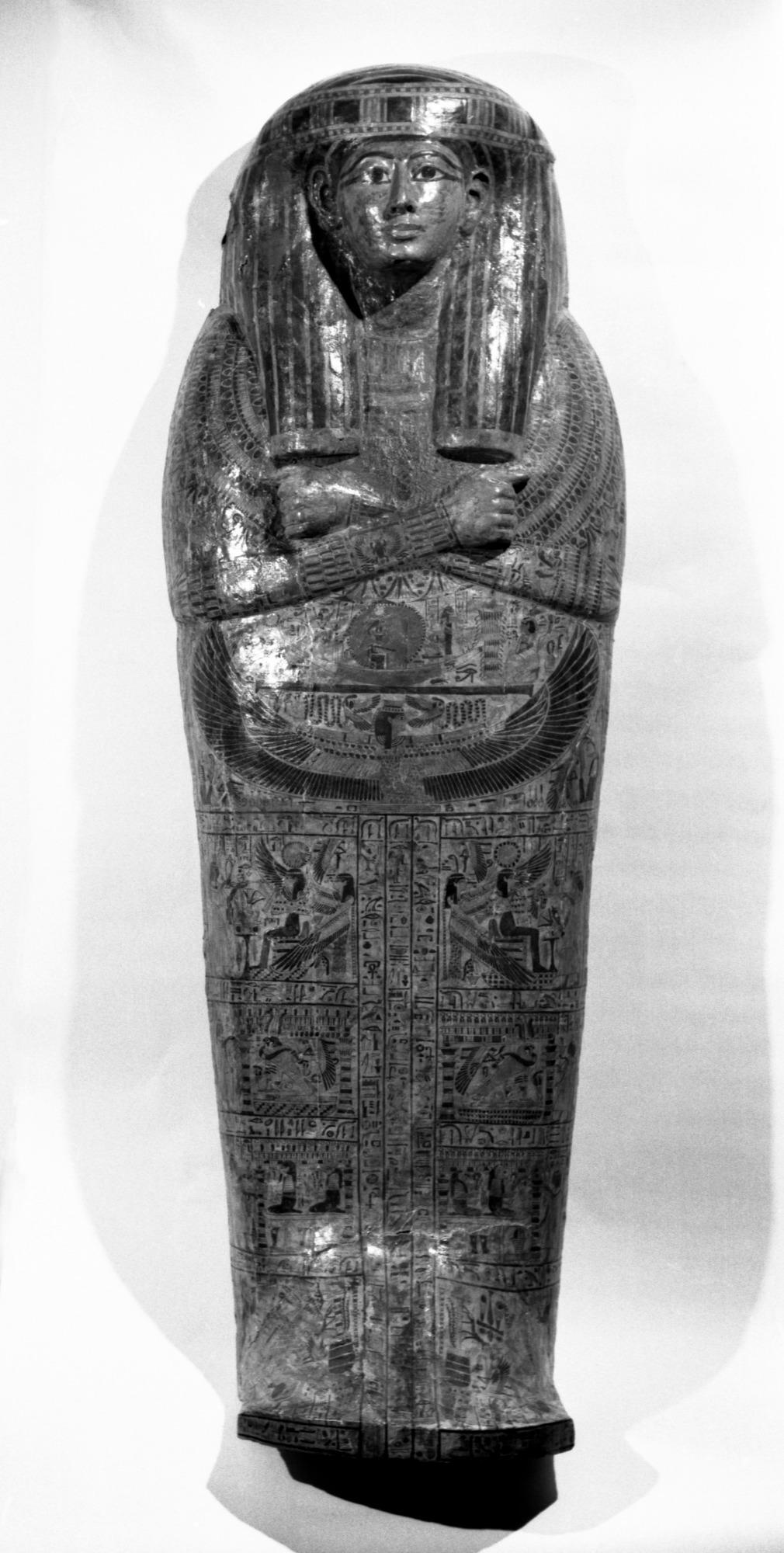
The damage to the painted surface on the left side of the coffin has been left unrepaired to reveal how the carpenters pinned smaller pieces of wood together with wooden pegs to make a coffin. Artists then plastered and painted the surface to make it appear smooth.
Caption
Outer Coffin of Pasebakhaienipet, ca. 1075–945 B.C.E.. Wood (cedar and acacia), gesso, pigment, 37 x 30 1/4 x 83 3/8 in., 287 lb. (94 x 76.8 x 211.8 cm, 130.2kg) Lid: 117.5 lb. (53.3kg) Base: 169.5 lb. (76.9kg) mount (Support and display board, NMK loan): 39 × 93 × 38 in. (99.1 × 236.2 × 96.5 cm). Brooklyn Museum, Charles Edwin Wilbour Fund, 08.480.1a-b. (Photo: Brooklyn Museum)
Title
Outer Coffin of Pasebakhaienipet
Date
ca. 1075–945 B.C.E.
Dynasty
Dynasty 21
Period
Third Intermediate Period
Geography
Place collected: Thebes, Egypt
Medium
Wood (cedar and acacia), gesso, pigment
Classification
Dimensions
37 x 30 1/4 x 83 3/8 in., 287 lb. (94 x 76.8 x 211.8 cm, 130.2kg) Lid: 117.5 lb. (53.3kg) Base: 169.5 lb. (76.9kg) mount (Support and display board, NMK loan): 39 × 93 × 38 in. (99.1 × 236.2 × 96.5 cm)
Credit Line
Charles Edwin Wilbour Fund
Accession Number
08.480.1a-b
Have information?
Have information about an artwork? Contact us at