Beaded Necklace


1 of 5
Object Label
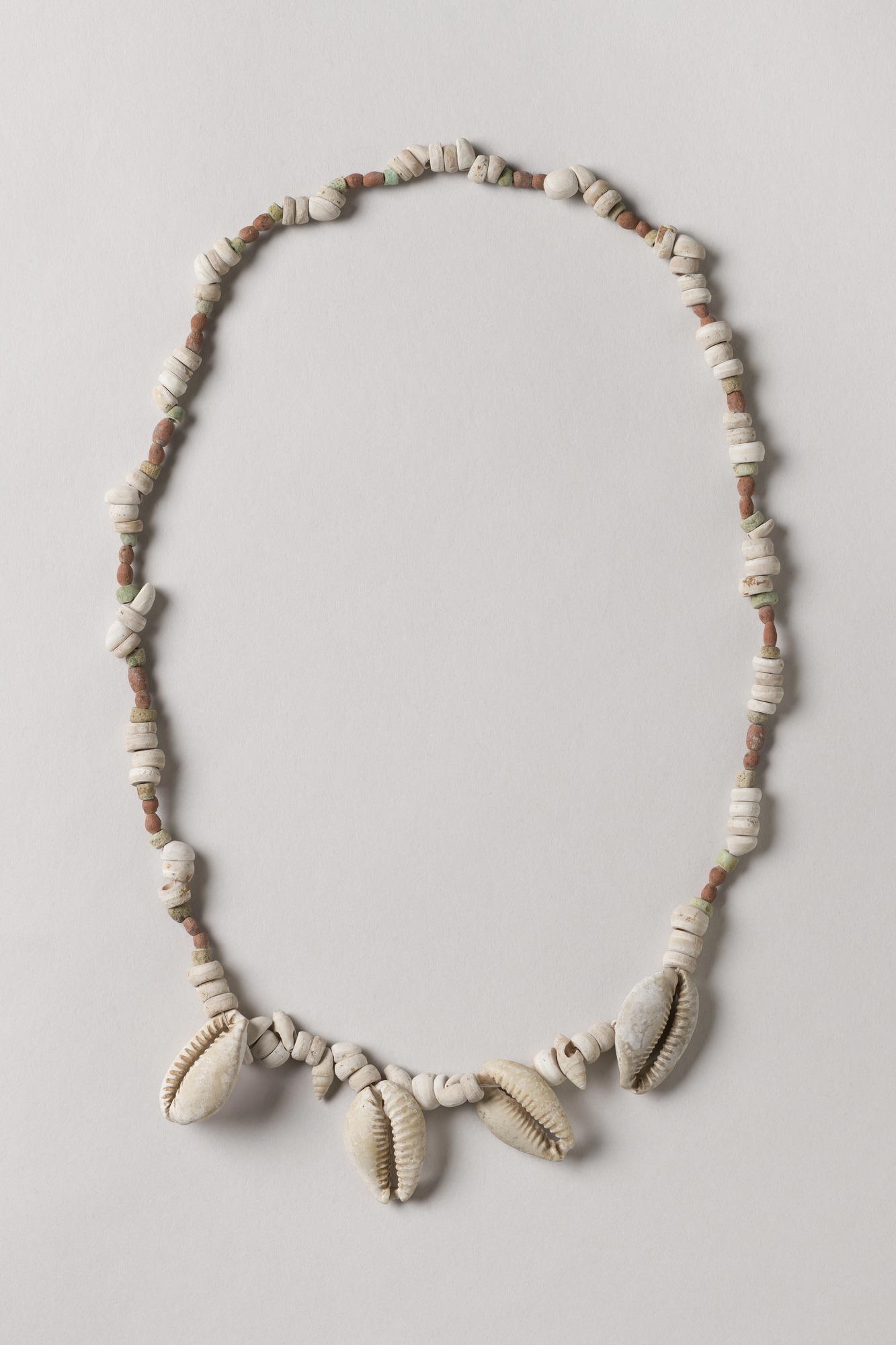
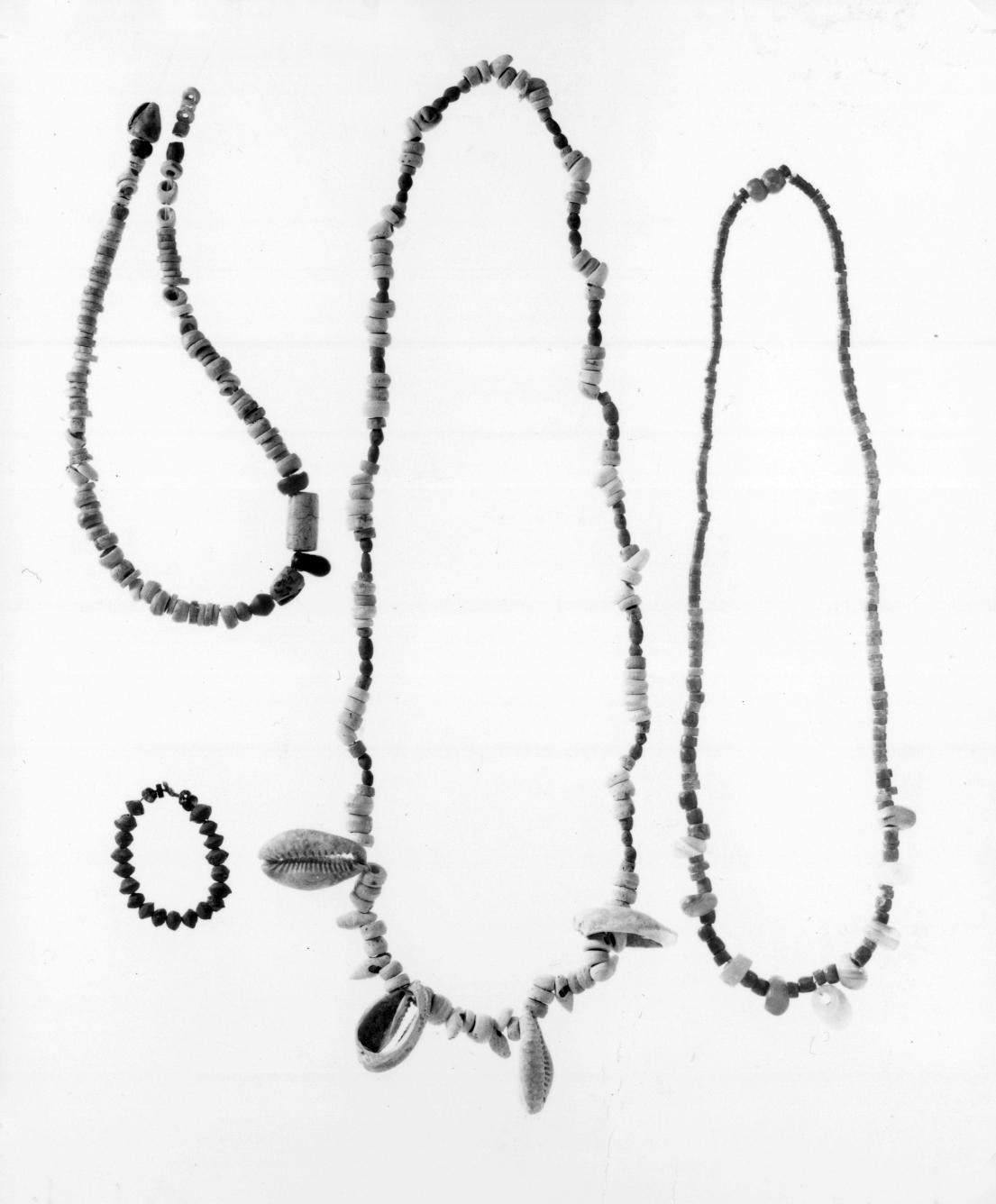
The three necklaces in this case were discovered in graves. Ancient Egyptians apparently wore jewelry not only as adornments but also as protective symbols. Beads of different materials may have been chosen for the symbolic qualities of their colors. The amulet represents the head of a powerful bull—or possibly a nurturing cow—and was probably thought to transfer that animal’s characteristics to its wearer.
Caption
Beaded Necklace, ca. 3300–3100 B.C.E.. Shell, faience, clay, largest: 1 1/8 in. (2.9 cm) average: 1/4 in. (0.7 cm). Brooklyn Museum, Charles Edwin Wilbour Fund, 09.889.302. (Photo: Brooklyn Museum)
Gallery
Not on view
Gallery
Not on view
Title
Beaded Necklace
Date
ca. 3300–3100 B.C.E.
Period
Predynastic Period, Naqada III Period
Geography
Place collected: Abu Zaidan, Egypt, Possible place collected: Abu Zaidan, Egypt
Medium
Shell, faience, clay
Classification
Dimensions
largest: 1 1/8 in. (2.9 cm) average: 1/4 in. (0.7 cm)
Credit Line
Charles Edwin Wilbour Fund
Accession Number
09.889.302
Have information?
Have information about an artwork? Contact us at