Private Statuette
ca. 1352–1336 B.C.E.


1 of 8
Caption
Private Statuette, ca. 1352–1336 B.C.E.. Limestone, pigment, 3 1/2 x 1 1/16 x 2 1/4 in. (8.9 x 2.7 x 5.7 cm). Brooklyn Museum, Gift of the Egypt Exploration Society, 29.1310. (Photo: Brooklyn Museum)
Title
Private Statuette
Date
ca. 1352–1336 B.C.E.
Dynasty
late Dynasty 18
Period
New Kingdom, Amarna Period
Geography
Place excavated: Tell el-Amarna, Egypt
Medium
Limestone, pigment
Classification
Dimensions
3 1/2 x 1 1/16 x 2 1/4 in. (8.9 x 2.7 x 5.7 cm)
Credit Line
Gift of the Egypt Exploration Society
Accession Number
29.1310
Frequent Art Questions
Why did the Egyptians make these statues?
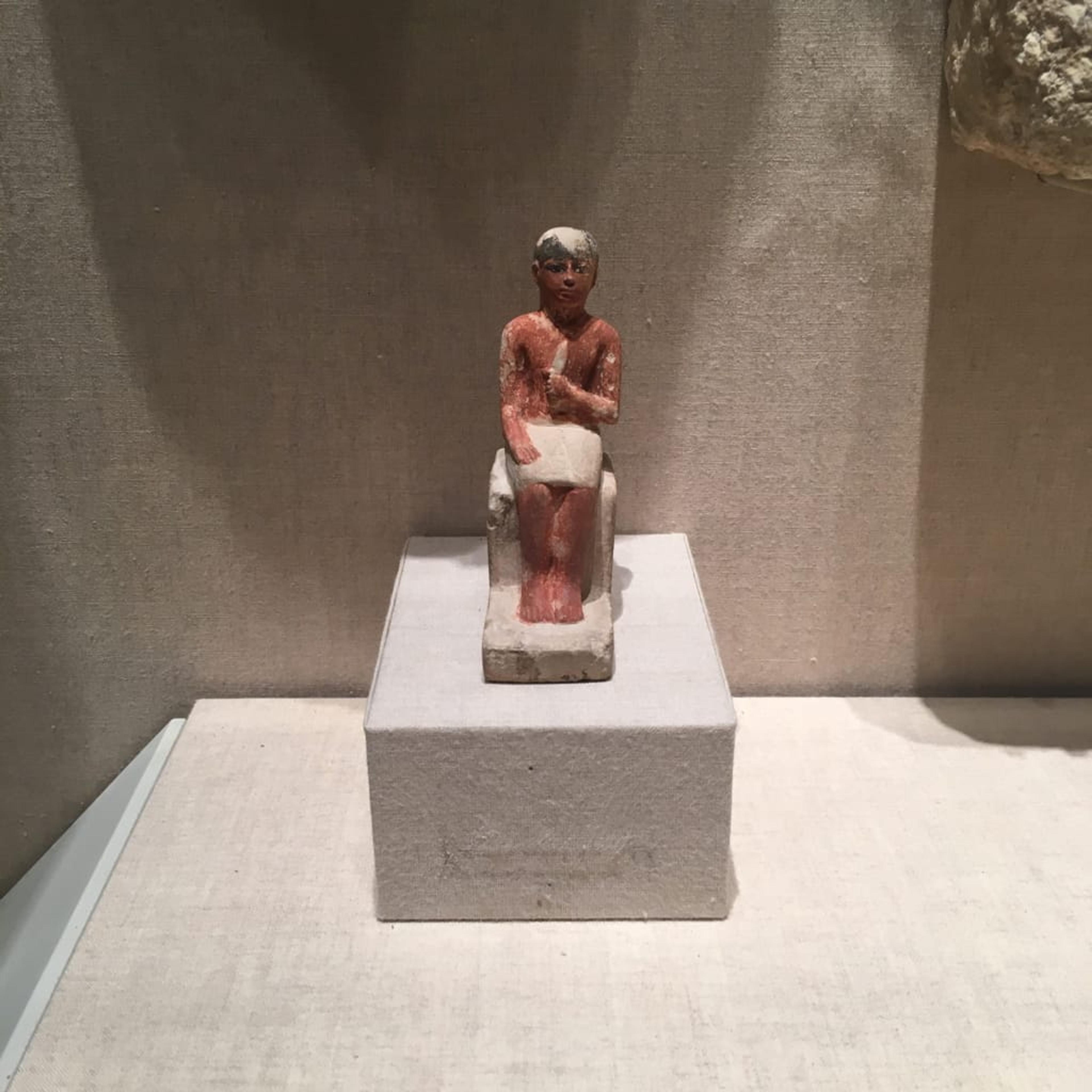 Something of this scale likely served as a model; a stand-in for an actual man holding a lotus. In the afterlife, the soul of a deceased person could inhabit a statue of themselves.Most of these statues aren't portrait sculpture in a modern sense. For ancient Egyptians, writing a person's name on the sculpture was the necessary element to make tie a statue to a person.ThanksYou're welcome! You can tell when a sculpture is of a man, because his skin is often painted a dark red. Women were generally depicted with pale yellow or white skin.
What does private statue mean?
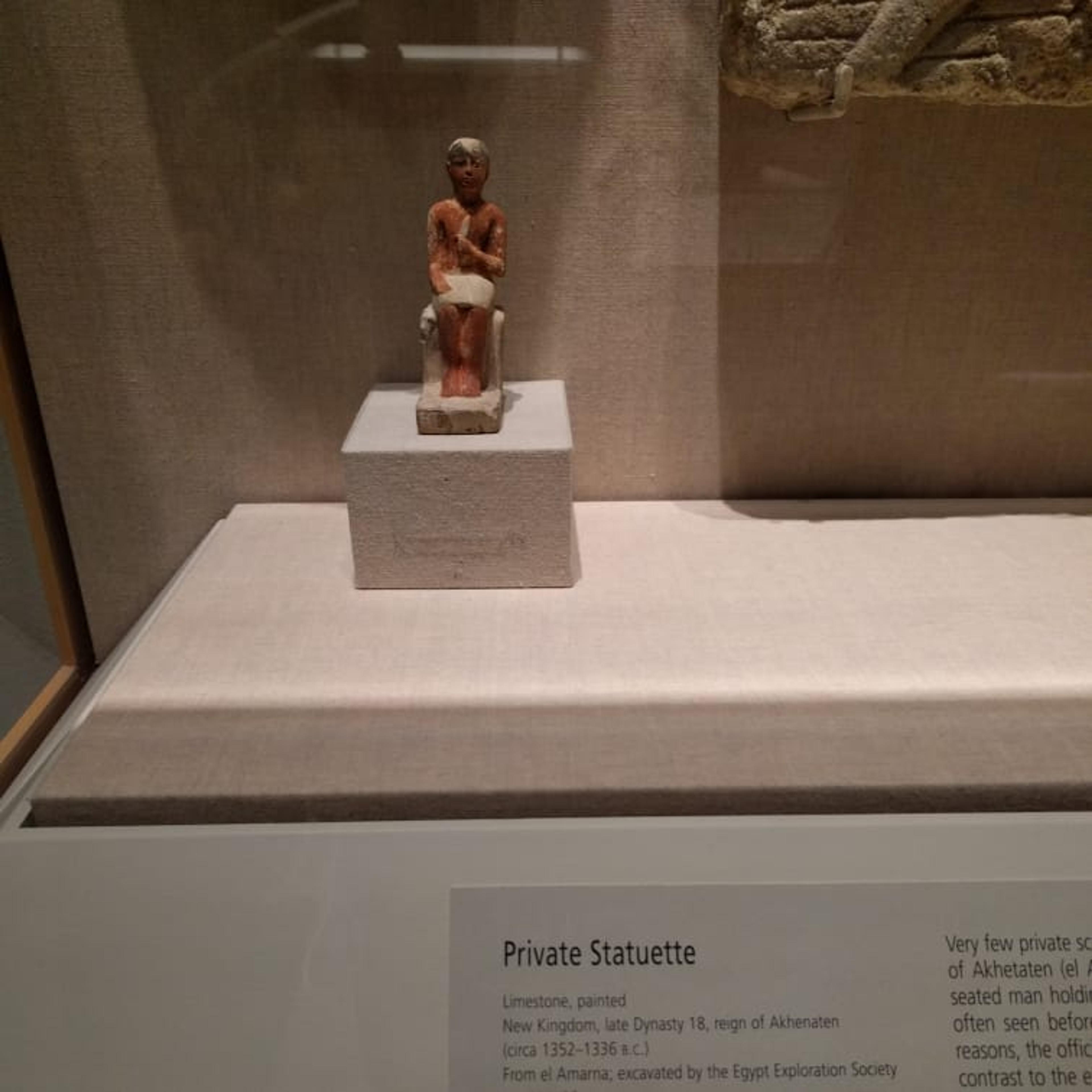 When Egyptologists use the word "private" it means that the object belongs to a private individual and a private individual is anyone other than the king and his immediate family.So, this "Private Statuette," is quite simply a statuette that depicts and belonged to someone outside of the royal family.
Why have very few private sculptures survived?
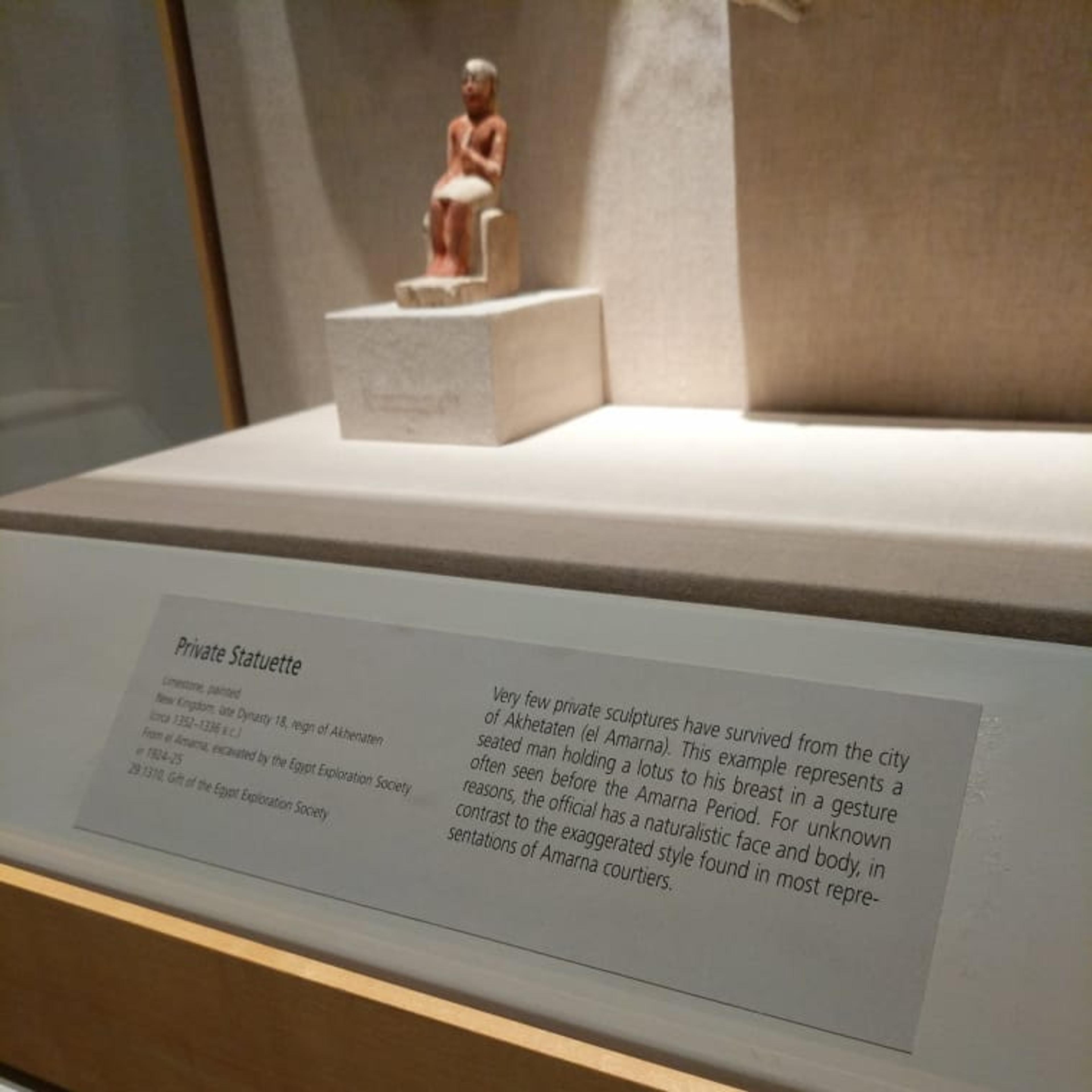 I know that at Akhetaten (the ancient name of Amarna), there was a real emphasis on art dedicated to the royal family.Perhaps not as many sculptures of private (meaning non-royal) individuals were made or maybe many of them were taken away when the city was abandoned only a few decades after it was built.
Have information?
Have information about an artwork? Contact us at