Soldiers Honoring Their Lord
1 of 3
Object Label
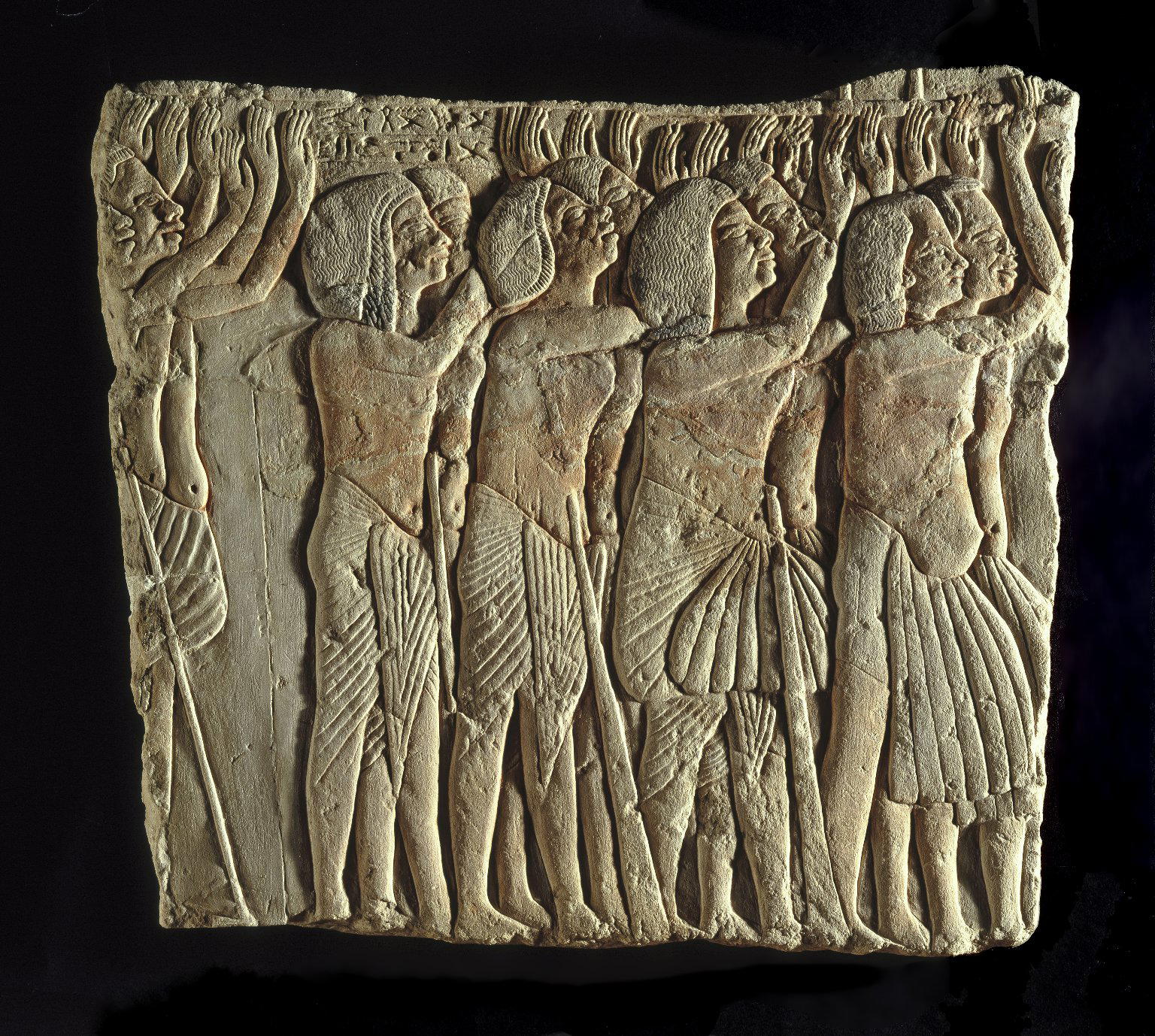
The kings of the Eighteenth Dynasty extended Egyptian military influence from the Euphrates River in modern Iraq to sub-Saharan Africa. Their army consisted of highly trained professional soldiers led by an able officer corps drawn from the ranks of the Egyptian nobility.
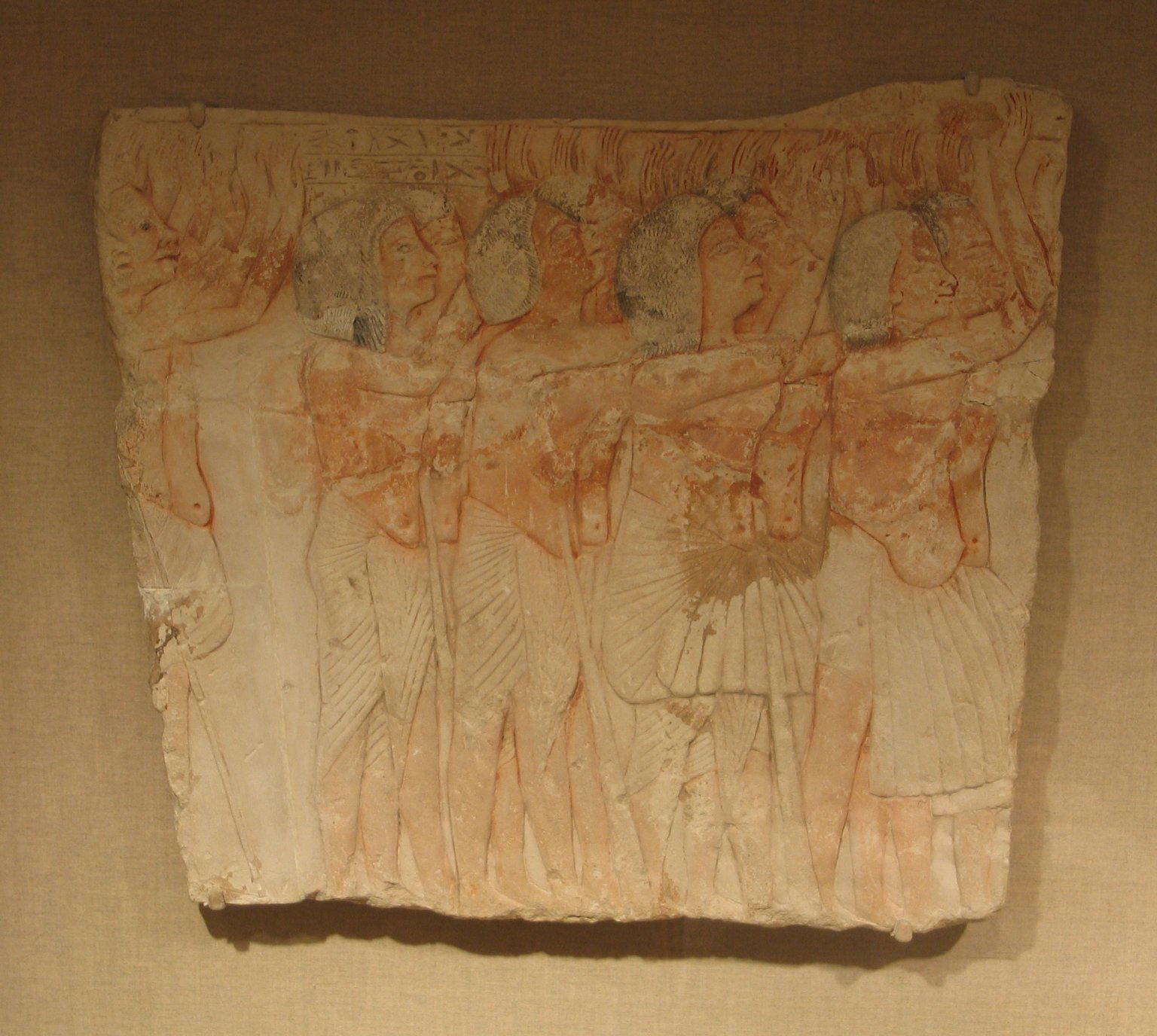
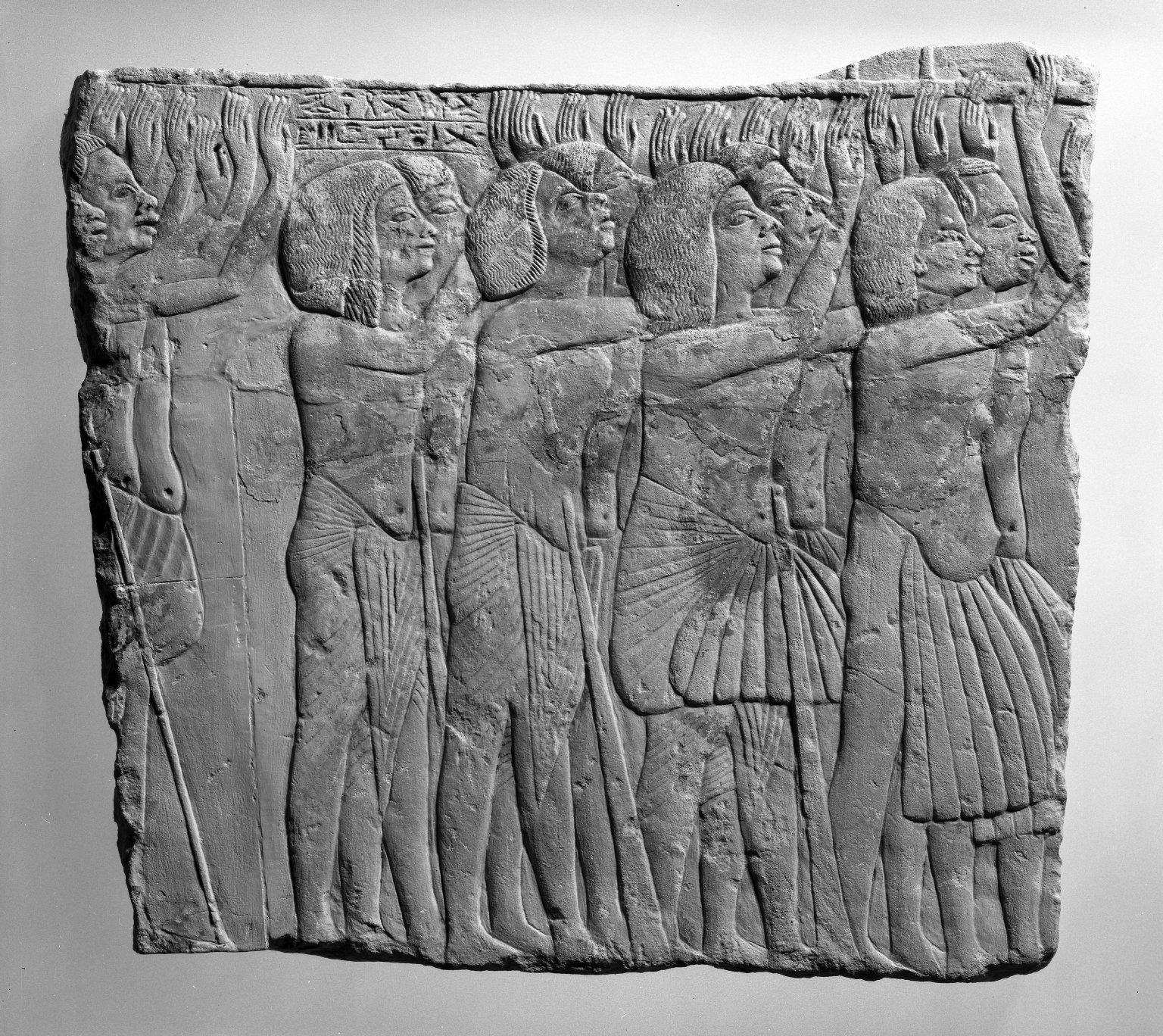
This relief shows a group of such soldiers resting their staves on the ground and raising their arms in a gesture of veneration toward either the ruling monarch or their general. Note the wide range of ethnic types—no doubt an accurate reflection of the composition of the Egyptian military during the New Kingdom.
Caption
Soldiers Honoring Their Lord, ca. 1336–1327 B.C.E.. Limestone, pigment, 16 7/16 x 14 7/16 in. (41.8 x 36.6 cm). Brooklyn Museum, Charles Edwin Wilbour Fund, 32.103. (Photo: Brooklyn Museum)
Title
Soldiers Honoring Their Lord
Date
ca. 1336–1327 B.C.E.
Dynasty
late Dynasty 18
Period
New Kingdom, Amarna Period
Geography
Possible place collected: Memphis, Egypt, Possible place collected: Saqqara, Egypt
Medium
Limestone, pigment
Classification
Dimensions
16 7/16 x 14 7/16 in. (41.8 x 36.6 cm)
Credit Line
Charles Edwin Wilbour Fund
Accession Number
32.103
Frequent Art Questions
Is this the Soldiers Honoring their Lord? Can you please tell me more about this piece? The story of the relief? Can you tell me some visual characteristic that I should pay attention to?
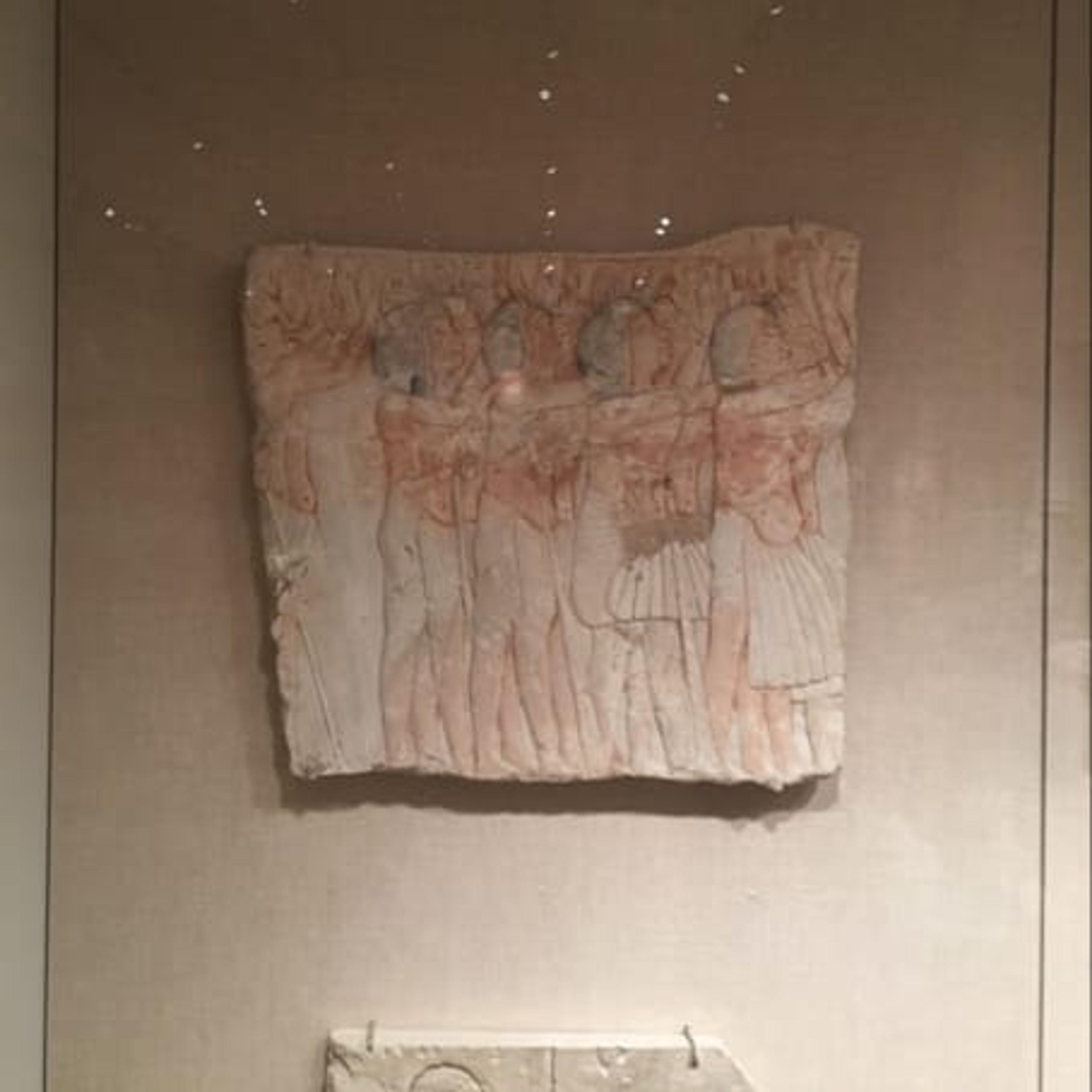 Yes it is! You may have read in the label that these soldiers have rested their weapons on the ground and are raising their arms in veneration of their general or king. You may also notice that multiple ethnicities are represented here. You can tell the difference between people by their hair styles and facial features. The Ancient Egyptian army was made up of men from all over the area they controlled which, during the New Kingdom, included land from Sub-Saharan Africa to Mesopotamia.The body shapes seen here are also visually interesting. Ancient Egyptian depictions of the human form are usually pretty regimented, but here you can see bodies of different shapes and sizes. The rounded-out style was common during the reign of Akhenaten when this relief was produced. You can compare that to the art styles before and after his reign and you'll notice a difference.Okay I will.There's also a bust of Akhenaten in the center gallery that highlights the rounded style. It represents the king these soldiers may be honoring!
Have information?
Have information about an artwork? Contact us at