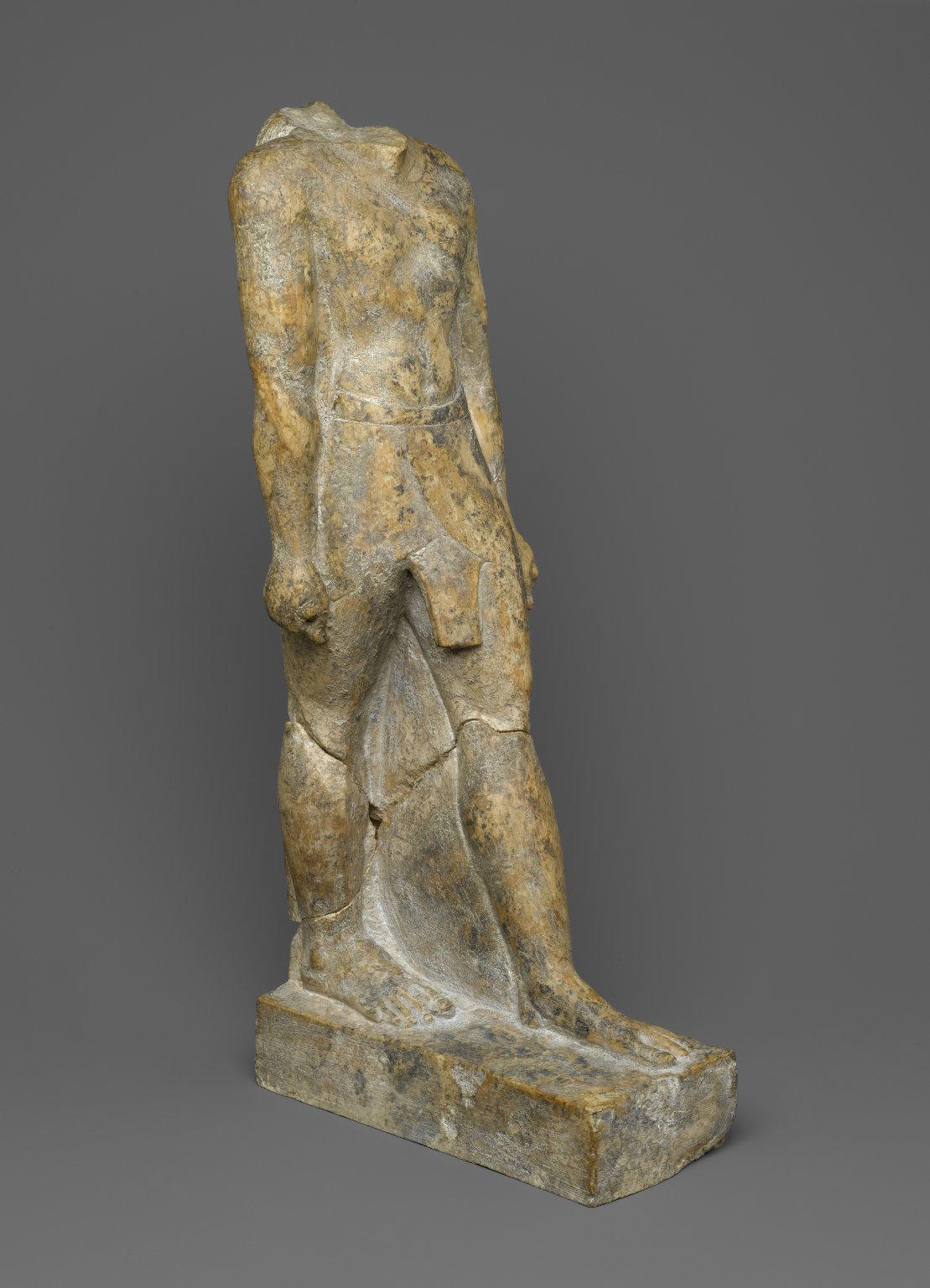
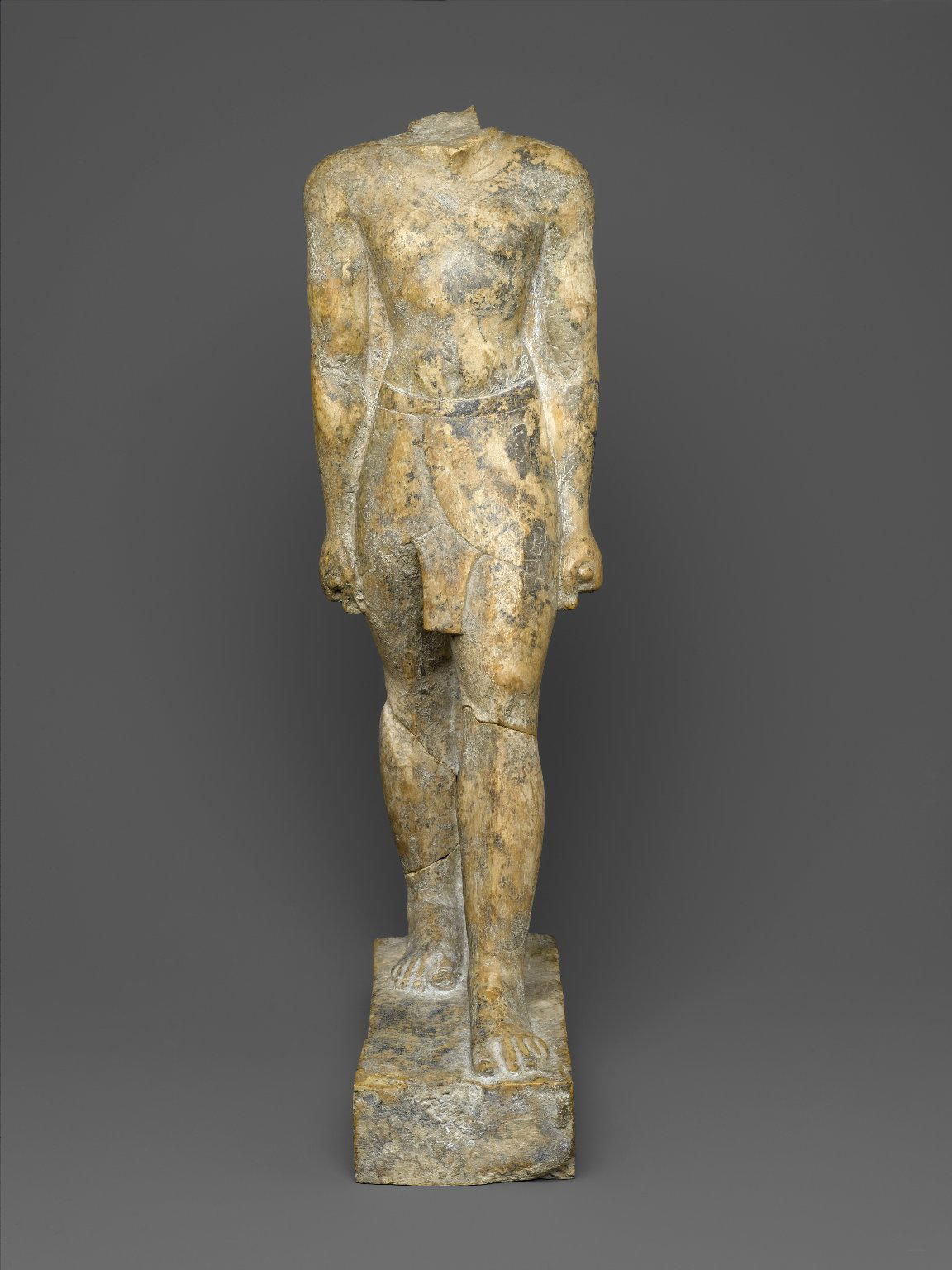
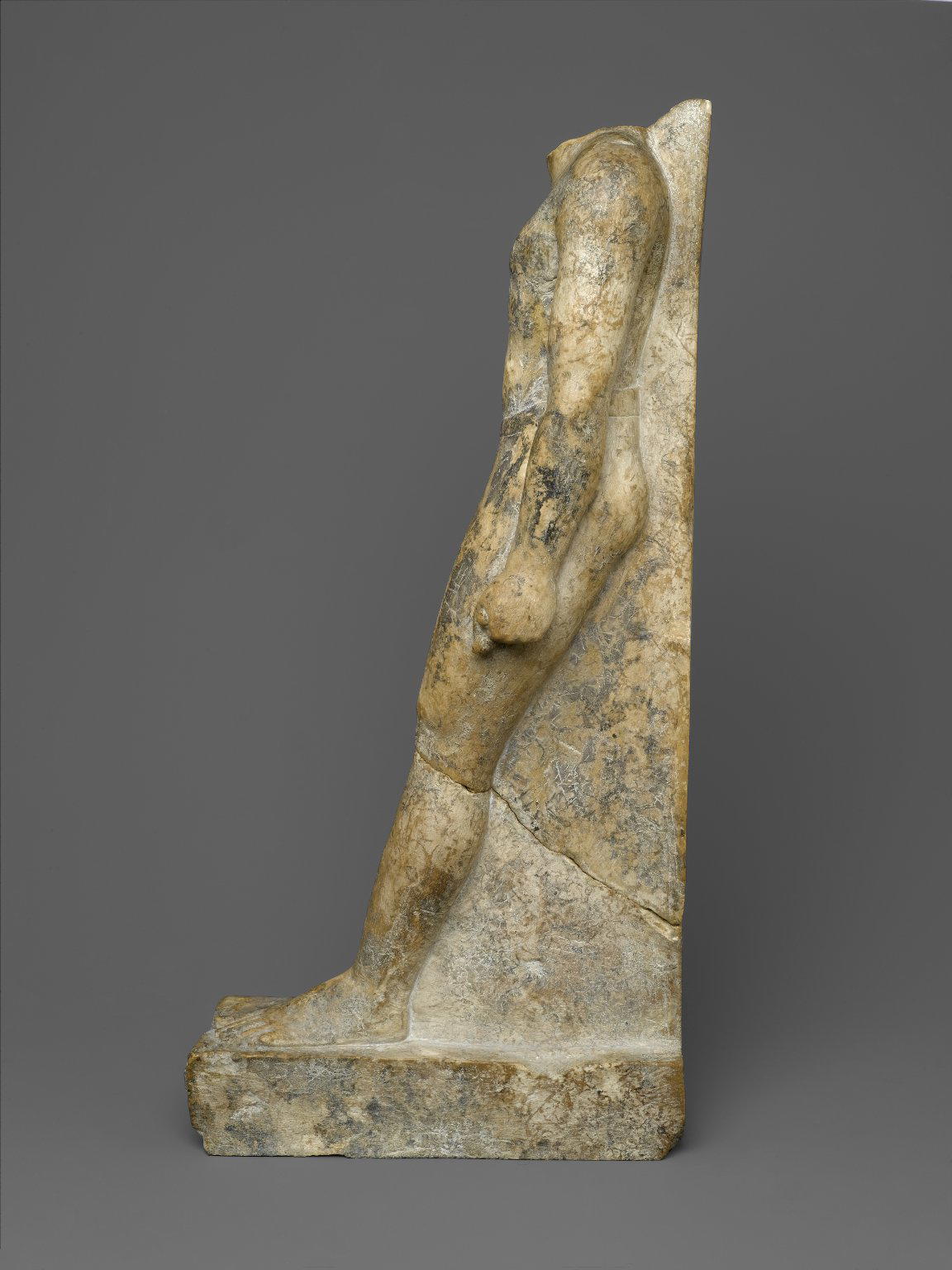
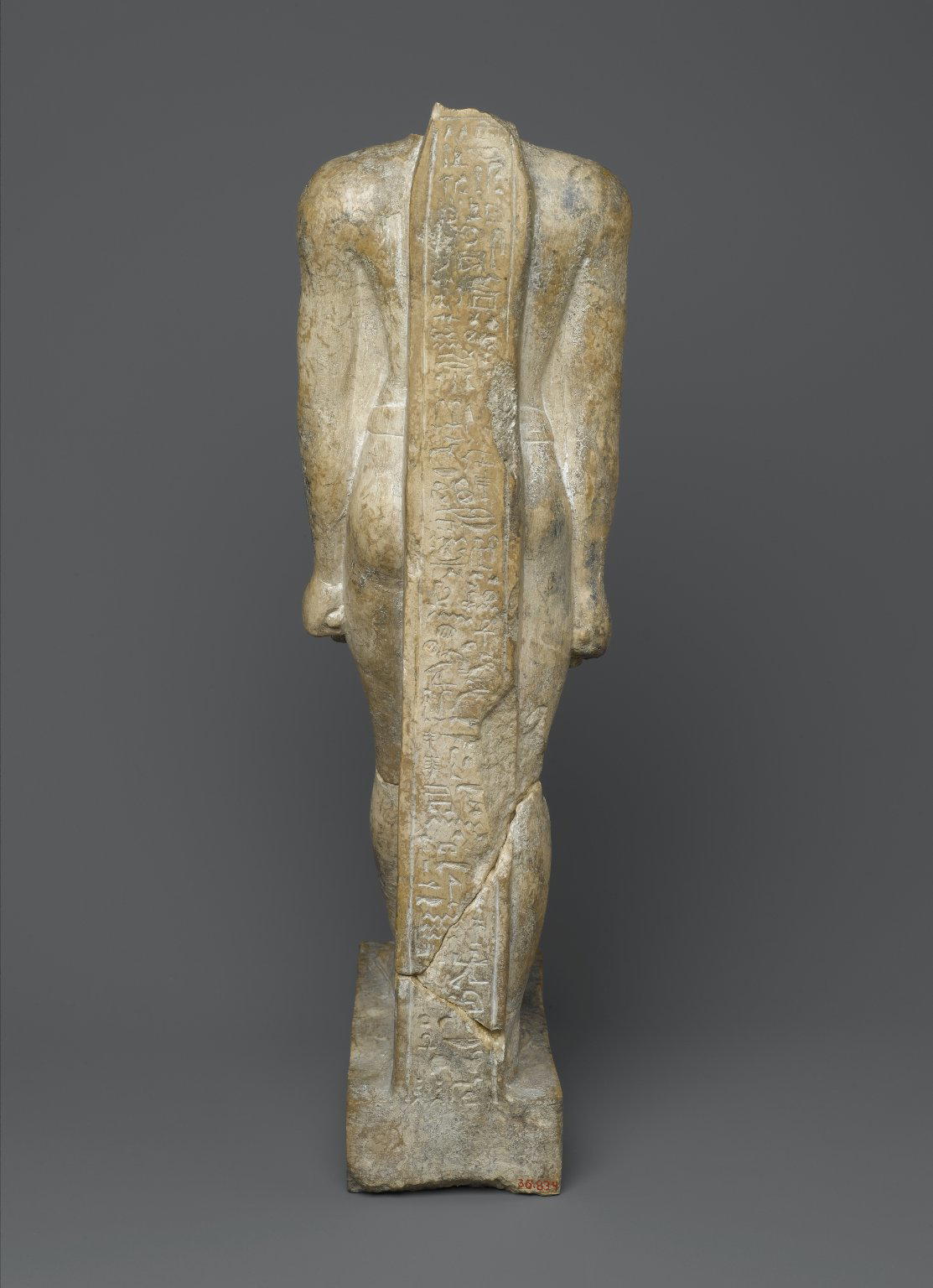
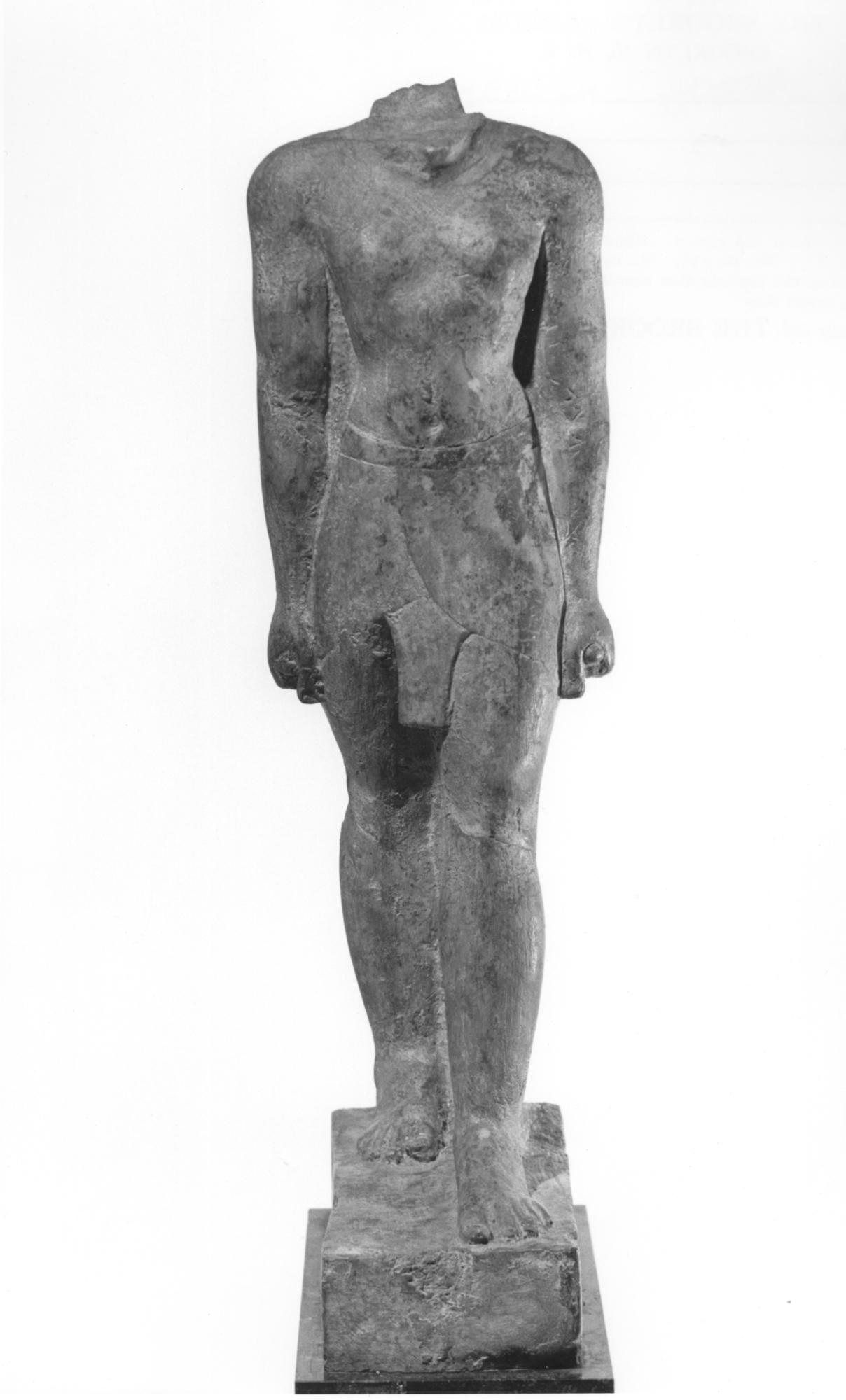
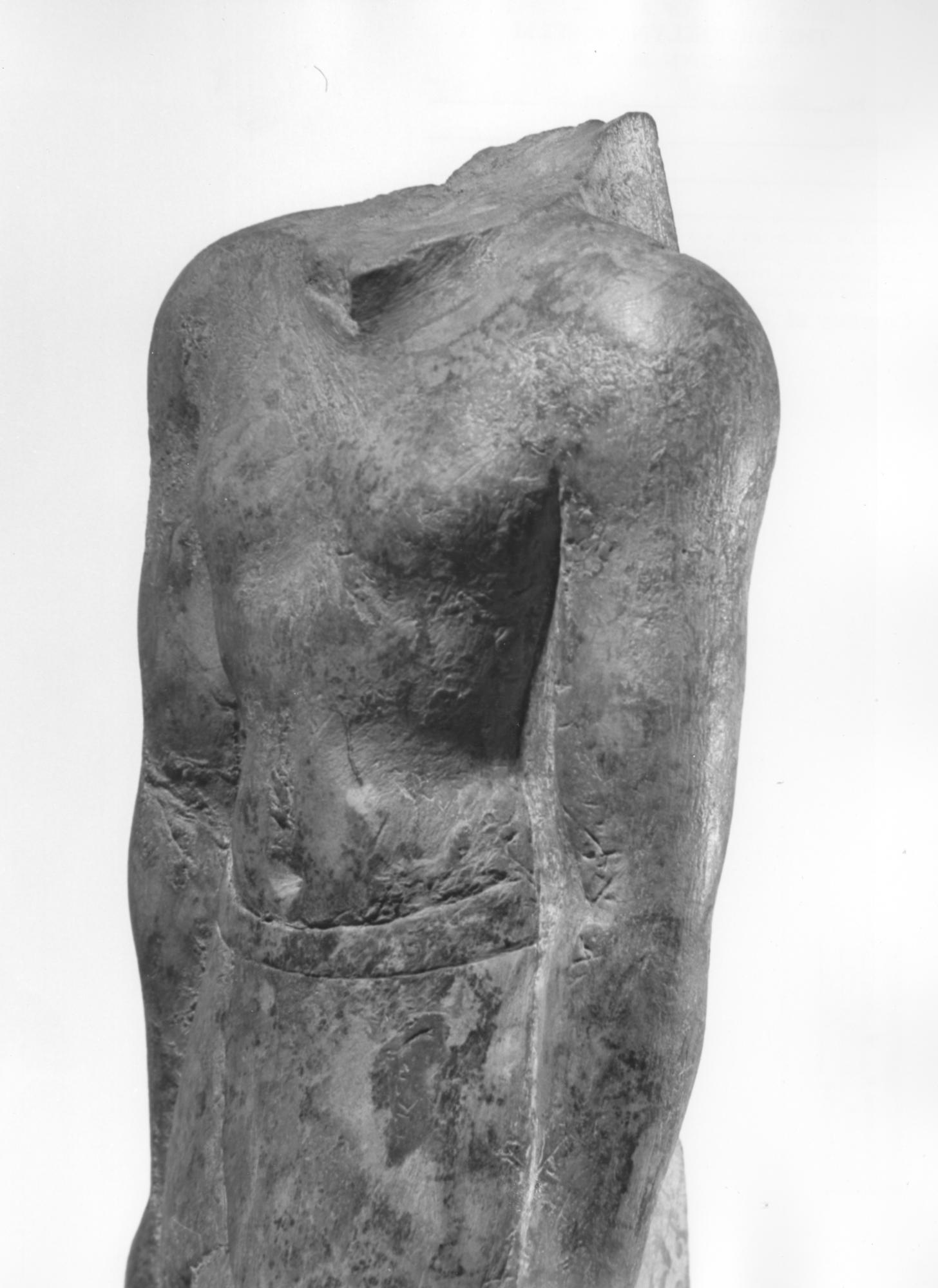
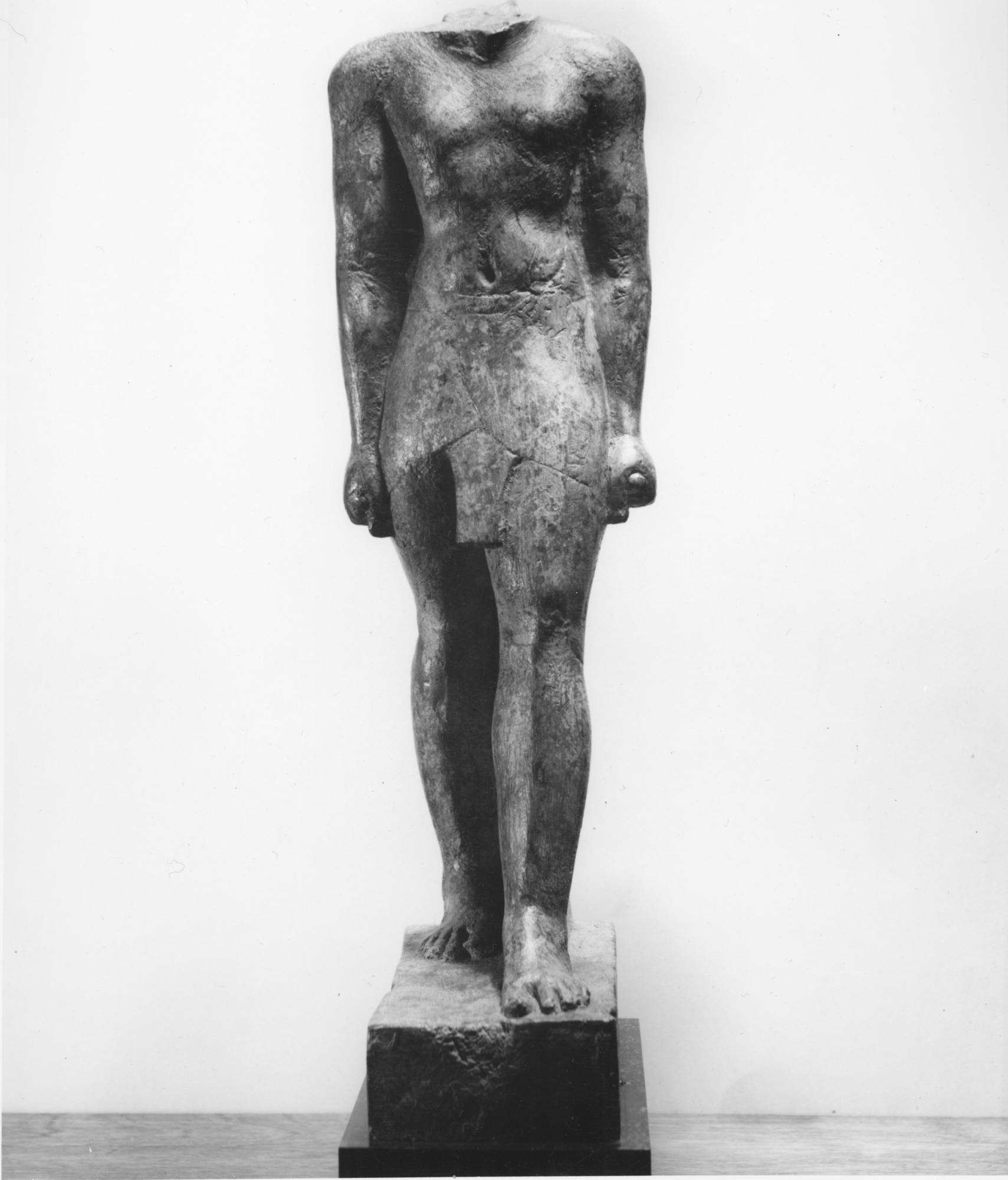
Statue of a Priest, Wen-amun Son of Nes-ba-neb-dedet and Ta-sherit-Khonsu
ca. 50 B.C.E.
1 of 15
Object Label
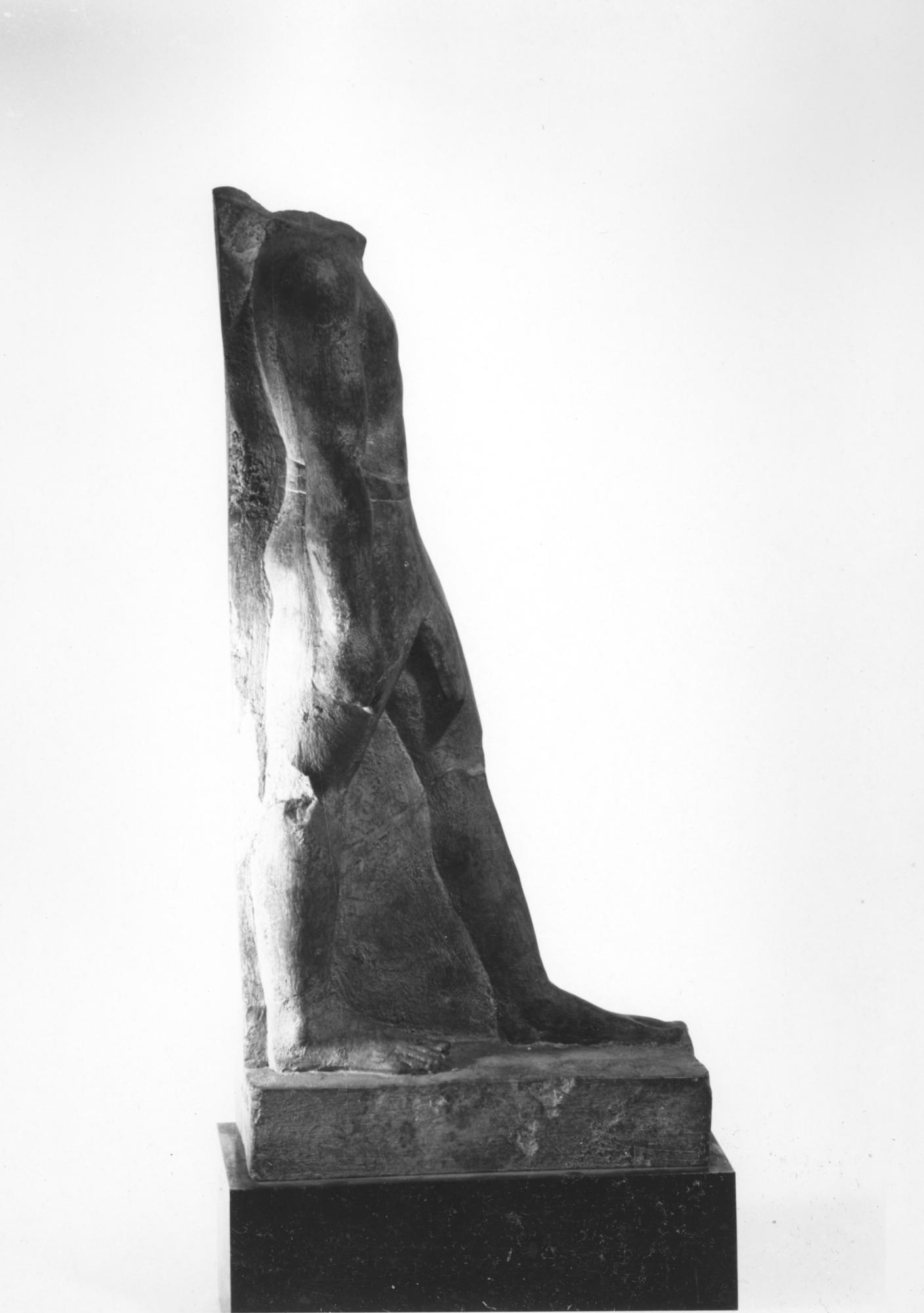
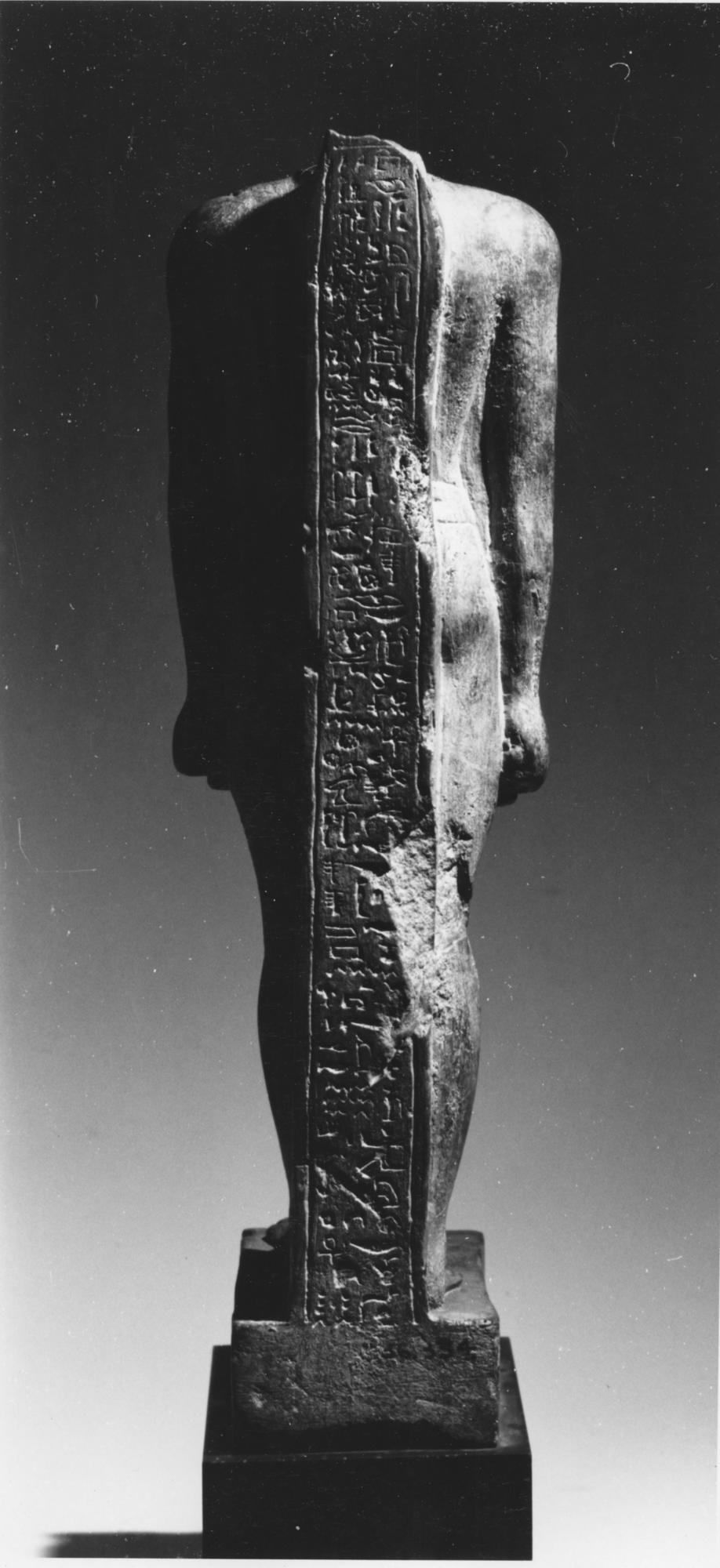
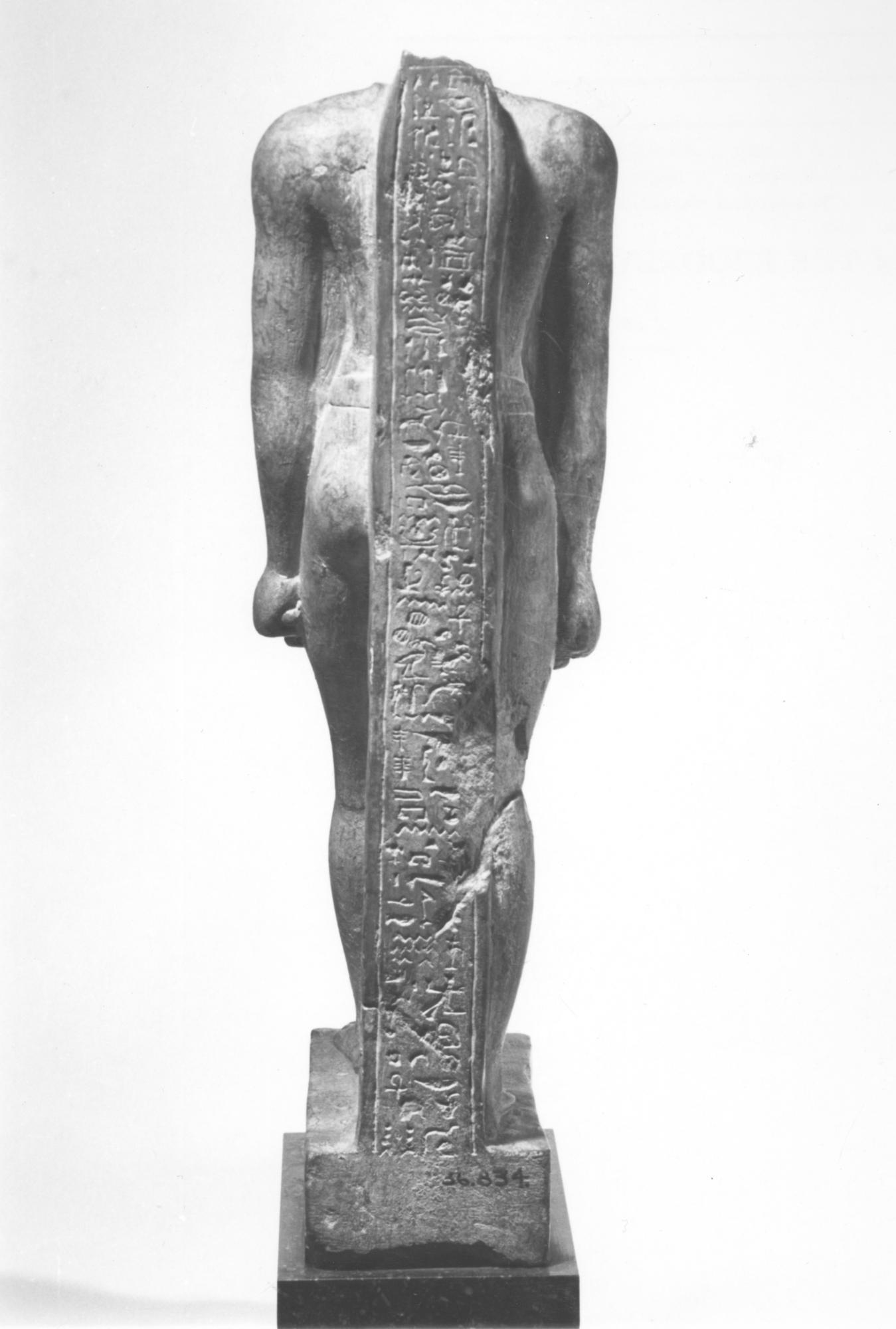
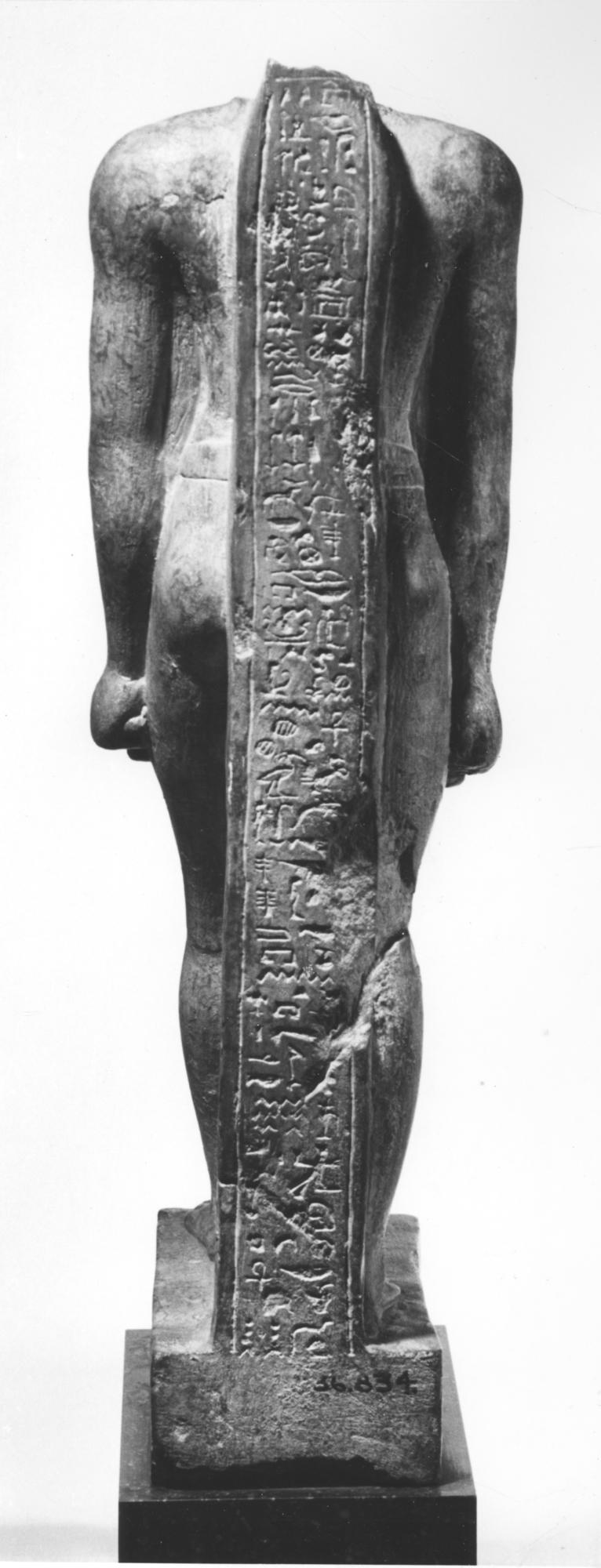
These three statues, from three different periods, were all carved from limestone. This kind of stone occurs in different grades from soft to hard. The harder the limestone, the more difficult to carve and the more skilled the sculptor must be. Soft limestone reveals less detail. Though nearly all ancient Egyptian statues were painted, the paint on the statuette hides the lower-grade stone used here.
All three statues would have been used in the tomb as a place for the ka-soul to reside and accept food offerings for the deceased from the living.
All three statues would have been used in the tomb as a place for the ka-soul to reside and accept food offerings for the deceased from the living.
Caption
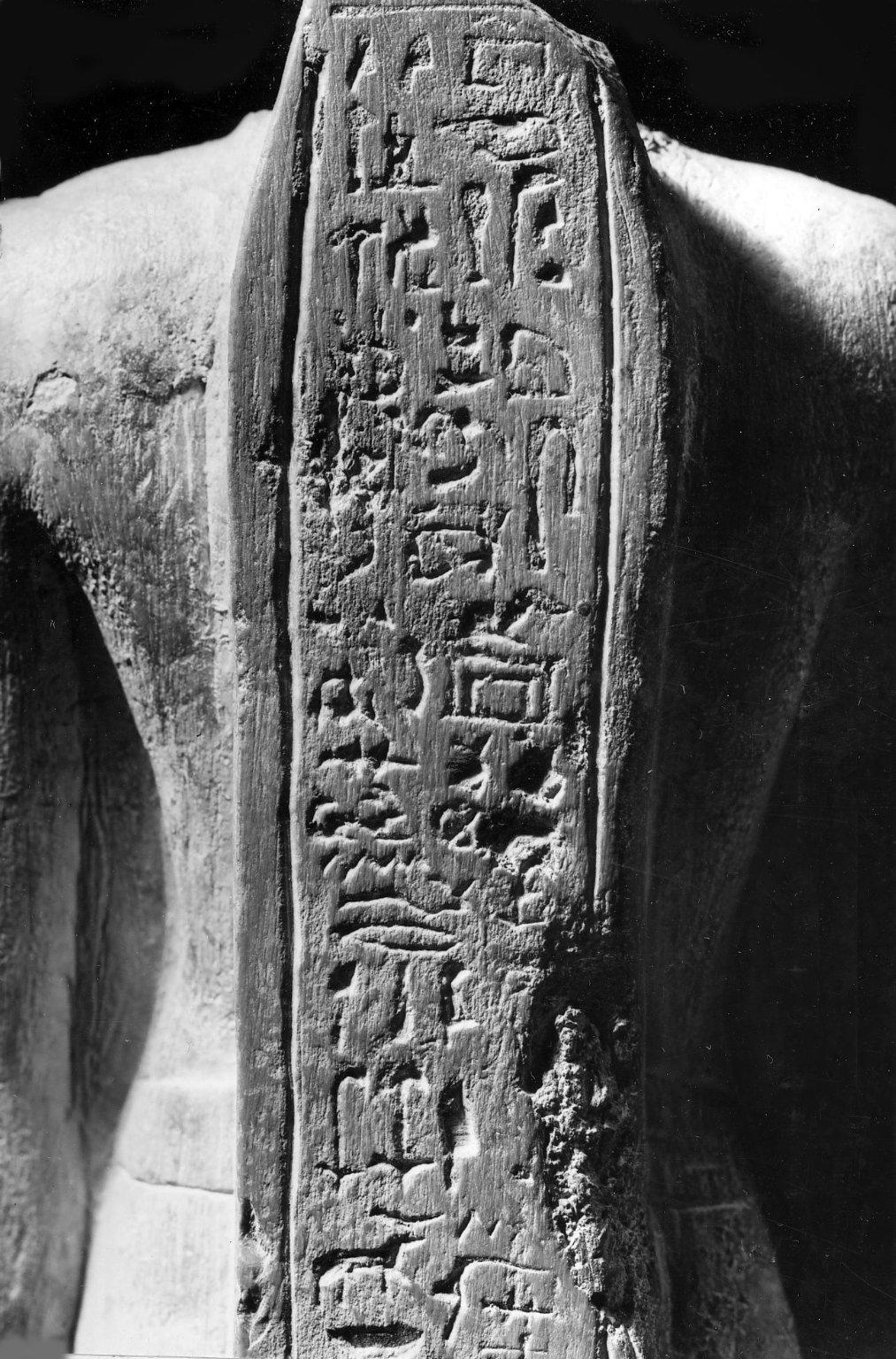
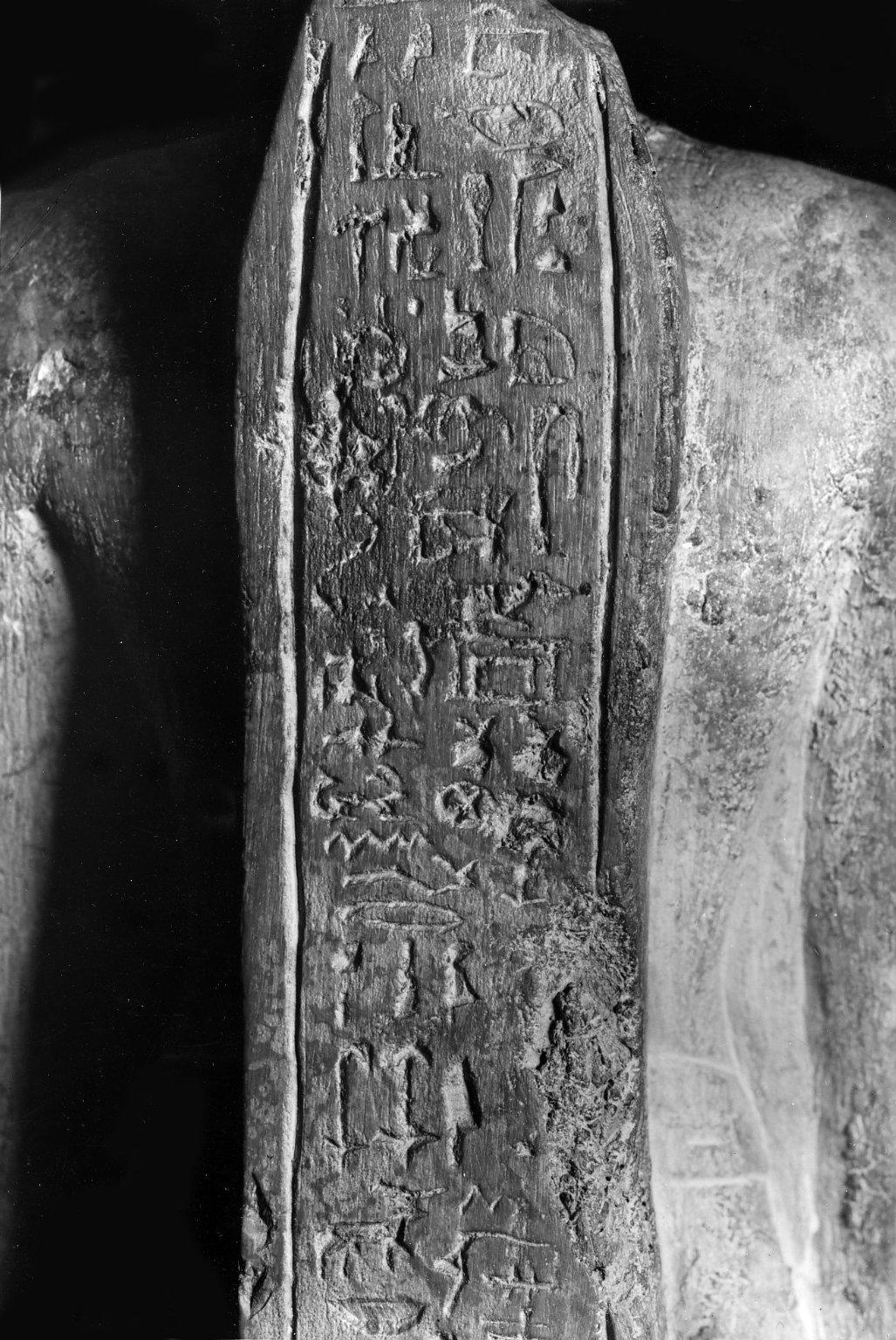
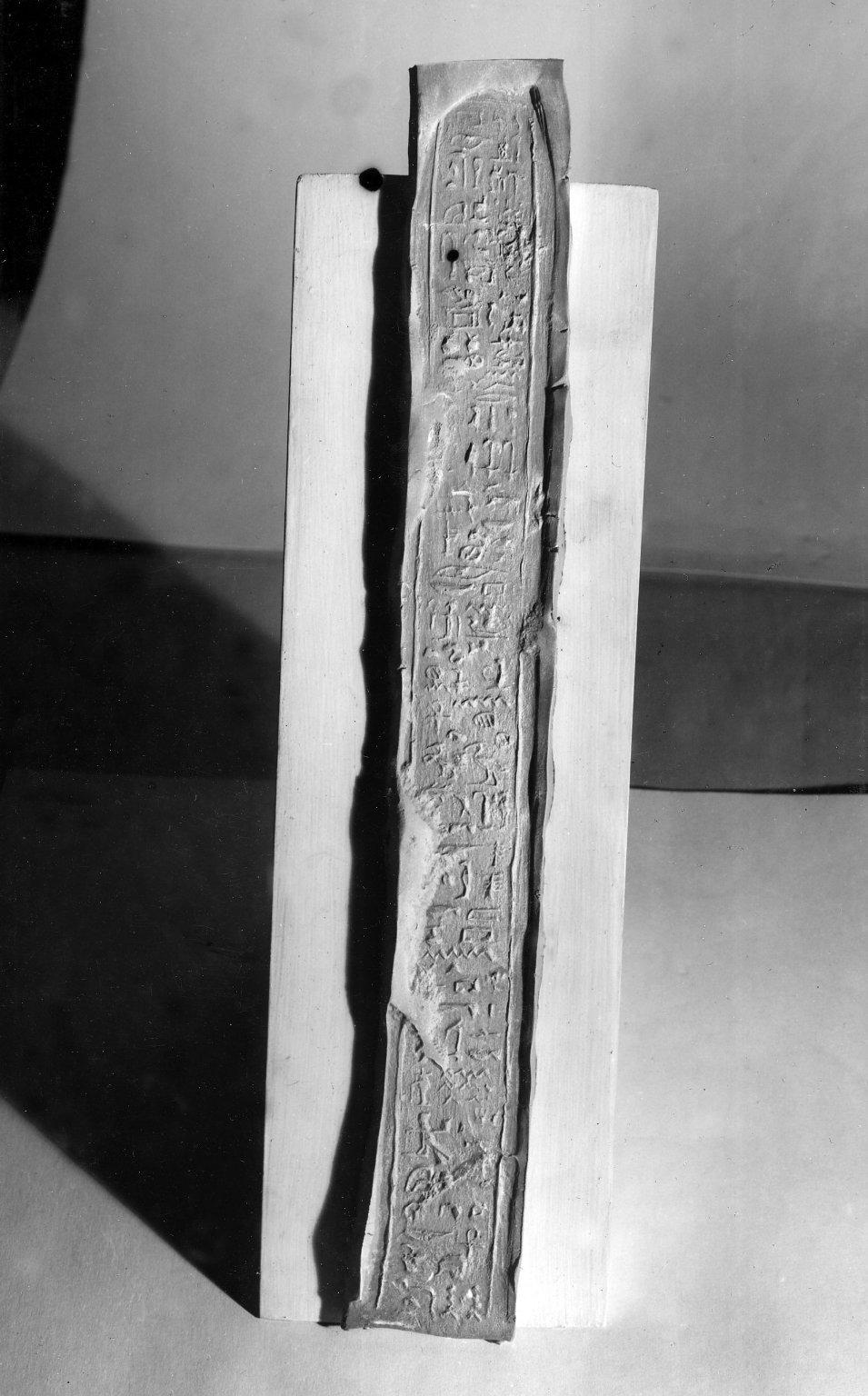
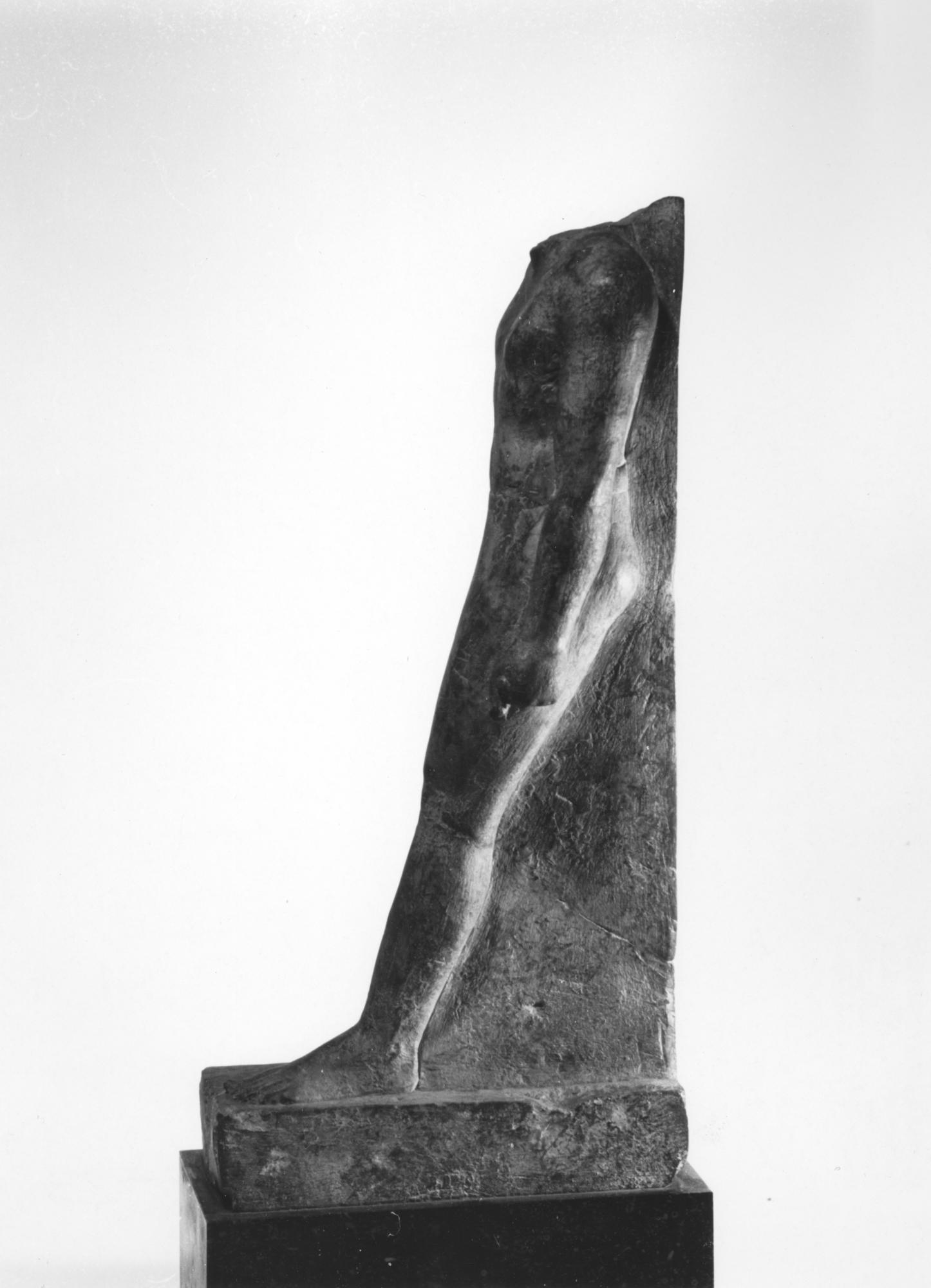
Statue of a Priest, Wen-amun Son of Nes-ba-neb-dedet and Ta-sherit-Khonsu, ca. 50 B.C.E.. Limestone, 15 1/2 × 4 13/16 × 7 5/16 in., 10 lb. (39.4 × 12.2 × 18.6 cm, 4.54kg). Brooklyn Museum, Charles Edwin Wilbour Fund, 36.834. (Photo: Brooklyn Museum)
Gallery
Not on view
Gallery
Not on view
Title
Statue of a Priest, Wen-amun Son of Nes-ba-neb-dedet and Ta-sherit-Khonsu
Date
ca. 50 B.C.E.
Period
Ptolemaic Period
Geography
Place made: Thebes, Egypt
Medium
Limestone
Classification
Dimensions
15 1/2 × 4 13/16 × 7 5/16 in., 10 lb. (39.4 × 12.2 × 18.6 cm, 4.54kg)
Credit Line
Charles Edwin Wilbour Fund
Accession Number
36.834
Have information?
Have information about an artwork? Contact us at