Overseer of the Treasury, Ptahhotep





1 of 24
Object Label
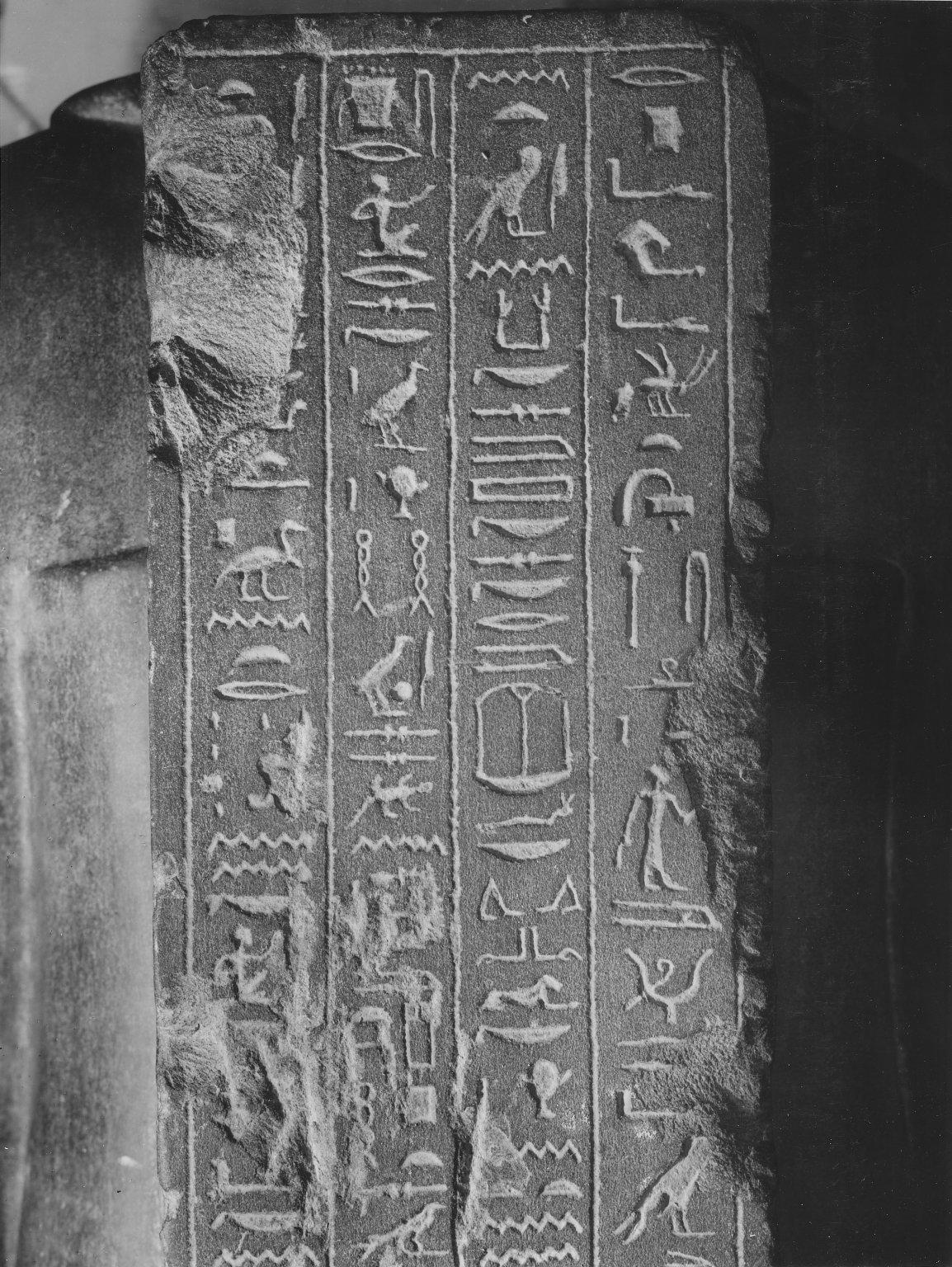
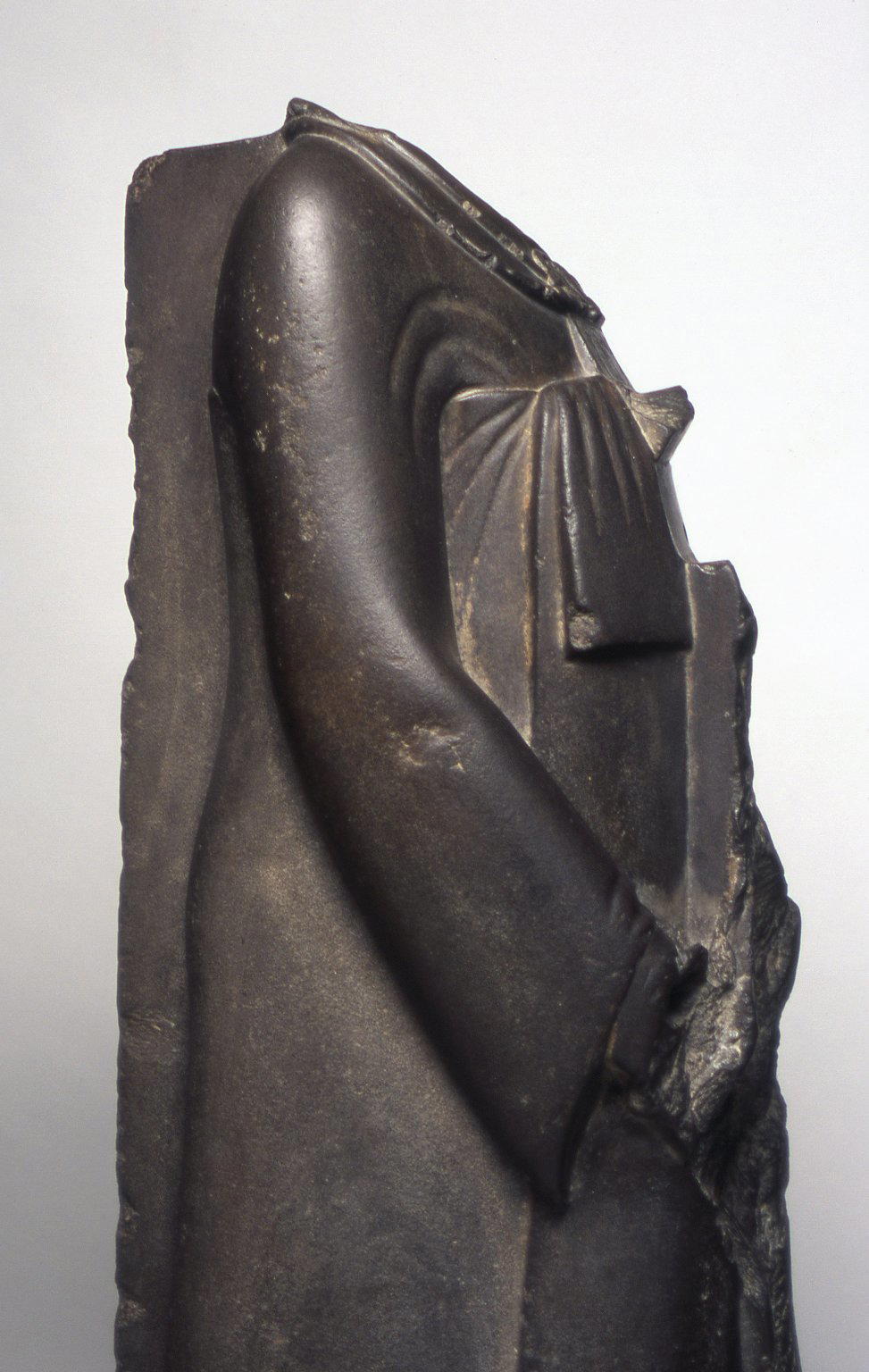
Ptahhotep is shown in a Persian costume that Egyptian officials adopted under the Persian rulers to imitate Persian court attire. The jacket with flaring sleeves, over which a skirt is wrapped, is complemented by a Persian bracelet and torque (a bar-like necklace) as well an Egyptian pectoral, or chest plaque. These accessories give Ptahhotep the overall appearance of an Egypto-Persian official, one whose dress speaks clearly of his loyalty to the Persian king. The rendering of the two ibexes that terminate the torque, however, is typically Egyptian, with the heads shown from the side. This treatment, together with the pectoral showing Ptah and the lion-headed goddess Sakhmet, underscores the essentially Egyptian nature of the statue.
Caption
Overseer of the Treasury, Ptahhotep, 521–486 B.C.E.. Quartzite, 35 × 12 × 13 in., 252 lb. (88.9 × 30.5 × 33 cm, 114.31kg) mount (dimensions as installed): 36 × 12 × 13 in. (91.4 × 30.5 × 33 cm). Brooklyn Museum, Charles Edwin Wilbour Fund, 37.353.
Title
Overseer of the Treasury, Ptahhotep
Date
521–486 B.C.E.
Dynasty
early Dynasty 27
Period
First Persian Period
Geography
Possible place made: Memphis, Egypt, Possible place collected: Cairo, Egypt
Medium
Quartzite
Classification
Dimensions
35 × 12 × 13 in., 252 lb. (88.9 × 30.5 × 33 cm, 114.31kg) mount (dimensions as installed): 36 × 12 × 13 in. (91.4 × 30.5 × 33 cm)
Credit Line
Charles Edwin Wilbour Fund
Accession Number
37.353
Frequent Art Questions
What happened to the rest of this?
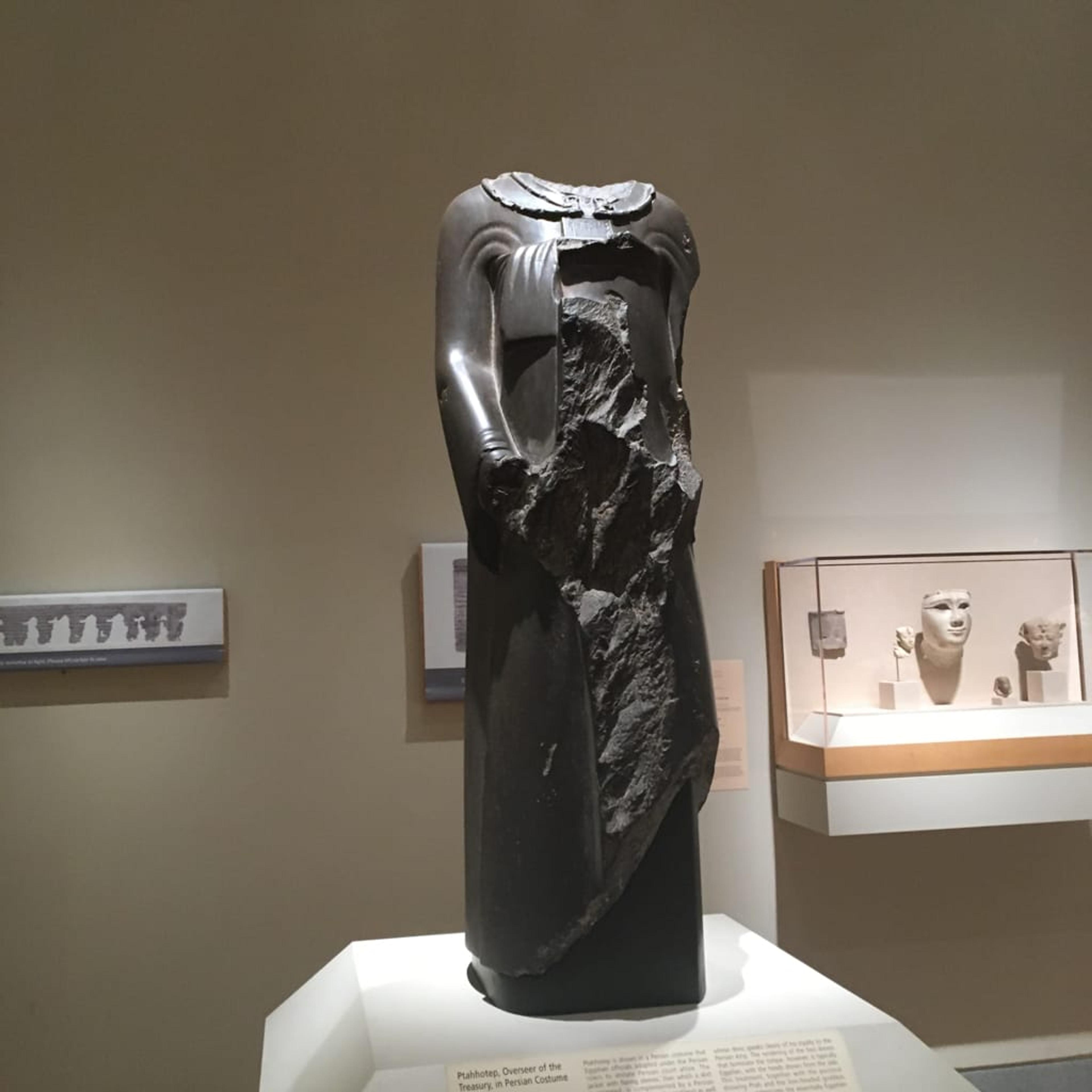 It's quite simply very old! This sculpture of a man named Ptahhotep is over 2500 years old and it got a little beaten up since then. We don't know where the broken off pieces are.
Did they melt the sandstone to make the statute and chisel it?
In ancient sculpture, the stone would not be melted. Rough shaping would be done with chisels, but the fine curves and polished surface that you see here would have been achieved with abrasives much like we use sandpaper today.Thanks
Have information?
Have information about an artwork? Contact us at