Stela of Maaty and Dedwi


1 of 4
Object Label
The sculptor who carved this colorful funerary stela of the official Maaty and his wife, Dedwi, lived during the First Intermediate Period. At this time, the centralized royal government of the Old Kingdom had given way to local rulers, isolating provincial artists from the artistic traditions of the royal court. They developed local styles which, as on this stela, tended to be simple but lively.
Caption
Stela of Maaty and Dedwi, ca. 2170–2008 B.C.E.. Limestone, pigment, 28 7/16 x 20 1/2 x 2 1/16 in. (72.3 x 52.1 x 5.3 cm). Brooklyn Museum, Charles Edwin Wilbour Fund, 39.1. (Photo: Brooklyn Museum)
Title
Stela of Maaty and Dedwi
Date
ca. 2170–2008 B.C.E.
Period
First Intermediate Period
Geography
Possible place collected: Naga ed-Deir, Egypt
Medium
Limestone, pigment
Classification
Dimensions
28 7/16 x 20 1/2 x 2 1/16 in. (72.3 x 52.1 x 5.3 cm)
Credit Line
Charles Edwin Wilbour Fund
Accession Number
39.1
Frequent Art Questions
Does the large angular size of his skirt have any significance?
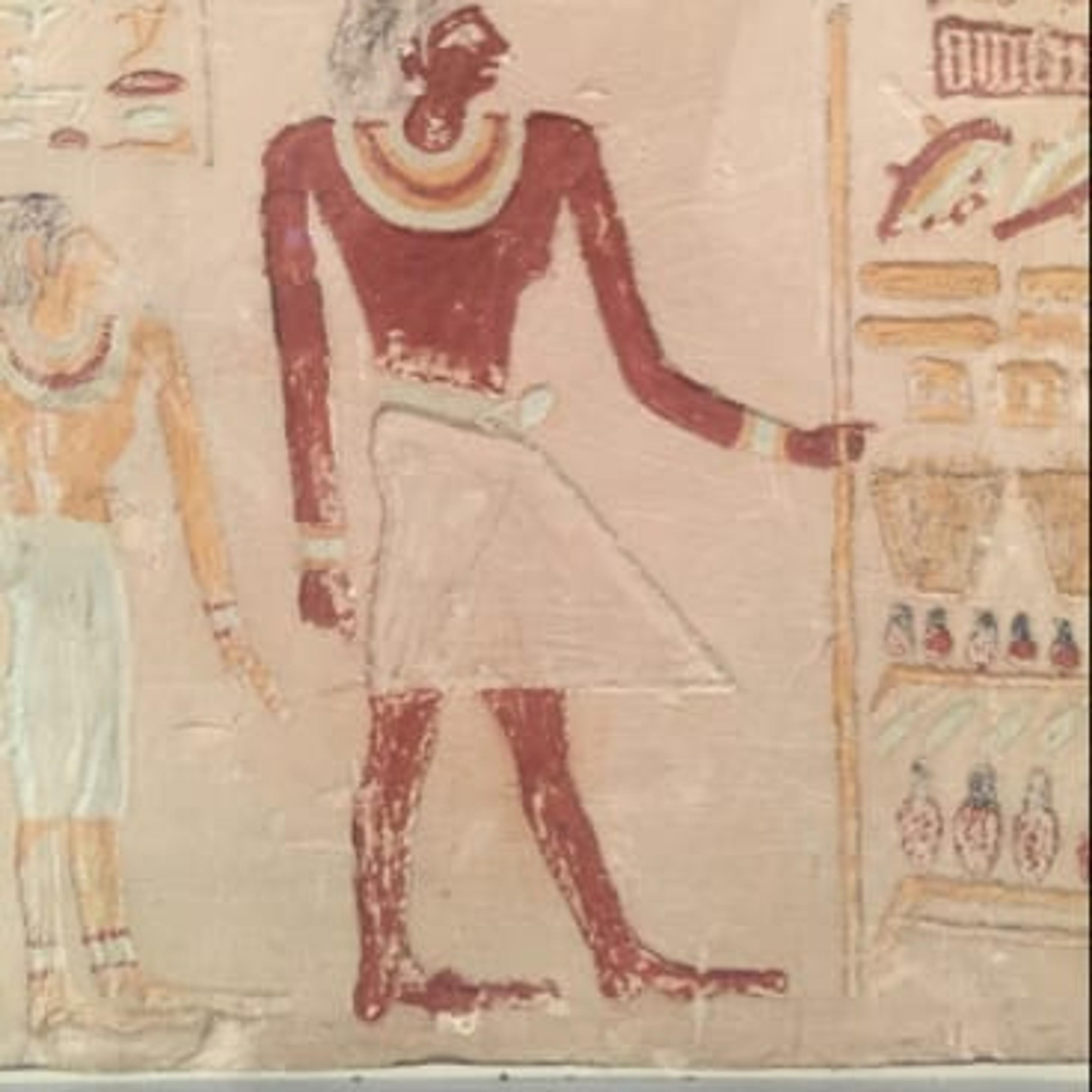 The large angular kilt is common in Egyptian iconography. It is the kilt of an official and therefore helps to indicate Maaty's status.You'll see this type of kilt all through the galleries in reliefs and statues. Likely clothing never did this in real life but Egyptians never the less continue to depict it.
My daughter wants to know what materials were used to make the different colors.
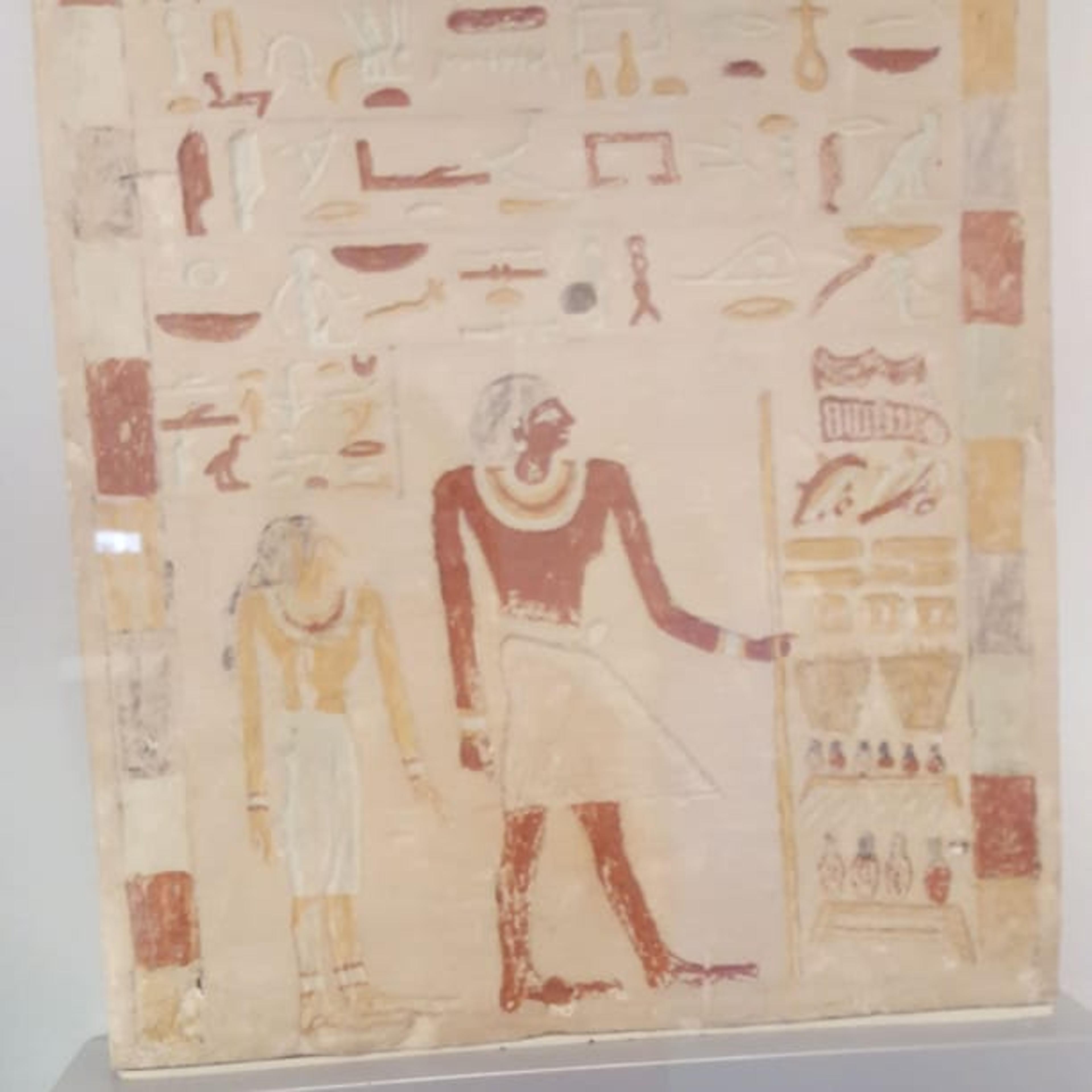 The colors in ancient Egyptian paintings are from minerals! Black would be from carbon, reds could be from ochre or iron oxides, green from malachite. It's so cool that we can still see the colors on objects that are thousands of years old!
Are the hieroglyphs colored for gender too?
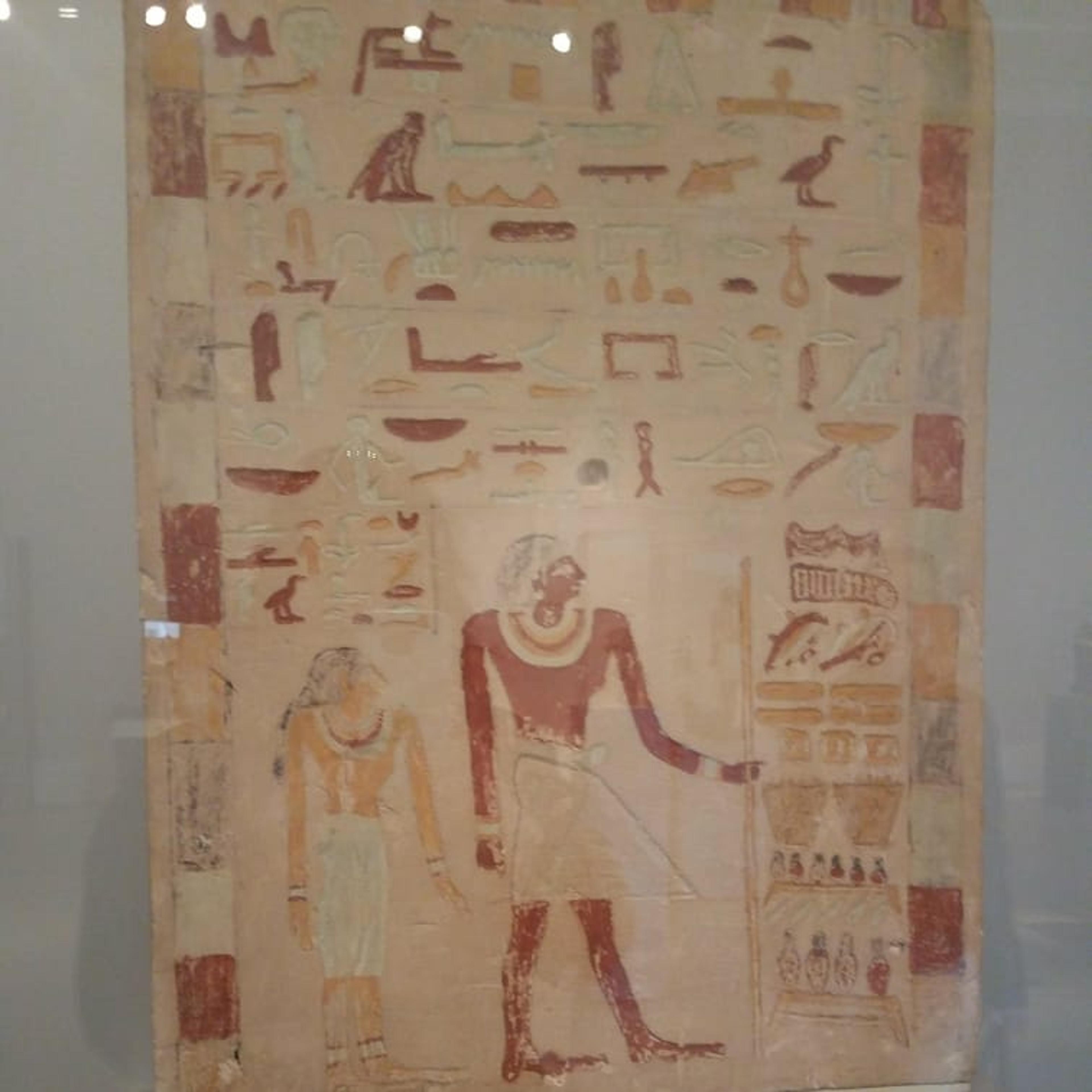 In general, they are not. These hieroglyphs seem to be colored randomly, if you look closely, you’ll notice that the same signs appear in different colors within this inscription. The heavily faded blue and green shades have little to do with gender.
Have information?
Have information about an artwork? Contact us at