Large Jar
1573–1619
Brooklyn Museum photograph
Object Label
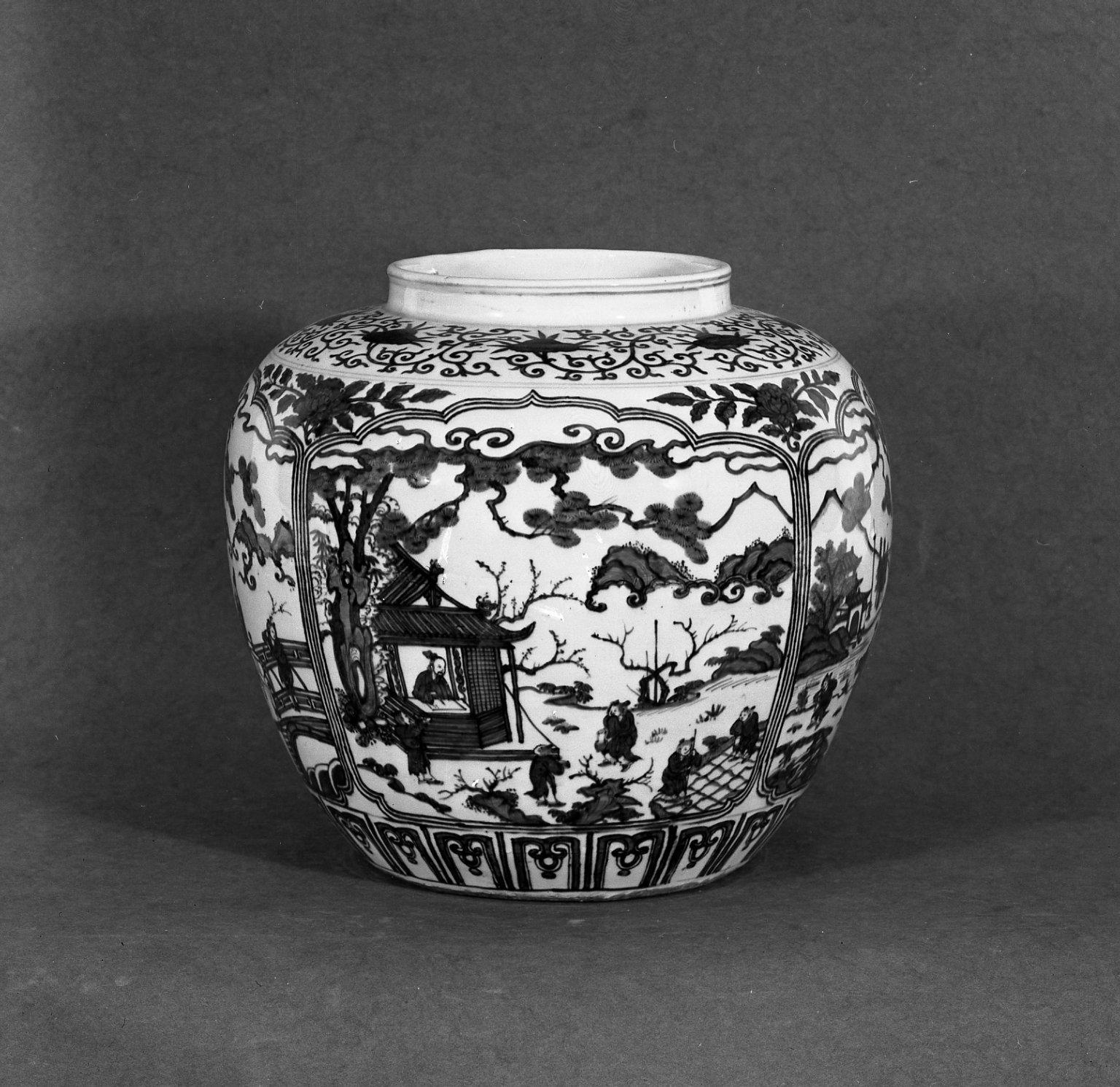
Decoration on blue-and-white porcelain often shared the same subjects as either paintings for elite consumers or illustrations of stories in woodblock prints and books for more popular taste. The scholar portrayed on this jar seated at his desk might be Zhuge Liang (181–284), courtesy name Kongming, a popular subject from his role in the famous novel Romance of the Three Kingdoms. Zhuge was a notable military strategist and historical figure. This story, with its emphasis on Neo-Confucian values, also became important in Choson dynasty Korea.
Caption
Large Jar, 1573–1619. Porcelain, blue underglaze, 19 1/8 x 14 9/16 in. (48.5 x 37 cm). Brooklyn Museum, Gift of the executors of the Estate of Colonel Michael Friedsam, 32.1025a-b. (Photo: Brooklyn Museum)
Gallery
Not on view
Collection
Gallery
Not on view
Collection
Frequent Art Questions
Were these pots painted?
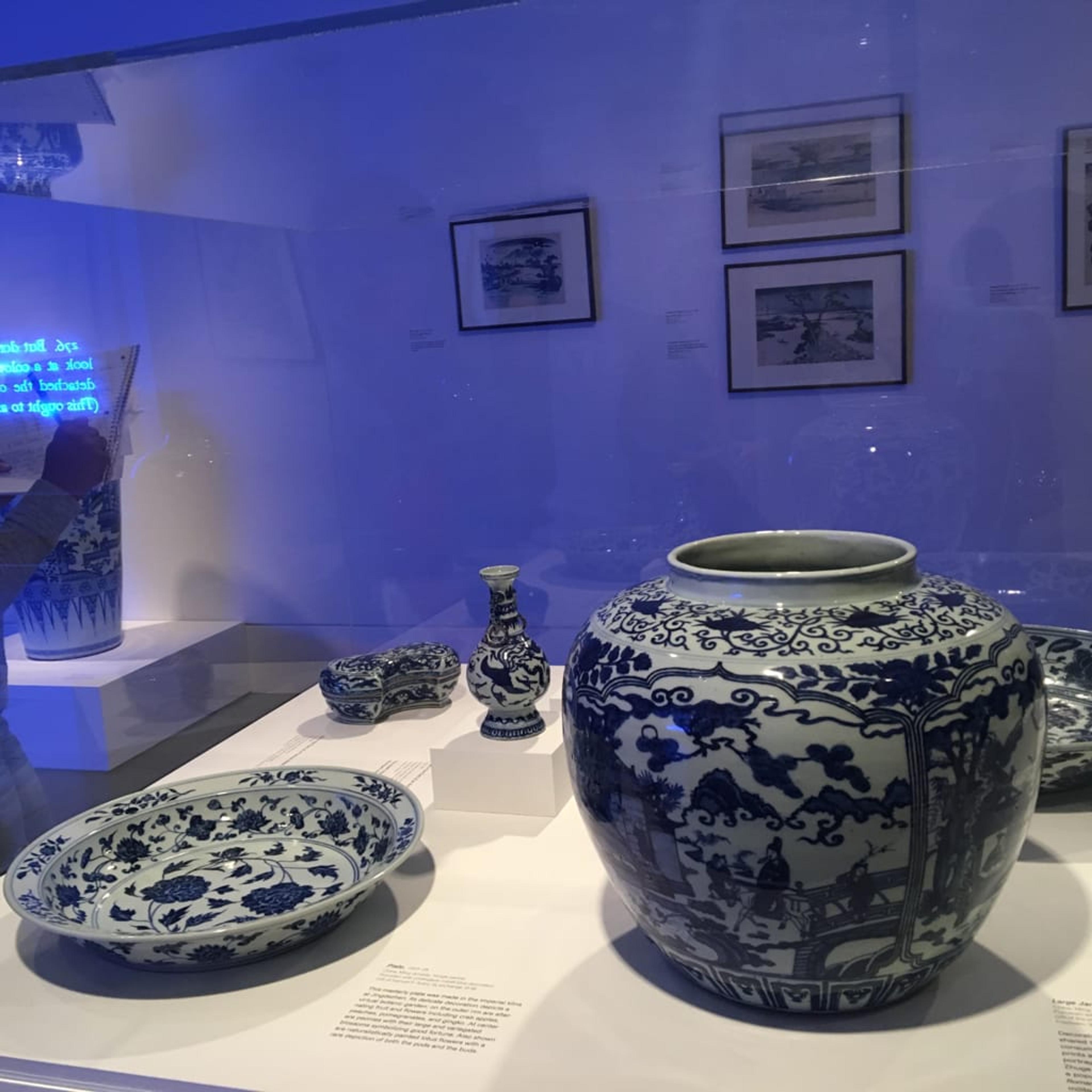 Yes, these Chinese blue-and-white porcelain vessels would have been painted as part of their production process. Cobalt blue pigment would have been painted onto the surface of the vessel prior to glazing and firing.Due to the high heat required to create porcelain, few pigments would have been able to withstand this process. Cobalt is one of those pigments!
This is so beautiful!
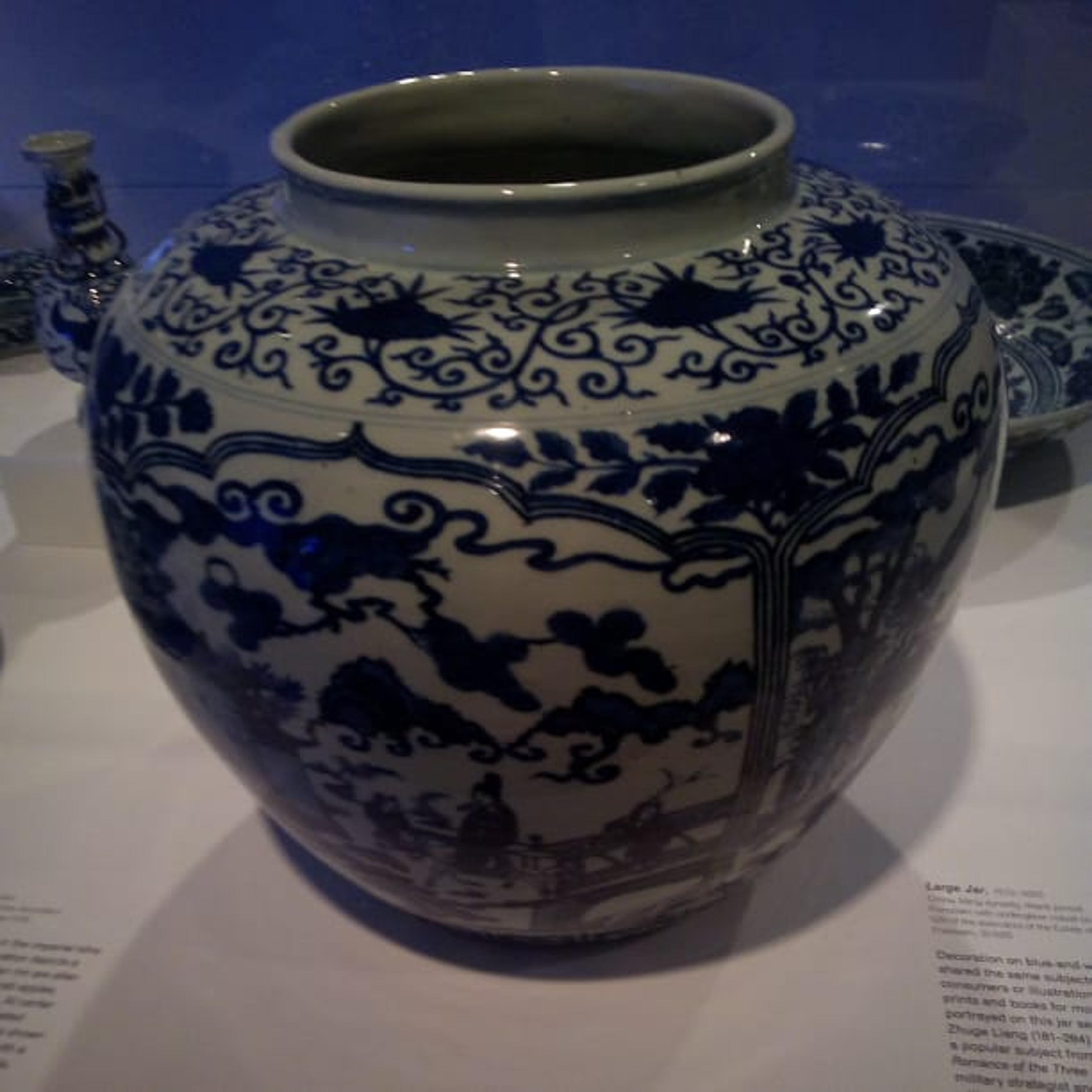 This is an example of Ming-dynasty blue-and-white porcelain, often regarded as the height of sophistication and craftsmanship in the style.This jar was likely produced for a domestic Chinese audience. The figure on the jar, thought to be related to a Chinese novel written in the early Ming dynasty, would have resonated with the scholarly elite of the time.
Were these Chinese ceramics thrown on a wheel?
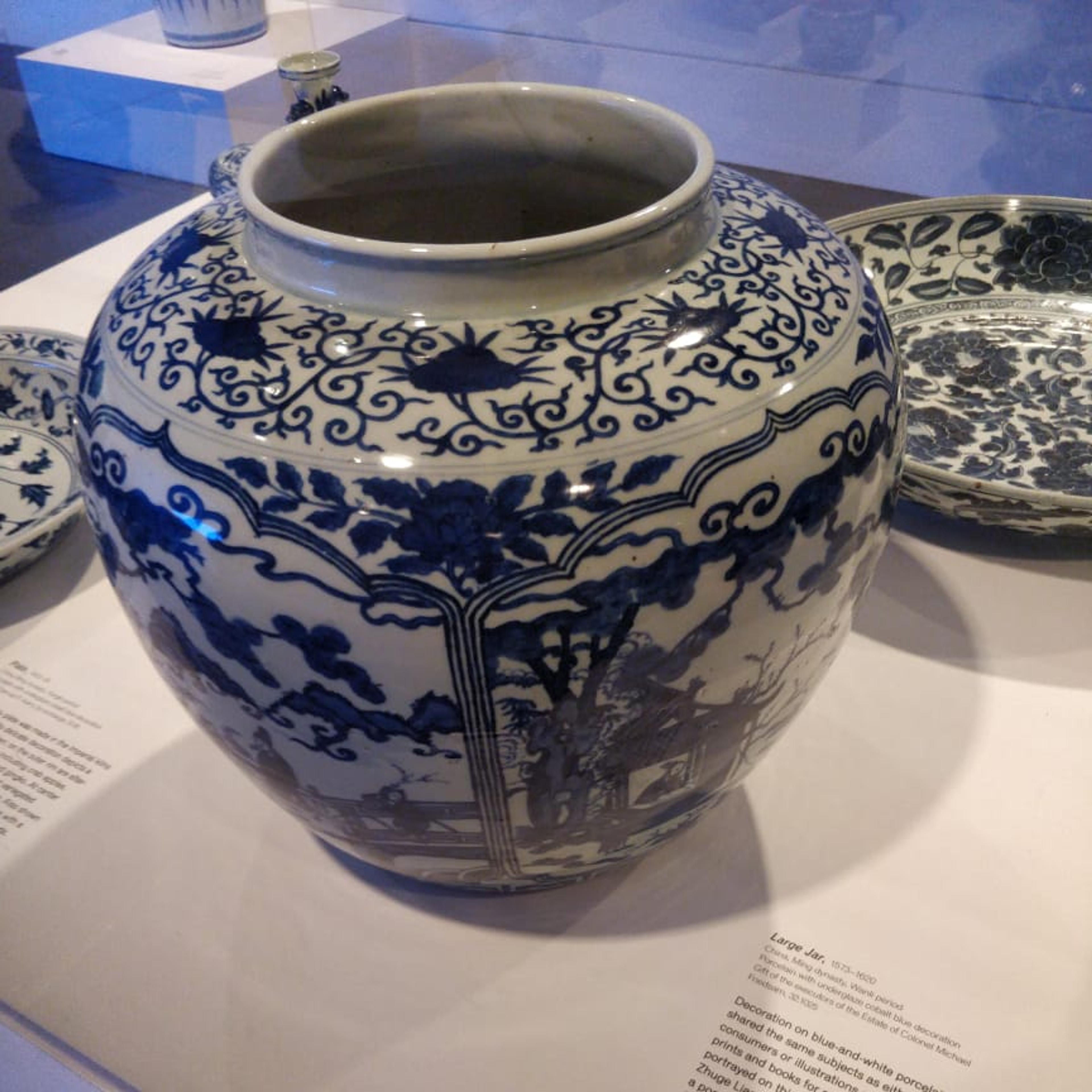 Yes. While early on in the history of Chinese ceramics, the vessels were hand-molded, by the late Neolithic period, the potter's wheel facilitated the production of more uniform vessels.Thanks.
Have information?
Have information about an artwork? Contact us at