Bottle with Openwork Shell



1 of 11
Object Label
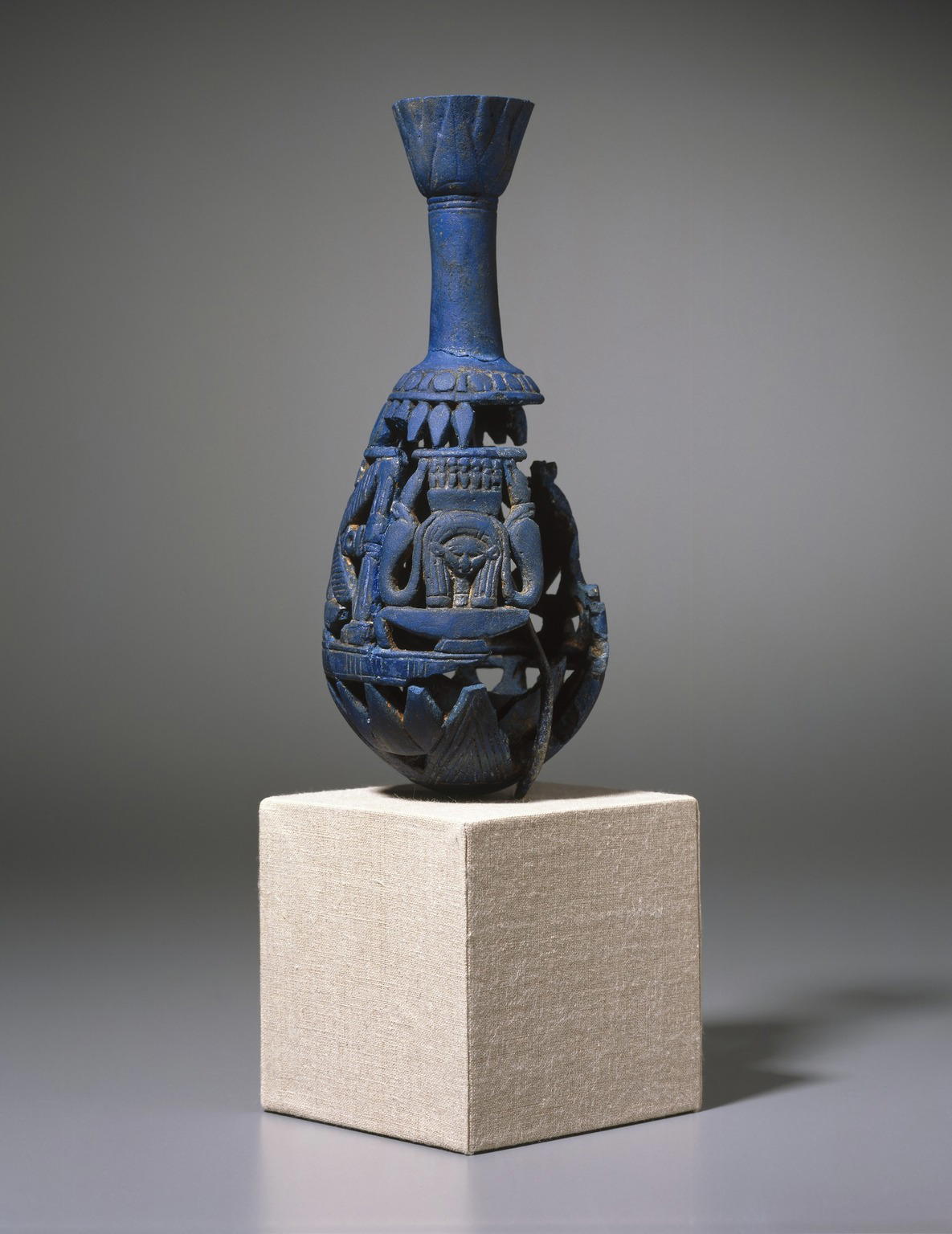
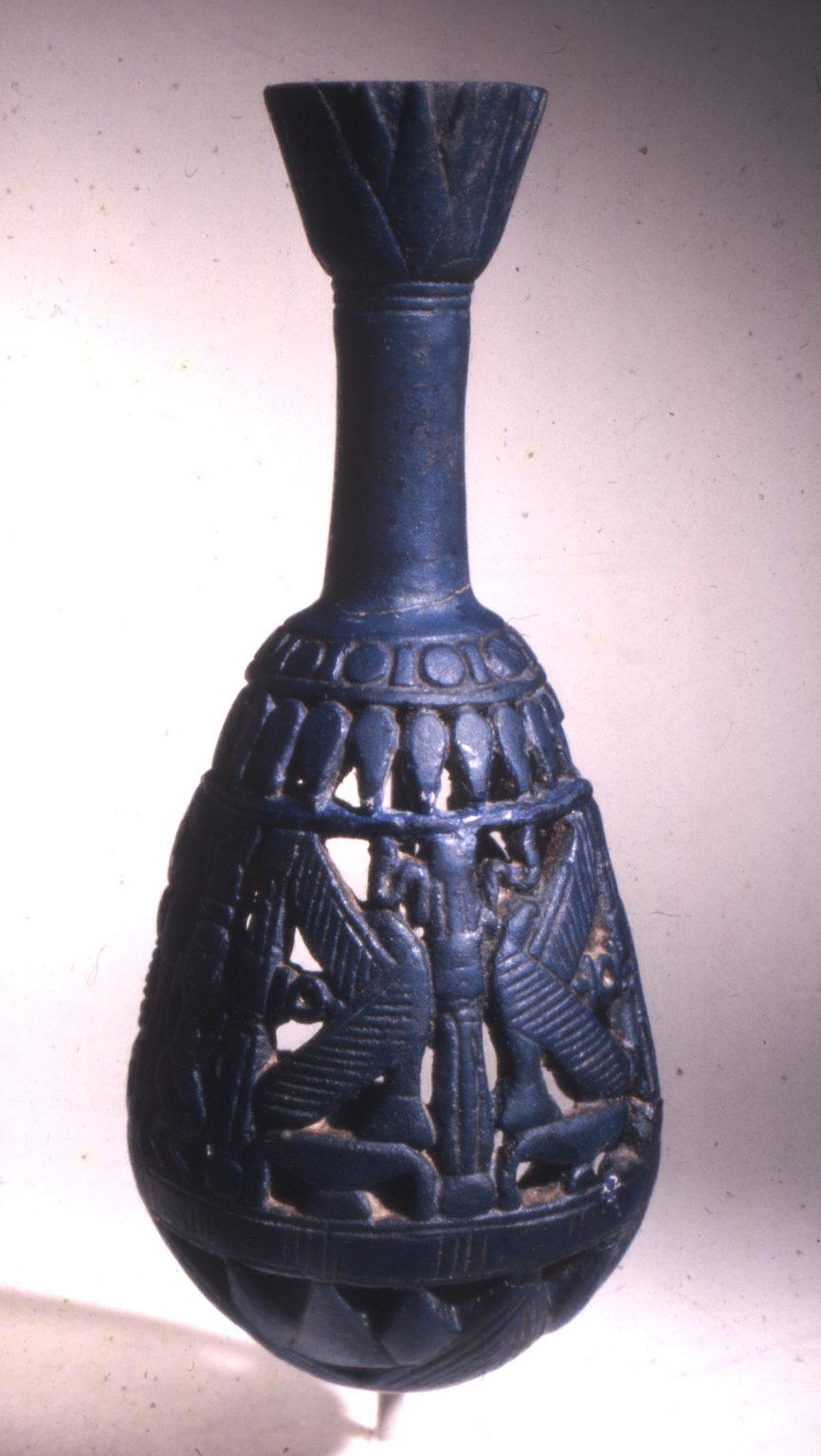
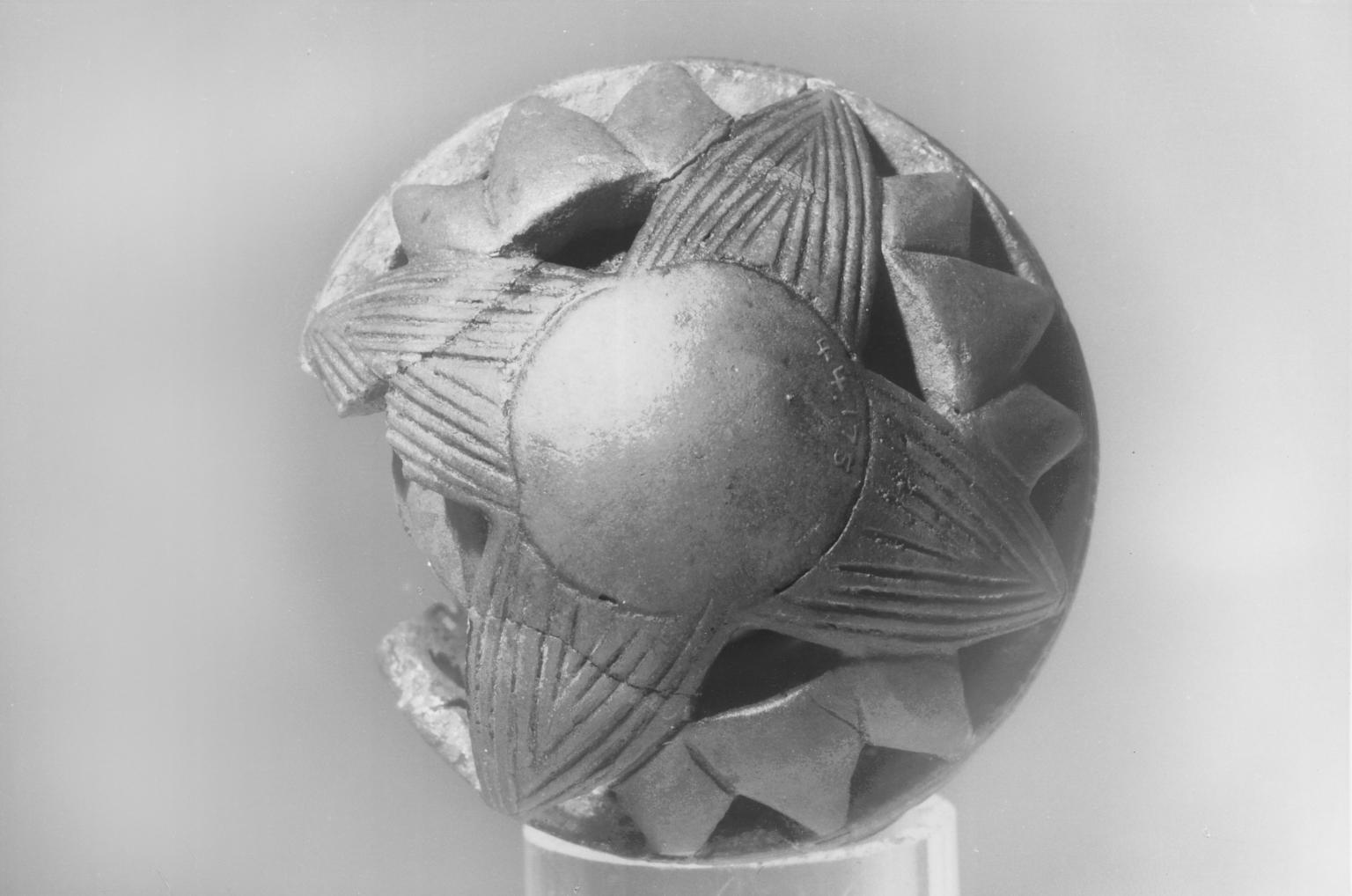
Egyptian blue is a copper-calcium tetrasilicate that the ancient Egyptians pulverized, mixed into a paste, and used to fashion objects fired at a low temperature. Seldom were those objects as large as this vessel, a technical masterpiece made of several parts. The rim and the base are shaped like lotus flowers, symbols of birth and rebirth, and the shell is adorned with images of deities in a setting represented by architectural columns.
Caption
Bottle with Openwork Shell, ca. 1075–712 B.C.E.. Egyptian blue, 6 11/16 x greatest diam. 2 15/16 in. (17 x 7.5 cm). Brooklyn Museum, Charles Edwin Wilbour Fund, 44.175. (Photo: Brooklyn Museum)
Title
Bottle with Openwork Shell
Date
ca. 1075–712 B.C.E.
Period
Third Intermediate Period
Geography
Place made: Upper Egypt, Egypt
Medium
Egyptian blue
Classification
Dimensions
6 11/16 x greatest diam. 2 15/16 in. (17 x 7.5 cm)
Credit Line
Charles Edwin Wilbour Fund
Accession Number
44.175
Frequent Art Questions
Do you know the original function of this piece?
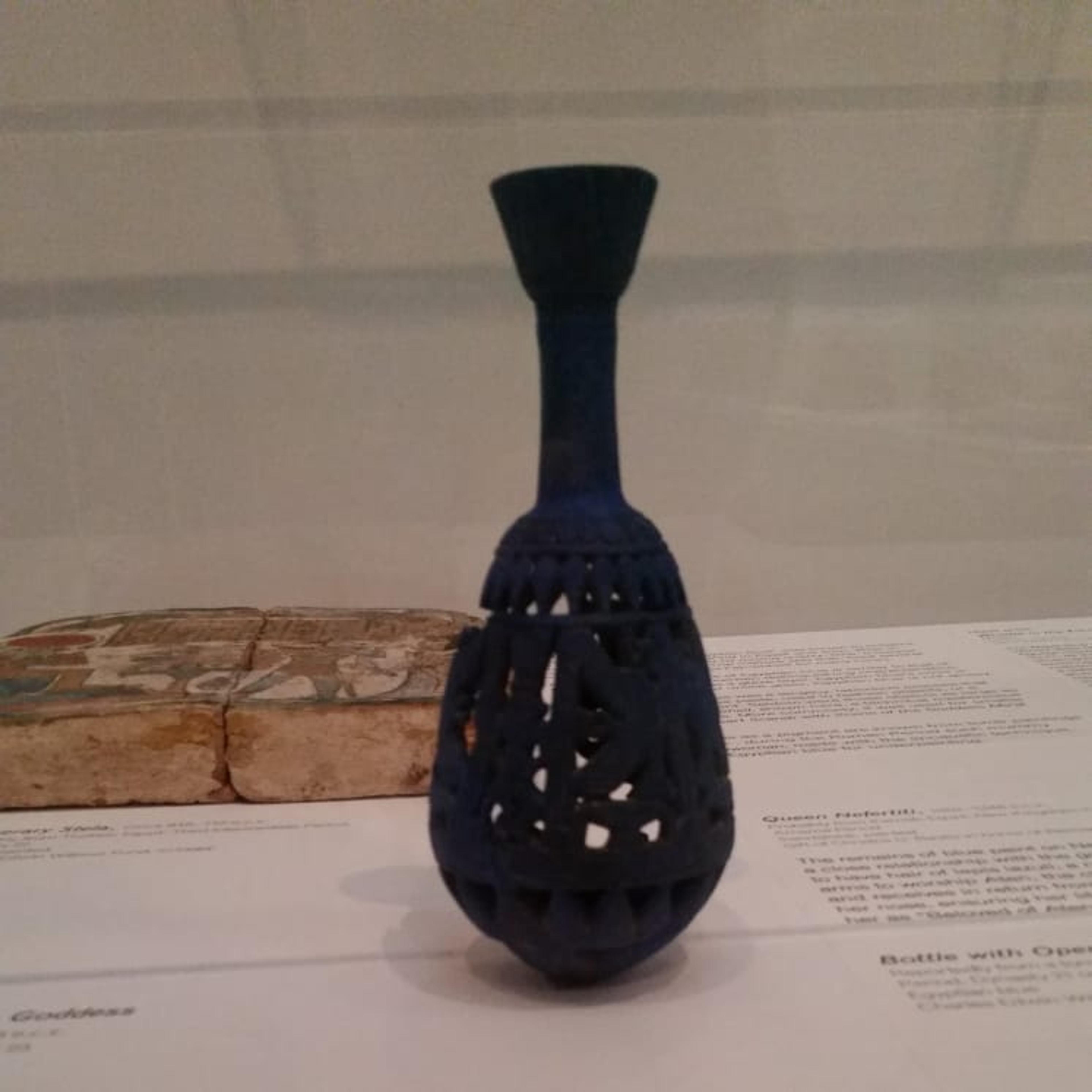 This piece was originally intended to be decorative! It is made from a material called Egyptian blue and is surprisingly large for the material.
Son originales o Réplicas?
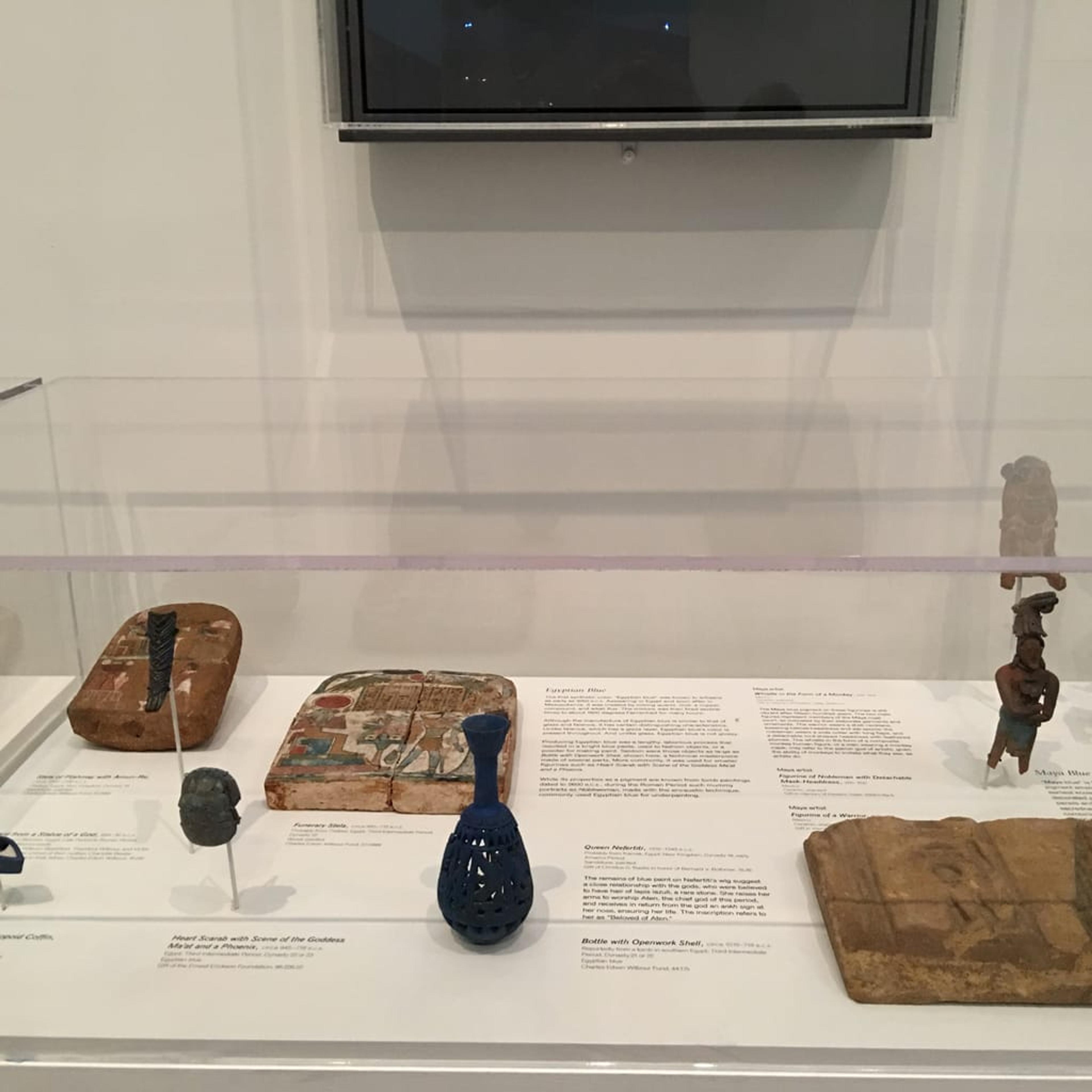 Si, todos son originales!
Tell me more.
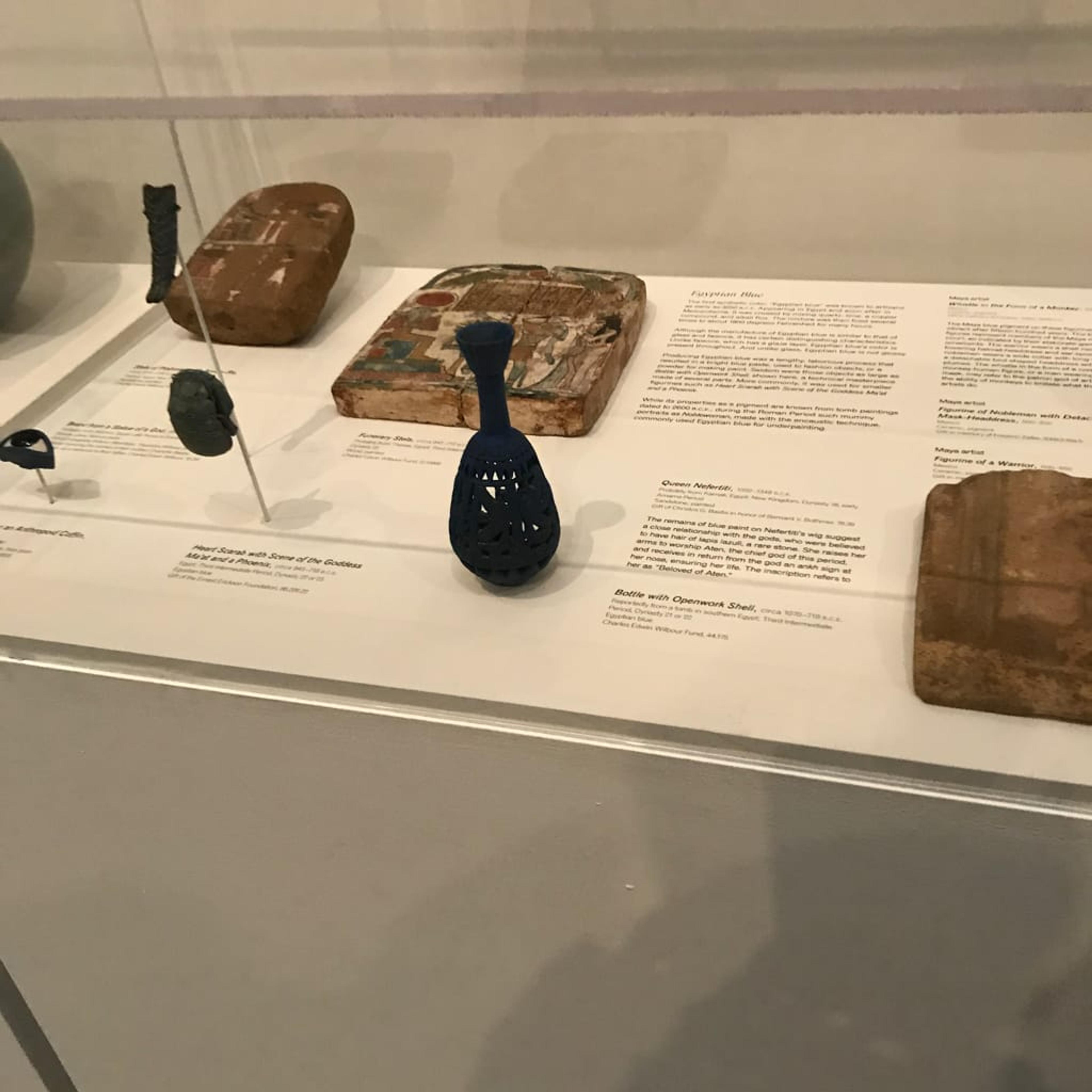 This openwork bottle is really a remarkable piece! Egyptian blue was typically used as a pigment (the first synthetic pigment!), and it is very rare to see it as a larger, stand-alone object.You can also tell that it is an object of luxury because it clearly only serves a decorative, or possibly symbolic purpose. It wouldn't have been able to hold anything!
Have information?
Have information about an artwork? Contact us at