Monkey
ca. 1352–1336 B.C.E.


1 of 7
Object Label
Throughout Egyptian history, monkeys were enjoyed for their playful, whimsical behavior. This blue faience example holds a ball or piece of fruit. In antiquity, it wore a metal earring indicating that it represented a household pet. Because they had to be imported over great distances at considerable expense, the possession of monkeys indicated the owner’s wealth and social status.
Caption
Monkey, ca. 1352–1336 B.C.E.. Faience, 2 1/8 × 1 1/8 × 1 9/16 in. (5.4 × 2.8 × 4 cm) mount: 2 1/4 × 1 3/4 × 1 3/8 in. (5.7 × 4.4 × 3.5 cm). Brooklyn Museum, Charles Edwin Wilbour Fund, 48.181. (Photo: Brooklyn Museum)
Gallery
Not on view
Gallery
Not on view
Title
Monkey
Date
ca. 1352–1336 B.C.E.
Dynasty
late Dynasty 18
Period
New Kingdom
Geography
Reportedly from: Tell el-Amarna, Egypt
Medium
Faience
Classification
Dimensions
2 1/8 × 1 1/8 × 1 9/16 in. (5.4 × 2.8 × 4 cm) mount: 2 1/4 × 1 3/4 × 1 3/8 in. (5.7 × 4.4 × 3.5 cm)
Credit Line
Charles Edwin Wilbour Fund
Accession Number
48.181
Frequent Art Questions
What makes the monkey figure such a vibrant shade of teal?
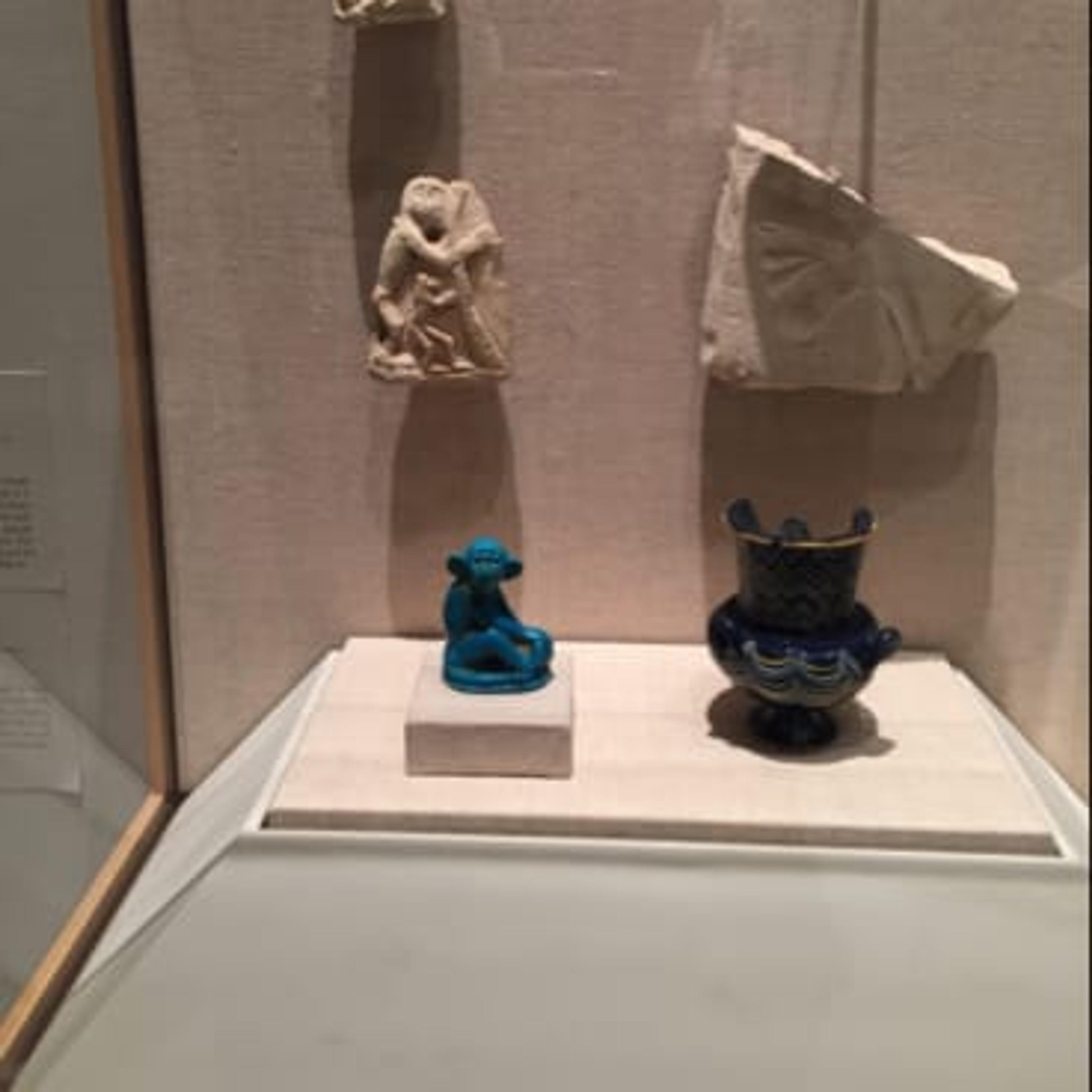 The monkey is formed out of a quartz-based paste called faience which is then glazed with mineral pigments to give it that bright blue color. It was often used as a more affordable alternative to expensive materials like the blue gems turquoise and lapis lazuli. It was the mix of certain pigments with copper, exposed to very high heat, that reacted and turned such a vibrant blue. And this color signified health and life to the ancient Egyptians like the Nile River and similar to the green of vegetation!
Have information?
Have information about an artwork? Contact us at