Jewelry Spacer
ca. 1185–653 B.C.E.
1 of 3
Object Label
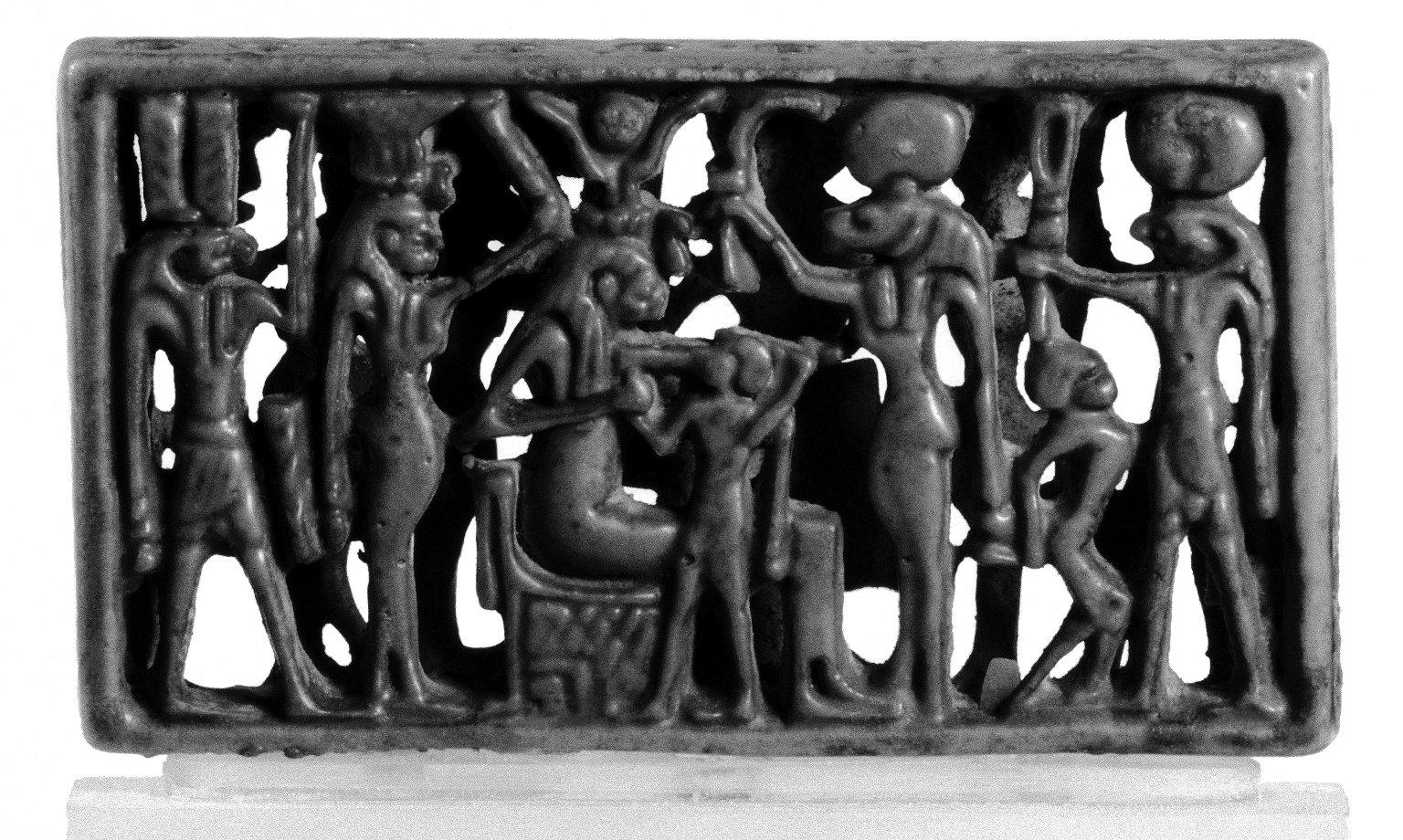
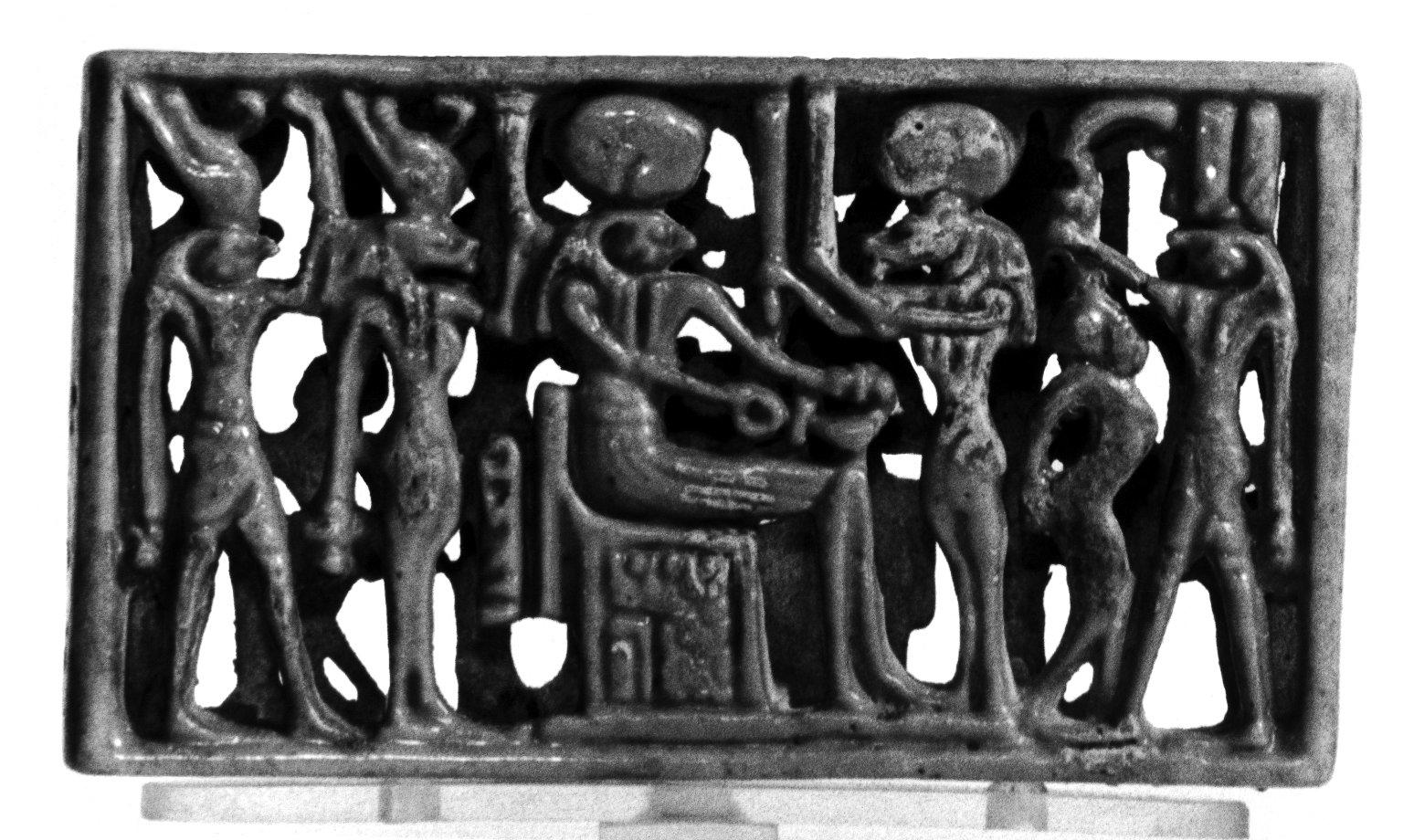
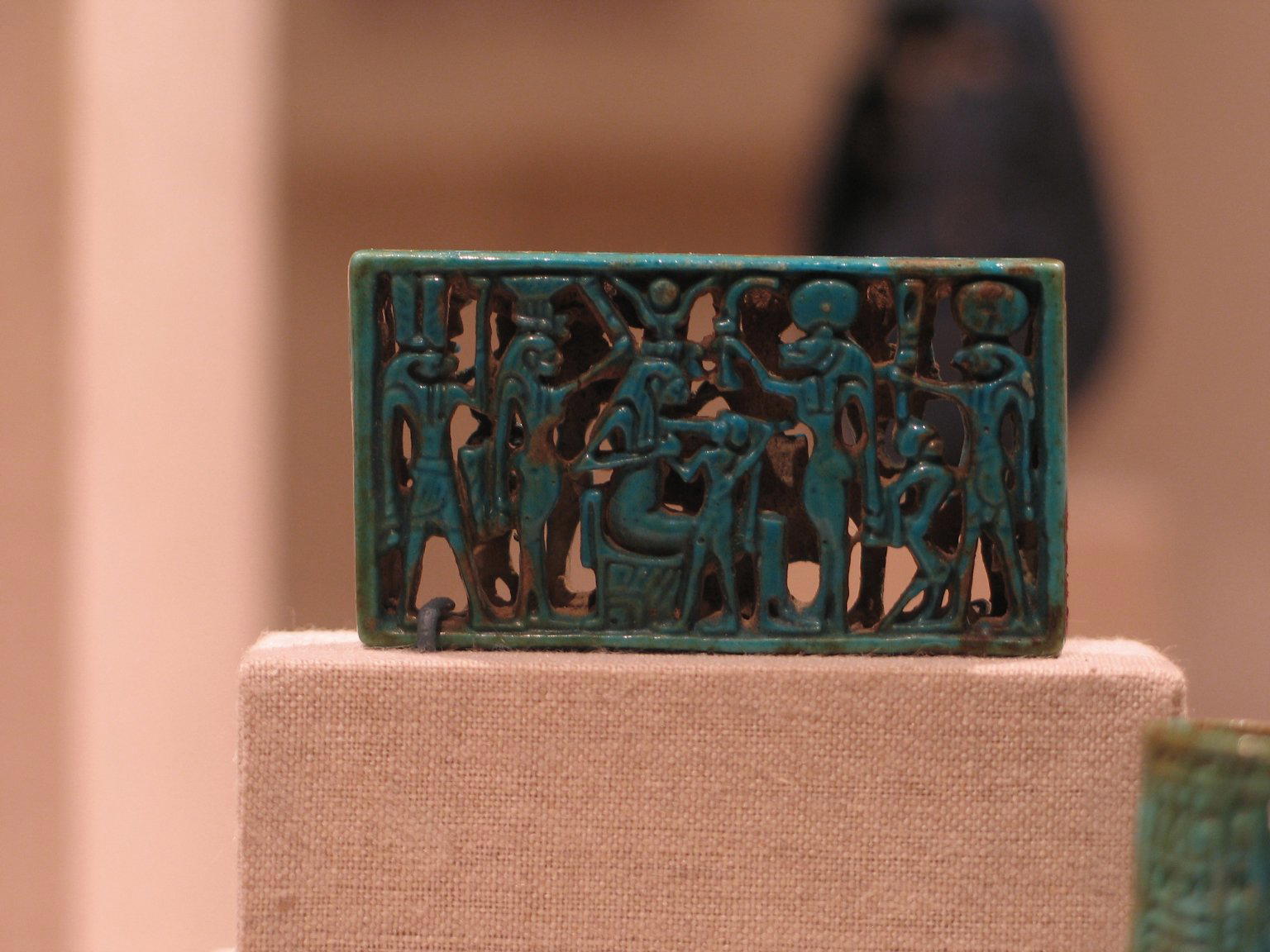
One side of this spacer depicts a child nursed by a goddess flanked by other deities, one dominating a bound prisoner. The other side shows an enthroned falcon-headed god flanked by still more deities, again with a bound captive. This decoration, done in openwork characteristic of late Dynasty XX through Dynasty XXV, may symbolize the birth, childhood, and triumphal enthronement of the god Horus and therefore possibly also the king in his role as Horus.
Caption
Jewelry Spacer, ca. 1185–653 B.C.E.. Faience, 1 1/16 x 1/4 x 1 15/16 in. (2.7 x 0.7 x 5 cm). Brooklyn Museum, Charles Edwin Wilbour Fund, 49.30. (Photo: Brooklyn Museum)
Frequent Art Questions
What is meant by a jewelry spacer
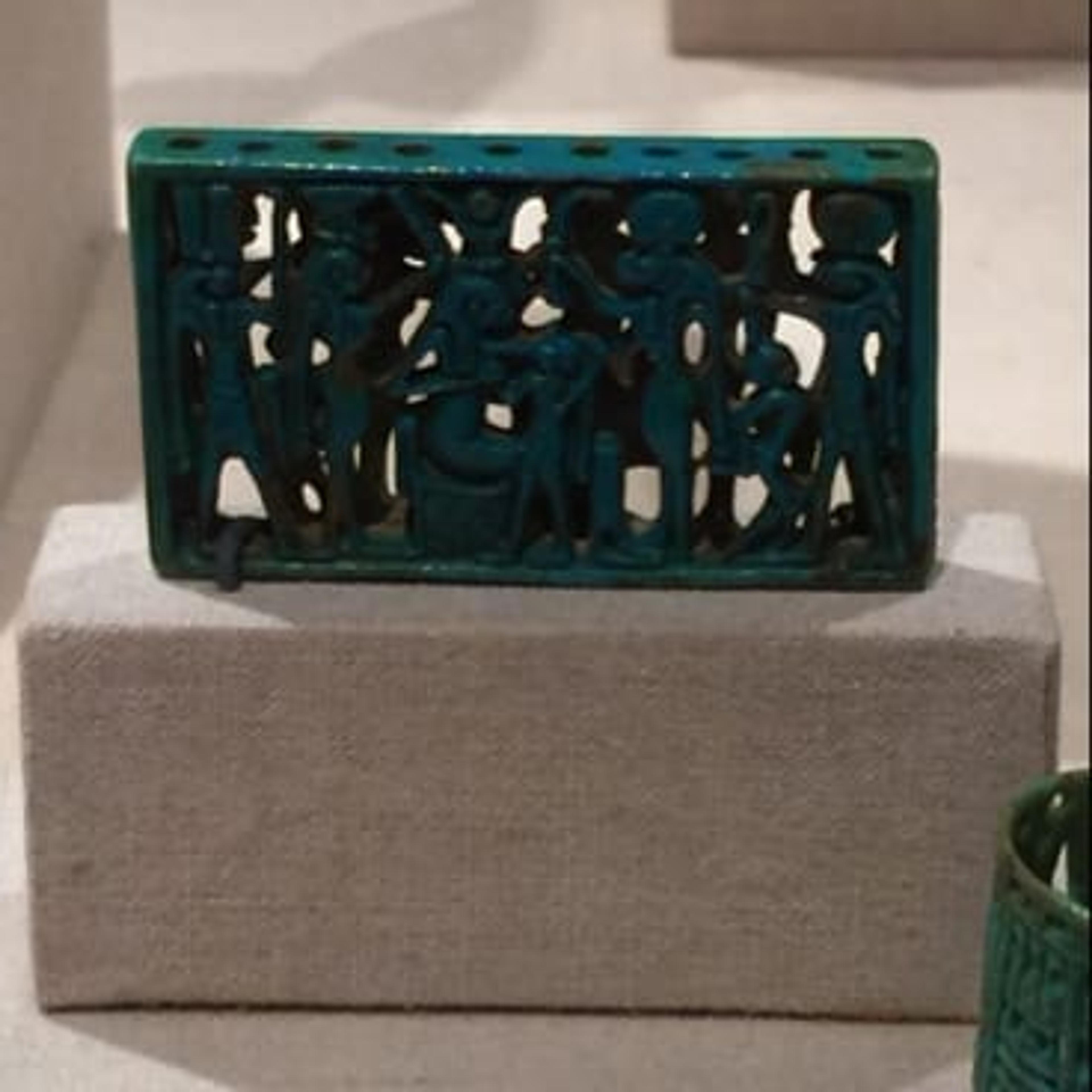 Hello! The spacers are the small beads which go between the larger stones. Can you believe the details in this piece? So incredible.If you look at a necklace, for example -- even a present-day necklace -- you might see tiny beads or pieces between the larger beads or stones that make up most of the necklace. The small spacers just separate them and keep them from rubbing against one another.We're looking deeper--- in this context, that square spacer would have been worn as the focal point in a bracelet or necklace, with multiple strings of beads attached to it on either side.
There's a figurine made from "glazed steatite" and a jewelry spacer made from glazed faience, from about 1000 BC, and they're this gorgeous blue or green. Is that how they were found or somehow worked on to get back that color?
I'm sure they've been cleaned, but other than that faience, especially, holds color VERY well. That's part of the reason the ancient Egyptians used it so much.Steatite is a type of stone that can also be glazed in a similar way. The glazes are glass-based which has a lot to do with how they've remained so stable.What are jewelry spacers used for?
It's used to join multiple strings of smaller beads in a necklace. Take the rectangular one for example. Notice how it has all of those small holes?Multiple strings could be threaded through that bead, each one with it's own row of smaller beads!Wow, thanks!
Have information?
Have information about an artwork? Contact us at