Relief of Men Presenting Cattle


1 of 5
Object Label
In this sculpture in relief, three men bring cattle to the tomb owner, “from the towns of the estate,” as the inscription says. Two of these balding, rustic laborers wear kilts of coarse material, and the other wears nothing at all. A fragmentary scene below shows men bringing cranes, which were penned and raised for food. Artisans carved images of live food animals in tombs to supply the deceased with an eternal source of provisions.
Caption
Relief of Men Presenting Cattle, ca. 2500–2350 B.C.E.. Limestone, 20 1/16 x 29 15/16 in. (51 x 76 cm). Brooklyn Museum, Charles Edwin Wilbour Fund, 49.62. (Photo: Brooklyn Museum)
Title
Relief of Men Presenting Cattle
Date
ca. 2500–2350 B.C.E.
Dynasty
Dynasty 5
Period
Old Kingdom
Geography
Place made: Egypt, Possible place collected: Giza, Egypt
Medium
Limestone
Classification
Dimensions
20 1/16 x 29 15/16 in. (51 x 76 cm)
Credit Line
Charles Edwin Wilbour Fund
Accession Number
49.62
Frequent Art Questions
What do these “X” shapes represent?
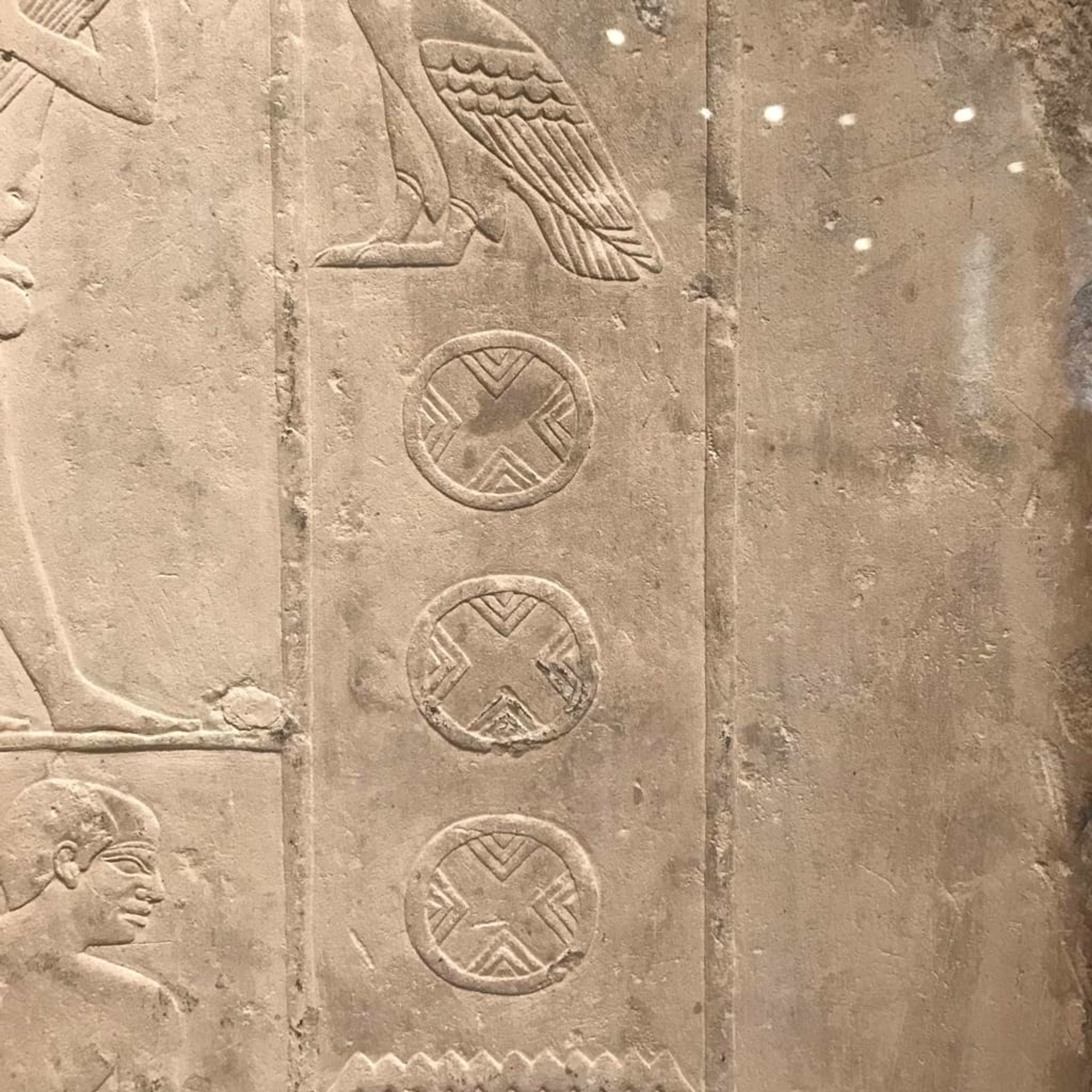 That's actually a pretty common hieroglyph! It stands for "city" and is pronounced "niwt."The X shapes are meant to be in the form of an intersection of roads! The surrounding circle is read as a protective wall around a settlement.Oh my god thank you so much for the great response!
No cows, bulls only? Why?
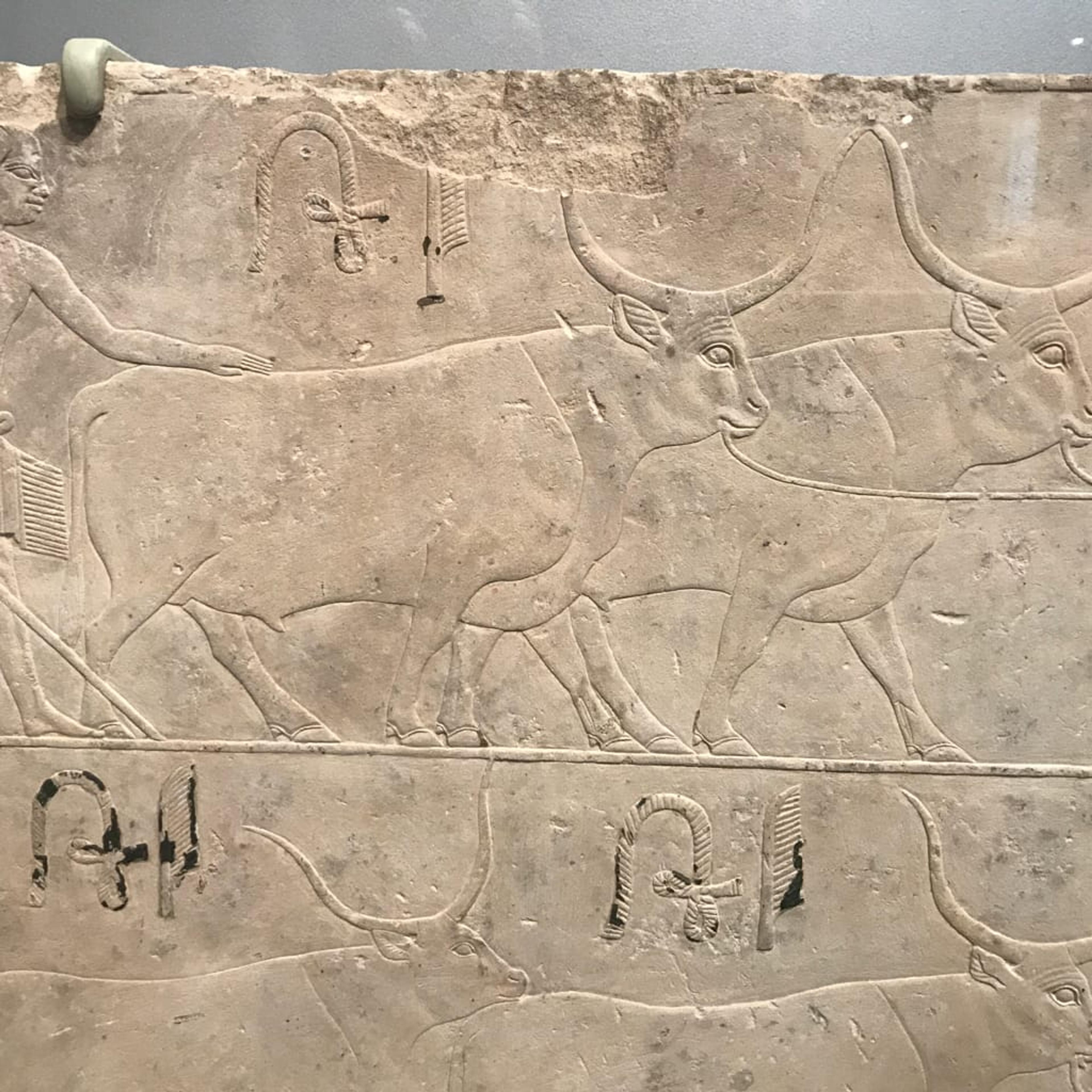 It is possible that there were cows shown being led to the tomb in another part of the decoration not preserved in this block. It is also possible that these bulls are meant to be shown as offerings as beasts of burden or for their association with power rather than as a food sourceYou can see, for instance, sculptures of Pharaohs wearing bull's tails, like the statue of Senwosret III. Pharaohs would wear bull's tails as a symbol of might and virility.
Have information?
Have information about an artwork? Contact us at