Cosmetic Container in Form of Trussed Goose
ca. 1539–1292 B.C.E.


1 of 4
Object Label
Cosmetic Containers
Like us, the ancient Egyptians used cosmetics, and often for the same purposes.
Archaeologists use the term “cosmetic container” to describe a variety of Egyptian boxes that once held scented, oil-based ointments. The salves in these boxes were used by women and men to heighten sexual allure and to camouflage body odor. Orange or yellow stains seen on ancient representations of clothing and on actual surviving linen garments show how liberally such ointments were applied.
Like us, the ancient Egyptians used cosmetics, and often for the same purposes.
Archaeologists use the term “cosmetic container” to describe a variety of Egyptian boxes that once held scented, oil-based ointments. The salves in these boxes were used by women and men to heighten sexual allure and to camouflage body odor. Orange or yellow stains seen on ancient representations of clothing and on actual surviving linen garments show how liberally such ointments were applied.
Caption
Cosmetic Container in Form of Trussed Goose, ca. 1539–1292 B.C.E.. Ivory, 2 1/16 x 4 1/4 in. (5.3 x 10.8 cm). Brooklyn Museum, Charles Edwin Wilbour Fund, 49.63a-b. (Photo: Brooklyn Museum)
Frequent Art Questions
What is this made out of?
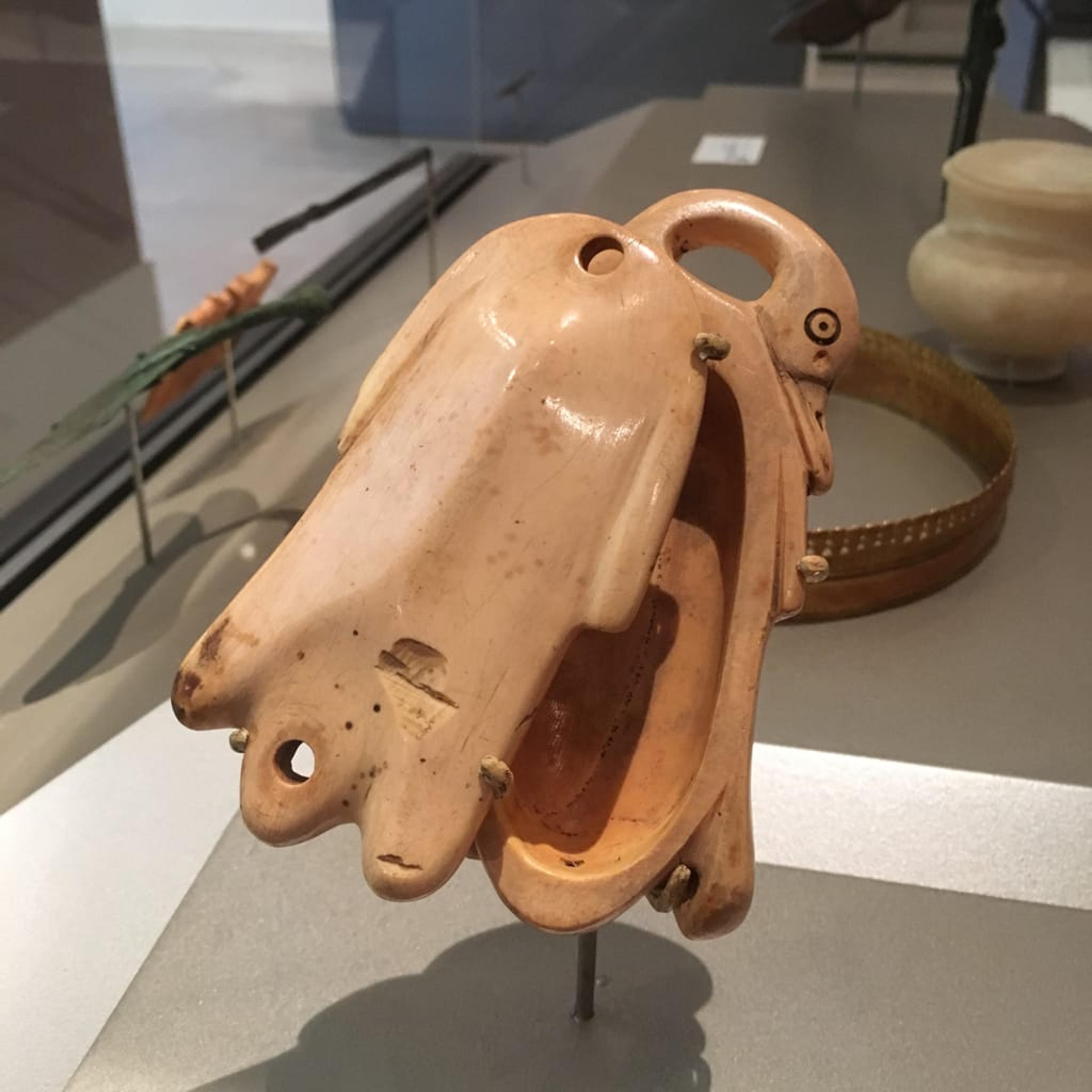 This object is actually made from ivory! It is a cosmetic container from the New Kingdom period. During that time, ivory may have come from elephant tusk or else hippopotami.
Have information?
Have information about an artwork? Contact us at