Two Halves of a Knife Handle






1 of 9
Object Label
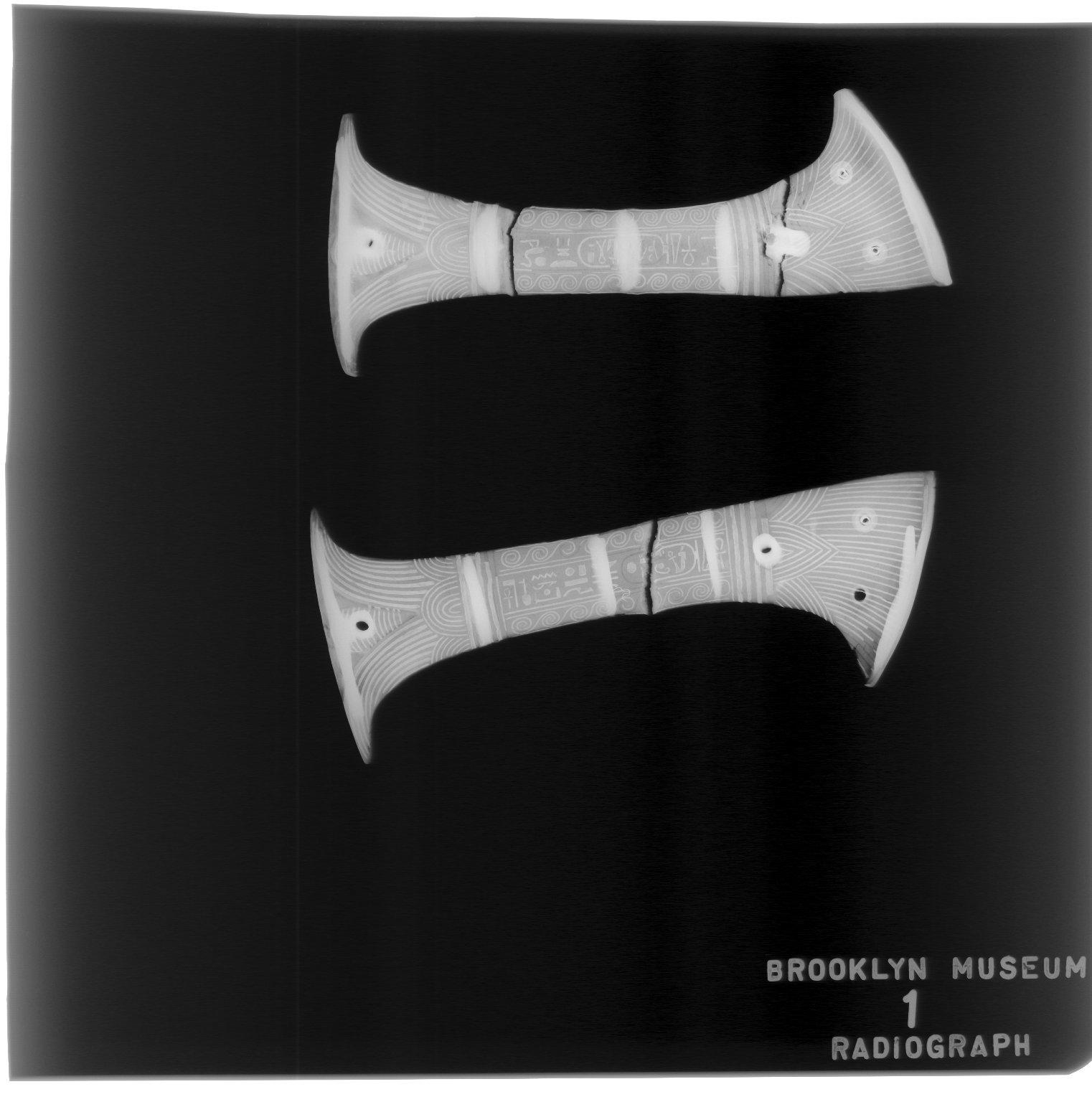
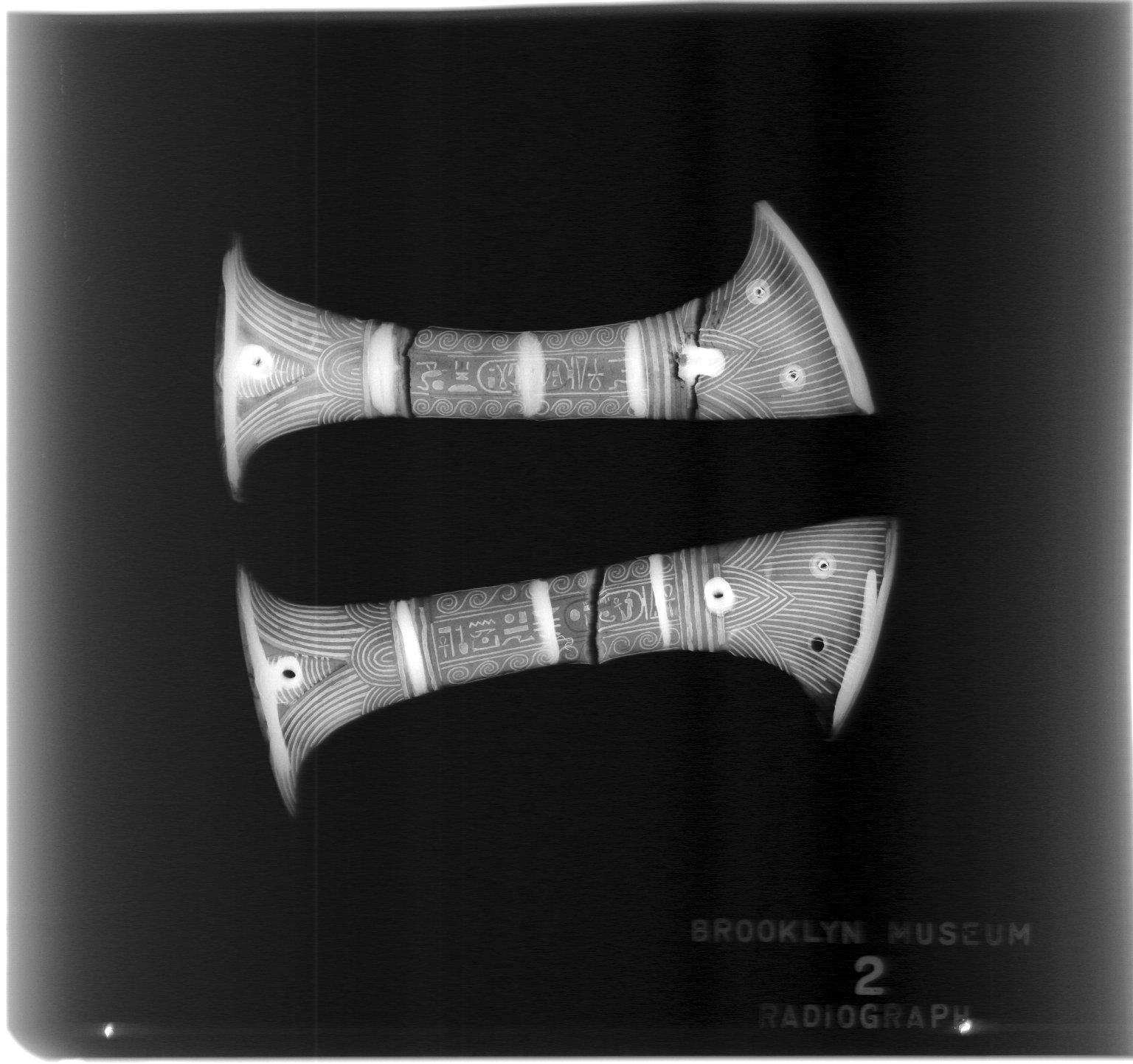
These two halves of a knife handle inscribed with the names of Seti I reflect Asiatic designs introduced to Egypt by the Hyksos sometime before Dynasty XVIII (circa 1539–1295 B.C.). The shape is characteristic of the grips of sickle-shaped Hyksos blades, and the spiral motif is found or. countless Hyksos scarabs. The intricate craftsmanship and the use of gold, which is not a durable metal, suggest that the knife had a ceremonial, not a practical, function. In fact, the knife may have been given to Seti I at his coronation. Two wall reliefs at his temple at Abydos depict the gods Amun-Re and Horus presenting him with an identically shaped knife as a divine guarantee of unending sovereignty. The decoration of the ends of the handle with lotus and papyrus blossoms, the heraldic plants of southern and northern Egypt respectively, further indicates that the knife was connected with a kingship ritual.
Caption
Two Halves of a Knife Handle, ca. 1294–1279 B.C.E.. Bronze, copper, gold, 2 1/16 x 4 13/16 in. (5.3 x 12.3 cm). Brooklyn Museum, Charles Edwin Wilbour Fund, 49.167a-b. (Photo: Brooklyn Museum)
Title
Two Halves of a Knife Handle
Date
ca. 1294–1279 B.C.E.
Dynasty
Dynasty 19
Period
New Kingdom
Geography
Place made: Egypt
Medium
Bronze, copper, gold
Classification
Dimensions
2 1/16 x 4 13/16 in. (5.3 x 12.3 cm)
Credit Line
Charles Edwin Wilbour Fund
Accession Number
49.167a-b
Have information?
Have information about an artwork? Contact us at