Statue of a Priest of Amun
1 of 4
Object Label
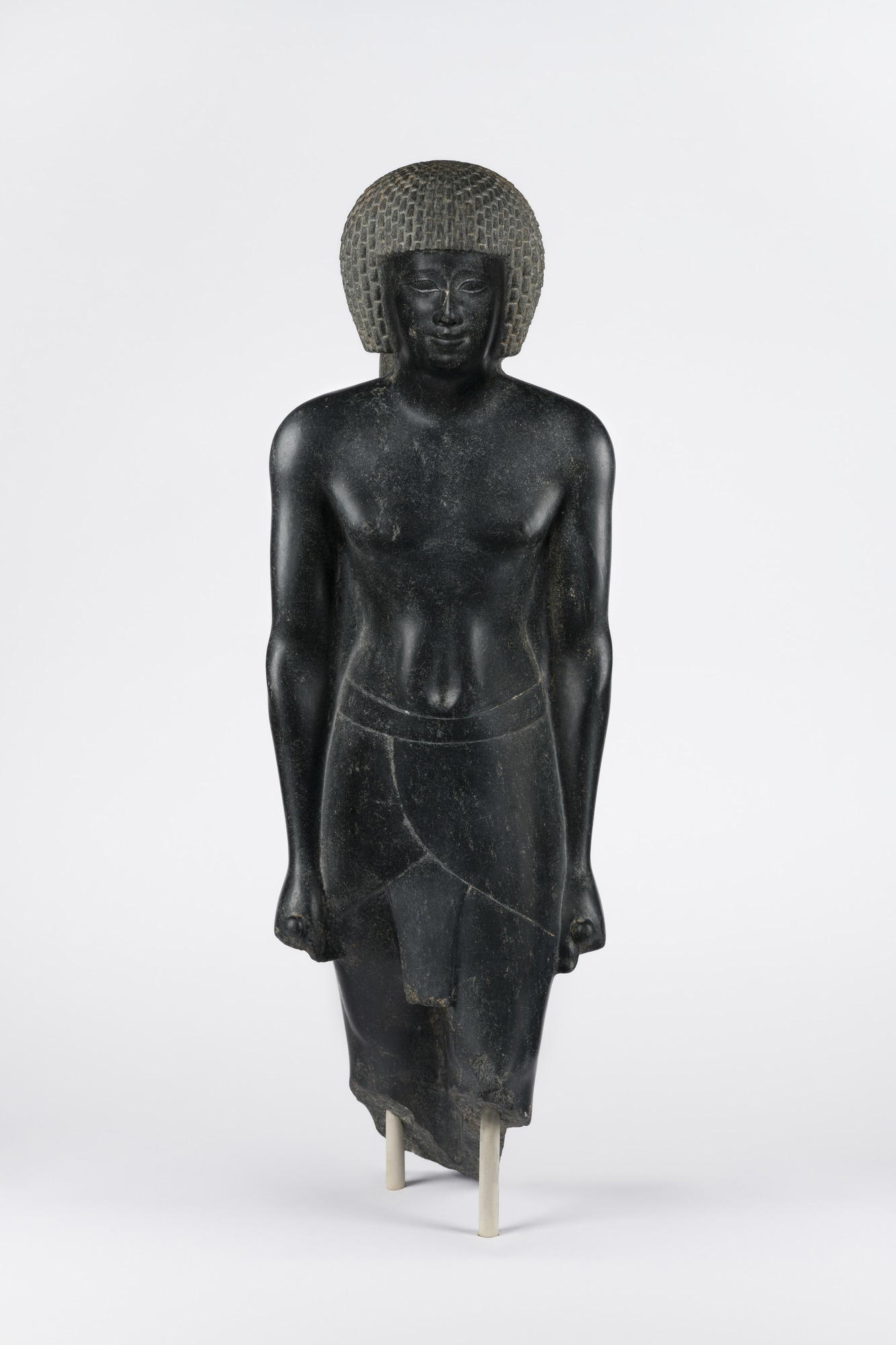
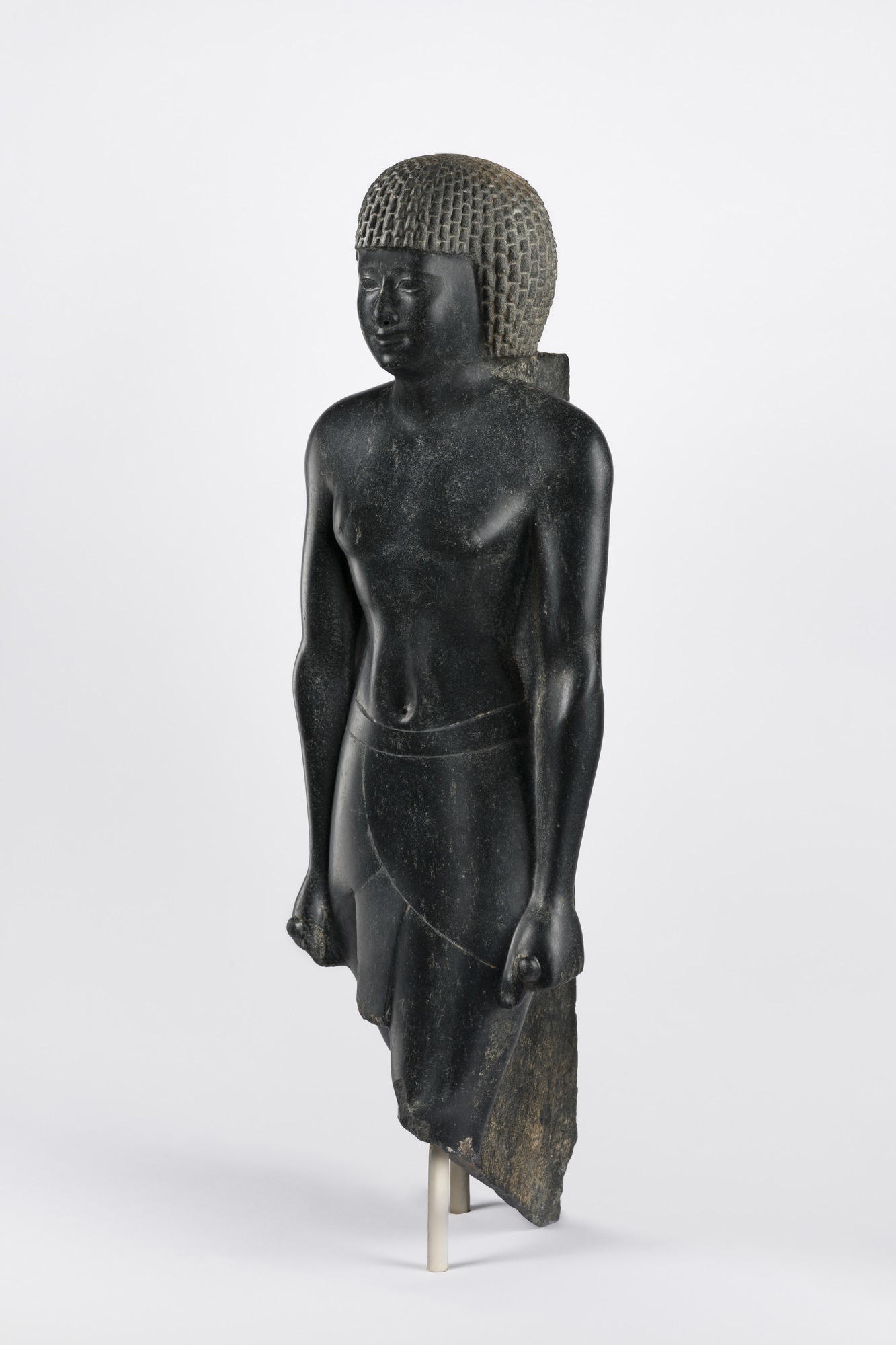
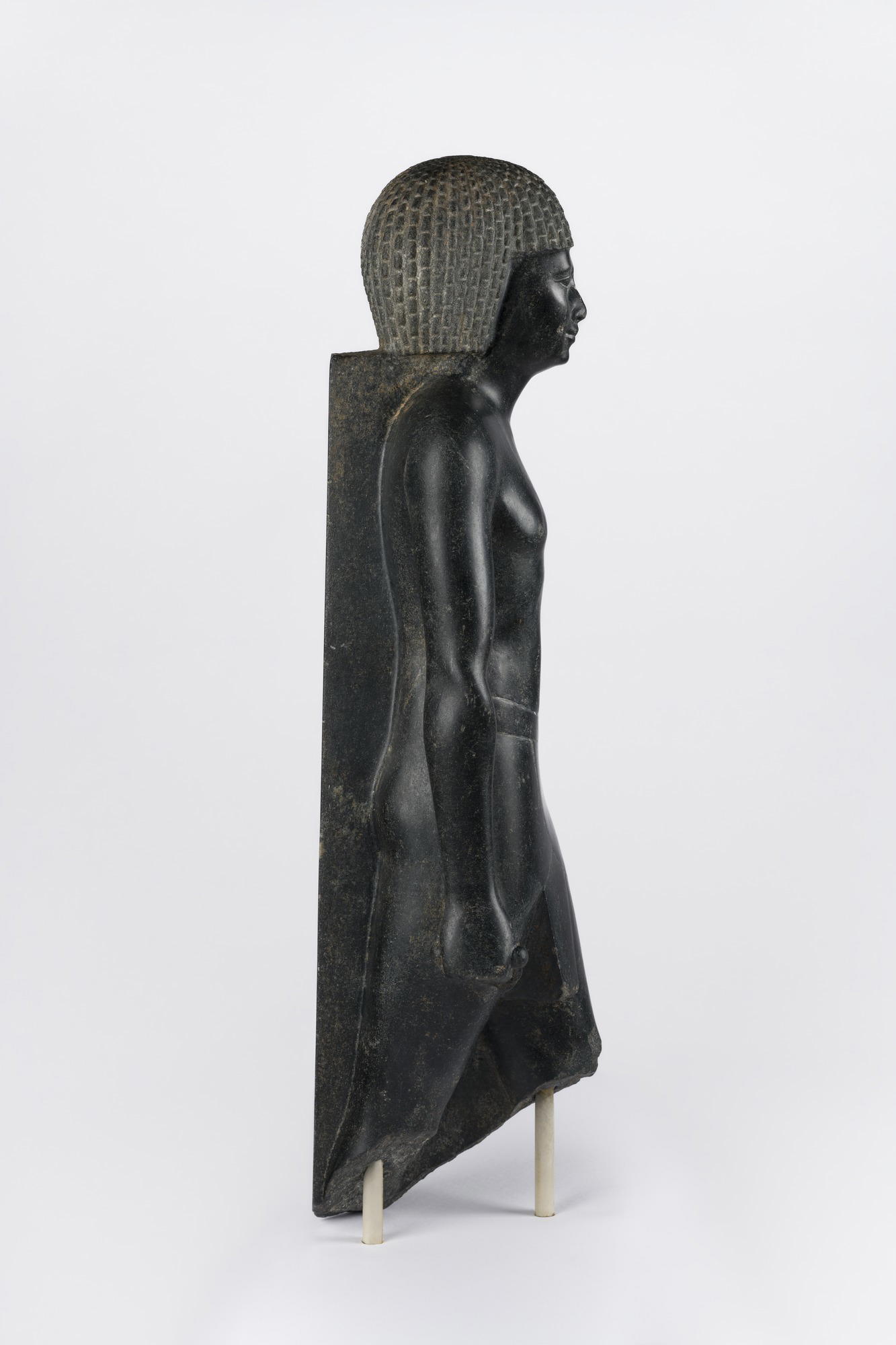
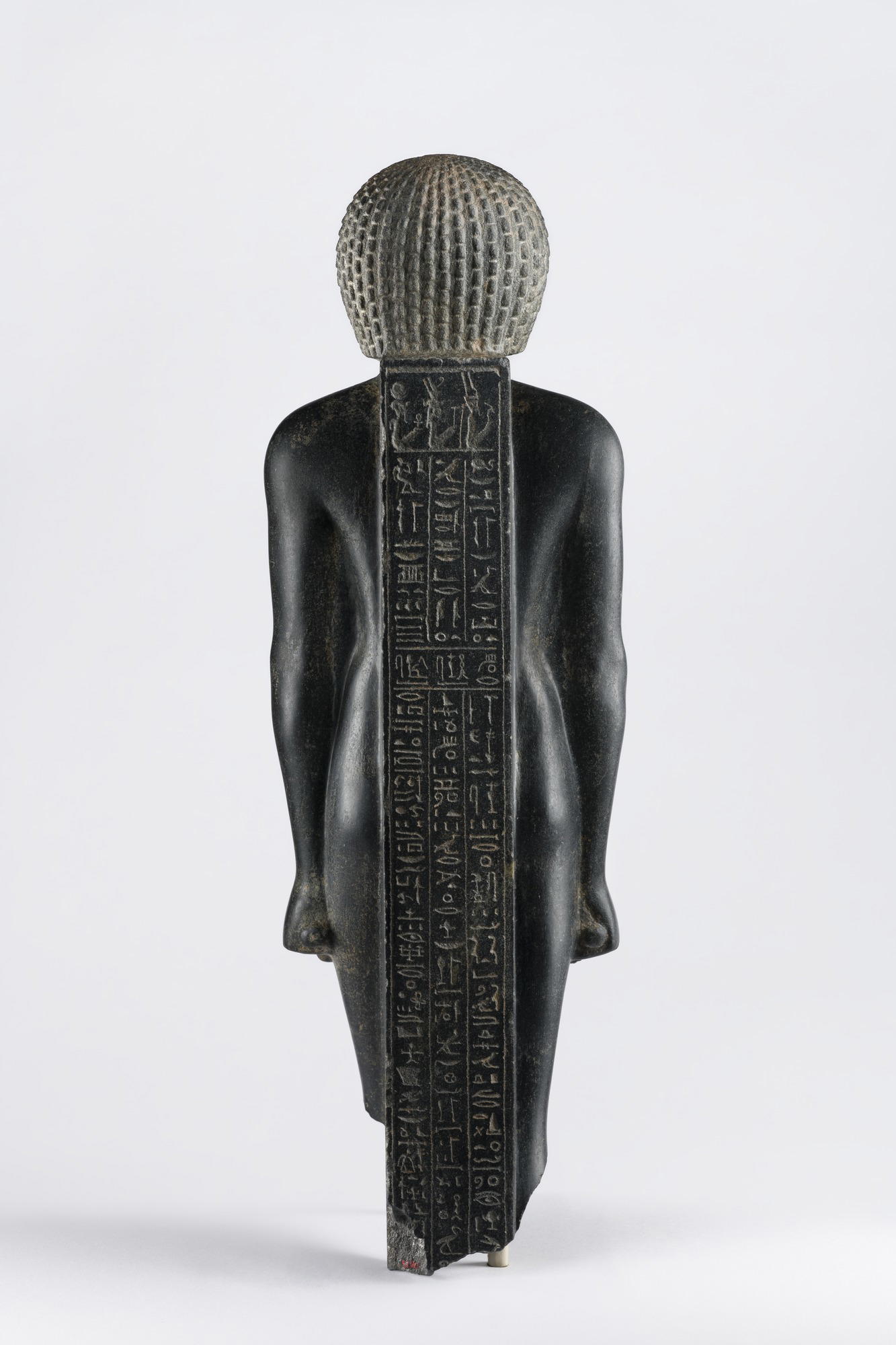
The statue of a priest of Amun shown here has an idealizing face in the style of the fourth century B.C. yet wears a Twenty-sixth Dynasty version of an Old Kingdom wig and is based typologically on Twenty-sixth Dynasty sculptures inspired by much earlier works. Despite these archaizing tendencies, it also displays a Thirtieth Dynasty innovation in statuary: the depiction of gods (here Amun, Mut, and Khonsu) on the top of the back pillar. Idealization is equally apparent in the two heads and the small statuette of Hor. The latter has some distinction. It is the earliest reasonably well dated sculpture with an egg-shaped cranium, an artistic detail that became common in the fourth century B.C.
Caption
Statue of a Priest of Amun, 381–362 B.C.E.. Diorite, 20 1/16 x 6 1/4 x 5 1/2 in., 30 lb. (51 x 15.9 x 14 cm, 13.61kg) Mount: 6 x 6 x 6 in. (15.2 x 15.2 x 15.2 cm) height of object on block: 26 1/4 in. (66.7 cm). Brooklyn Museum, Charles Edwin Wilbour Fund, 52.89. (Photo: Brooklyn Museum)
Gallery
Not on view
Gallery
Not on view
Title
Statue of a Priest of Amun
Date
381–362 B.C.E.
Dynasty
Dynasty 30
Period
Late Period
Geography
Place made: Thebes, Egypt
Medium
Diorite
Classification
Dimensions
20 1/16 x 6 1/4 x 5 1/2 in., 30 lb. (51 x 15.9 x 14 cm, 13.61kg) Mount: 6 x 6 x 6 in. (15.2 x 15.2 x 15.2 cm) height of object on block: 26 1/4 in. (66.7 cm)
Credit Line
Charles Edwin Wilbour Fund
Accession Number
52.89
Frequent Art Questions
Can you tell me some information about this artwork?
Sure! We know this man was a priest of Amun from the inscription on the back pillar. The style of the status is indicative of a later period in Egyptian history, but his clothing and hair replicate styles popular thousands of years earlier.Diorite and other hard, dark stones were valued for Egyptian sculpture because of the way the details carved into them appear very clearly.What is the term that describes the kind of pictorial writing found on these statues?
In general, the writing on the pieces you'll see in the galleries can all be referred to as Egyptian hieroglyphs or simply hieroglyphs, the writing system used in ancient Egypt.
Have information?
Have information about an artwork? Contact us at