Senwosret I
1 of 3
Object Label
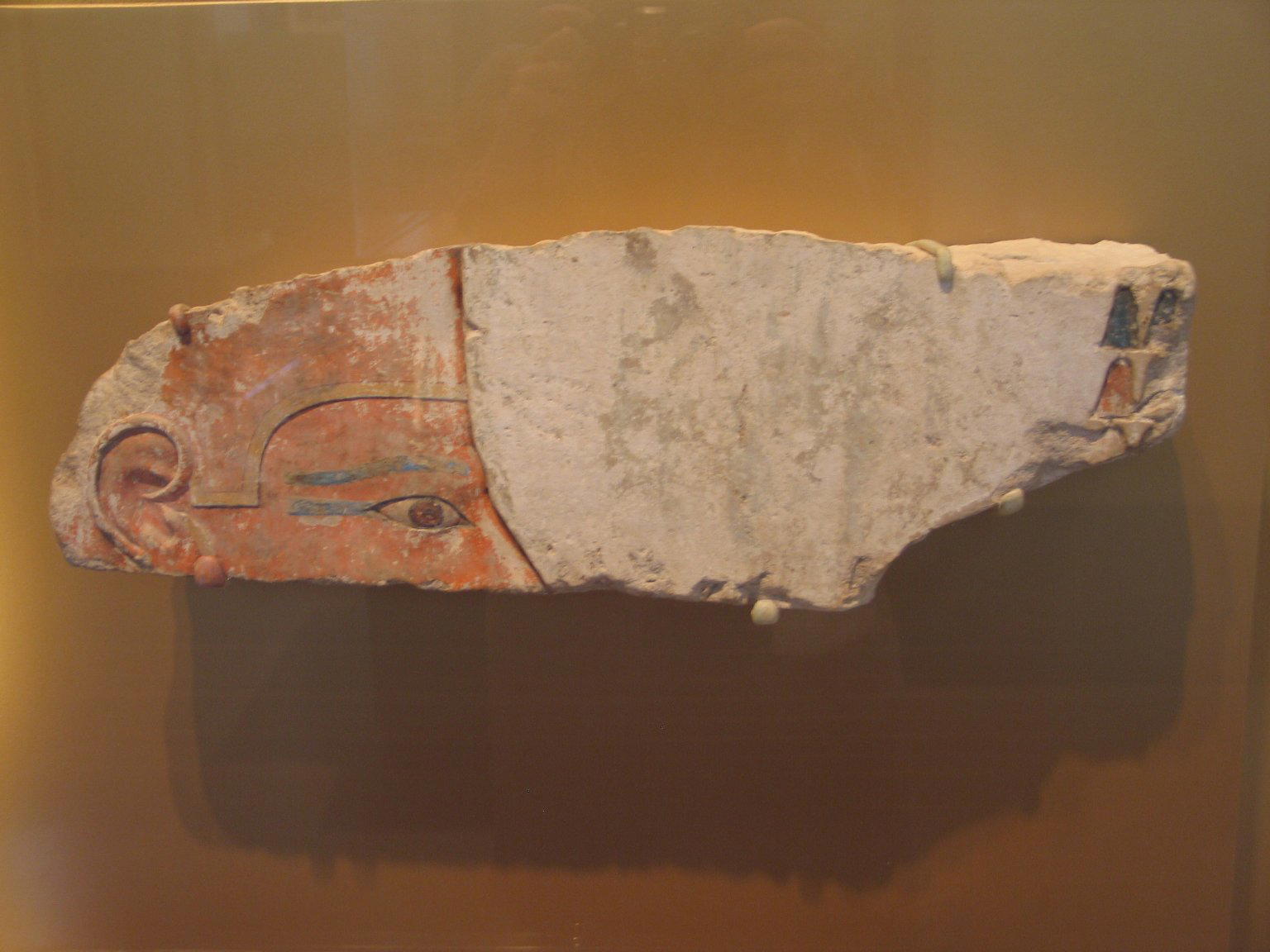
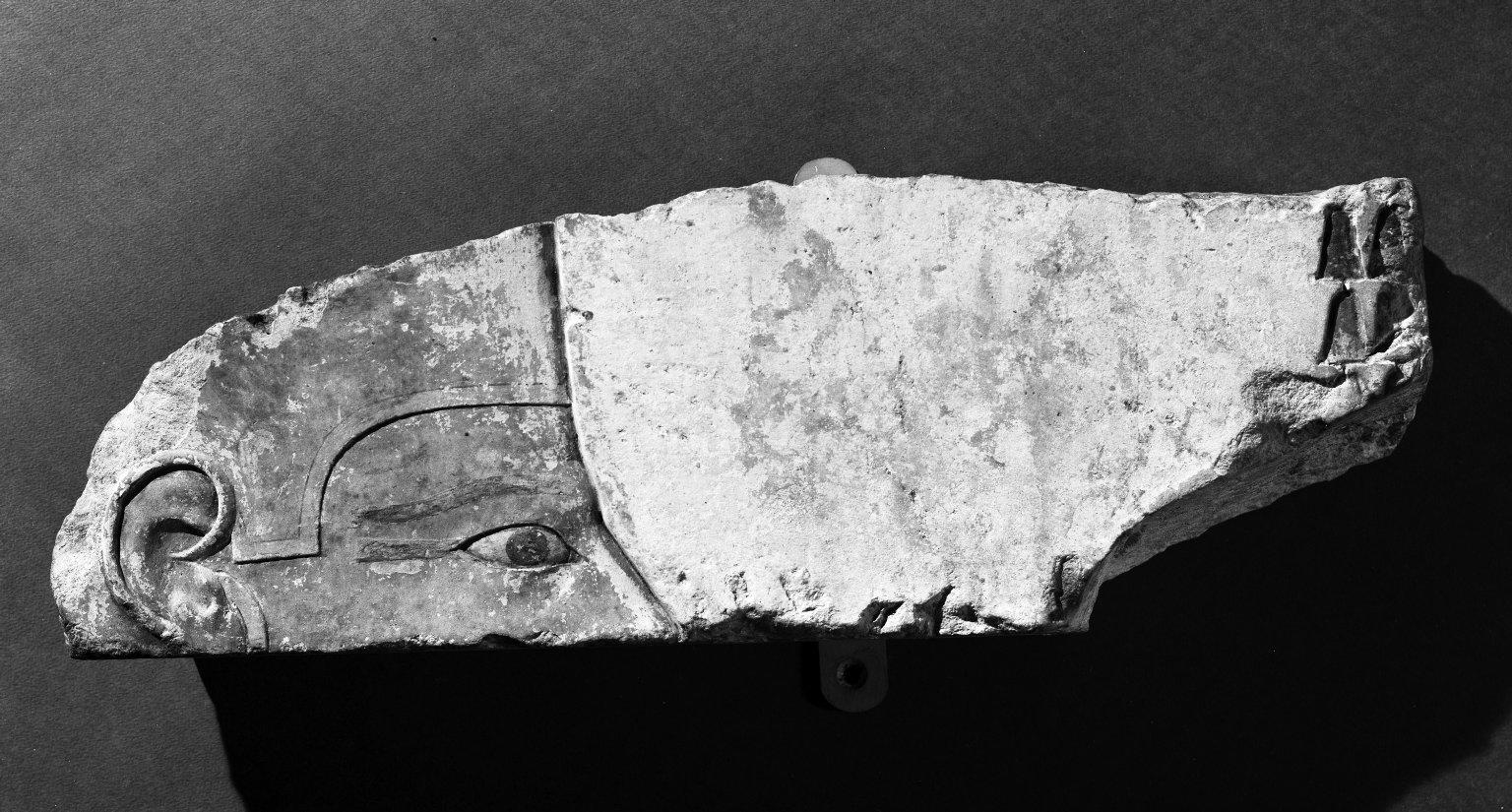
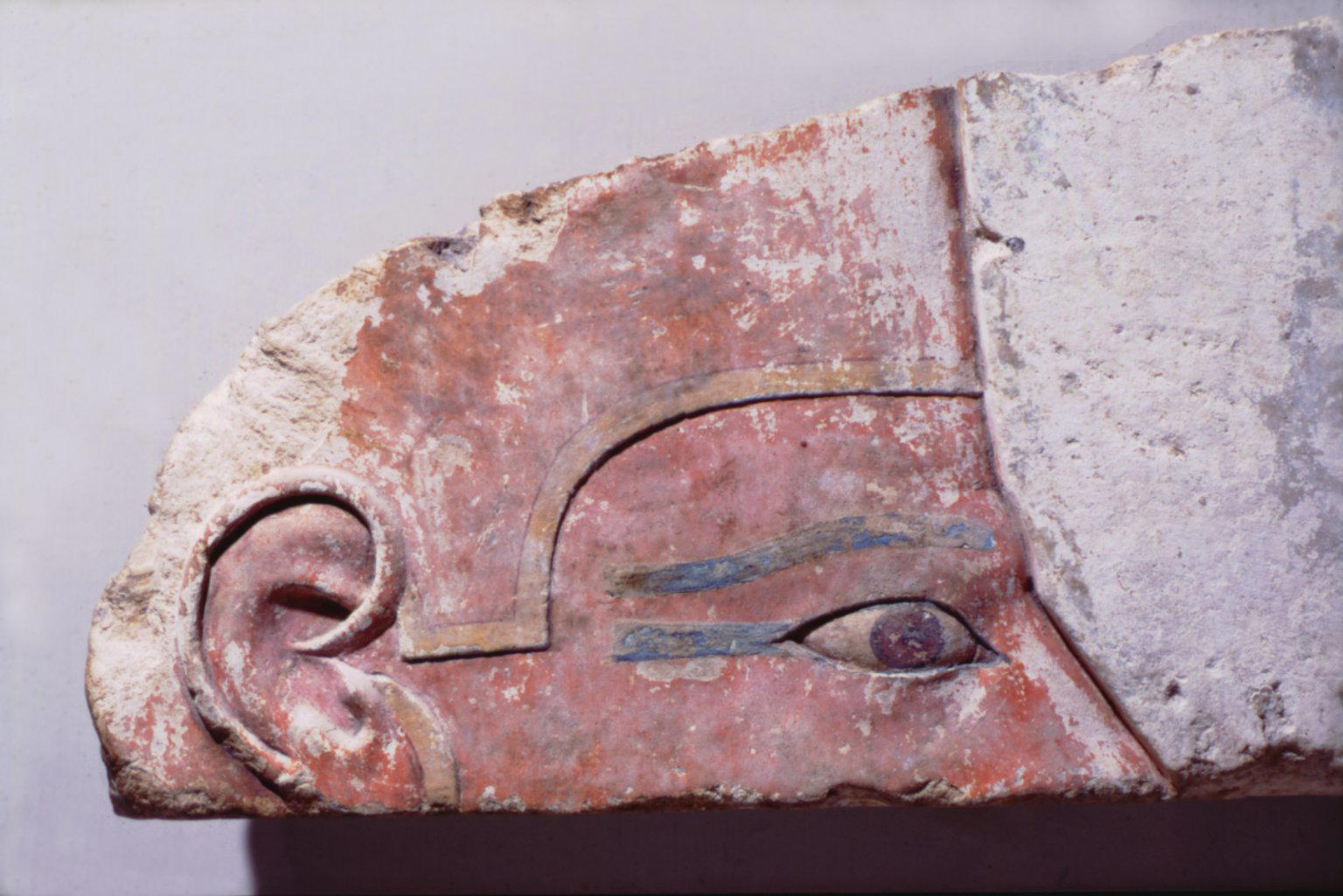
Most Egyptian reliefs decorating ancient temple walls were brightly painted. Limestone was too porous to allow for an even application of color, so artists usually covered a wall with plaster, smoothed the surface, and painted directly on the dried plaster. Over time, the painted plaster layer separated from the limestone and fell from the wall, so very little original coloration survives. Through the accidents of preservation, this fragment of the king’s face retains most of its ancient paint.
Caption
Senwosret I, ca. 1919–1875 B.C.E.. Limestone, pigment, 6 9/16 x 19 11/16 in. (16.7 x 50 cm). Brooklyn Museum, Charles Edwin Wilbour Fund, 52.130.1. (Photo: Brooklyn Museum)
Title
Senwosret I
Date
ca. 1919–1875 B.C.E.
Dynasty
Dynasty 12
Period
Middle Kingdom
Geography
Place excavated: Lisht, Egypt
Medium
Limestone, pigment
Classification
Dimensions
6 9/16 x 19 11/16 in. (16.7 x 50 cm)
Credit Line
Charles Edwin Wilbour Fund
Accession Number
52.130.1
Frequent Art Questions
Is this the original pigment of the object? Or was the color restored?
That's the original pigment. A layer plaster helps it adhere to the stone. The ancient Egyptians used mostly minerals and metals to create pigments which, luckily, means that the colors are less likely to fade.So cool! Thanks
Have information?
Have information about an artwork? Contact us at