Monkey


1 of 4
Object Label
Originally this whimsical representation of a monkey had movable forepaws. The left is now gone; only the wooden peg that held it in place survives. The piece may have been used as a diversion by a nurse to amuse and entertain a very young child. A strikingly similar piece, no doubt by the same master craftsman, was found by the English archaeologist Howard Carter in the tomb of Tutankhamun.
Caption
Monkey, ca. 1336–1327 B.C.E.. Ivory, 4 3/16 x 1 x 1 3/4 in. (10.7 x 2.5 x 4.4 cm). Brooklyn Museum, Charles Edwin Wilbour Fund, 55.176. (Photo: Brooklyn Museum)
Title
Monkey
Date
ca. 1336–1327 B.C.E.
Dynasty
late Dynasty 18
Period
New Kingdom
Geography
Possible place collected: Thebes, Egypt
Medium
Ivory
Classification
Dimensions
4 3/16 x 1 x 1 3/4 in. (10.7 x 2.5 x 4.4 cm)
Credit Line
Charles Edwin Wilbour Fund
Accession Number
55.176
Frequent Art Questions
Can you tell me a little bit about this?
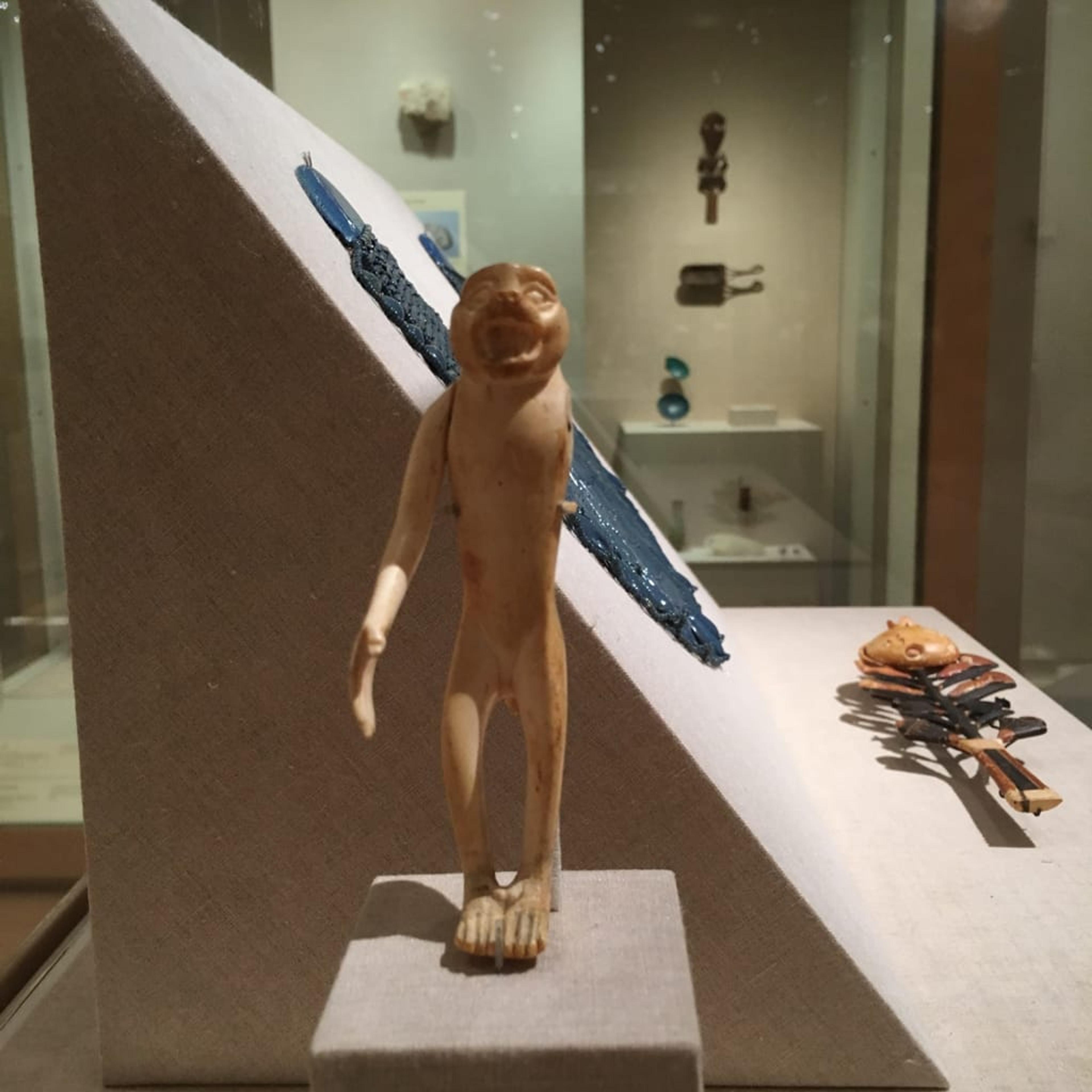 This image of a hybrid monkey was likely used to entertain a very young child. Essentially it is a toy, as you might be able to tell from the moveable arms.
Have information?
Have information about an artwork? Contact us at