Hot Water Urn


1 of 4
Object Label
Caption
American; Simeon Soumaine (American, baptized 1685–ca. 1750). Hot Water Urn, 1800. Silver, bone or ivory, pigment, Lid and body together: 18 3/4 × 10 1/2 × 8 1/2 in. (47.6 × 26.7 × 21.6 cm) Lid only: 6 × 4 1/2 in. (15.2 × 11.4 cm) Body only: 15 1/8 × 10 1/2 × 8 1/2 in. (38.4 × 26.7 × 21.6 cm). Brooklyn Museum, George C. Brackett Fund, 33.244. (Photo: Brooklyn Museum)
Gallery
Not on view
Collection
Gallery
Not on view
Collection
Culture
Maker
Title
Hot Water Urn
Date
1800
Medium
Silver, bone or ivory, pigment
Classification
Dimensions
Lid and body together: 18 3/4 × 10 1/2 × 8 1/2 in. (47.6 × 26.7 × 21.6 cm) Lid only: 6 × 4 1/2 in. (15.2 × 11.4 cm) Body only: 15 1/8 × 10 1/2 × 8 1/2 in. (38.4 × 26.7 × 21.6 cm)
Markings
S S in rectangle. (refers to maker Sun Sing, from Canton, China)
Credit Line
George C. Brackett Fund
Accession Number
33.244
Frequent Art Questions
What liquid would this vessel have held?
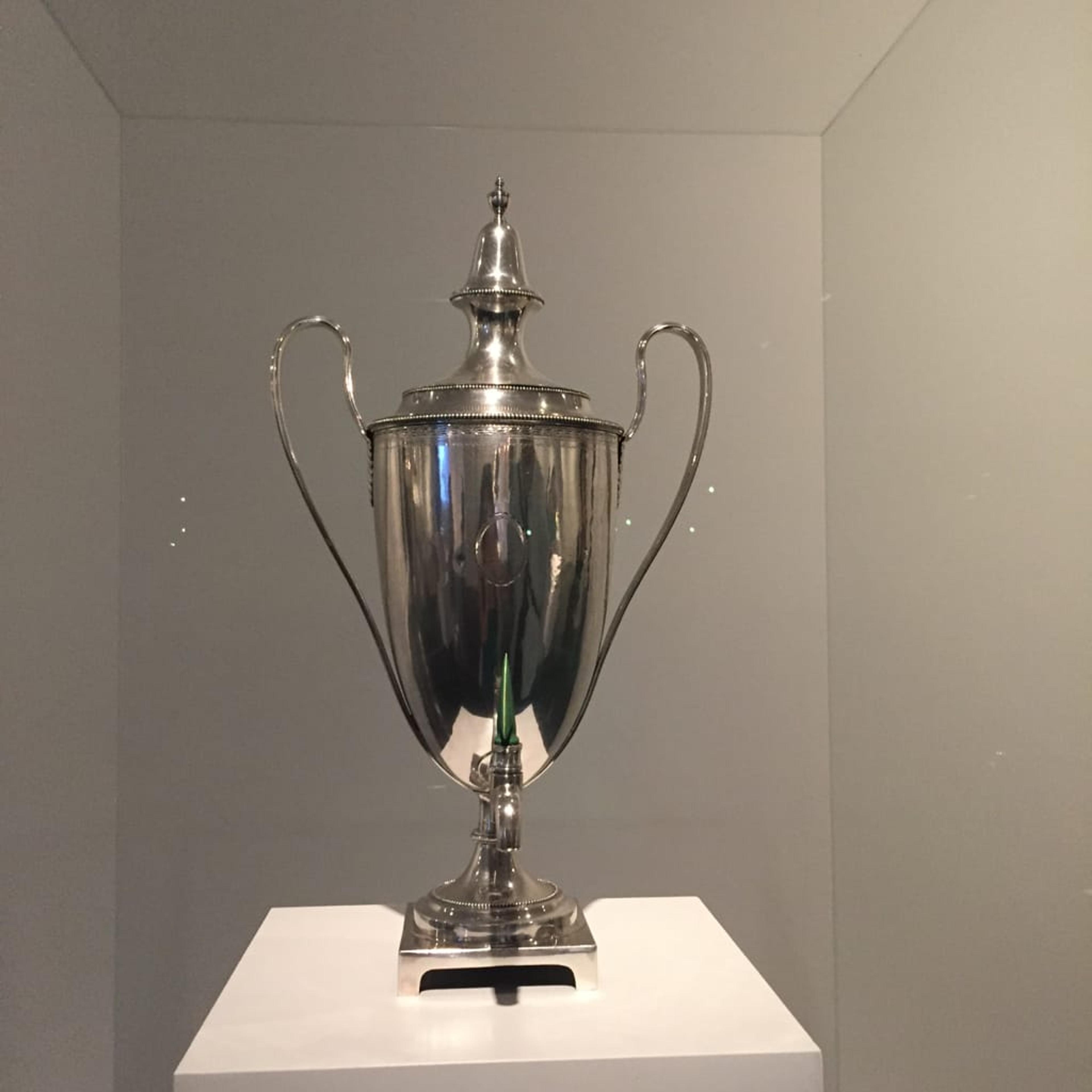 This urn would have held boiling hot water to make tea. I love the little piece of bone dyed green to resemble jade
What is this? It looks like a Russian samovar, but it’s in the Asian art section.
Much like a samovar, this is a hot water urn. It was made in China for export to the United States. Following the American Revolution, the US traded directly with China for silver goods at a fraction of the prices they paid under British rule. They wished to demonstrate their affluence. This urn was also used for tea in a communal setting over long periods of time.What was this used for?
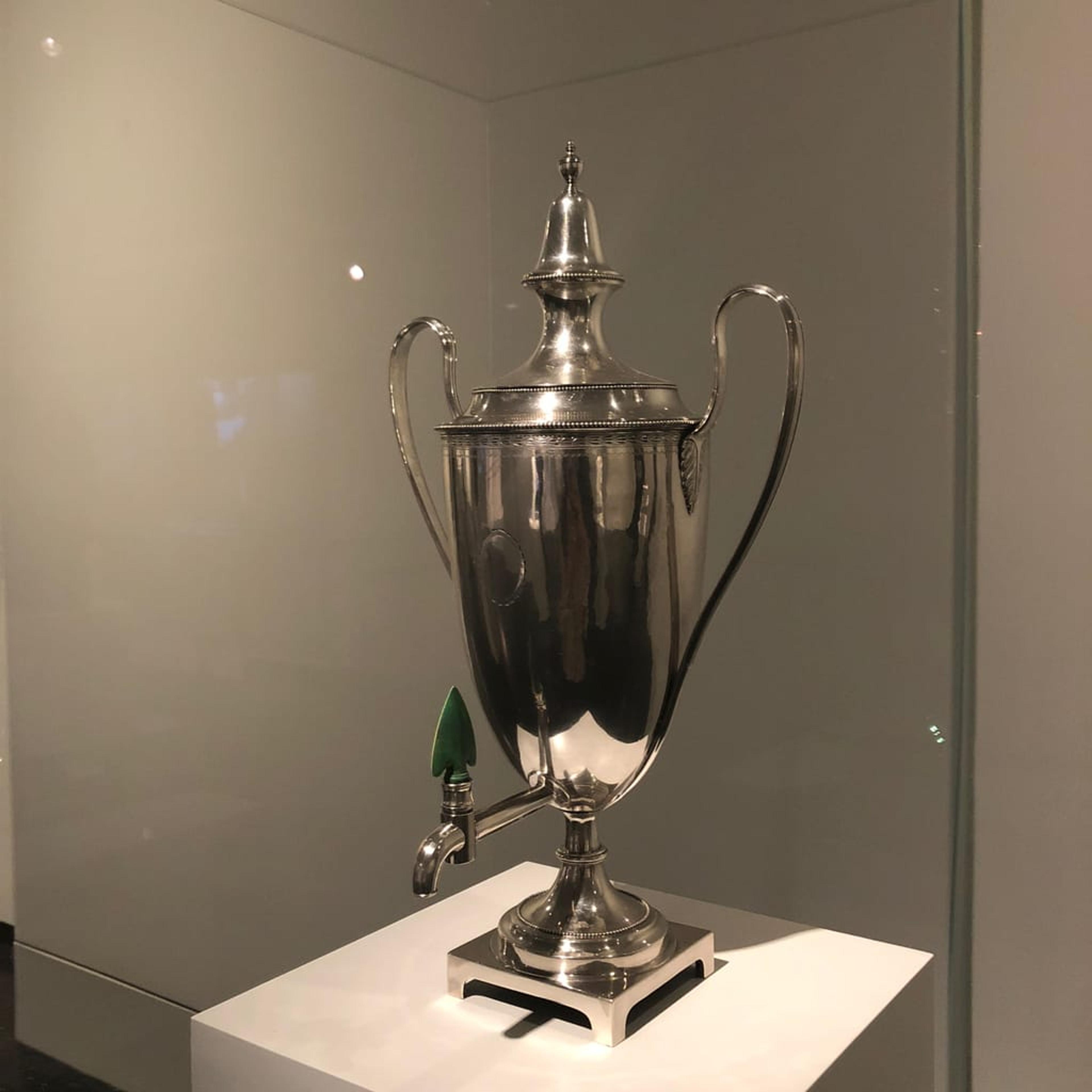 This urn was meant for hot water, just like one you might see at a meeting today! Moving the green handle opened the spigot and you could pour water into your cup for tea.
Have information?
Have information about an artwork? Contact us at