Frog
ca. 1390–1353 B.C.E.


1 of 4
Object Label
In antiquity, as today, the croaking of frogs was often the first sound heard each morning in Egypt. These amphibians were thus associated with the sun’s daily rebirth, and their images were believed to have protective powers. This sculpture was probably placed next to a woman to safeguard her during childbirth. The combination of deep blue and turquoise typifies objects from the time of Amunhotep III.
Caption
Frog, ca. 1390–1353 B.C.E.. Faience, 2 1/16 x 1 15/16 x 1 7/8 in. (5.3 x 5 x 4.7 cm). Brooklyn Museum, Charles Edwin Wilbour Fund, 58.28.8. (Photo: Brooklyn Museum)
Gallery
Not on view
Gallery
Not on view
Frequent Art Questions
Do you have any guess on when this frog was created?
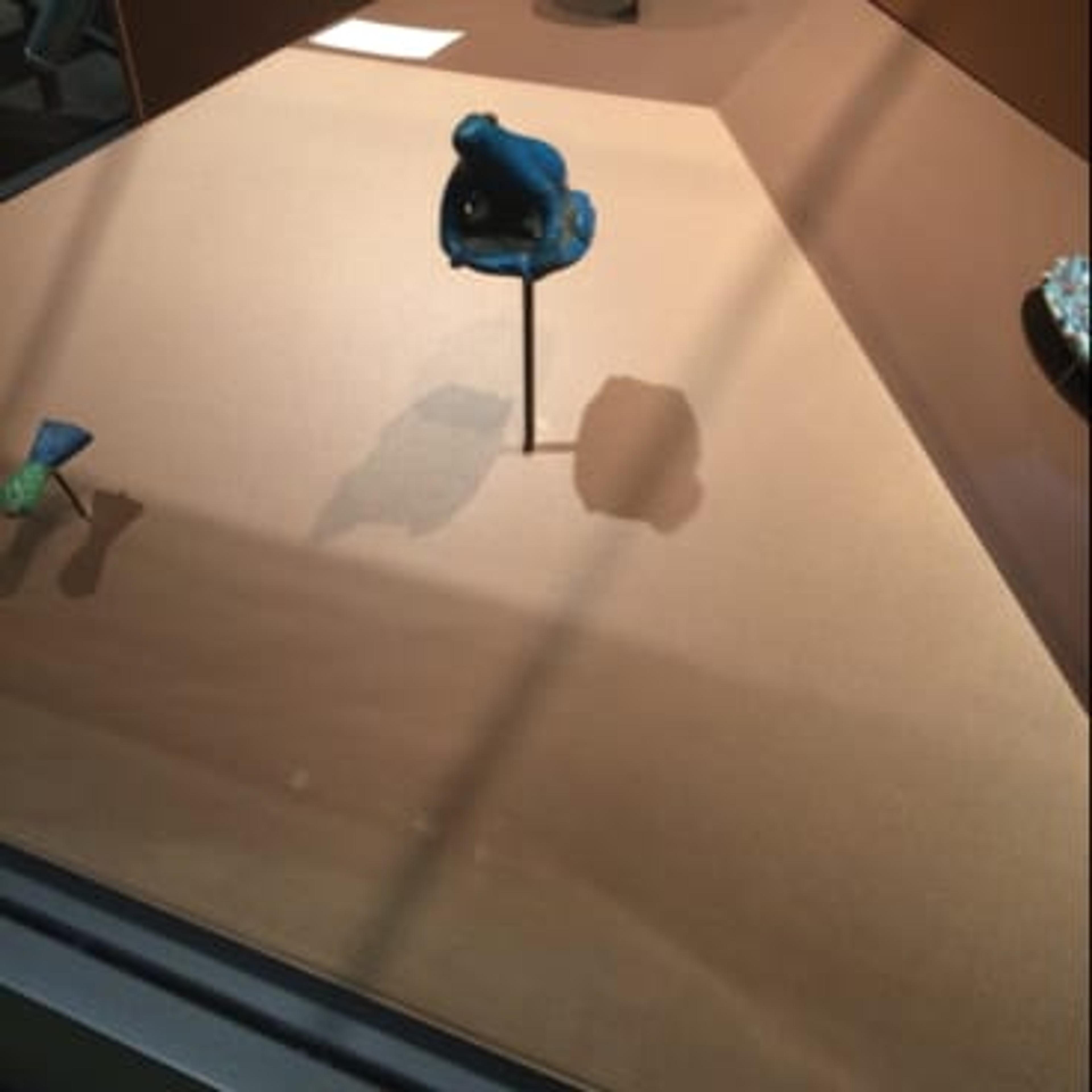 We have on file that it was created circa 1390-1353 BCE, it's very old!
I couldn’t think of a question for this frog, but I like it a lot.
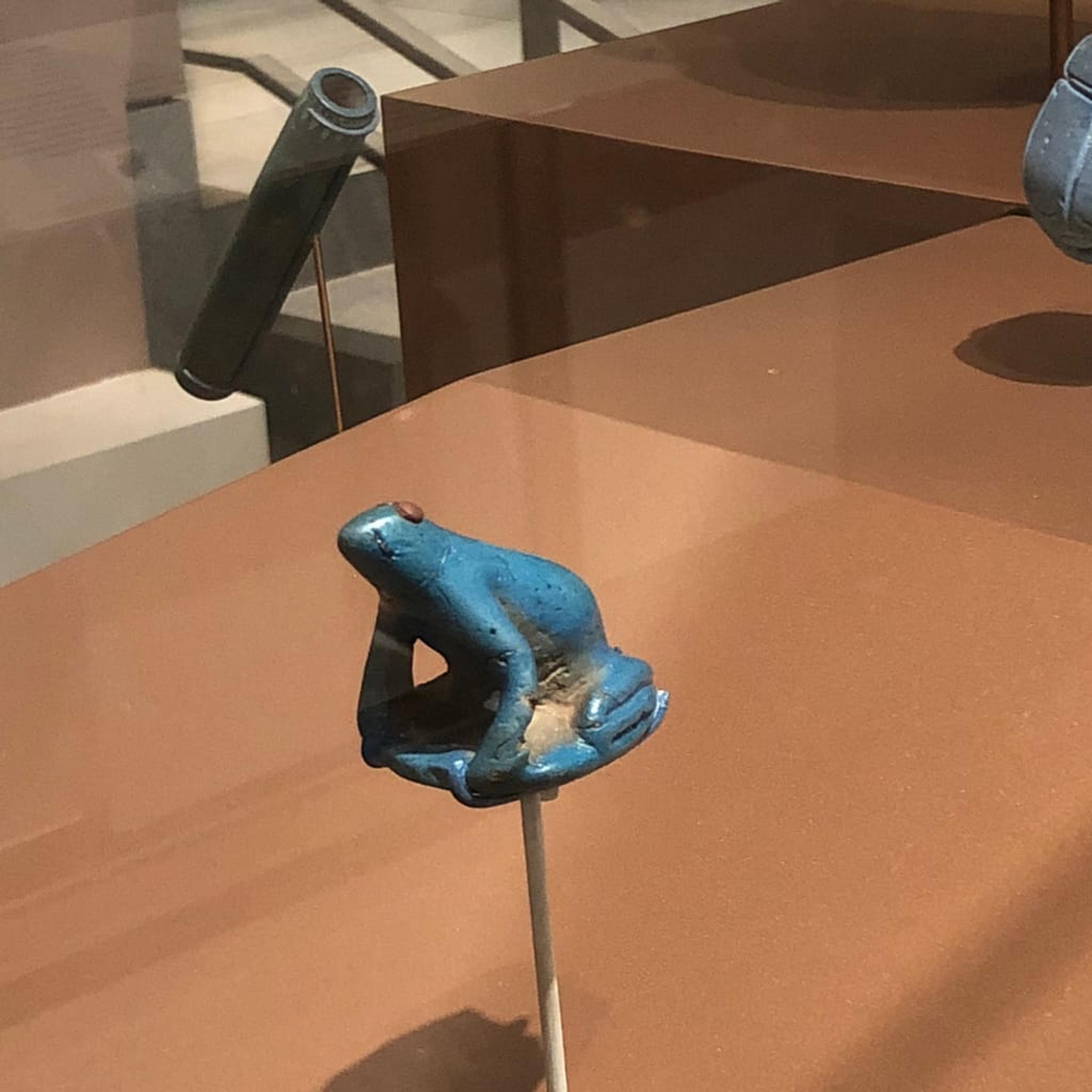 No worries! This frog is an example of faience like what the statuette of Aphrodite is made out of; this bright blue was the most common glaze that was used on the material.Faience is a quartz-based paste that can be molded and fired at high temperatures to harden much like ceramics. The material is naturally sparkling white so it takes color very well. This glass-like glaze is colored with copper oxides.Awesome! Thank you!
Have information?
Have information about an artwork? Contact us at