Head of an Egyptian Official
ca. 50 B.C.E.


1 of 2
Object Label
During the Ptolemaic Period (332–30 B.C.), when Egypt was ruled by a family of Greek descent named Ptolemy, large numbers of Greeks moved to Egypt, where many served as government officials. We cannot know, therefore, whether this striking head, from an over-life-size statue, represented a Greek or a native Egyptian, especially since its striking features are a blend of Egyptian and Greek styles. The short curls, for example, are a simplified rendering of a Greek hairdo, and the large, deep-set eyes derive from images of Alexander the Great. But the facial modeling, with its folds and furrows, has many precedents in Egyptian art, as does the narrow, sharply outlined mouth. We may see here the beginning of a mixed Greco-Egyptian style, which was soon to disappear when the Romans conquered Egypt.
Caption
Head of an Egyptian Official, ca. 50 B.C.E.. Diorite, 16 5/16 x 11 1/4 x 13 7/8 in. (41.4 x 28.5 x 35.2 cm). Brooklyn Museum, Charles Edwin Wilbour Fund, 58.30. (Photo: Brooklyn Museum)
Title
Head of an Egyptian Official
Date
ca. 50 B.C.E.
Period
Ptolemaic Period
Geography
Possible place made: Mitrahina, Egypt
Medium
Diorite
Classification
Dimensions
16 5/16 x 11 1/4 x 13 7/8 in. (41.4 x 28.5 x 35.2 cm)
Credit Line
Charles Edwin Wilbour Fund
Accession Number
58.30
Frequent Art Questions
Why is the nose missing from the statue?
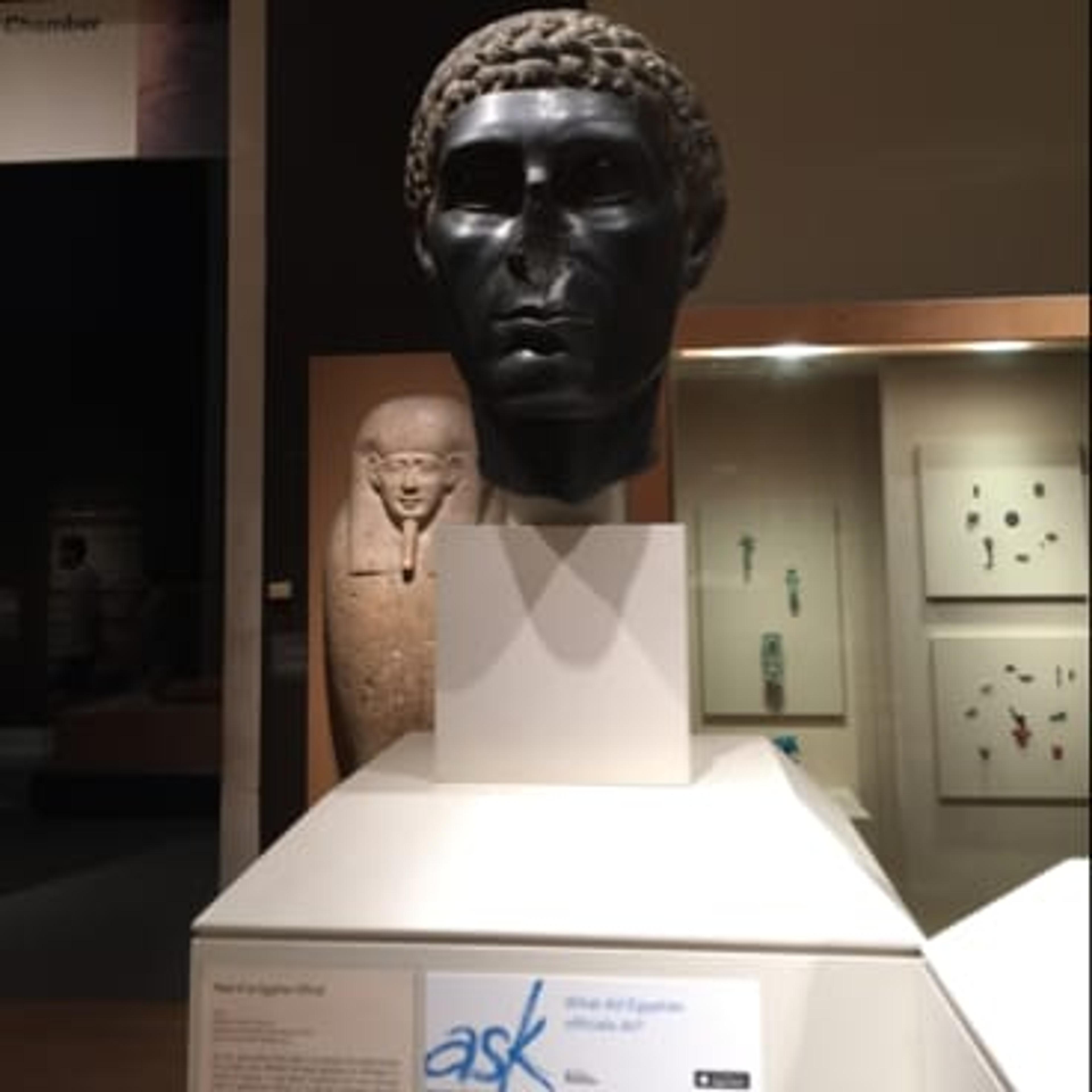 The nose may be broken for two reasons--one being that when sculptures fell down, the nose was the first part to hit and would break; the other reason is iconoclasm, or, that people of a different religion would destroy them out of belief that these images were unholy.
Why does the hair look different from the earlier Egyptian statues?
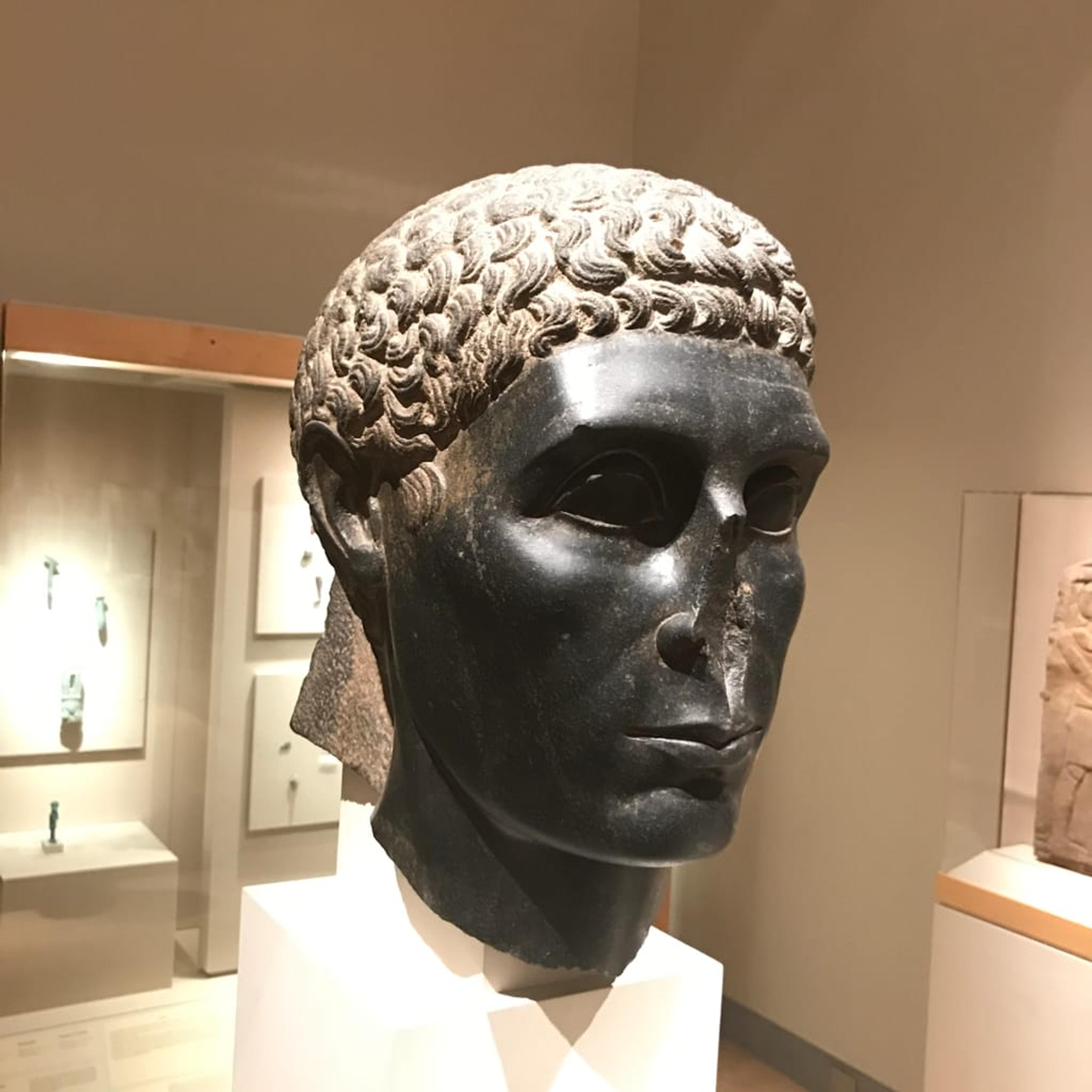 The man depicted in this statue lived during the Ptolemaic Period when Greek kings ruled Egypt. During this time, Egypt became a melting pot of cultures. Greek styles, like this man's hair, had a huge influence. You can see in his facial features, though, that he still looks very Egyptian.
Have information?
Have information about an artwork? Contact us at