Baboon
1 of 3
Object Label
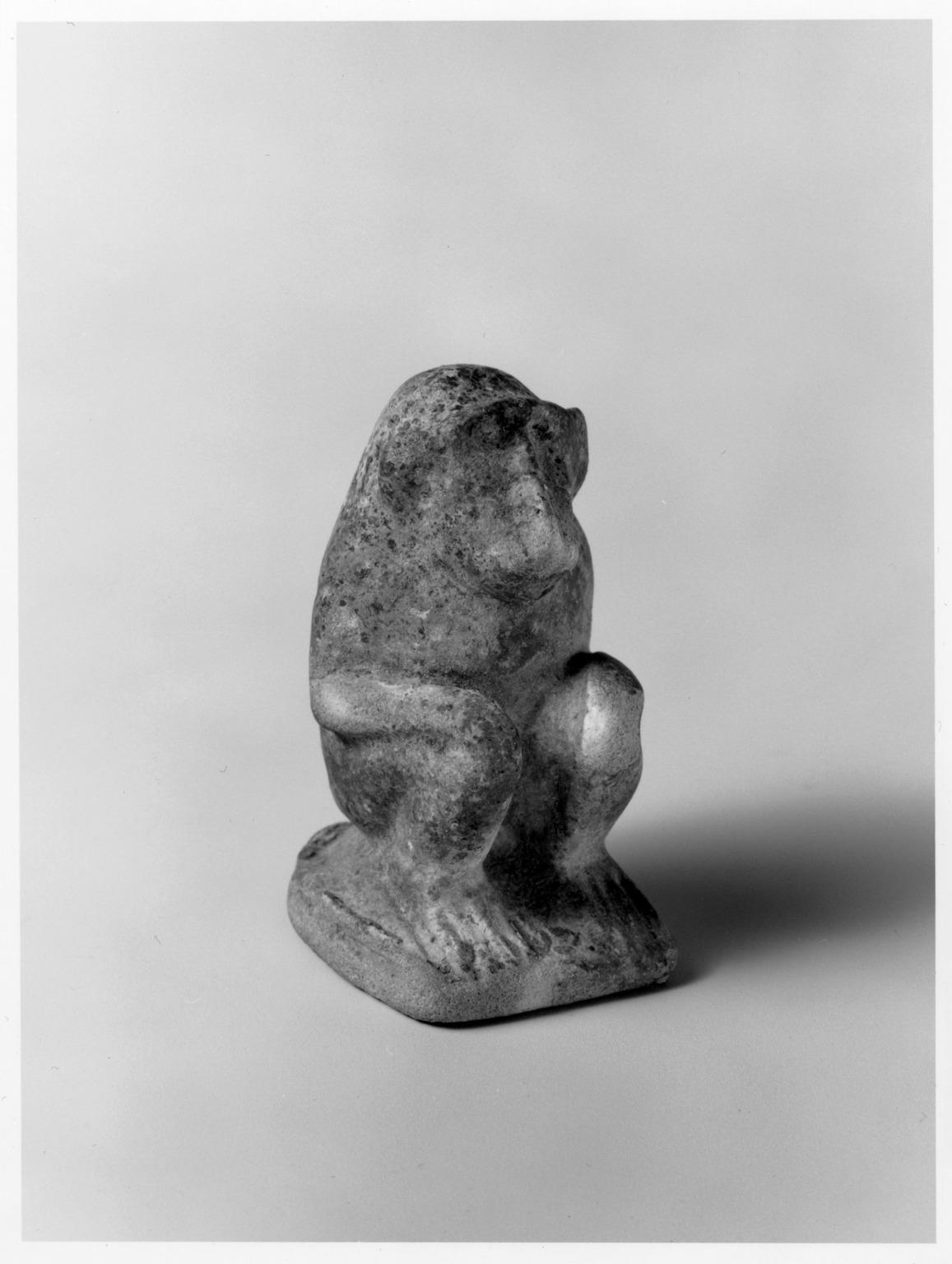
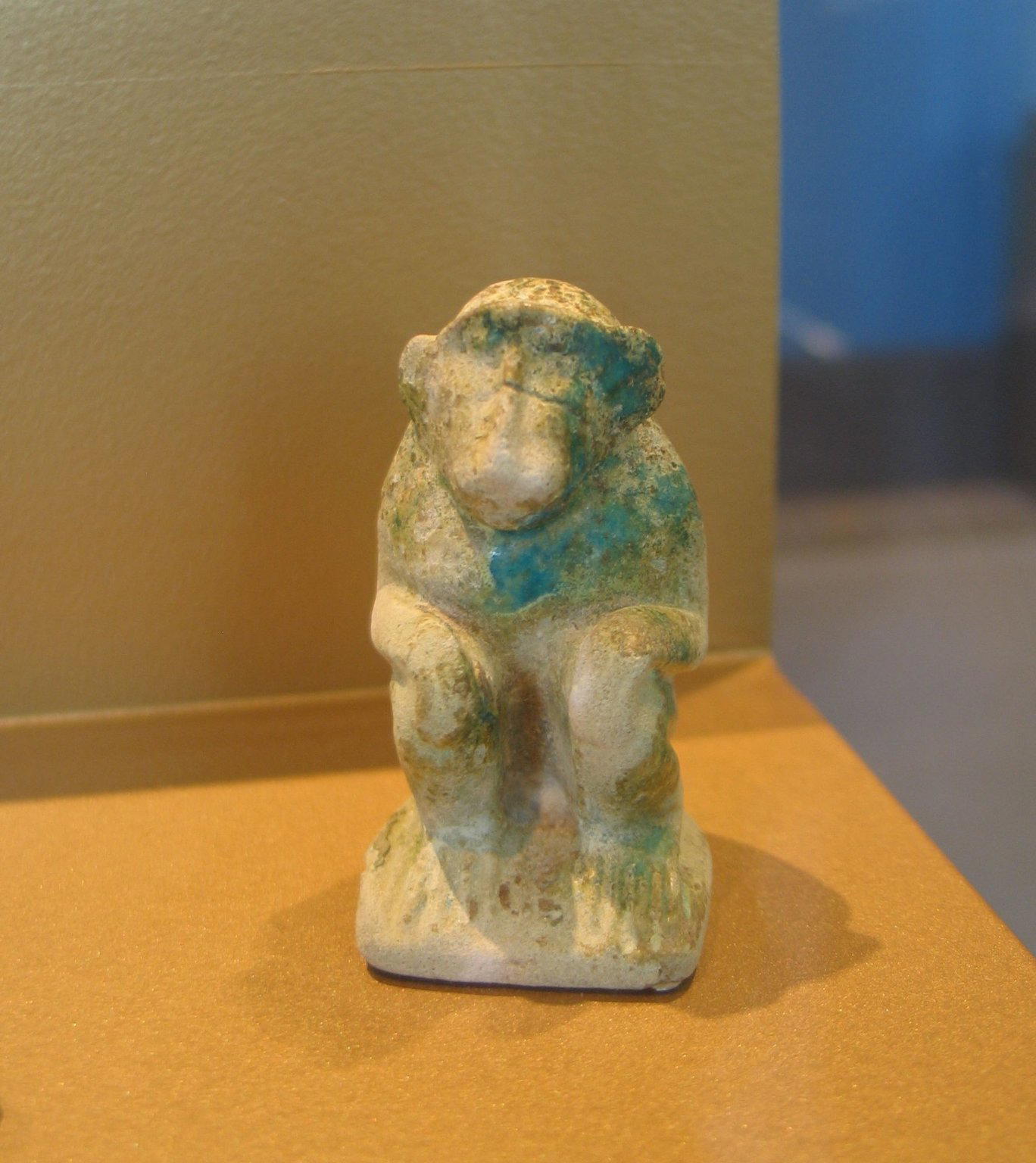
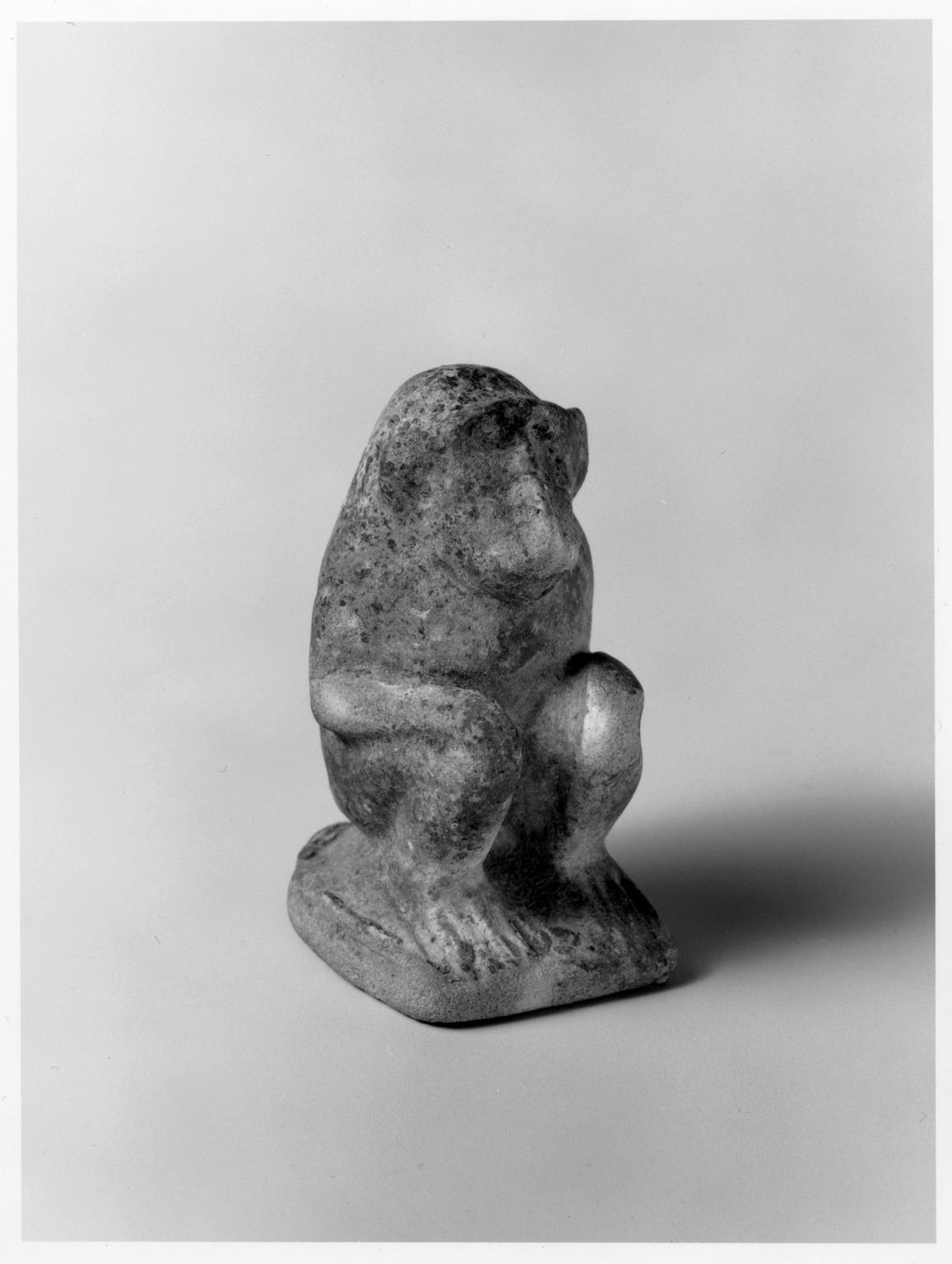
Baboons warm their stomachs by sitting up, raising their paws, and facing the sun each morning, a behavior the Egyptians interpreted as solar worship. Baboon figures were included in burials to assist in the deceased’s rebirth. Wild baboons had all but disappeared from around the Nile Valley by the Middle Kingdom, when this figure was made. Female baboons were placid enough to be domesticated and kept as pets, but they had to be imported at great cost from central Africa, making them exotic luxuries and conspicuous status symbols.
Caption
Baboon, ca. 1938–1700 B.C.E.. Faience, 2 1/2 x 1 1/2 x 1 3/4 in. (6.4 x 3.8 x 4.4 cm). Brooklyn Museum, Charles Edwin Wilbour Fund, 59.199.3.
Title
Baboon
Date
ca. 1938–1700 B.C.E.
Dynasty
Dynasty 12 to early Dynasty 13
Period
Middle Kingdom
Geography
Place excavated: Lisht, Egypt
Medium
Faience
Classification
Dimensions
2 1/2 x 1 1/2 x 1 3/4 in. (6.4 x 3.8 x 4.4 cm)
Credit Line
Charles Edwin Wilbour Fund
Accession Number
59.199.3
Have information?
Have information about an artwork? Contact us at