Mirror with Handle in Form of Girl
Egyptian


1 of 28
Object Label
Mirrors
Although commonplace objects to us, mirrors held great meaning to the ancient Egyptians.
The Egyptians first used mirrors in the Old Kingdom (Third through Sixth Dynasties; circa 2675–2170 B.C.E.) if not earlier. The design—elliptical disks supported by handles shaped like papyrus plants—symbolized the moment when the creator-god emerged from the primordial swamp in the form of the sun. The Egyptians believed that all life began in this so-called First Moment. When they picked up their mirrors each morning they were thus reminded of creation.
The shape of mirrors changed over time. In the Eighteenth Dynasty, the traditional oval disk was replaced by a circular form. Handles appeared in a wide variety of shapes, including images of animals, adolescent girls, and papyrus flowers.
Although commonplace objects to us, mirrors held great meaning to the ancient Egyptians.
The Egyptians first used mirrors in the Old Kingdom (Third through Sixth Dynasties; circa 2675–2170 B.C.E.) if not earlier. The design—elliptical disks supported by handles shaped like papyrus plants—symbolized the moment when the creator-god emerged from the primordial swamp in the form of the sun. The Egyptians believed that all life began in this so-called First Moment. When they picked up their mirrors each morning they were thus reminded of creation.
The shape of mirrors changed over time. In the Eighteenth Dynasty, the traditional oval disk was replaced by a circular form. Handles appeared in a wide variety of shapes, including images of animals, adolescent girls, and papyrus flowers.
Caption
Egyptian. Mirror with Handle in Form of Girl, ca. 1400–1292 B.C.E.. Bronze, 8 3/4 x 4 13/16 in. (22.2 x 12.2 cm). Brooklyn Museum, Charles Edwin Wilbour Fund, 60.27.1. (Photo: Brooklyn Museum)
Frequent Art Questions
Tell me more.
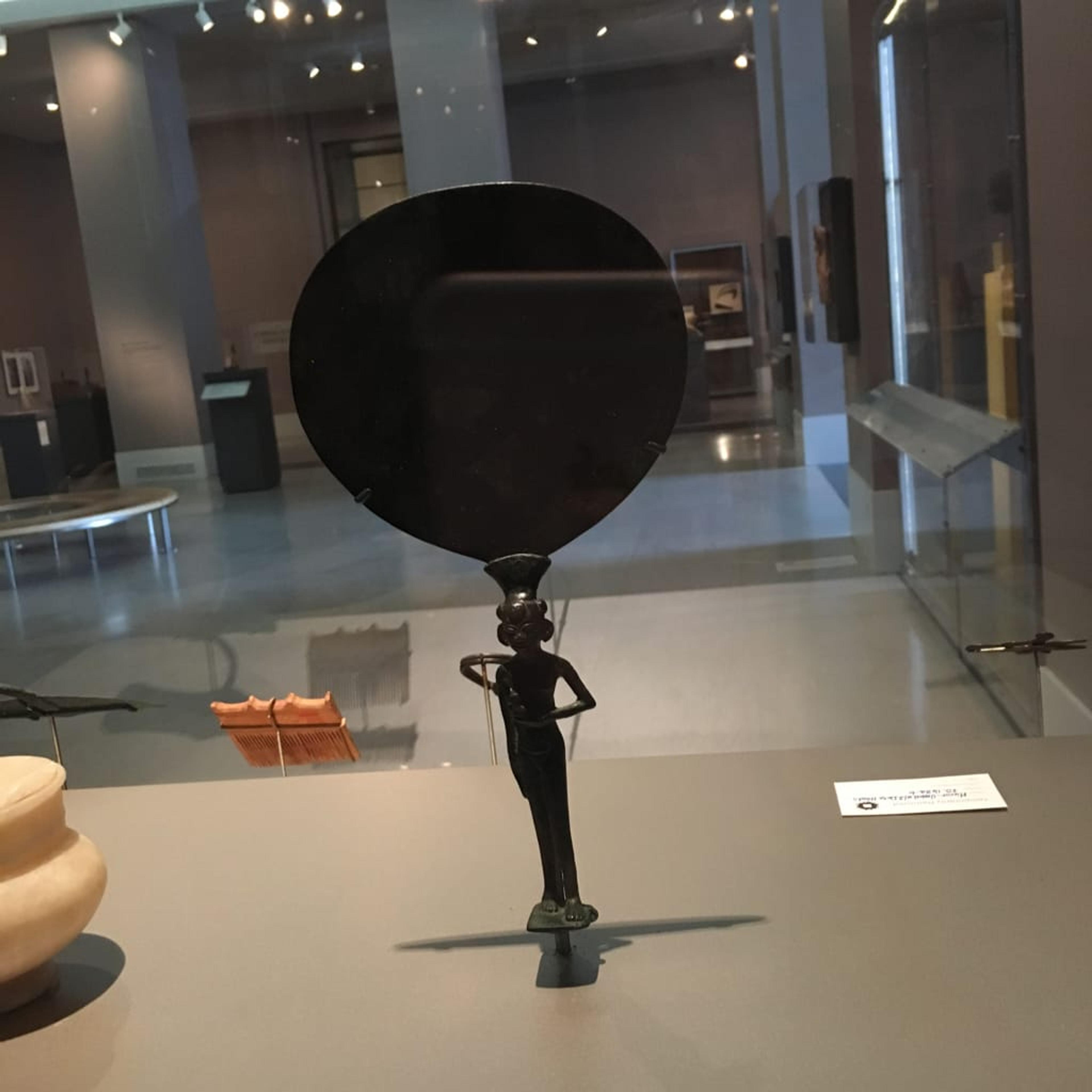 Mirrors held great meaning to the ancient Egyptians. The oval shape mimics that of the sun when it first emerges over the horizon, a daily event that reminded the ancient Egyptians of rebirth and renewal.The surface of the oval would have been buffed and buffed until it became reflective.
Why doesn't this mirror have glass?
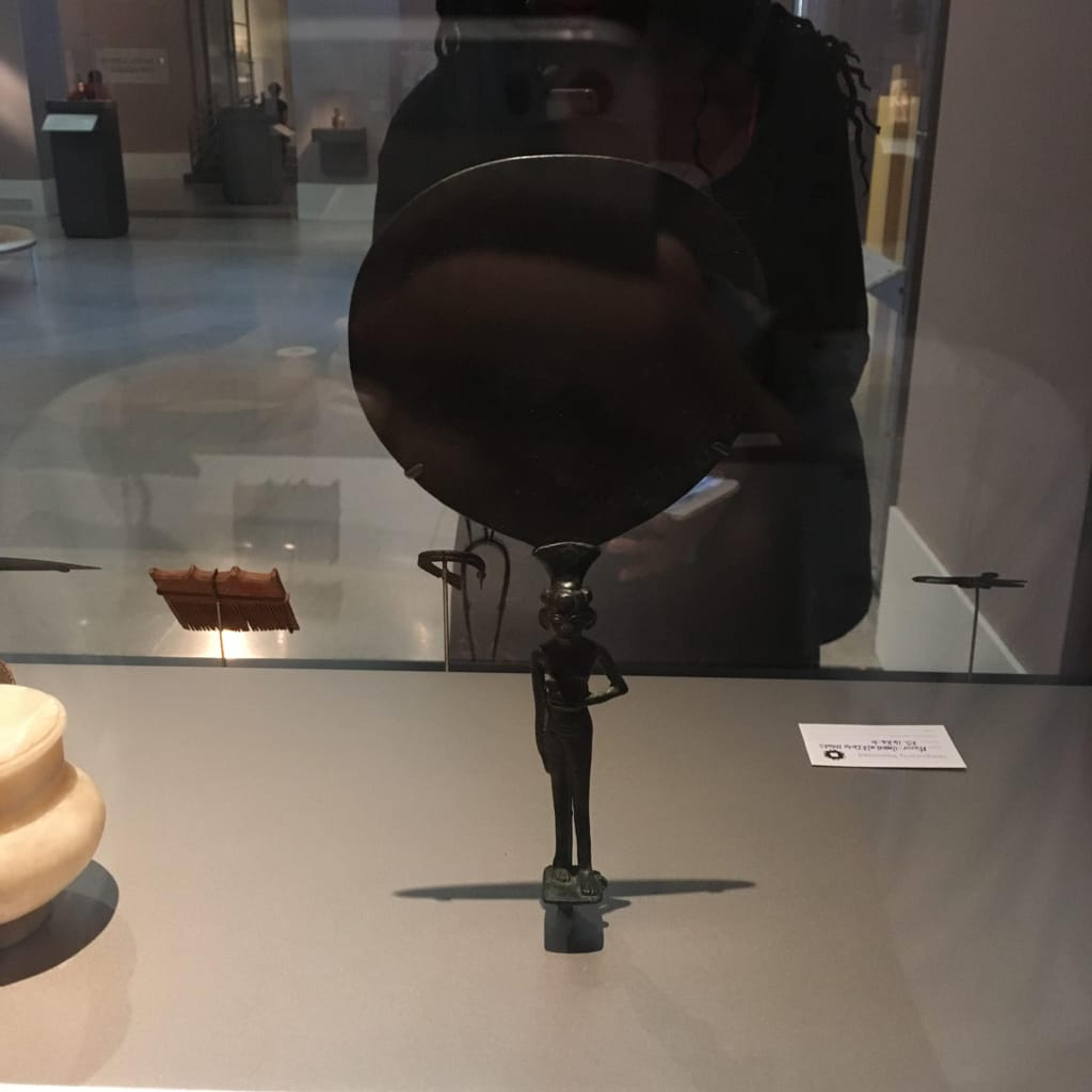 The mirror was actually just a highly polished piece of bronze that you would have been able to see your reflection in!Mirrors today are actually also made of a thin layer of reflective metal. They are just topped by a layer of glass to protect the metal!
Have information?
Have information about an artwork? Contact us at