Feeding Calves

1 of 4
Object Label
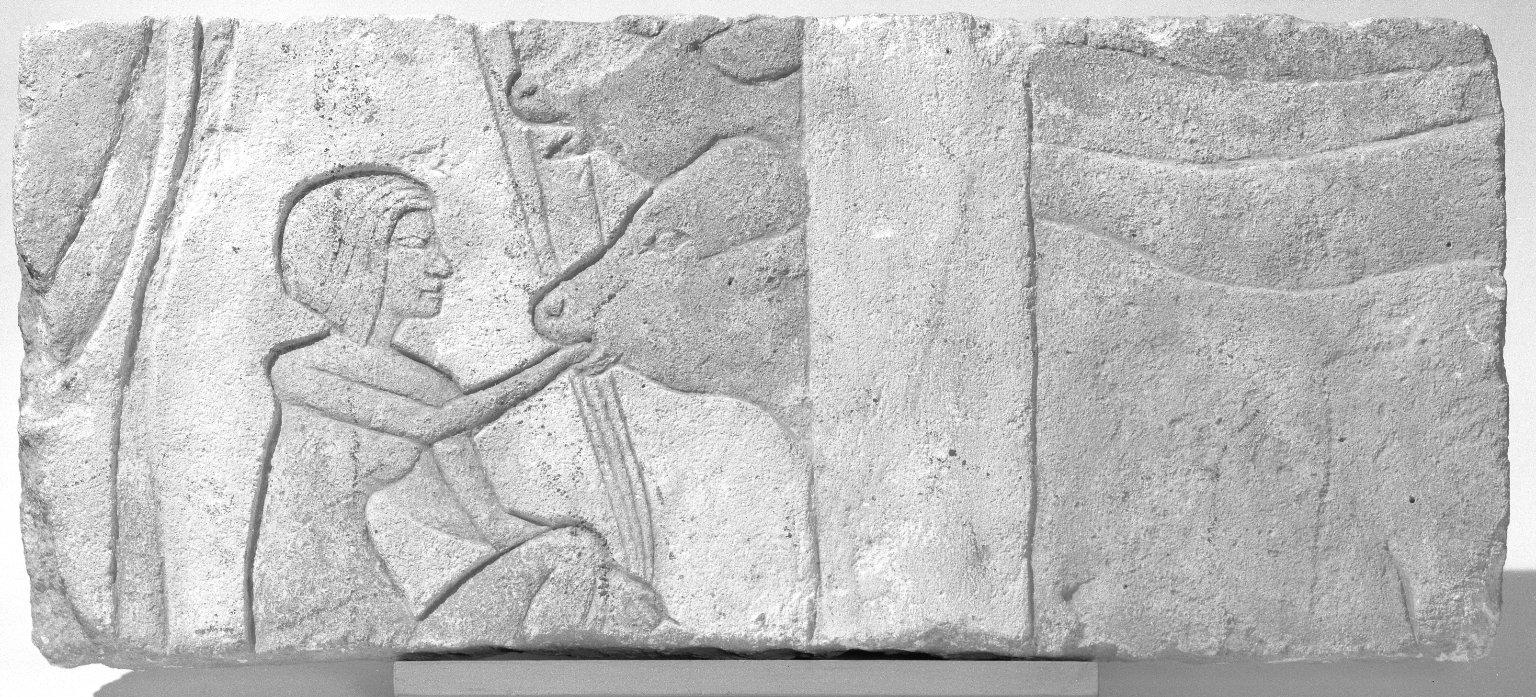
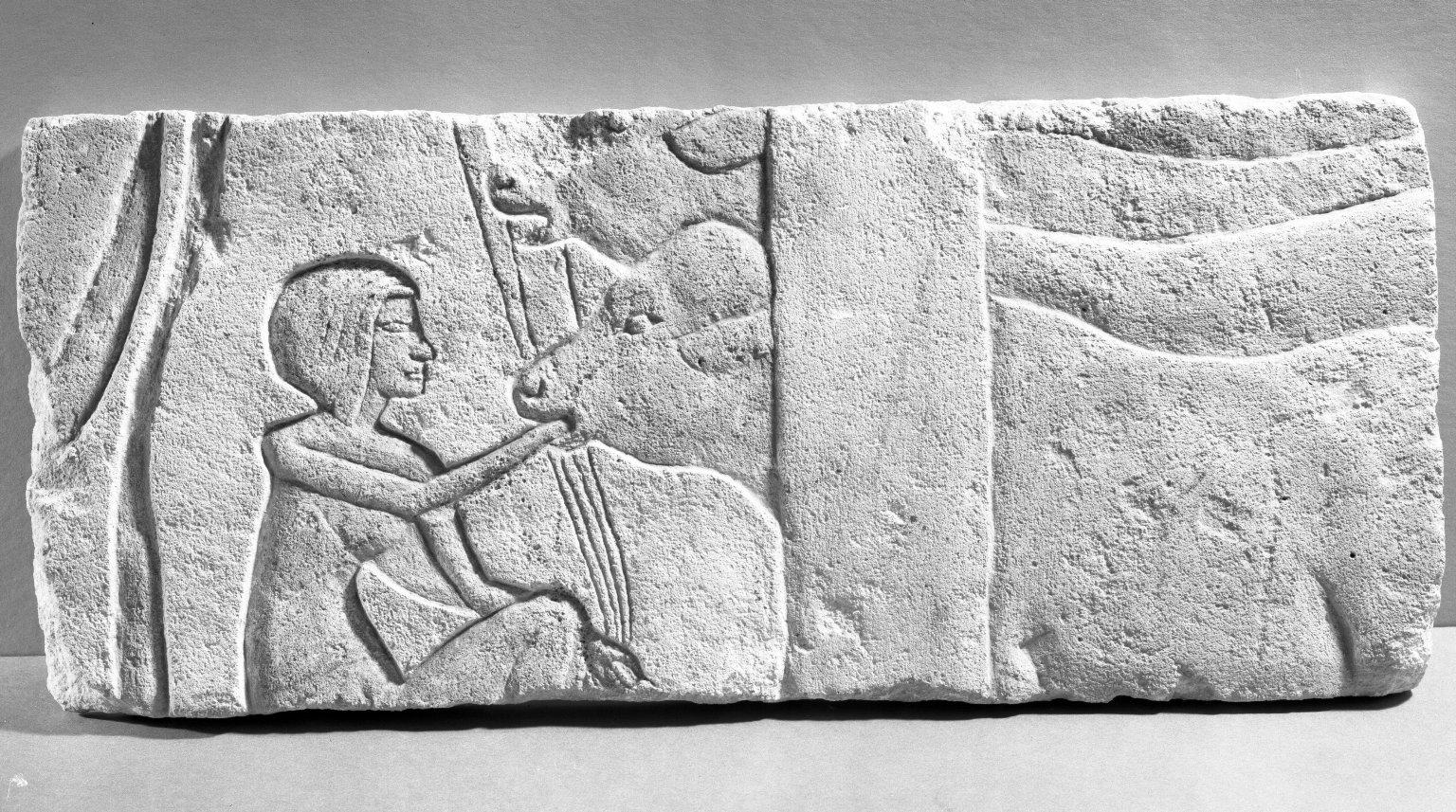
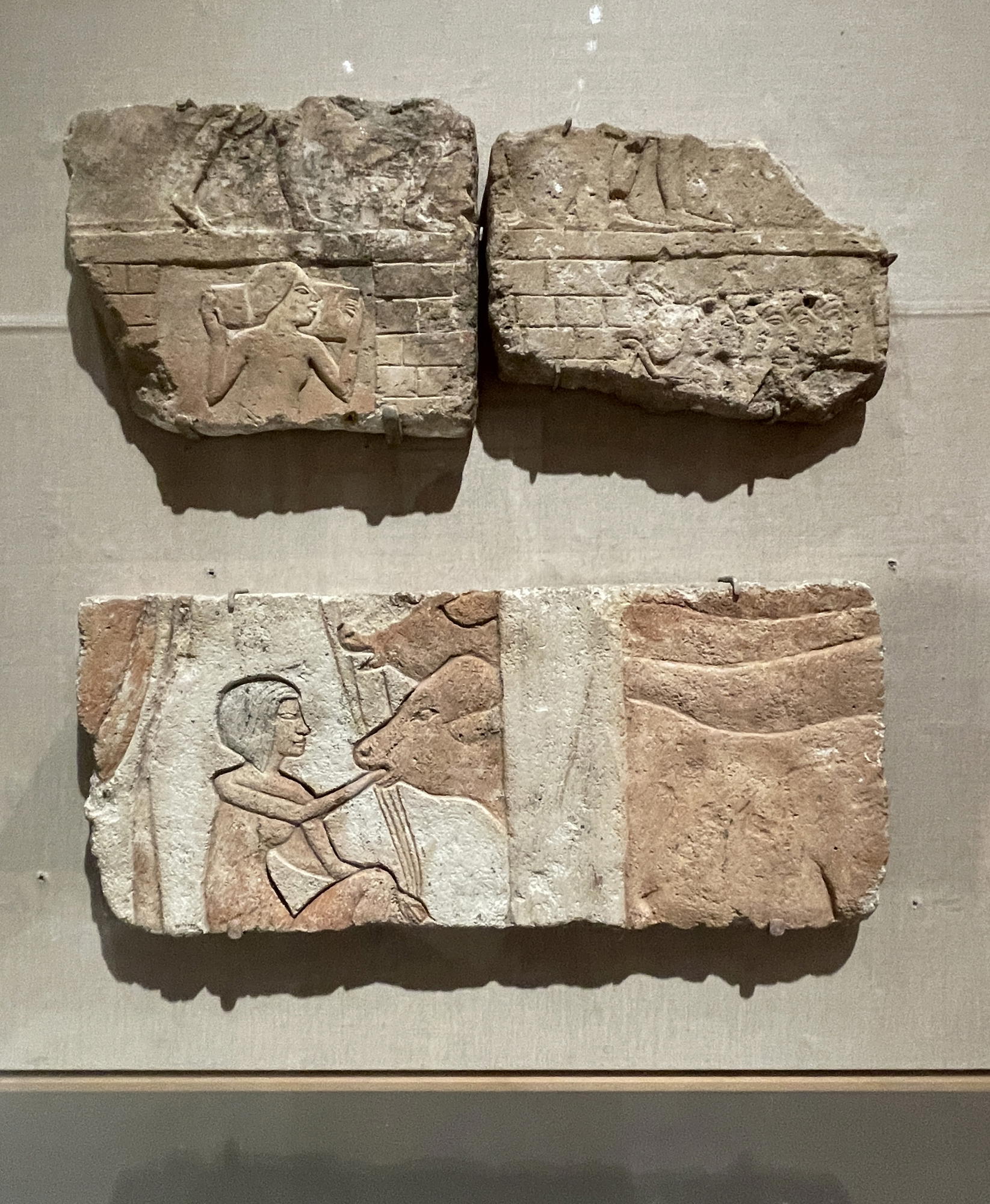
One of the most unusual scenes of daily life from el Amarna, this block depicts a herdsman thrusting his hand down the throat of a tethered cow. He may be force-feeding the animal or helping it digest its food. Above the cow we can see traces of three more animals and, at the far left, part of a much larger bovine, perhaps the mother cow.
Caption
Feeding Calves, ca. 1352–1336 B.C.E.. Limestone, pigment, 9 1/16 x 21 1/4 in. (23 x 54 cm). Brooklyn Museum, Charles Edwin Wilbour Fund, 60.197.4. (Photo: Brooklyn Museum)
Title
Feeding Calves
Date
ca. 1352–1336 B.C.E.
Dynasty
late Dynasty 18
Period
New Kingdom, Amarna Period
Geography
Place found: Hermopolis, Egypt, Place made: Tell el-Amarna, Egypt
Medium
Limestone, pigment
Classification
Dimensions
9 1/16 x 21 1/4 in. (23 x 54 cm)
Credit Line
Charles Edwin Wilbour Fund
Accession Number
60.197.4
Frequent Art Questions
Tell me more!
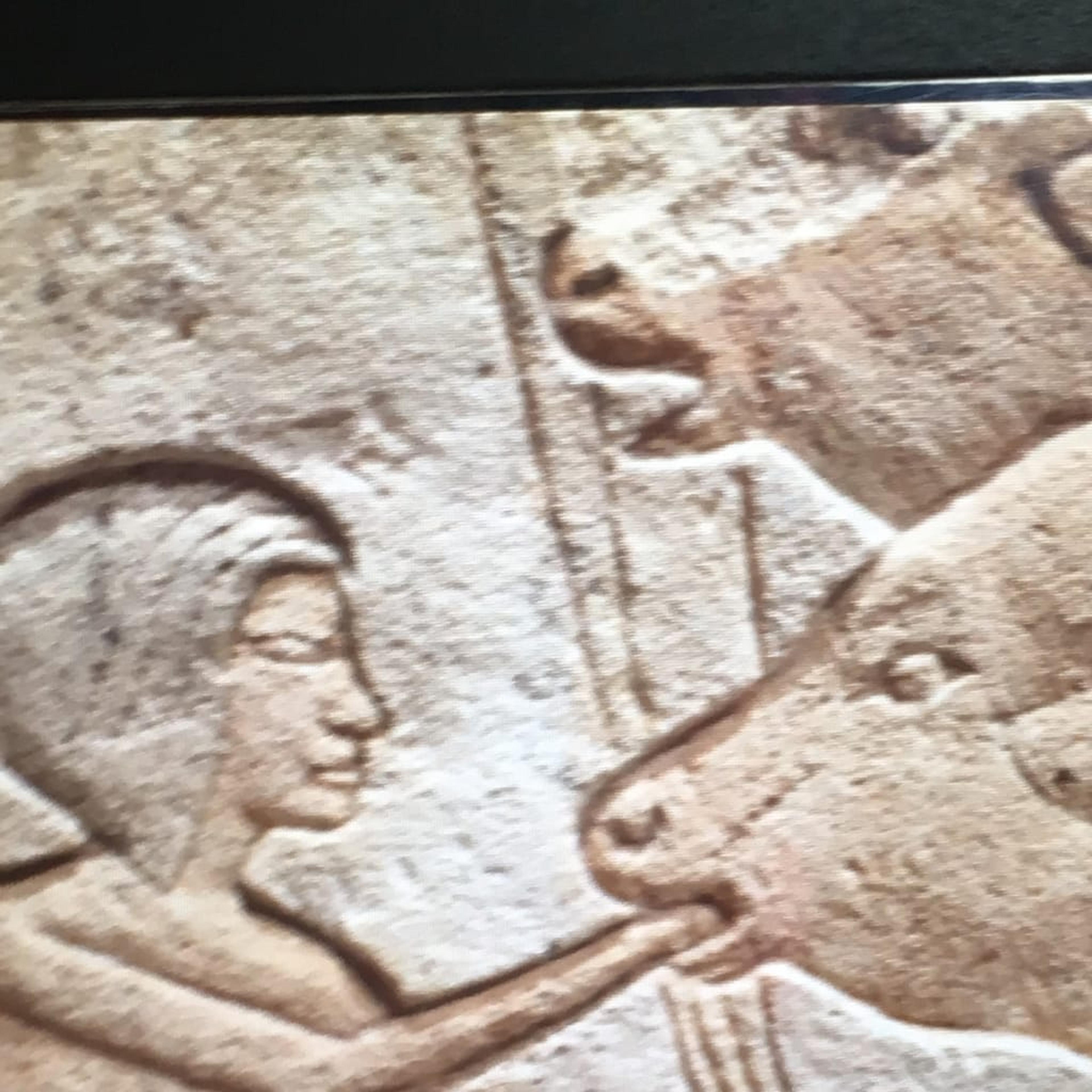 This is a block showing a man force-feeding a cow. It would have been part of a larger wall decoration in Akhetaten (known today as Tell el-Amarna) in Egypt.Is it similar to force feeding for slaughter today?That's likely. He was either helping it to digest food or force feeding it to help fatten it for it to be processed later for consumption.Thanks!
Can you tell me about the materials and time frame of these objects?
These reliefs are carved into limestone and has been painted. This type of carving is called “sunk relief” because the background area is not carved away around the images and they appear sunken into the stone’s surface. Everything in this gallery comes from the reign of King Akhenaten (also known as the Amarna Period after where he built his capital) during the later part of the 18th Dynasty early in the New Kingdom, around 1352 to 1336 BCE.
Have information?
Have information about an artwork? Contact us at