Kitchen Scene
Brooklyn Museum photograph
Object Label
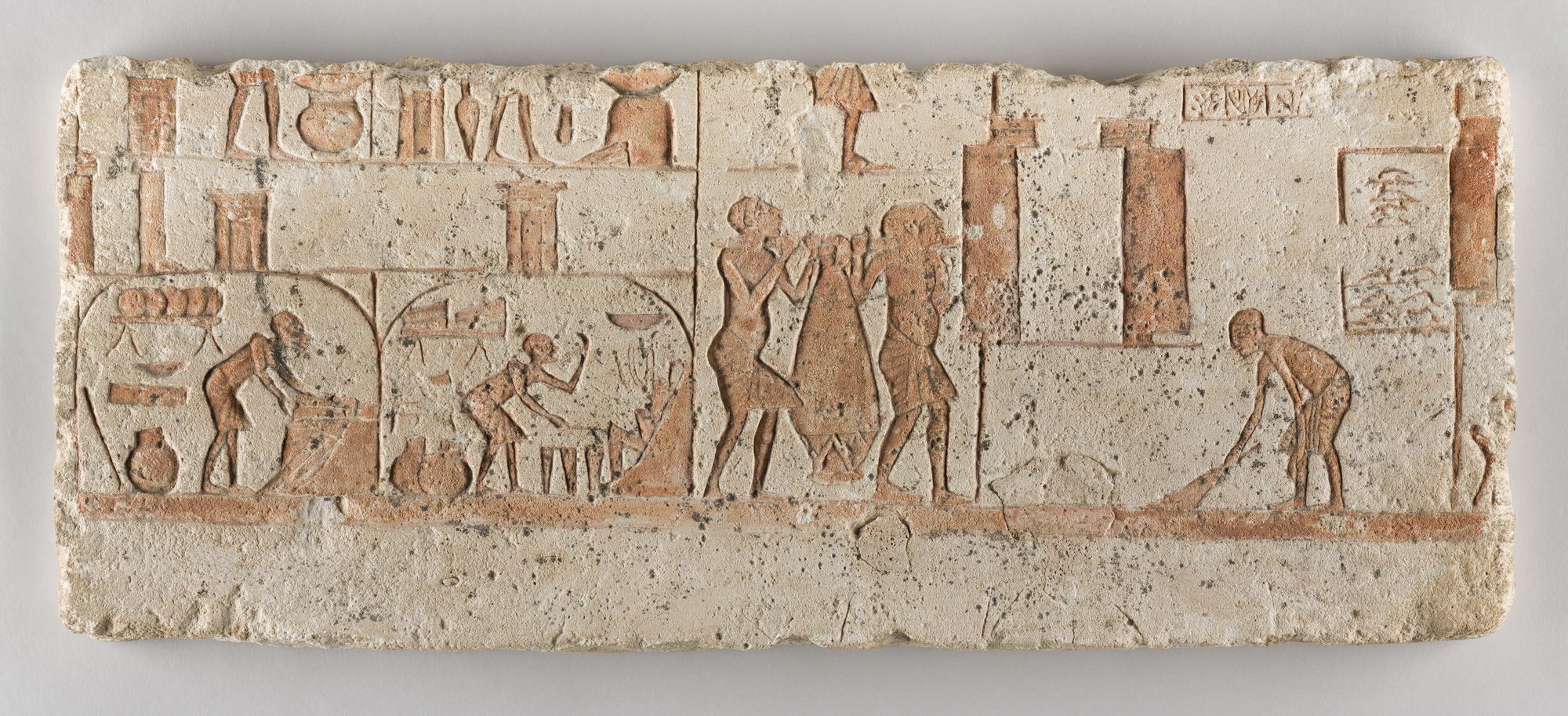
Amarna art frequently provides the modern viewer with scenes of everyday life in an Egyptian palace. This relief presents a highly detailed glimpse of the activities in the palace kitchen. At the far left are two vaulted bakehouses. The worker in the bakehouse on the right shields his face from the flames rising from the fire. Above this scene are the fragmentary remains of the royal brewery. At the center of the relief two men carry a huge wine jar, suspended in a net from a pole, through an open double door into a court. Two details in the court are particularly noteworthy: the small cupboard containing five pairs of sandals, evidently the property of the kitchen help, and the workman who sweeps the floor of the court with a short-handled broom.
Caption
Kitchen Scene, ca. 1352–1336 B.C.E.. Limestone, pigment, 8 1/2 × 21 3/8 × 1 1/2 in. (21.6 × 54.3 × 3.8 cm). Brooklyn Museum, Charles Edwin Wilbour Fund, 62.149. (Photo: Brooklyn Museum)
Gallery
Not on view
Gallery
Not on view
Title
Kitchen Scene
Date
ca. 1352–1336 B.C.E.
Dynasty
late Dynasty 18
Period
New Kingdom, Amarna Period
Geography
Place found: Hermopolis, Egypt
Medium
Limestone, pigment
Classification
Dimensions
8 1/2 × 21 3/8 × 1 1/2 in. (21.6 × 54.3 × 3.8 cm)
Credit Line
Charles Edwin Wilbour Fund
Accession Number
62.149
Frequent Art Questions
Are the red markings that highlight the images in the relief put there later or when they were originally made?
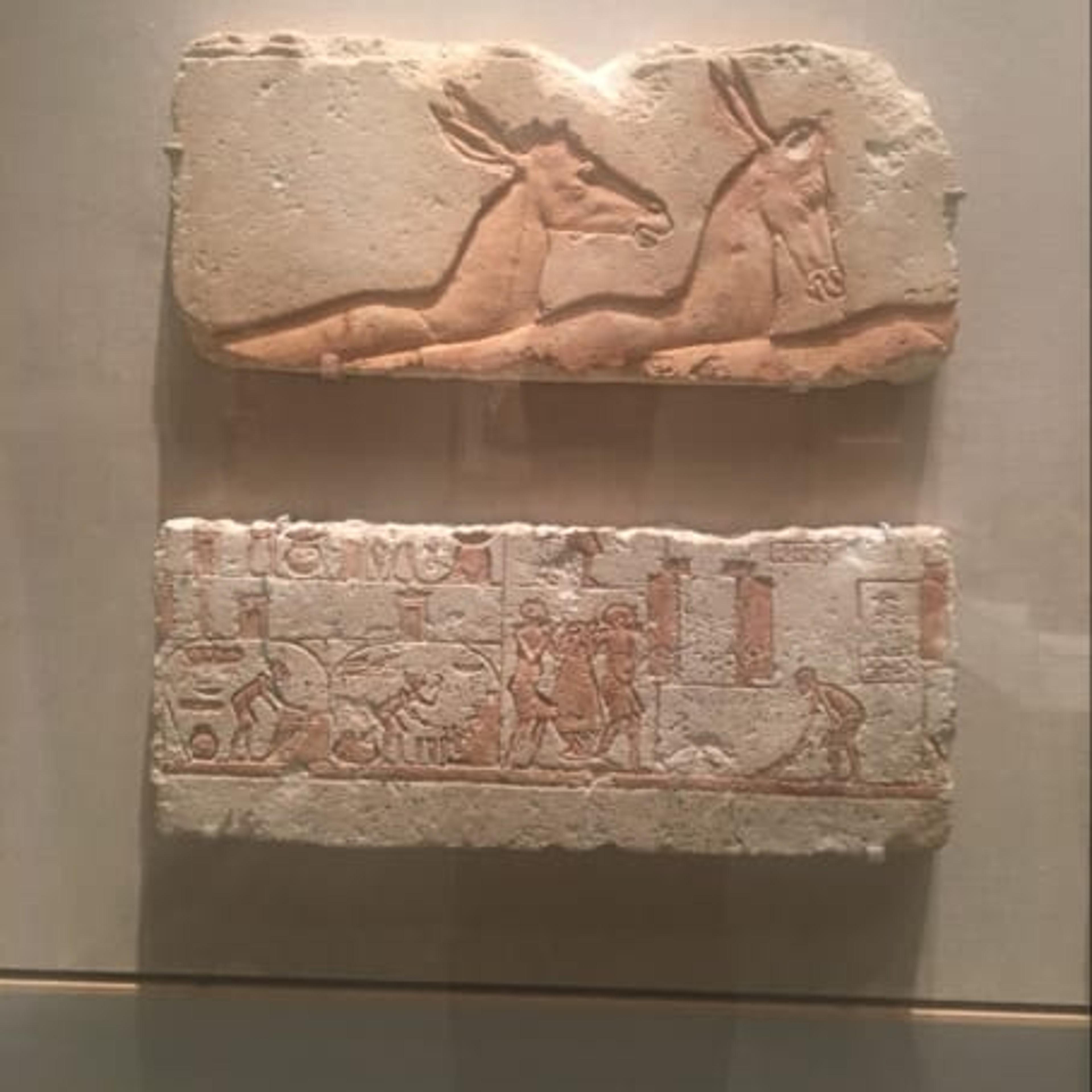 It is all original. Most reliefs, were brightly painted in Ancient Egypt. But unlike the stone its painted on, fragile paint pigments don't always to survive well over thousands of years, so they come to us lacking much of their original bright paint.So these colors probably represent their skin color?Good question: Skin color was indicated with colors, yes, with men typically painted red, and women painted yellowish-white. That doesn't help us pinpoint what actual Egyptians looked like because this was clearly just a convention - real Egyptian women weren't paper-white, nor were the men really bright red.
Have information?
Have information about an artwork? Contact us at