Terminal from a Broad Collar
305–30 B.C.E.


1 of 7
Object Label
The broad collar was part of the funerary dress affording magical protection for its wearer. Examples with falcon-headed terminals symbolic of Horus in his role as avenger of his murdered father Osiris are known from as early as the Middle Kingdom. This particular terminal, which exhibits the same color scheme as fine Twenty-third Dynasty specimens inlaid with semiprecious stones, illustrates the use of glass as a substitute for more costly elements.
Caption
Terminal from a Broad Collar, 305–30 B.C.E.. Gold, glass, 1 3/8 x 1 3/4 x 1/4 in. (3.5 x 4.5 x 0.7 cm). Brooklyn Museum, Charles Edwin Wilbour Fund, 65.3.2. (Photo: Brooklyn Museum)
Frequent Art Questions
What were these used for?
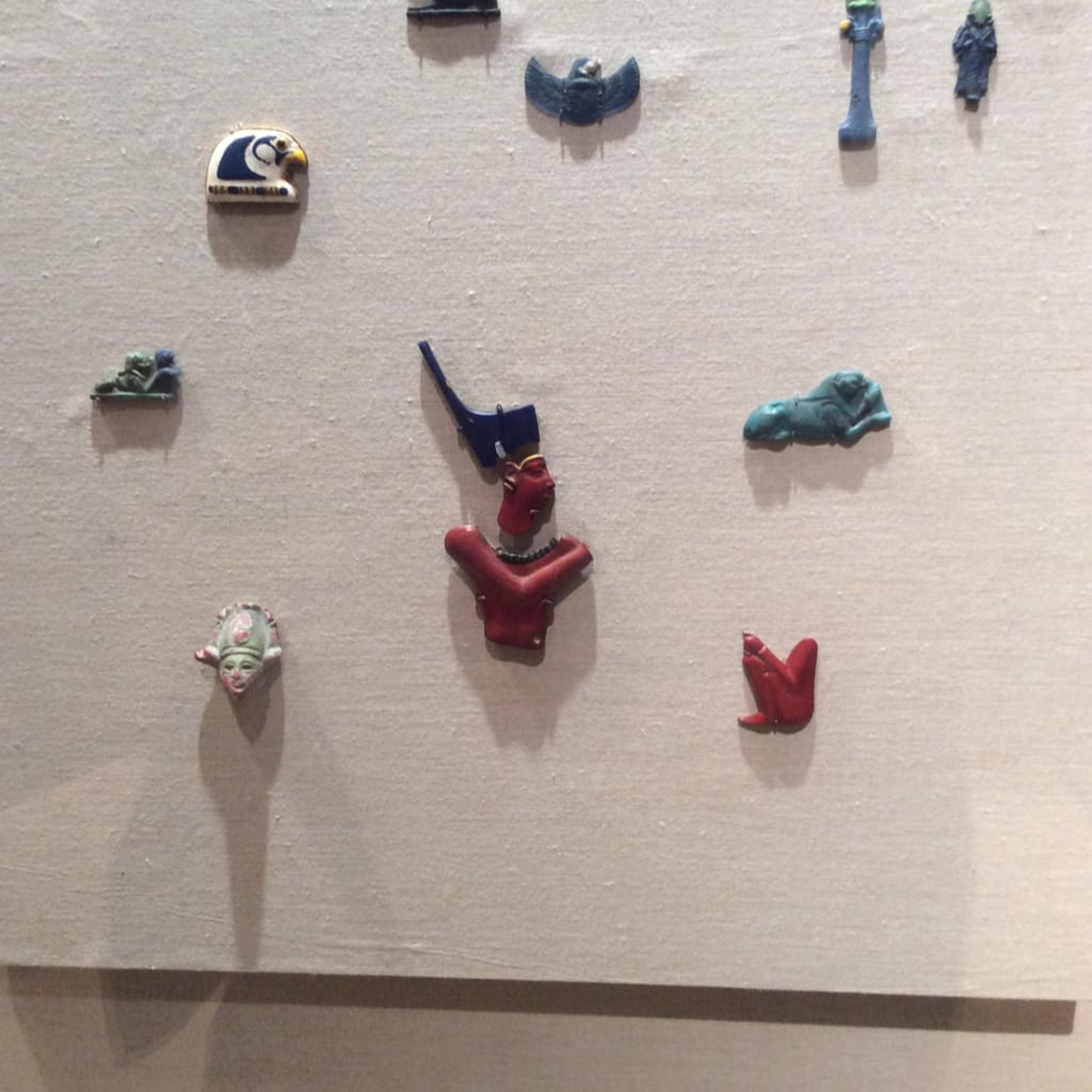 These are inlays, they would have been set into surfaces (like on a wall or on a coffin) as decoration.The falcon head, though, is actually from a piece of jewelry! You can tell because it is rimmed in gold unlike the others.It's a terminal for a broad collar (there is a big blue broad collar on view at the other end of the gallery). Attached at the bottom, would have been the beads, and above its head would have been the clasp or closure for the necklace.Thanks!
Have information?
Have information about an artwork? Contact us at