Bracelet with Scarab


1 of 4
Object Label
The soft matte finish and pristine condition of its clasp loops indicate that this bracelet was never worn. Rather, it seems to have been deposited as a funerary offering in an official’s tomb in Byblos.
Caption
Bracelet with Scarab, ca. 1938–1700 B.C.E.. Gold, amethyst, 1 5/16 x 1 x 7 15/16 in. (3.3 x 2.5 x 20.1 cm). Brooklyn Museum, Charles Edwin Wilbour Fund, 65.46. (Photo: Brooklyn Museum)
Title
Bracelet with Scarab
Date
ca. 1938–1700 B.C.E.
Dynasty
Dynasty 12 to early Dynasty 13
Period
Middle Kingdom
Geography
Place made: Egypt, Reportedly from: Byblos, Lebanon
Medium
Gold, amethyst
Classification
Dimensions
1 5/16 x 1 x 7 15/16 in. (3.3 x 2.5 x 20.1 cm)
Credit Line
Charles Edwin Wilbour Fund
Accession Number
65.46
Frequent Art Questions
Who would have worn this?
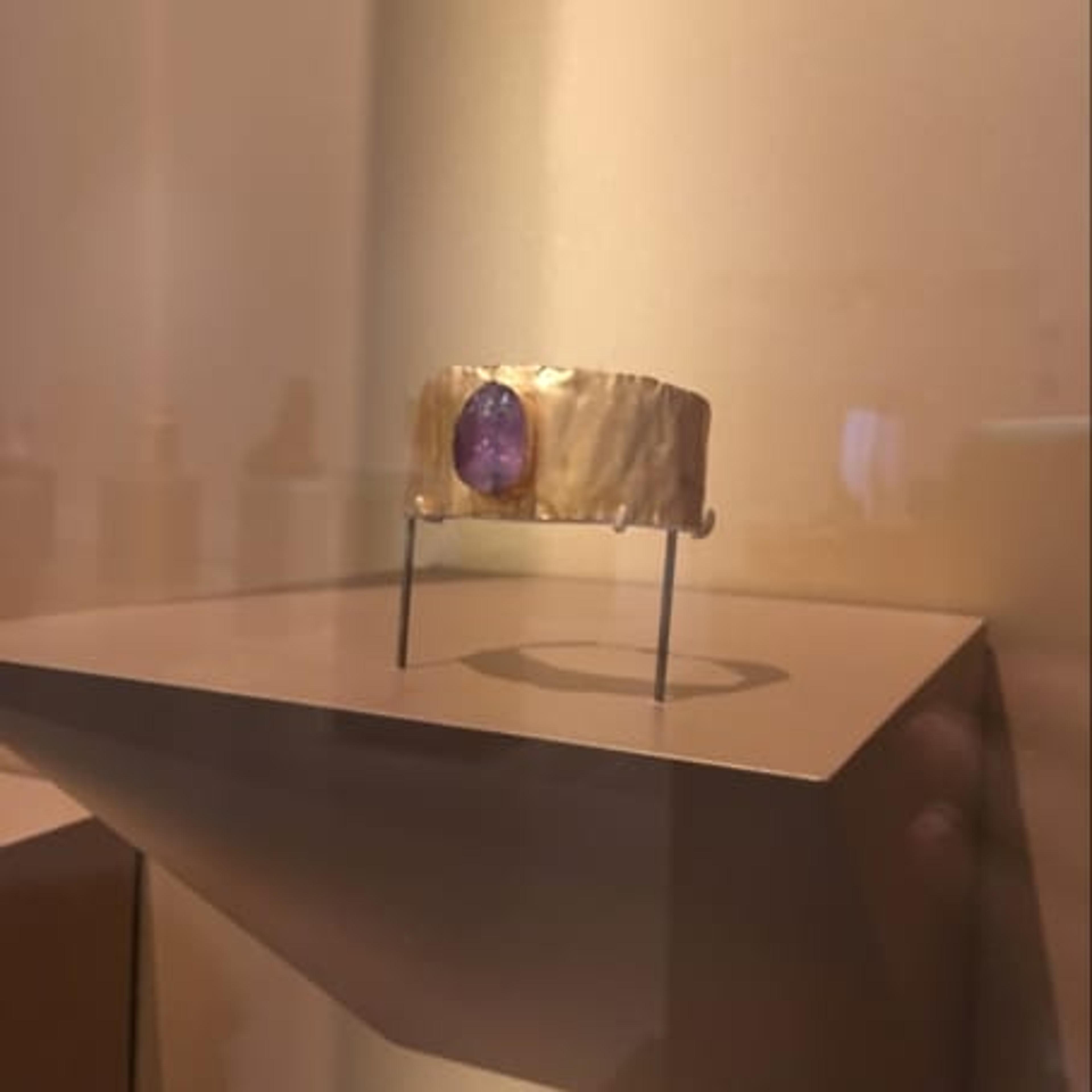 That's always in important question to ask! This particular bracelet shows no signs of wear indicating that no one ever wore it. It was more of a symbol of wealth and luxury, used as a funerary offering. This bracelet probably came from a tomb in Byblos which is in modern day Lebanon. There, such a bracelet would have functioned as symbol of Egypt and a testament to the owners ties to their powerful neighbors.
Is there a reason that the bracelet is made from amethyst as a stone? Did it have a meaning in mythology?
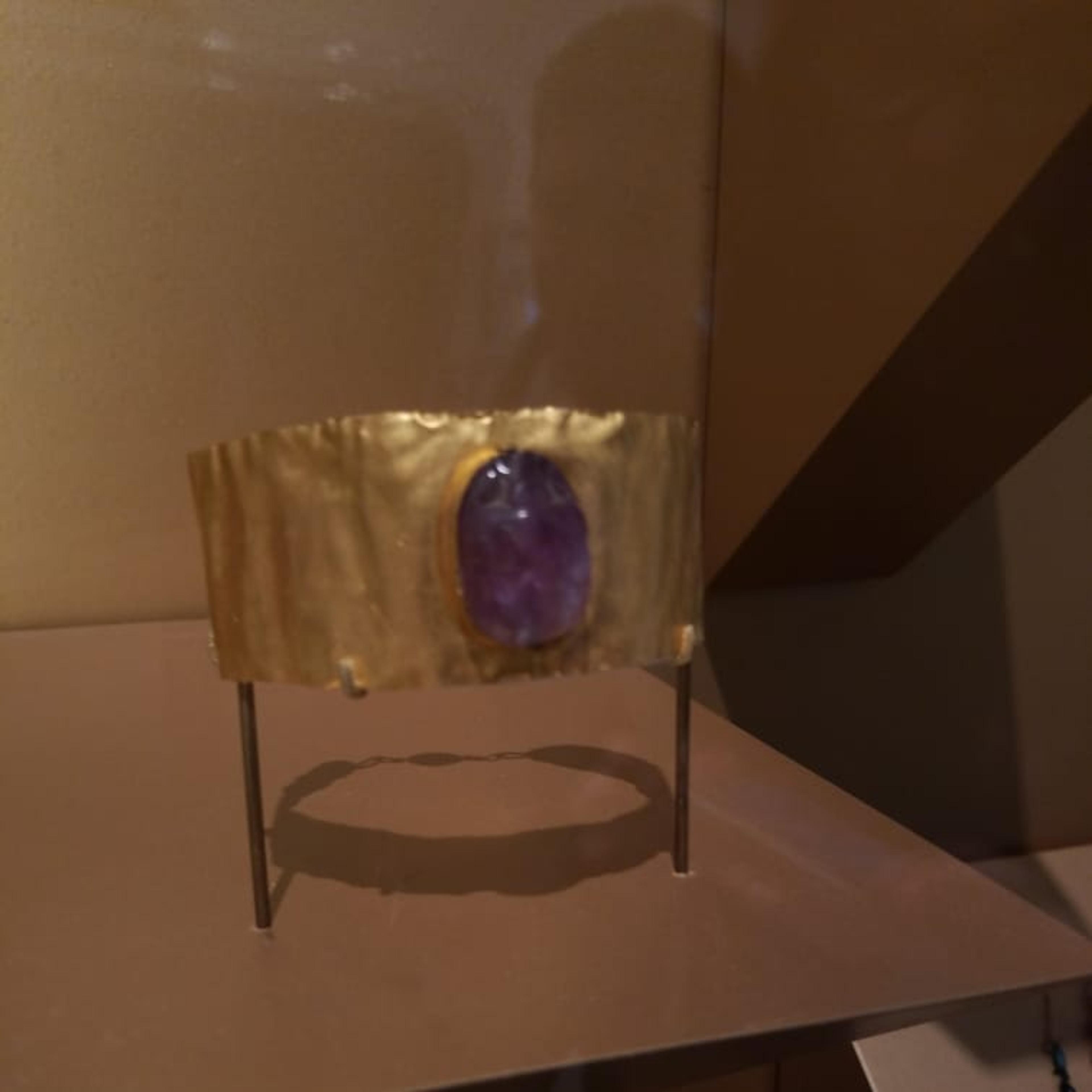 That's a good question. Small scarabs are mostly carved in stone. Decorative examples, like those designed to be set in jewelry, were carved from precious and semi-precious gems of many types and colors. Amethyst was primarily chosen for aesthetic reasons. Like many people today, the ancient Egyptians found amethyst beautiful. Also, amethyst is relatively widespread in the Earth and the Ancient Egyptians would have had access to sources in Africa and western Asia.
Have information?
Have information about an artwork? Contact us at