Donation Stela



1 of 12
Object Label
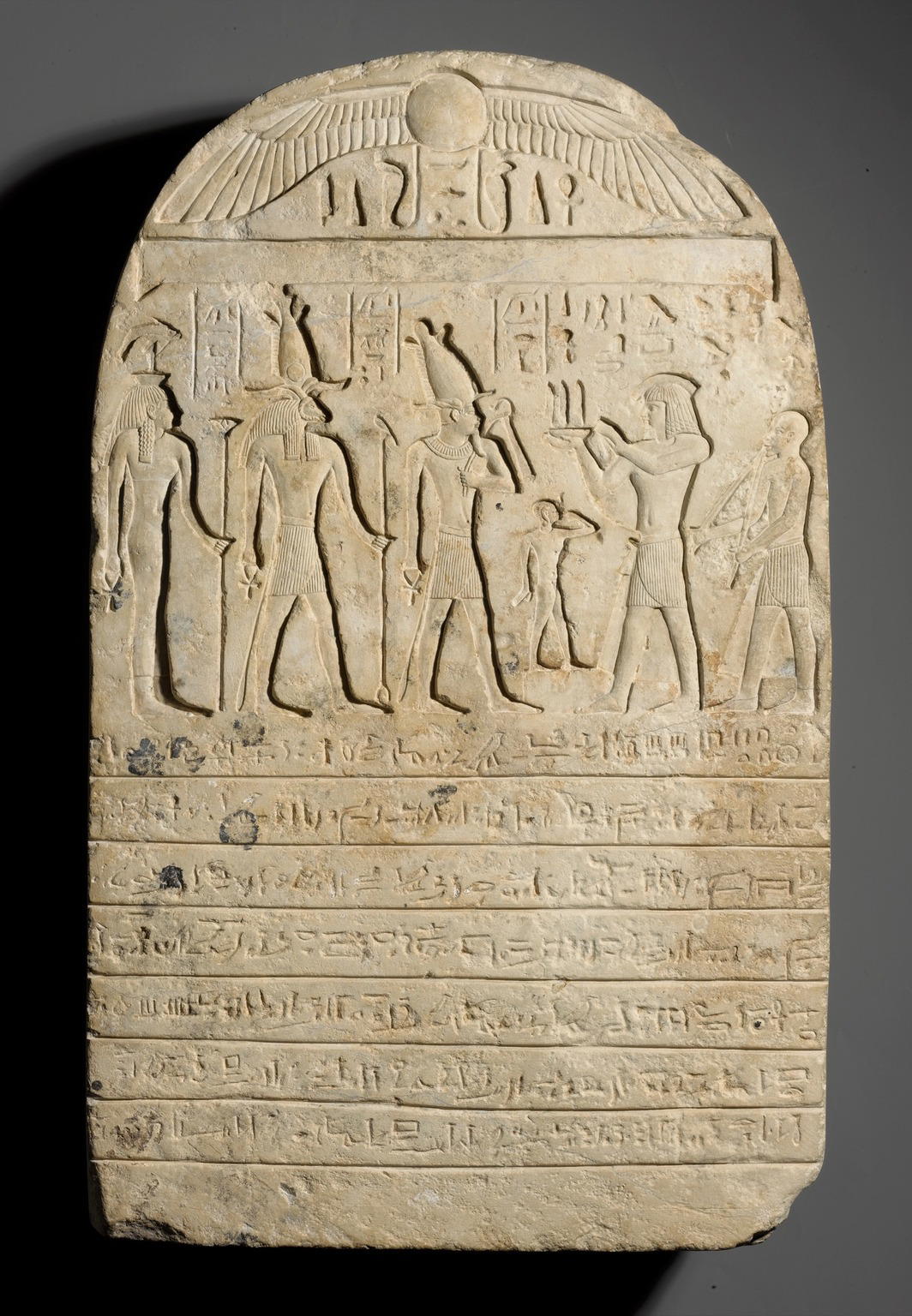
This stela, which once stood in or near a temple, commemorates a donation of land to that temple, and its text promises dire punishments to anyone misappropriating the land. In modern times the media have made much of Egyptian curses, especially that of King Tutankhamun's tomb. That curse was in fact an invention of a newspaper reporter, inspired by the sudden death of Lord Carnarvon, the sponsor of the archaeological expedition, several months after he attended the opening of the tomb in 1922. Nevertheless, the ancient Egyptians did aim curses against tomb and temple violators, and they believed it was magic (heqa) in the form of written and spoken words that made those curses possible and effective.
Caption
Donation Stela, ca. 804 B.C.E.. Limestone, 20 1/2 x 12 3/4 x 2 1/2 in., 41 lb. (52.1 x 32.4 x 6.4 cm, 18.6kg). Brooklyn Museum, Charles Edwin Wilbour Fund, 67.118. (Photo: Brooklyn Museum)
Gallery
Not on view
Gallery
Not on view
Title
Donation Stela
Date
ca. 804 B.C.E.
Dynasty
Dynasty 22
Period
Third Intermediate Period
Geography
Place found: Mendes, Egypt
Medium
Limestone
Classification
Dimensions
20 1/2 x 12 3/4 x 2 1/2 in., 41 lb. (52.1 x 32.4 x 6.4 cm, 18.6kg)
Credit Line
Charles Edwin Wilbour Fund
Accession Number
67.118
Frequent Art Questions
What's this?
 You're looking at "Donation Stela with a Curse" from the Third Intermediate Period. A stela (stelae, plural) is just a standing slab, usually with carved relief or inscriptions on it. In the Egyptian culture, as in most cultures, stelae usually had commemorative or funerary purposes.As you may have read on the label it is a representation of the Libyan chieftain Hornakht accompanied by the flute player Ankh-hor-pa-khered, making donation of a field of 10 acres to Harpocrates, a representation of Horus as a child.
What is this?
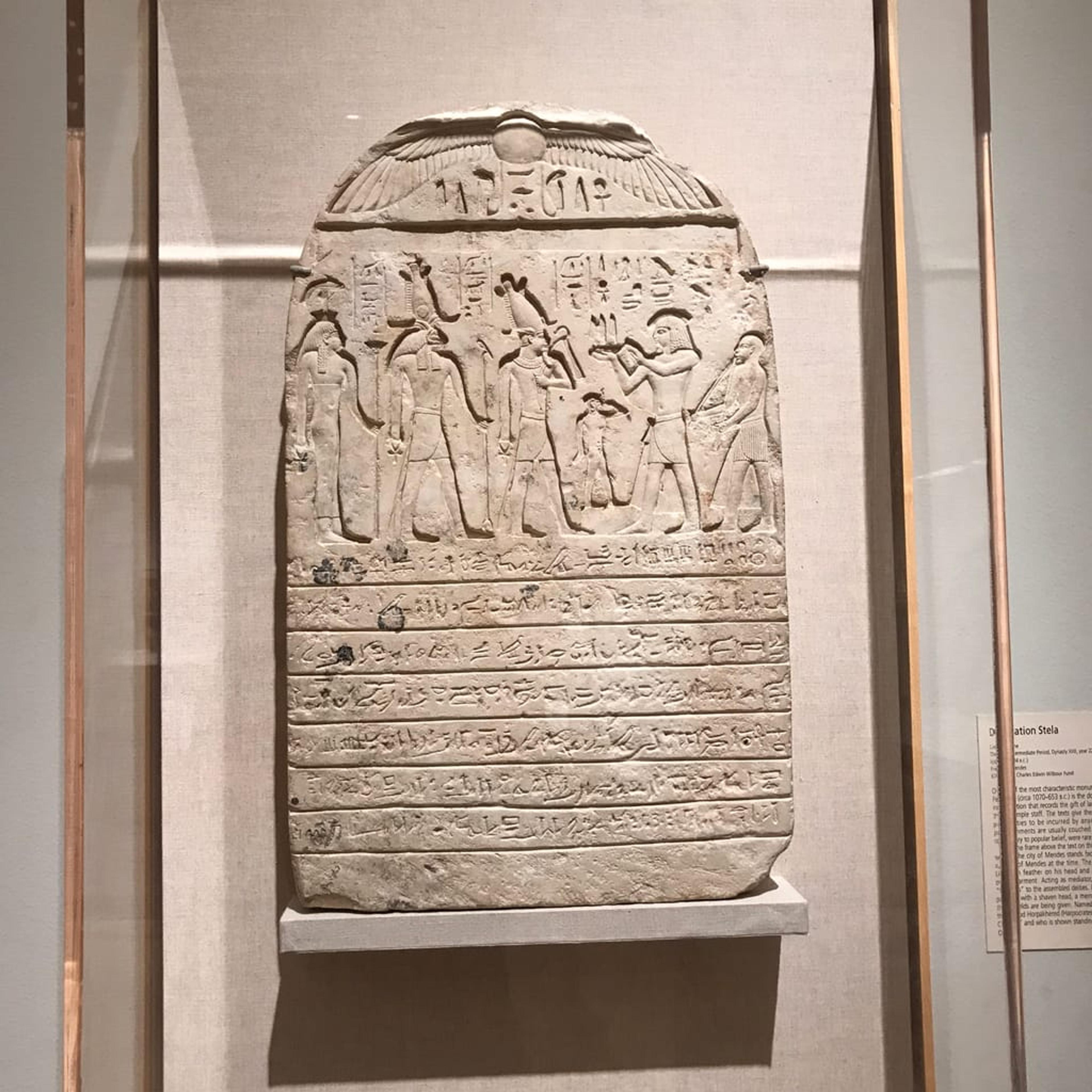 This stela is a donation from a Libyan chieftain named Hornakht to the god Horus in the form of a child.Hornakht is shown second from the right presenting a tray with offerings of maat feathers, symbols of truth, justice, and balance. Behind him is a flute player named Ankh-hor-pa-khered.The child depicted is Horus (also known as Harpocrates when he is a child). Behind him is his father, Osiris, followed by two more deities, Ba-nebdjedet, and Hatmehyt.
Have information?
Have information about an artwork? Contact us at