Censer


1 of 16
Object Label
An arm-shaped censer like this one can be understood as a hieroglyphic representation of one of the most potent rituals, the rite of the presentation of the Eye of Horus. The incense bowl and the falcon terminal represent the Eye, while the arm is the hieroglyph for “presenting” or “giving.” The Eye of Horus was believed to possess the power to heal or protect whoever received it.
Caption
Censer, ca. 712–404 B.C.E.. Bronze, 2 1/2 × 2 1/2 × 21 1/2 in., 2 lb. (6.4 × 6.4 × 54.6 cm, 0.91kg). Brooklyn Museum, Gift of Michael DeBry, 72.8.
Title
Censer
Date
ca. 712–404 B.C.E.
Dynasty
late Dynasty 25 to Dynasty 28
Period
Third Intermediate Period to Late Period
Geography
Place made: Egypt
Medium
Bronze
Classification
Dimensions
2 1/2 × 2 1/2 × 21 1/2 in., 2 lb. (6.4 × 6.4 × 54.6 cm, 0.91kg)
Credit Line
Gift of Michael DeBry
Accession Number
72.8
Frequent Art Questions
What’s the significance of the arm shaped censer?
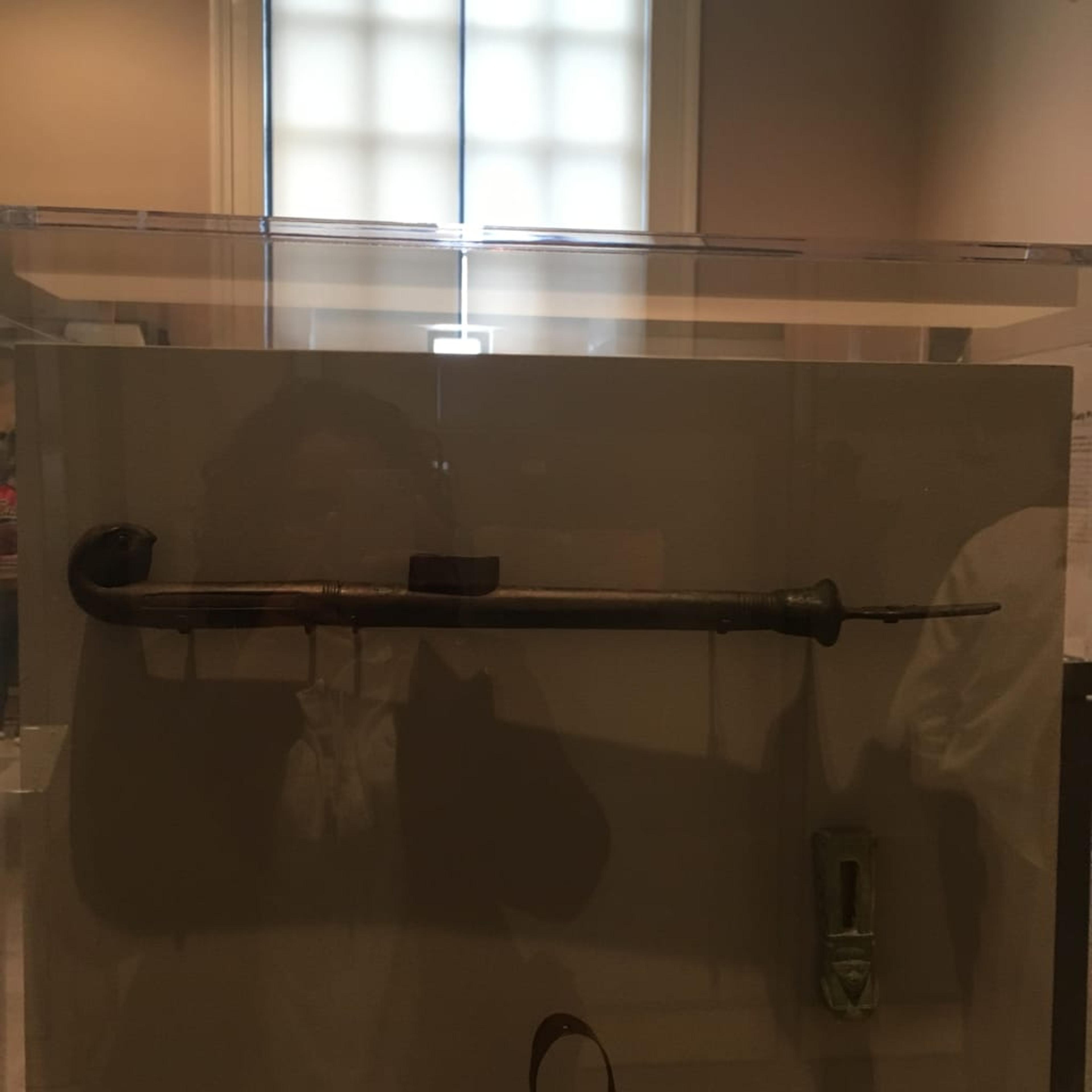 It was a ritual object, burning incense would have been placed in the box-like form. It would have been used in a temple setting. The falcon head to the left could represent several deities, it is most likely is meant to be Horus.
Have information?
Have information about an artwork? Contact us at