Jasmine Blossoms
ca. 1319–1190 B.C.E.

Brooklyn Museum photograph
Object Label
Necklaces
Most ancient Egyptians owned at least one necklace.
The simplest examples were made of tiny beads of shell, bone, faience, metal, or glazed steatite. More complex versions had beads in the form of amulets, including uraeus-cobras, wedjat-eyes (the eye of the falcon-god Horus, symbolizing wholeness), scarabs (charms in the form of beetles), or images of gods such as Hathor. Individual beads as well as complete necklaces had significance. Beads reproducing fruits or flowers, such as the examples in this case, were believed to enhance fertility. Military officers presented fly necklaces to valiant soldiers to acknowledge their tenacity in battle.
Most ancient Egyptians owned at least one necklace.
The simplest examples were made of tiny beads of shell, bone, faience, metal, or glazed steatite. More complex versions had beads in the form of amulets, including uraeus-cobras, wedjat-eyes (the eye of the falcon-god Horus, symbolizing wholeness), scarabs (charms in the form of beetles), or images of gods such as Hathor. Individual beads as well as complete necklaces had significance. Beads reproducing fruits or flowers, such as the examples in this case, were believed to enhance fertility. Military officers presented fly necklaces to valiant soldiers to acknowledge their tenacity in battle.
Caption
Jasmine Blossoms, ca. 1319–1190 B.C.E.. Faience, Length: 20 7/8 in. (53 cm) 3/4 x Diam. 1 1/8 in. (1.9 x 2.9 cm). Brooklyn Museum, Gift of Helena Simkhovitch in memory of her father, Vladimir G. Simkhovitch, 72.56. (Photo: Brooklyn Museum)
Title
Jasmine Blossoms
Date
ca. 1319–1190 B.C.E.
Dynasty
Dynasty 18 to Dynasty 19
Period
New Kingdom
Geography
Place made: Egypt
Medium
Faience
Classification
Dimensions
Length: 20 7/8 in. (53 cm) 3/4 x Diam. 1 1/8 in. (1.9 x 2.9 cm)
Credit Line
Gift of Helena Simkhovitch in memory of her father, Vladimir G. Simkhovitch
Accession Number
72.56
Frequent Art Questions
Is that a neclace? Did anyone wear it?
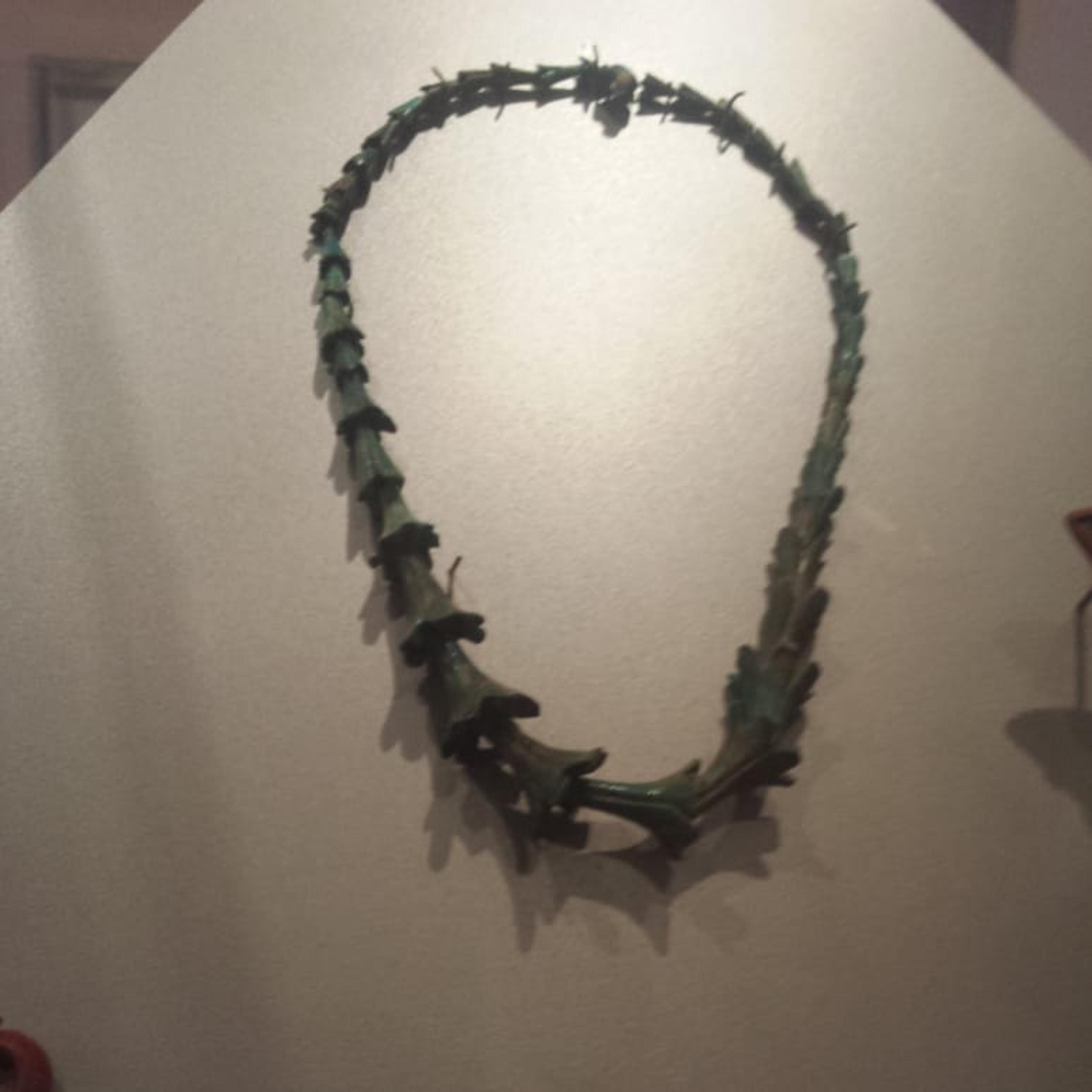 It is a necklace! It is made of faience, a quartz-based paste that could be used to create brilliantly colored objects. The flowers seen here are jasmine blossoms.It was certainly designed to be worn, but we're not sure who it belonged to.
Have information?
Have information about an artwork? Contact us at