Relief of Ptolemy II Philadelphos


1 of 5
Object Label
Although the Ptolemaic Period ushered in a long period of foreign rule, the Macedonian kings of that dynasty did not interfere with the Egyptian artistic traditions of the preceding three milennia. Ptolemy II Philadelphos, like his father Ptolemy I Soter, the founder of the dynasty, continued the practice of building and decorating temples in traditional Egyptian fashion.
While this is not to say that the Macedonian rulers did not have Greek artists portray them according to Greek artistic conventions, here the Greek ruler is shown in a purely Egyptian guise, wearing the traditional nemes-headdress of the pharaoh. The style of the relief, including the deeply cut navel, the horizontal treatment of the torso muscles, the "golf ball" chin, and the upturned smile, is common in representations from Dynasties XXIX and XXX (circa 399–342 B.C.) and was readily adopted by the Ptolemies into their iconographic program. Visible behind the king is the figure of a goddess in another scene.
Caption
Relief of Ptolemy II Philadelphos, 285 or 282–246 B.C.E.. Granite, 27 × 23 1/2 × 2 5/8 in. (68.6 × 59.7 × 6.7 cm). Brooklyn Museum, Charles Edwin Wilbour Fund, 72.127. (Photo: Brooklyn Museum)
Gallery
Not on view
Gallery
Not on view
Title
Relief of Ptolemy II Philadelphos
Date
285 or 282–246 B.C.E.
Period
Ptolemaic Period
Geography
Place made: Behbeit el Higra, Egypt
Medium
Granite
Classification
Dimensions
27 × 23 1/2 × 2 5/8 in. (68.6 × 59.7 × 6.7 cm)
Credit Line
Charles Edwin Wilbour Fund
Accession Number
72.127
Frequent Art Questions
What's this?
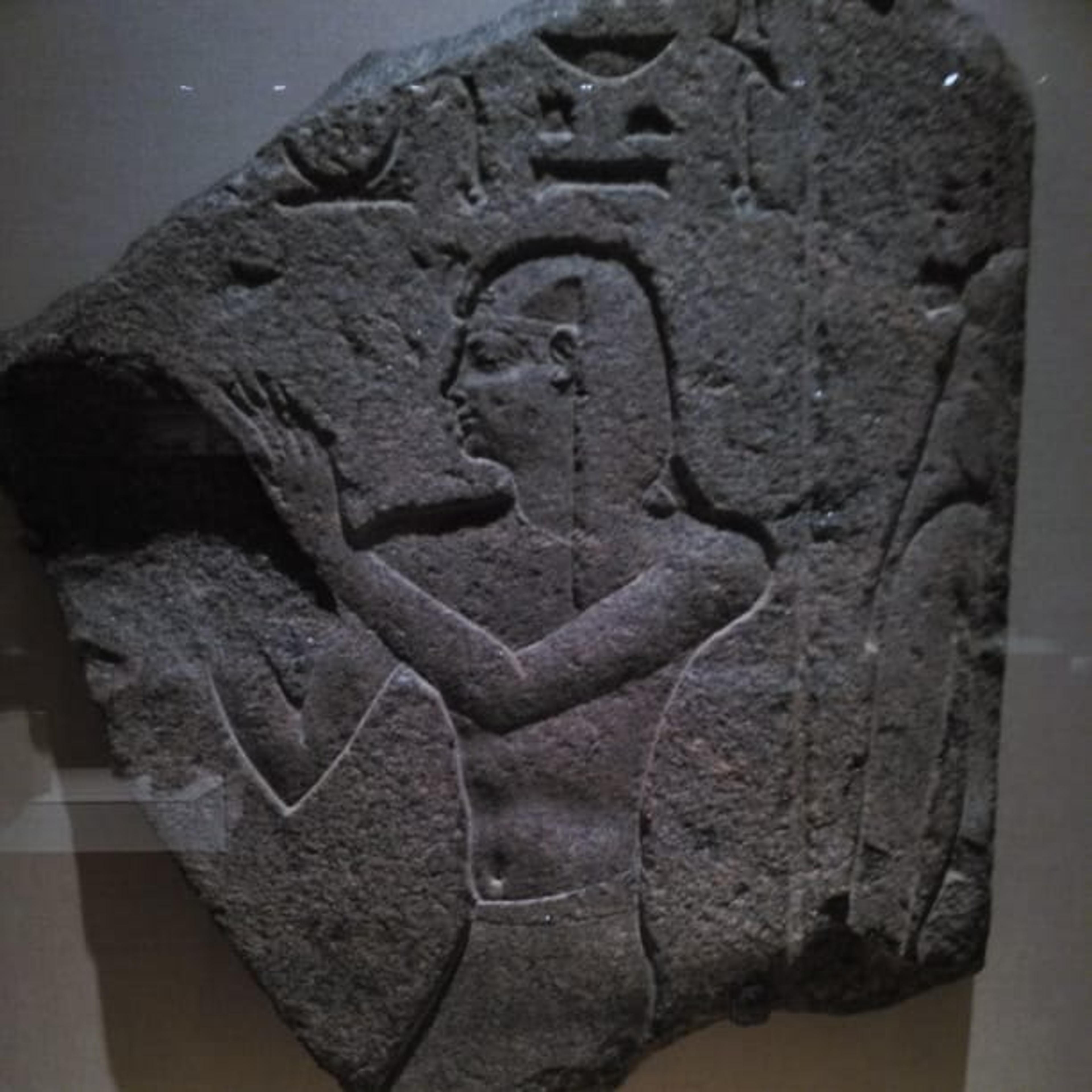 This man's pose suggests that he praising or worshipping, probably directed towards a god. This piece is also interesting because it depicts a Greek king of Egypt wearing Egyptian clothing: the traditional nemes-headdress of the pharaoh.
Have information?
Have information about an artwork? Contact us at