Isis
1st century C.E.


1 of 11
Object Label
Some elements of Egyptian art were susceptible to frequent change, but others were bound by tradition. The style of garments shown on statues, for example, changed with fashion trends, but a sculptural form, once perfected, tended to be reproduced for thousands of years.
This statue depicts the elaborate garments favored by the aristocracy in the first century C.E. Although the clothing style of this statue differs from earlier pharaonic ones, the basic poses are identical.
This statue depicts the elaborate garments favored by the aristocracy in the first century C.E. Although the clothing style of this statue differs from earlier pharaonic ones, the basic poses are identical.
Caption
Isis, 1st century C.E.. Basalt, 38 1/2 × 15 × 13 in., 231 lb. (97.8 × 38.1 × 33 cm, 104.78kg) mount (dimensions as installed): 40 × 15 × 13 in., 230 lb. (101.6 × 38.1 × 33 cm). Brooklyn Museum, Charles Edwin Wilbour Fund, 74.220.
Title
Isis
Date
1st century C.E.
Period
Roman Period
Geography
Place made: Egypt
Medium
Basalt
Classification
Dimensions
38 1/2 × 15 × 13 in., 231 lb. (97.8 × 38.1 × 33 cm, 104.78kg) mount (dimensions as installed): 40 × 15 × 13 in., 230 lb. (101.6 × 38.1 × 33 cm)
Credit Line
Charles Edwin Wilbour Fund
Accession Number
74.220
Frequent Art Questions
How do u know this is a sculpture of a goddess? Why doesn't it have a head?
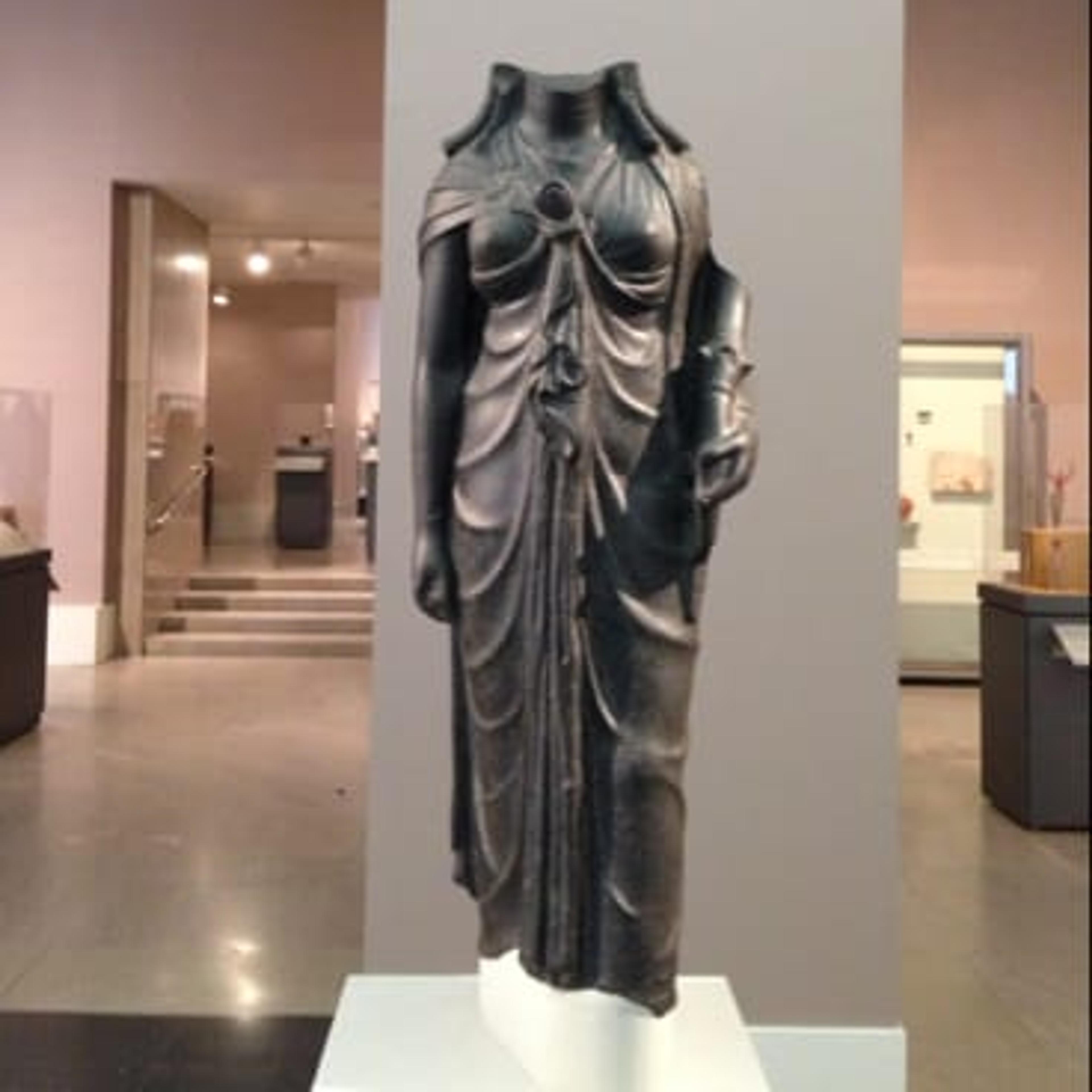 The head question is easy to answer, it simply broke off in the approximately 2000 years since the statue was created. The sculpture is identified as Isis because of the cornucopia she holds in her hand. This is an emblem of Isis in the Roman period. The way her garment is knotted is also specific to Isis. Isis worship remained popular into the Hellenistic and Roman periods and you'll see as you explore the gallery how imagery of her changed over time.
I like this statue.
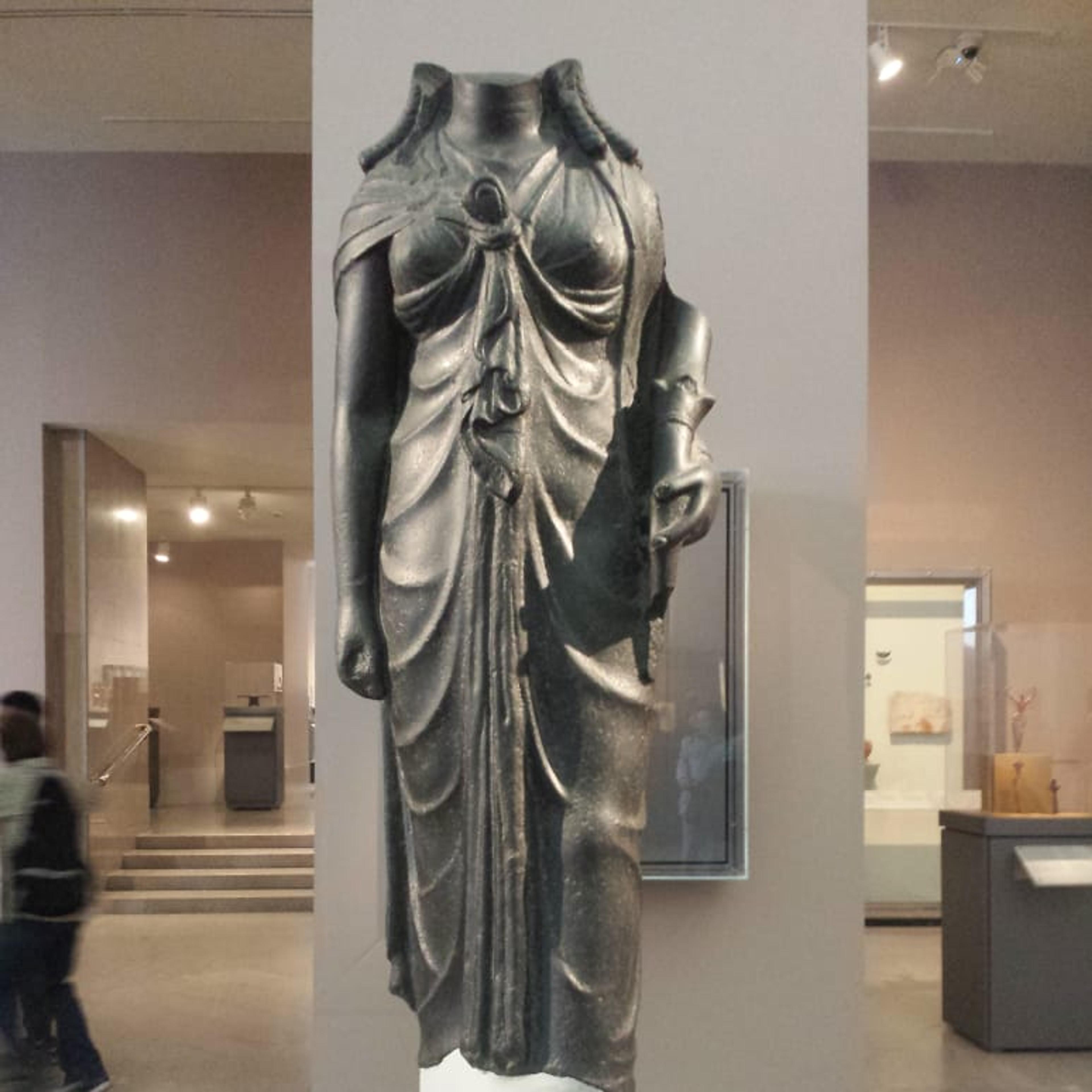 Though headless, she can be identified with the goddess Isis by her cornucopia and the knot in her garment. It is from the Roman period of Egypt's history. In the Hellenistic and Roman periods, worship of Isis was popular both in and outside of Egypt.
Why is the head missing?
 The head broke off at some point in the statue's history. Since the neck is often a thin point in the sculpture, it's easier for it to break there than, say, the stomach. The same goes for hands and arms, for example.
Tell me more.
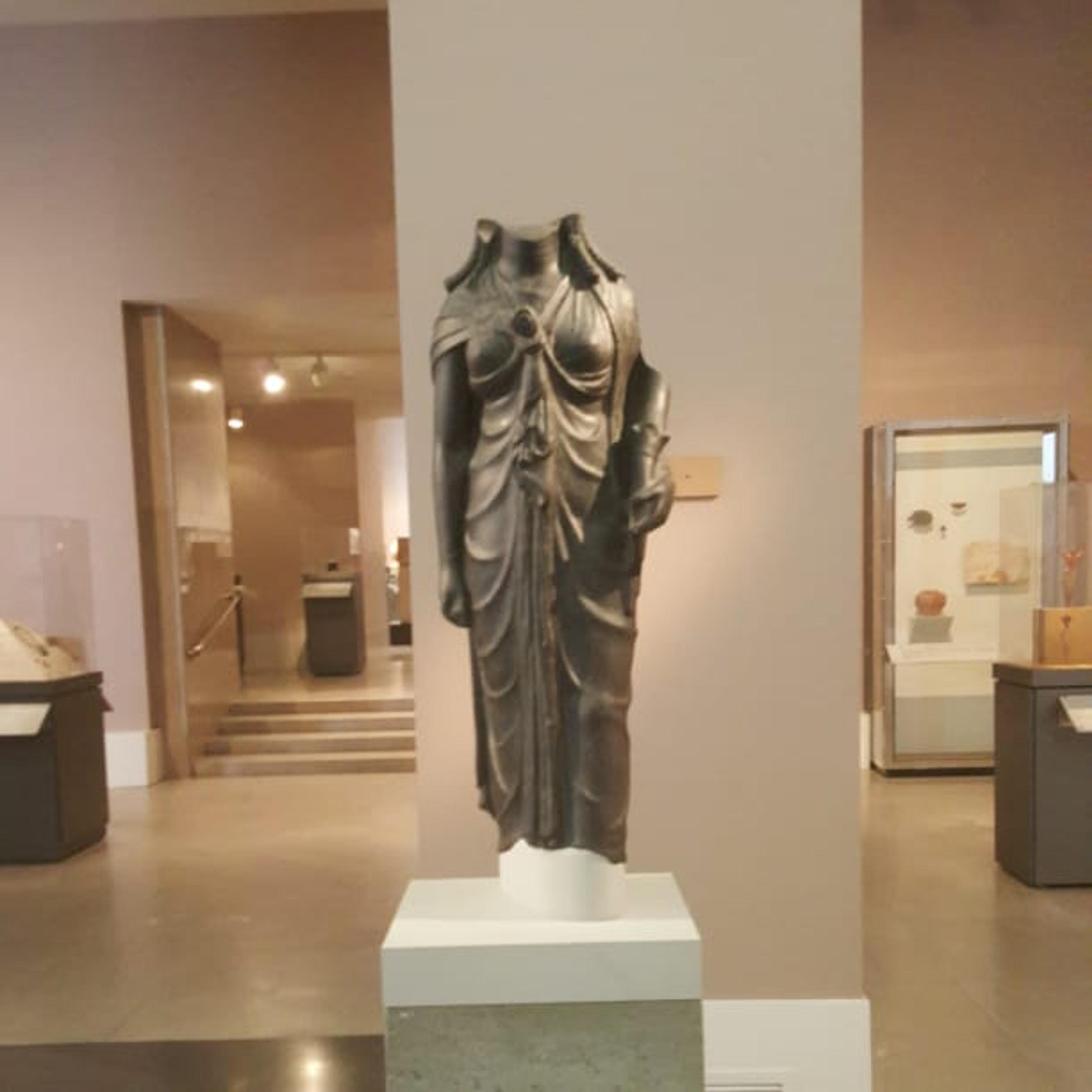 Though headless, this figure can be identified with the goddess Isis by her cornucopia in her hand and the knot in her garment. This knot resembles the hieroglyph "tyt" which is also known as the "Isis knot" and is a symbol of her protection.It is from the Roman period of Egypt's history. In the Hellenistic and Roman periods, worship of Isis was popular both in and outside of Egypt.
Which goddess is this?
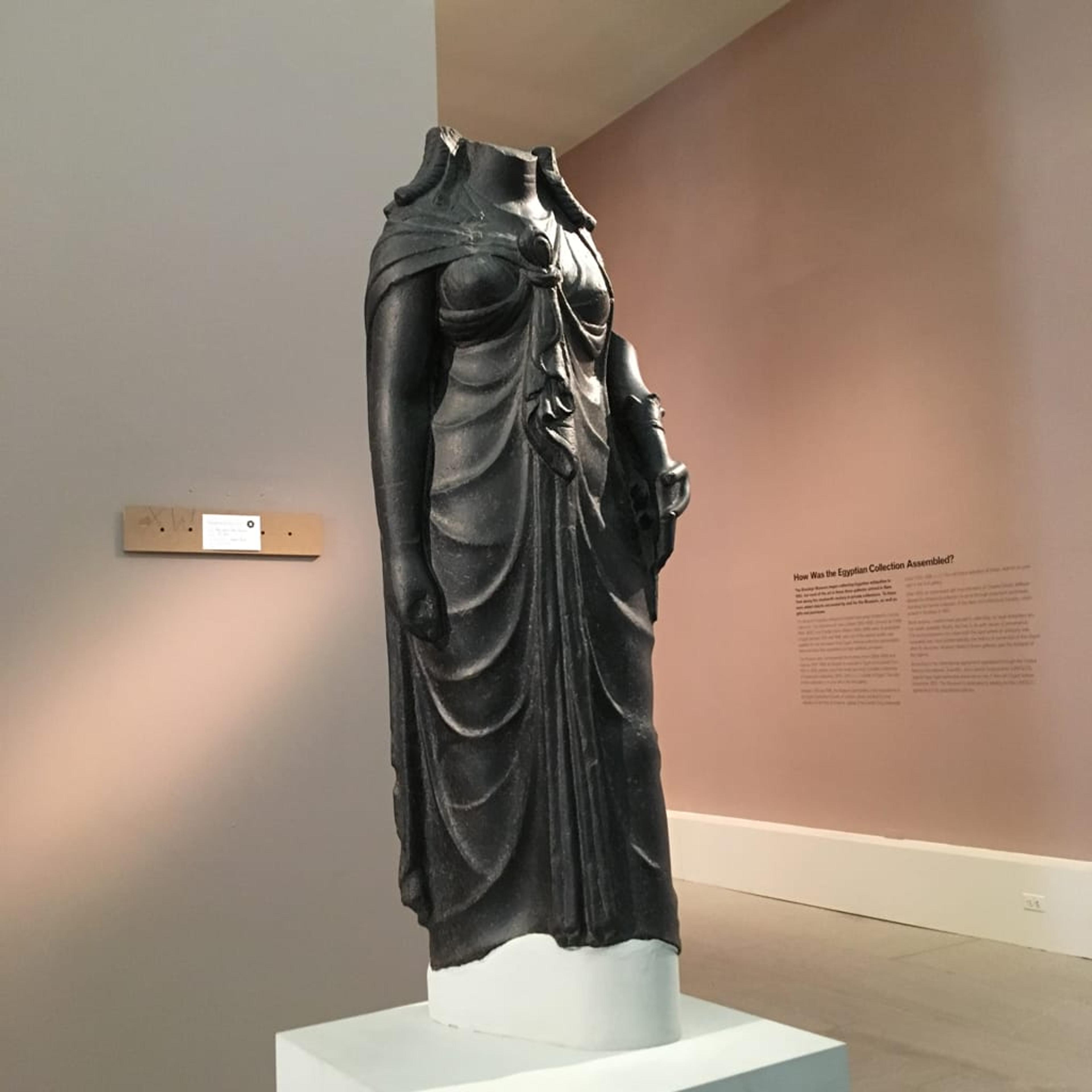 The goddess in that headless statue is Isis, a major goddess with great power and a role model for wives and mothers.During this period, Egypt was under the rule of the Roman Empire which explains why Isis, an Egyptian goddess, is represented here in Roman style. The cornucopia in her hand and style of knot in her dress help to identify her.
Have information?
Have information about an artwork? Contact us at