Bowl
ca. 1295–1185 B.C.E.


1 of 4
Object Label
The image on one of these bowls depicts a monkey playing a double flute. Representations of animals engaged in human activities occur throughout Egyptian history. The other bowl shows a female figure and flowering plants. This motif may be borrowed from scenes on the walls of painted tombs.
Caption
Bowl, ca. 1295–1185 B.C.E.. Faience, 1 1/2 × Diam. 4 1/4 in. (3.8 × 10.8 cm). Brooklyn Museum, Charles Edwin Wilbour Fund, 34.1182. (Photo: Brooklyn Museum)
Frequent Art Questions
Could you tell me how faience was made?
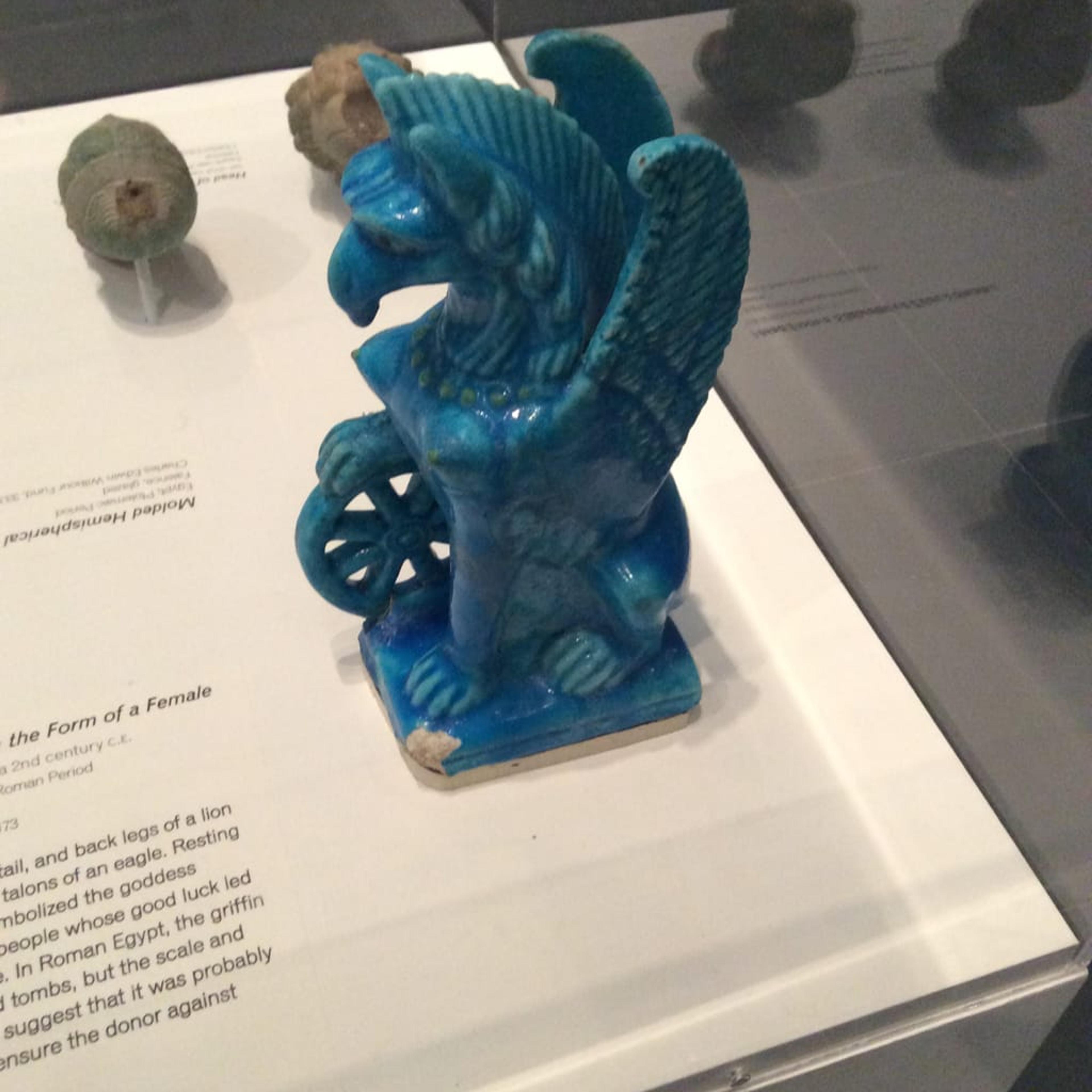 Faience is a man-made mixture of "ground quartz or quartz-sand held together by and alkaline binder. The bright and shiny surface seen on this figurine is a result of glazing. The glaze was made of a form of powdered glass mixed with a liquid and applied either with a brush or by dipping the entire figurine.It gets it's blue color from copper that is mixed into or applied to the surface of the quartz body before firing.
Have information?
Have information about an artwork? Contact us at