Beauties of the Latest Fashion Compared with the Beauty of Flowers (Tosei Bijin), from Flower Playing Cards (Hana-awase)


1 of 2
Object Label
Caption
Gosotei Toyokuni II (Japanese, 1802–1835). Beauties of the Latest Fashion Compared with the Beauty of Flowers (Tosei Bijin), from Flower Playing Cards (Hana-awase), ca. 1830–35. Woodblock print, 15 1/4 x 10 1/2 in. (38.7 x 26.7 cm). Brooklyn Museum, Anonymous gift, 76.151.14. (Photo: Brooklyn Museum)
Gallery
Not on view
Collection
Gallery
Not on view
Collection
Artist
Title
Beauties of the Latest Fashion Compared with the Beauty of Flowers (Tosei Bijin), from Flower Playing Cards (Hana-awase)
Date
ca. 1830–35
Period
Edo Period
Geography
Place made: Japan
Medium
Woodblock print
Classification
Dimensions
15 1/4 x 10 1/2 in. (38.7 x 26.7 cm)
Signatures
Artist's signature: Toyokuni ga.
Markings
Publisher's seal. Censor seal: Kiwame
Credit Line
Anonymous gift
Accession Number
76.151.14
Frequent Art Questions
So the red stamps on the prints are ownership marks?
Typically the marks in red are the artist's seal. Publisher and censor marks would also appear on prints, but tend not to be red.What exactly is Prussian Blue? The notes say simply that it's a synthetic pigment. Do you know any more about it?
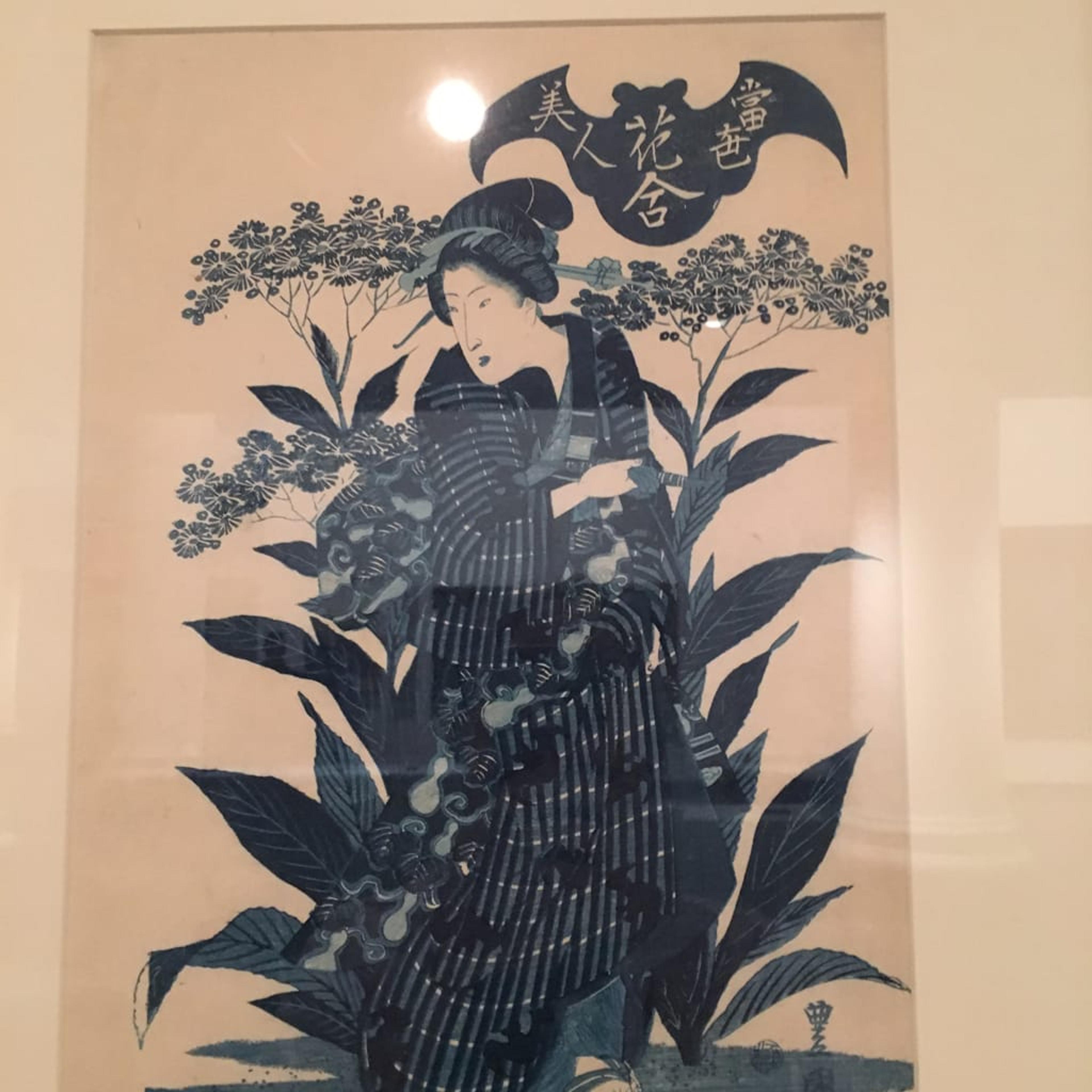 Prussian blue is a synthetic pigment that is smoother and more well suited to printmaking than plant and mineral dyes.Cool. That's why this print looks so rich and detailed. I love the depth of colorYes, so did Japanese printmakers like Toyokuni II, Hokusai, and Hiroshige!I'm sure it was very inspiring to have materials like this to work with.Monochromatic blue Aizuri-e prints like this were a common form of ukiyo-e print.The Berlin blue, or Prussian blue, while it was developed in the first decade of the 18th century in Germany, entered the Asian market by the mid 18th century. It took until the 1820s for the price to go down, and the material to become more affordable. That's when it became practical for prints!
Have information?
Have information about an artwork? Contact us at