Relief of King Sobekhotep III
ca. 1744–1741 B.C.E.
1 of 18
Object Label
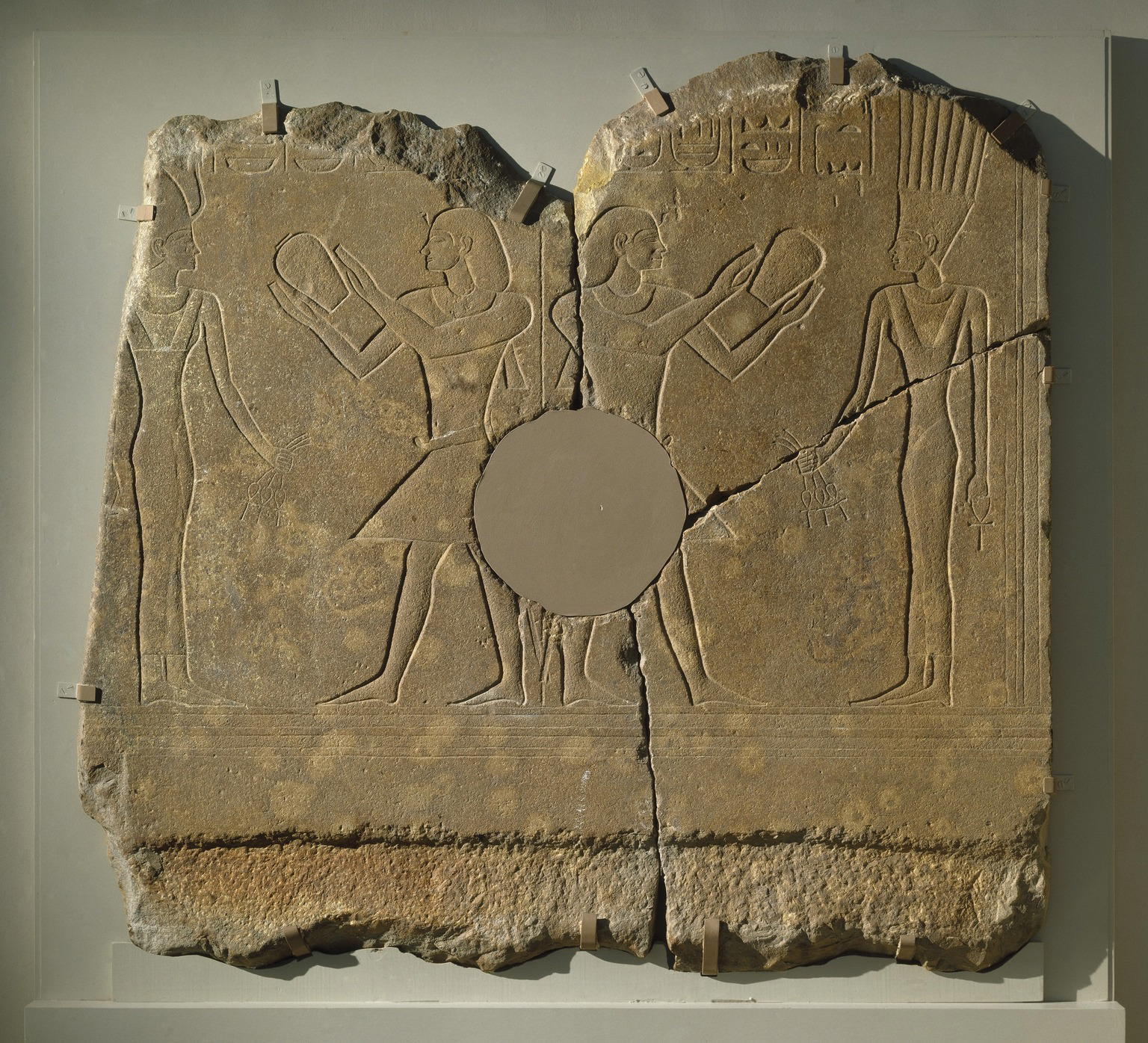
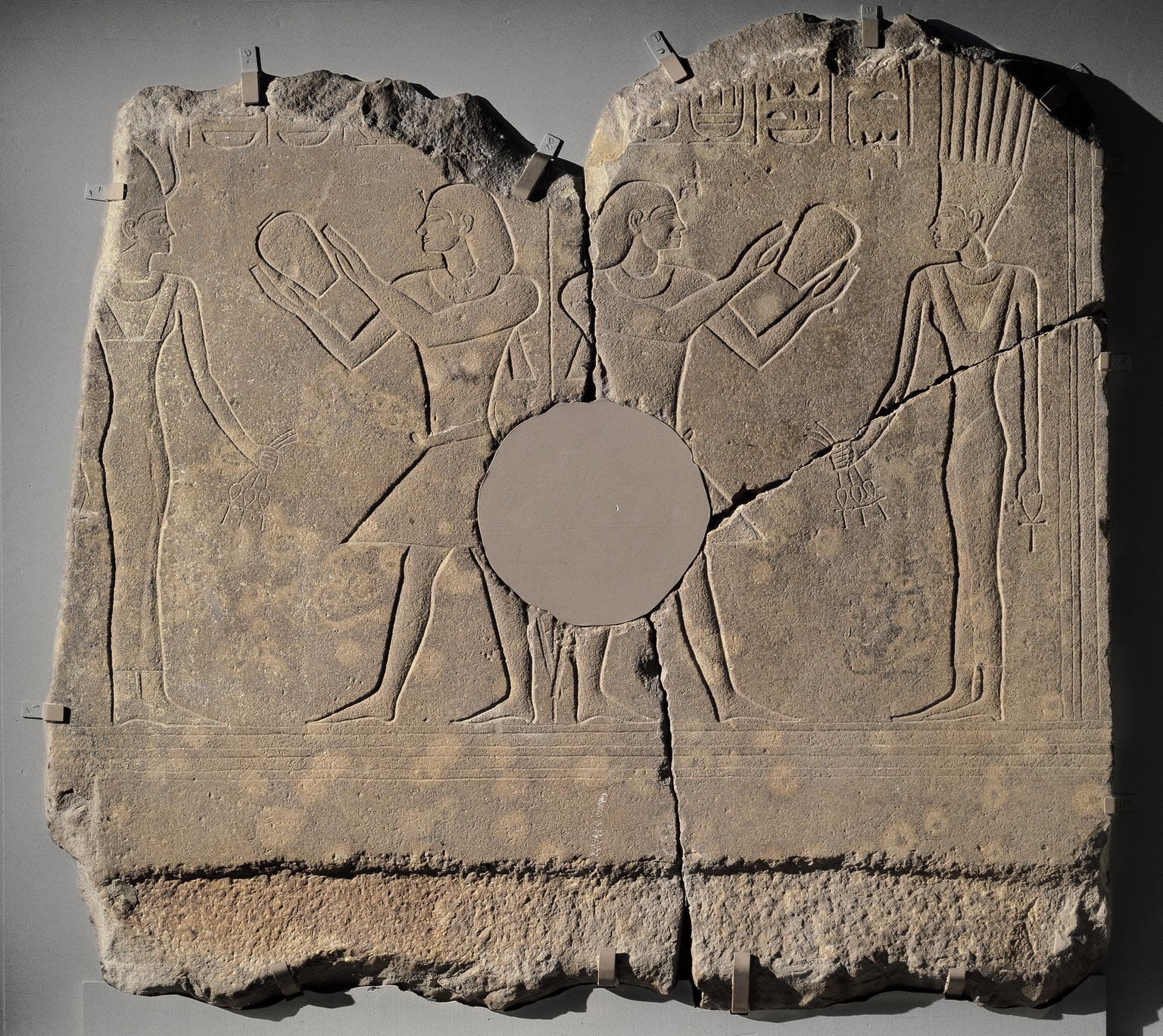
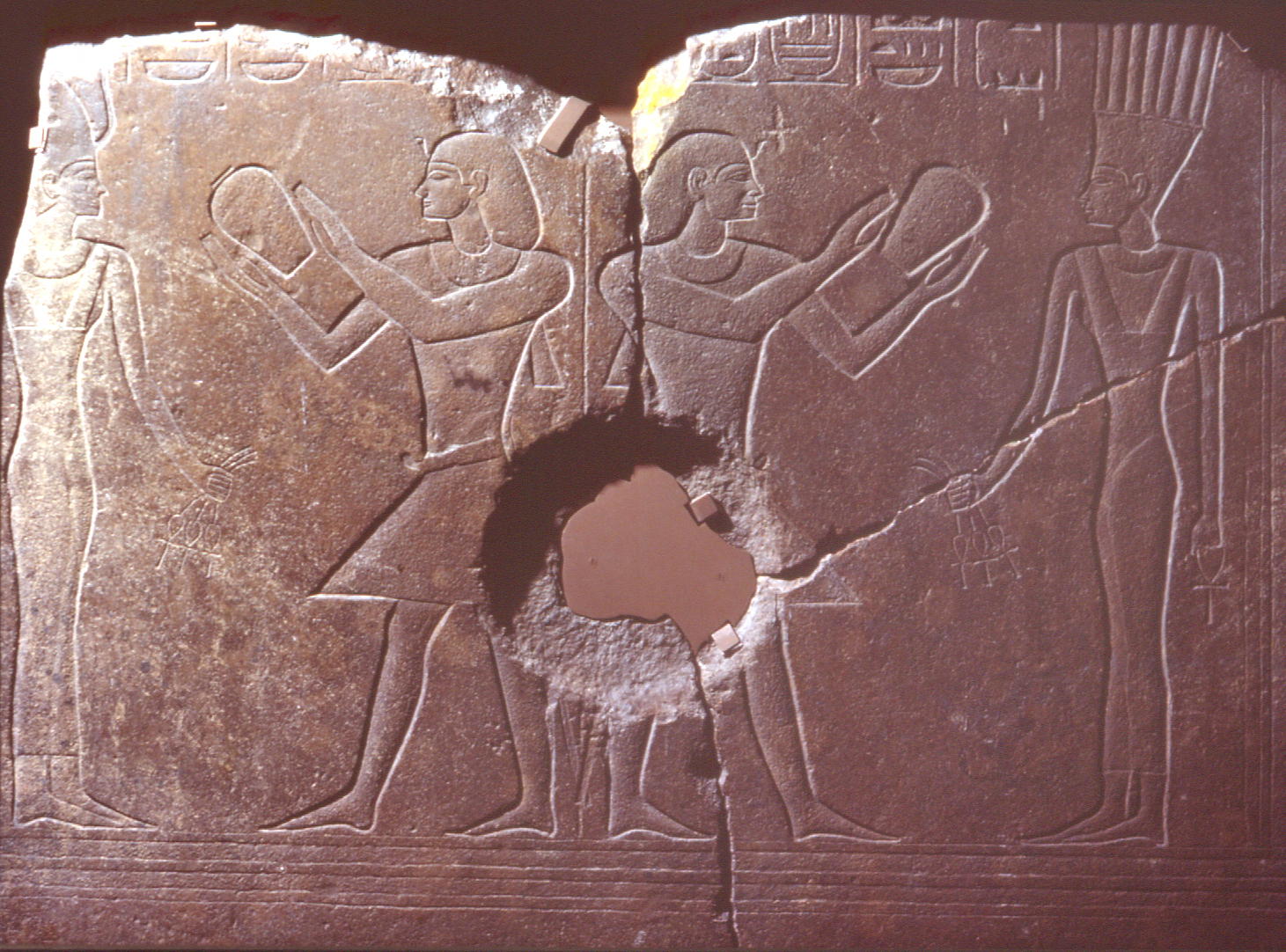
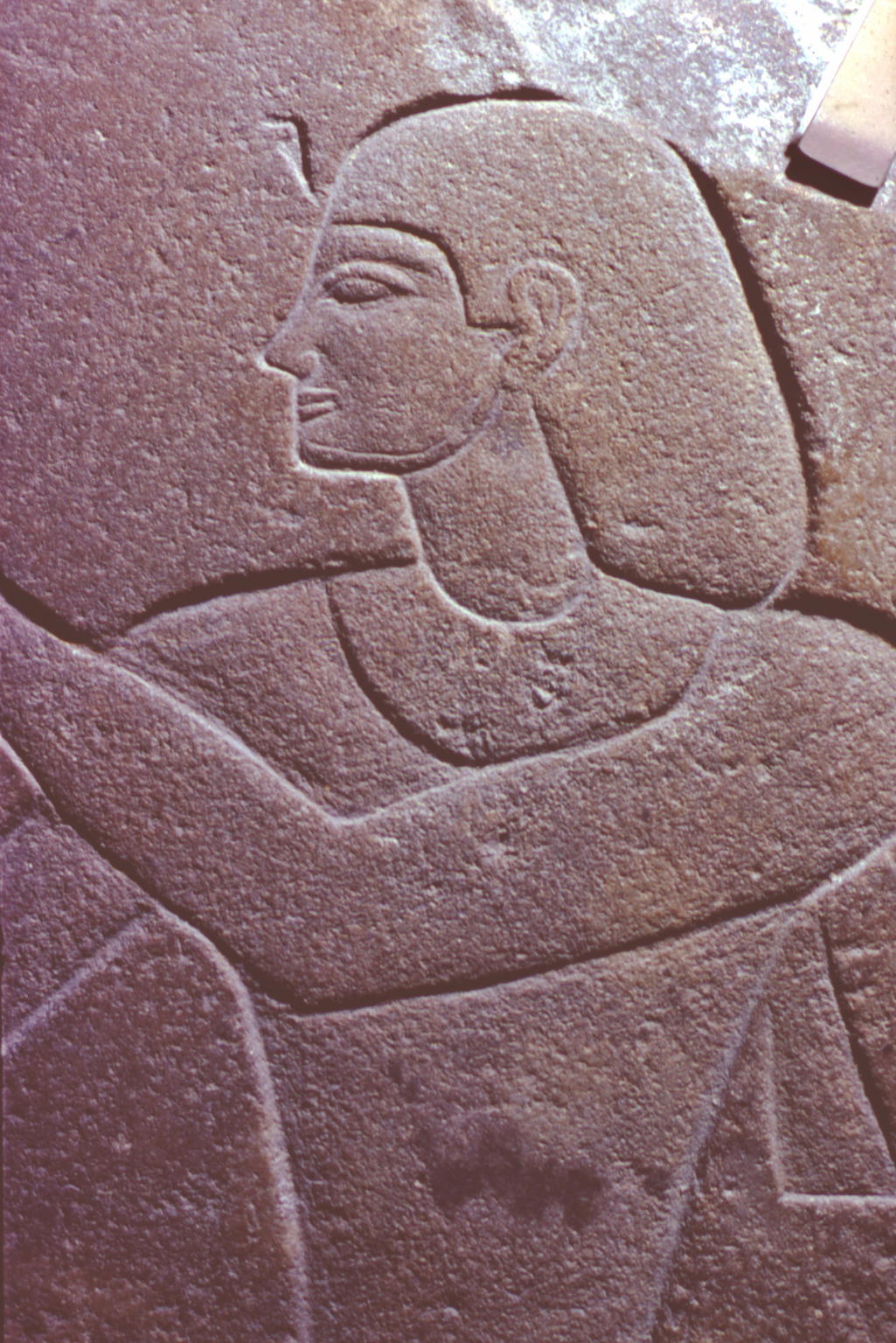
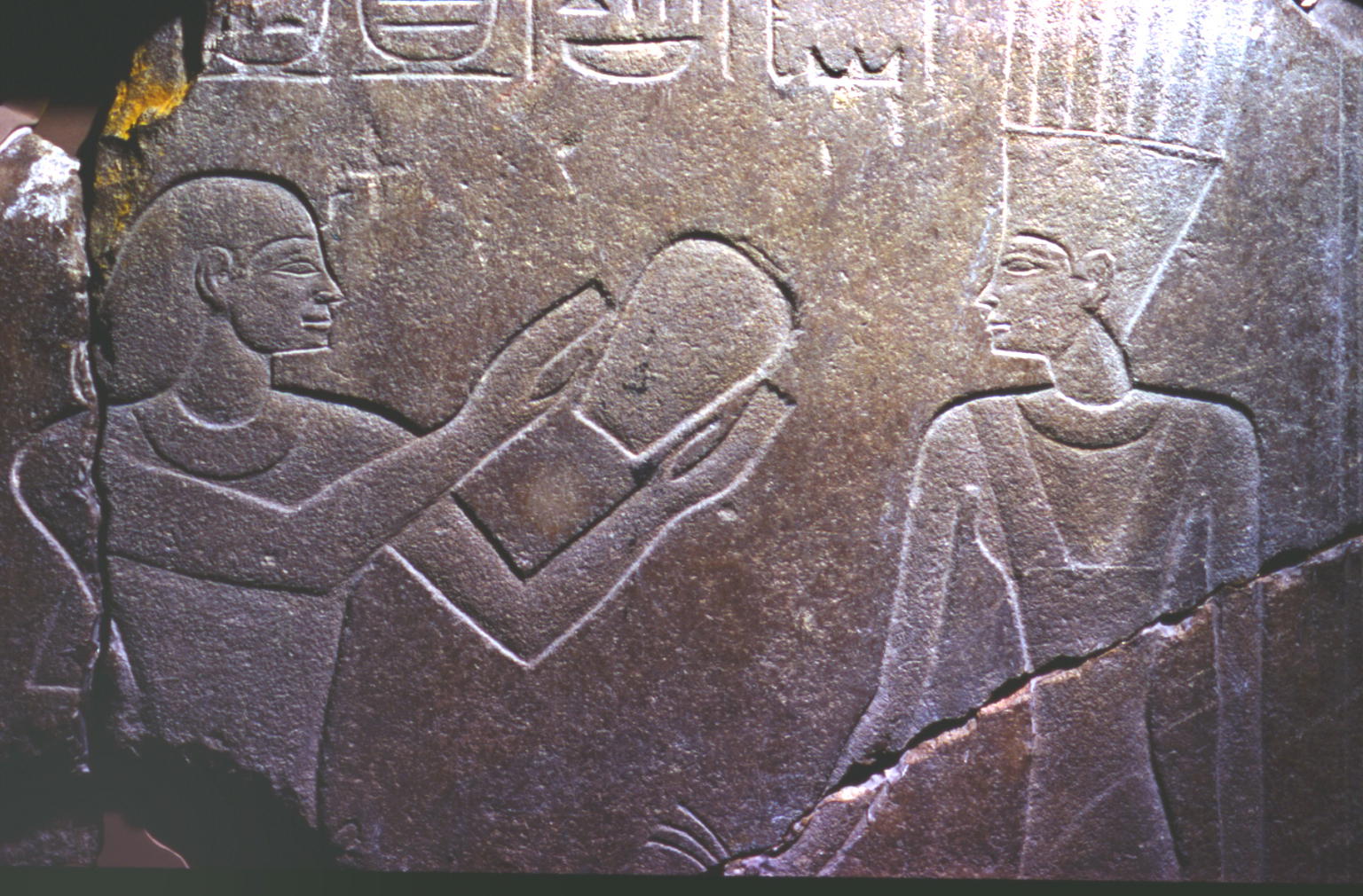
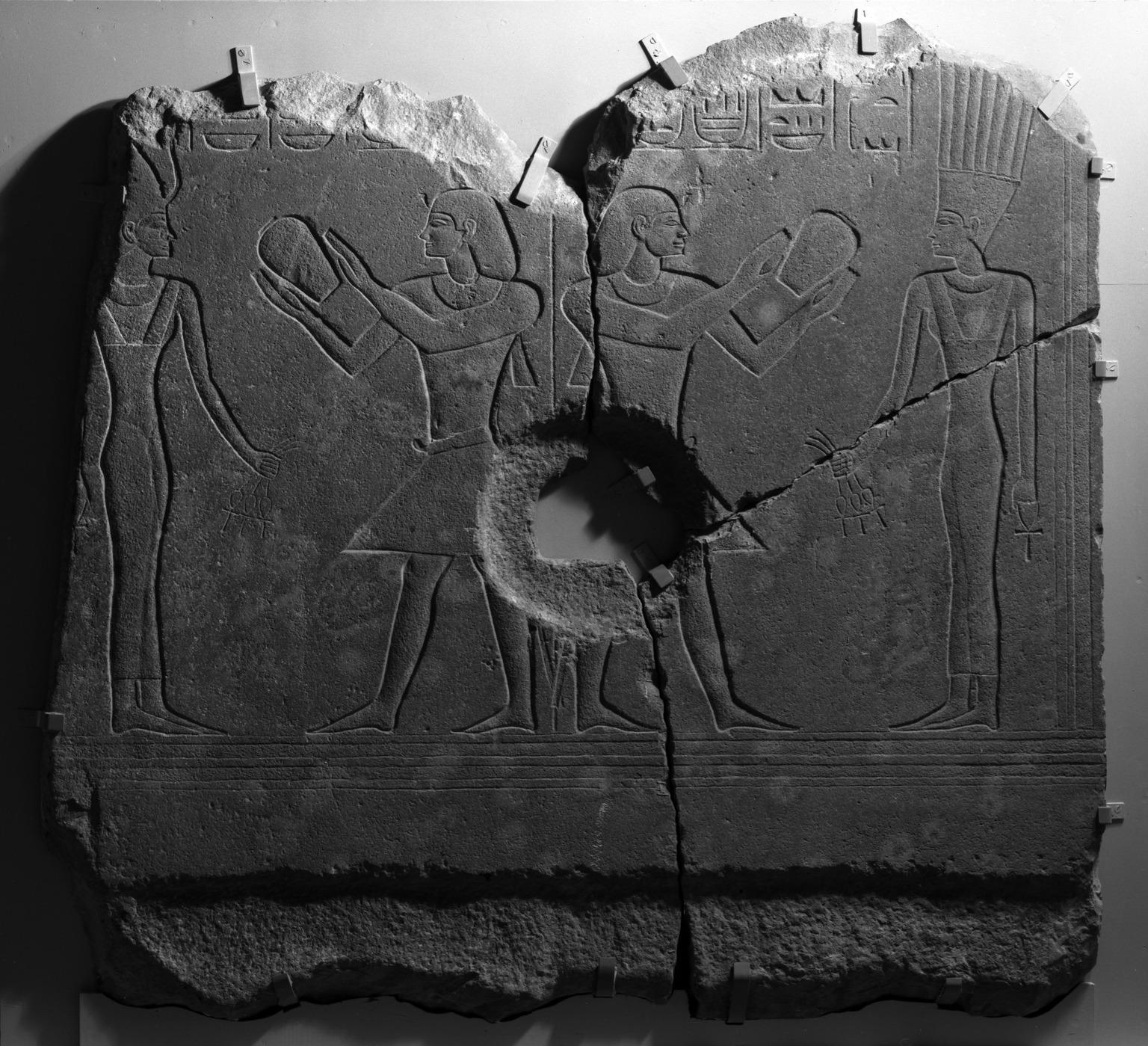
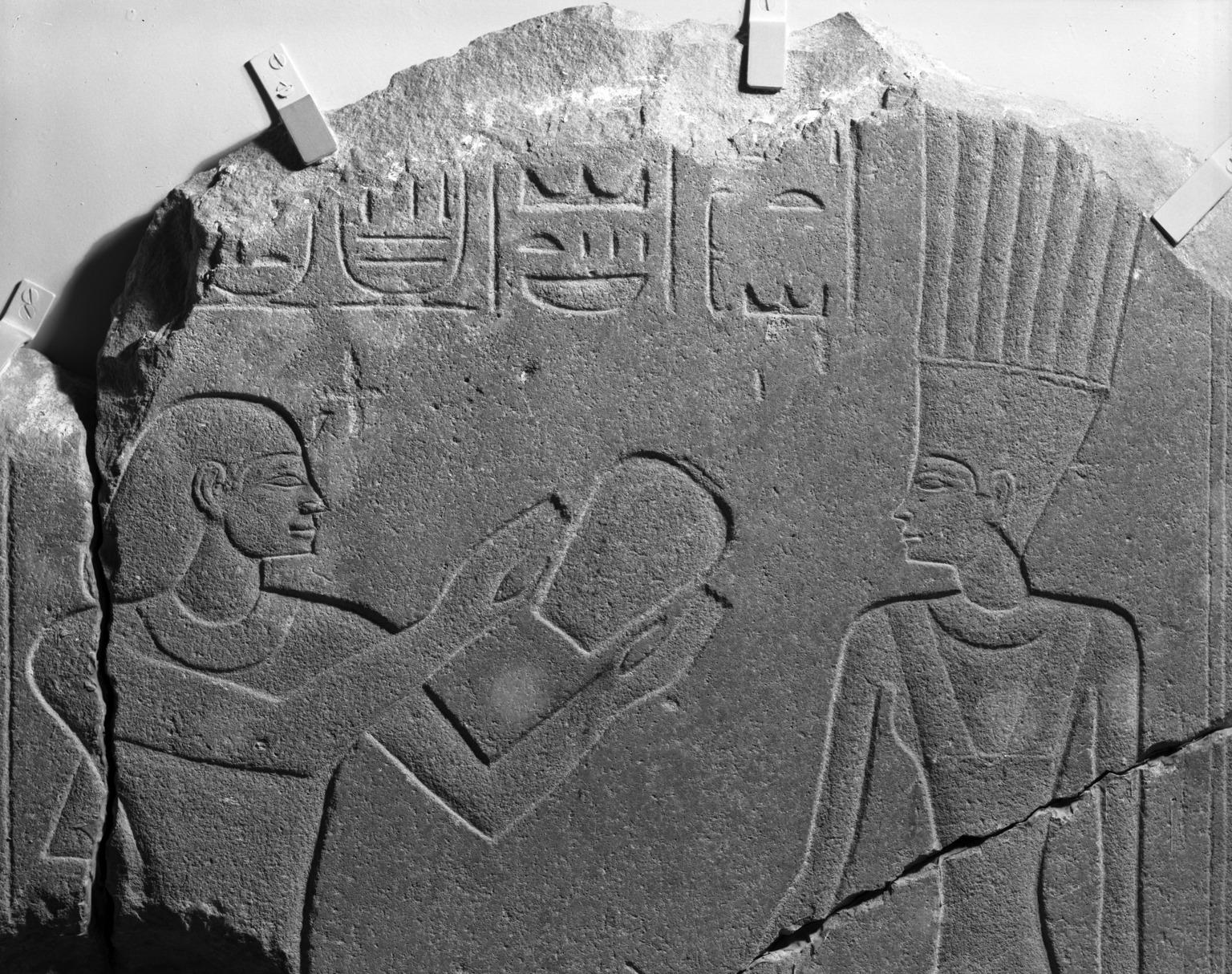
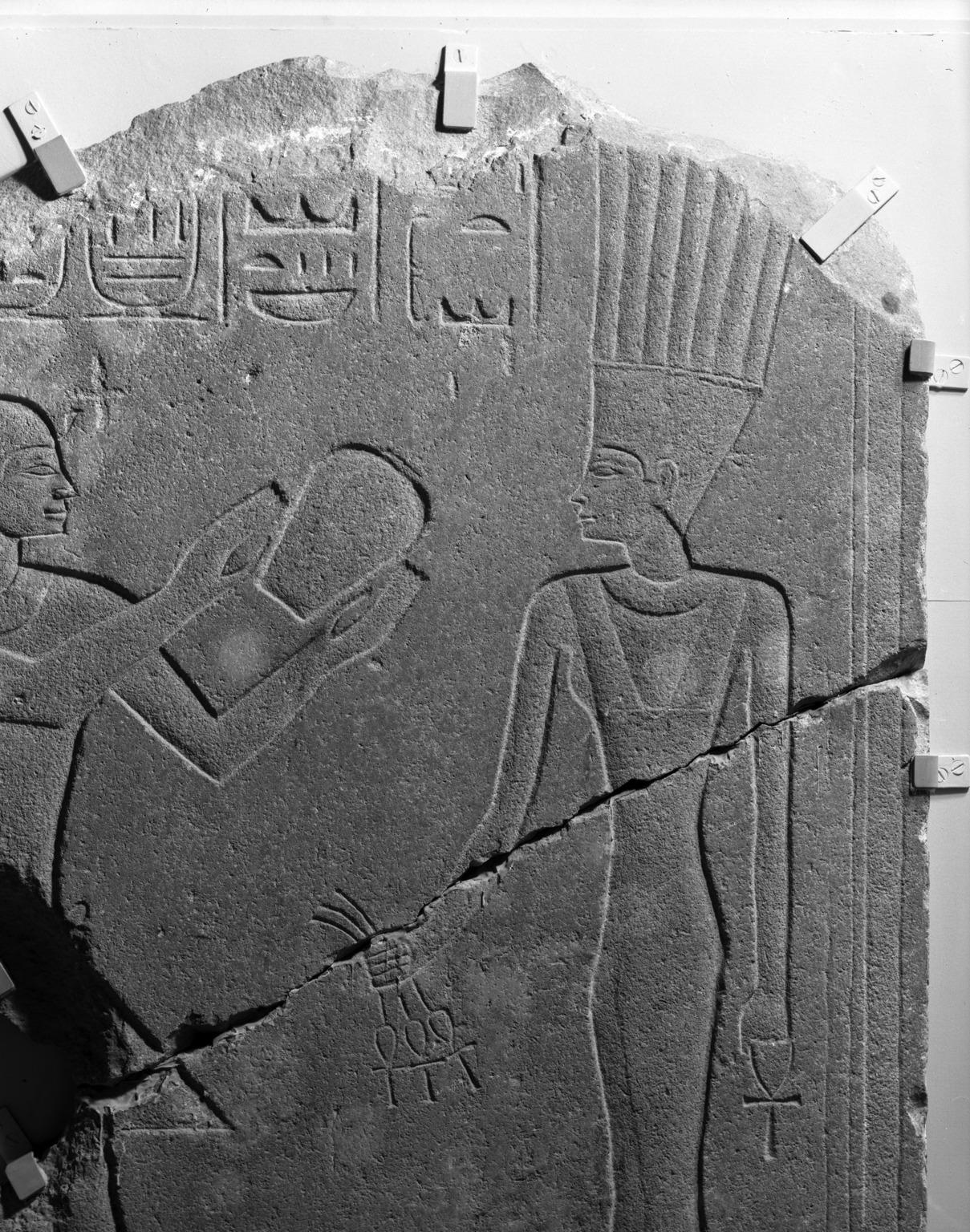
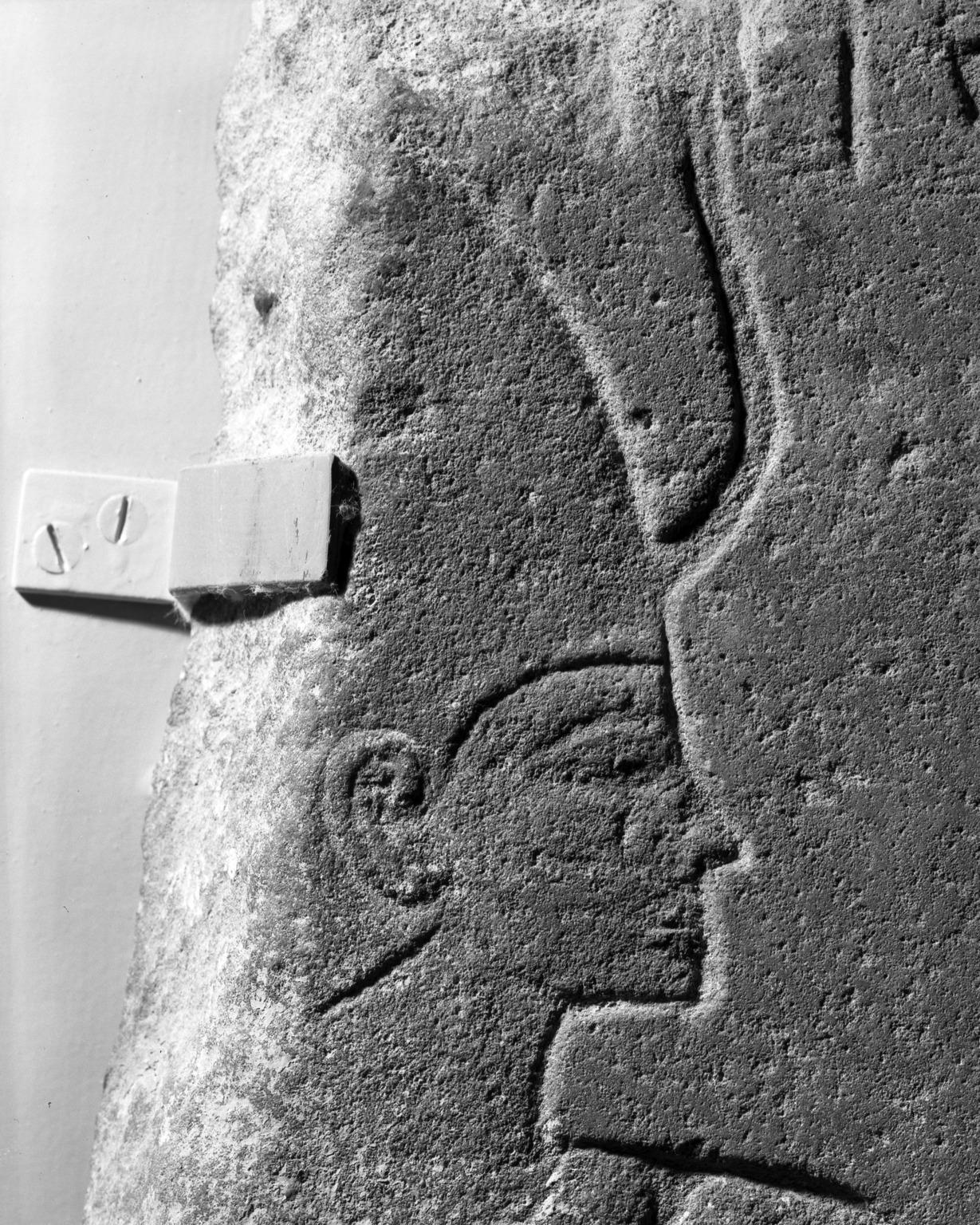
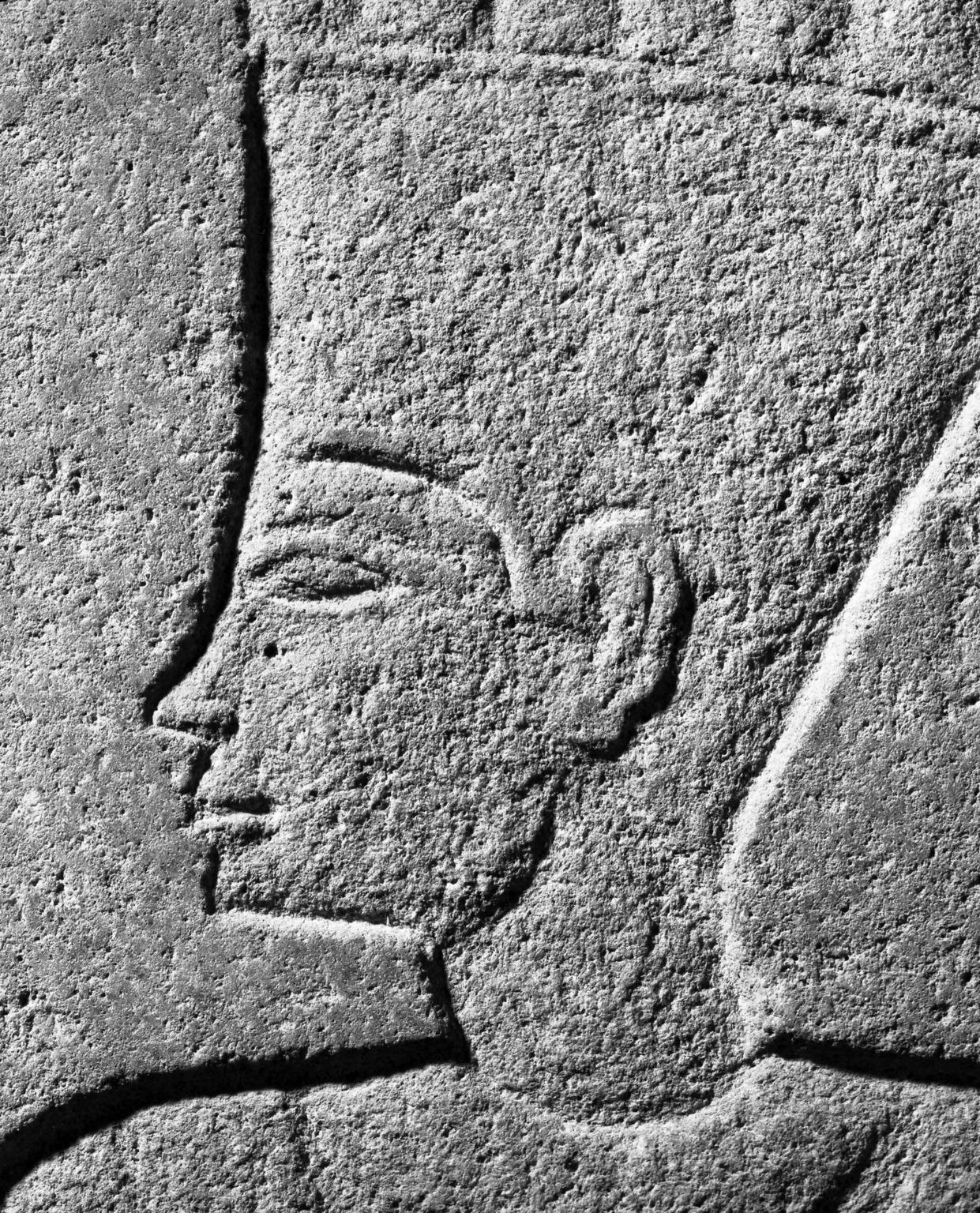
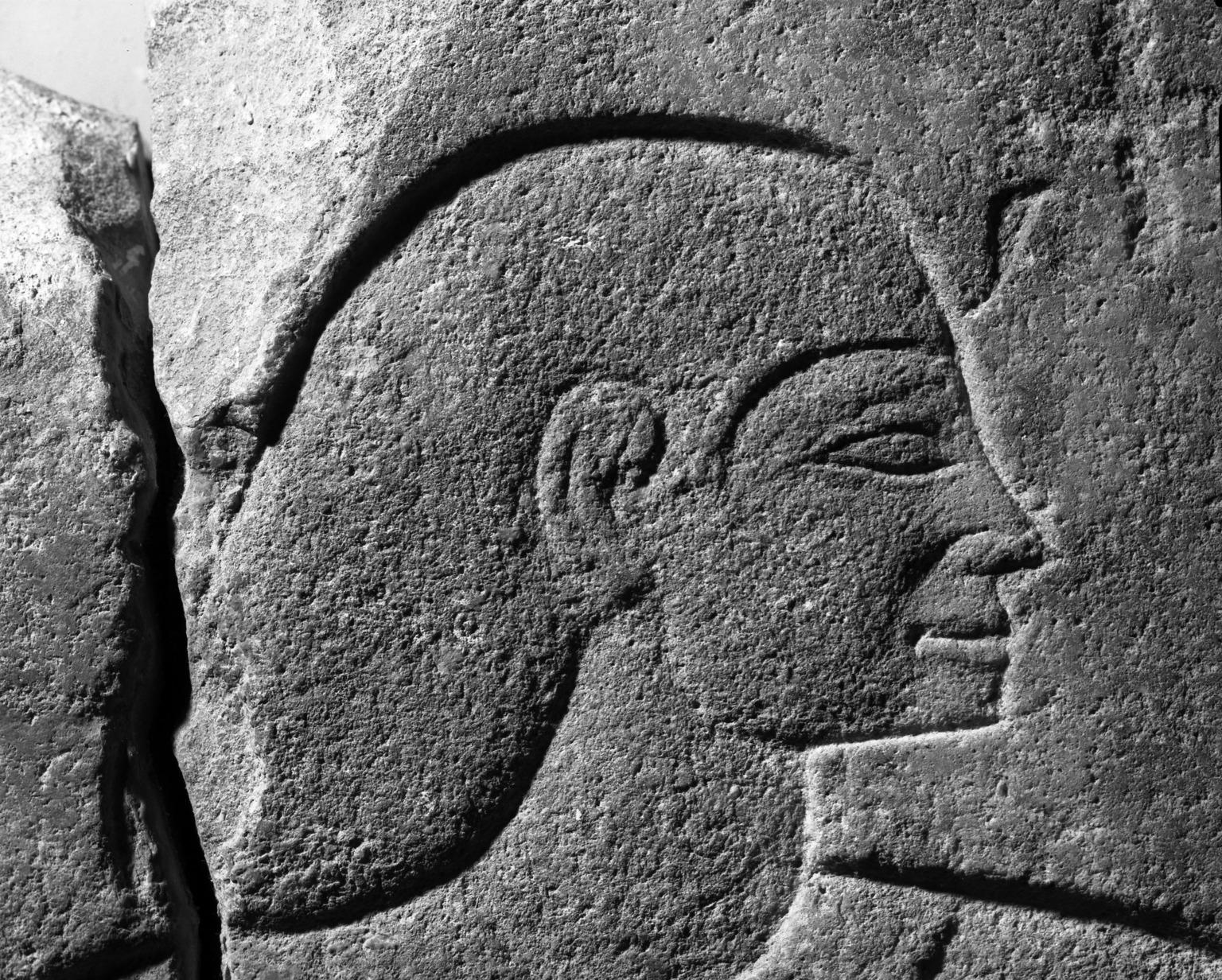
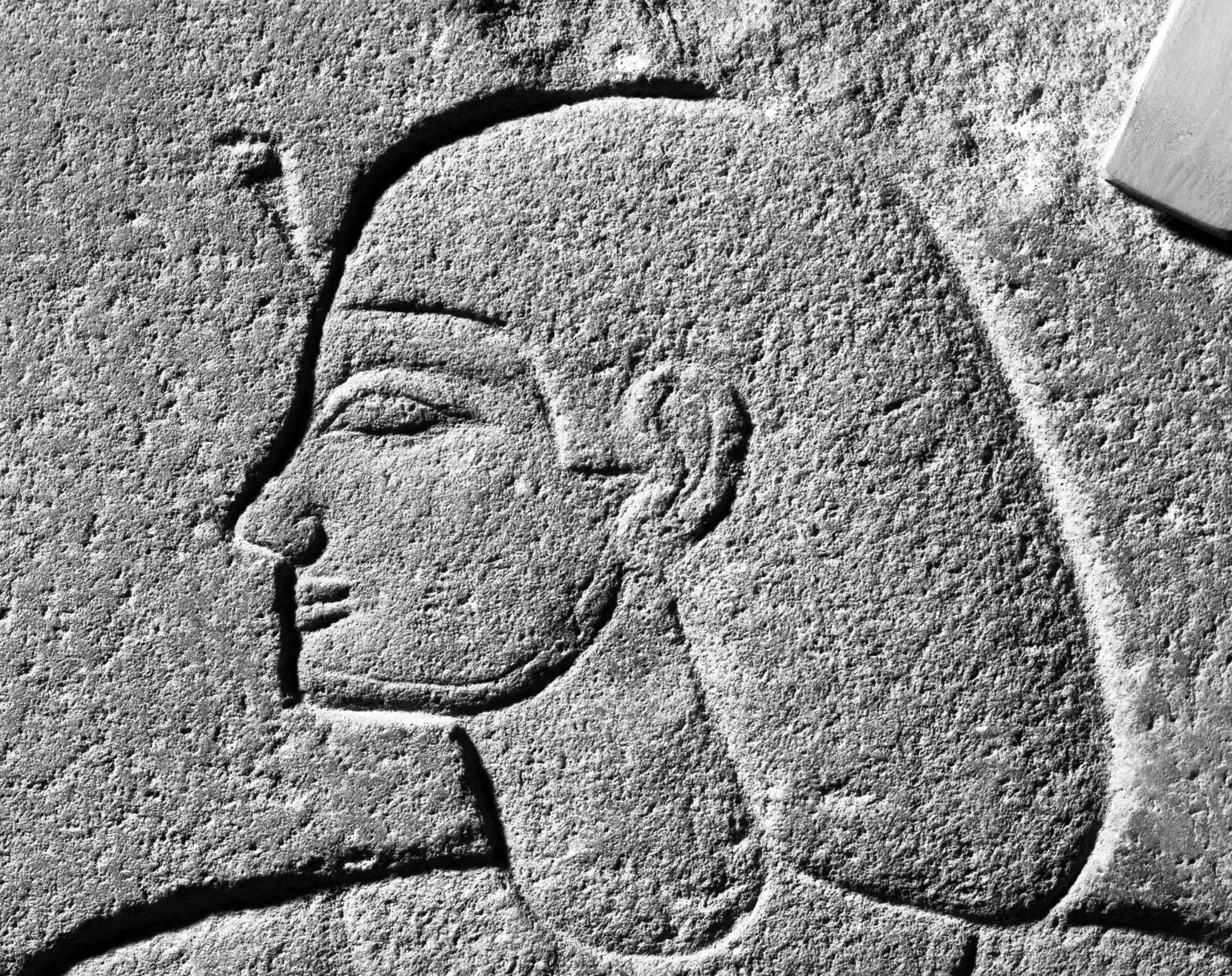
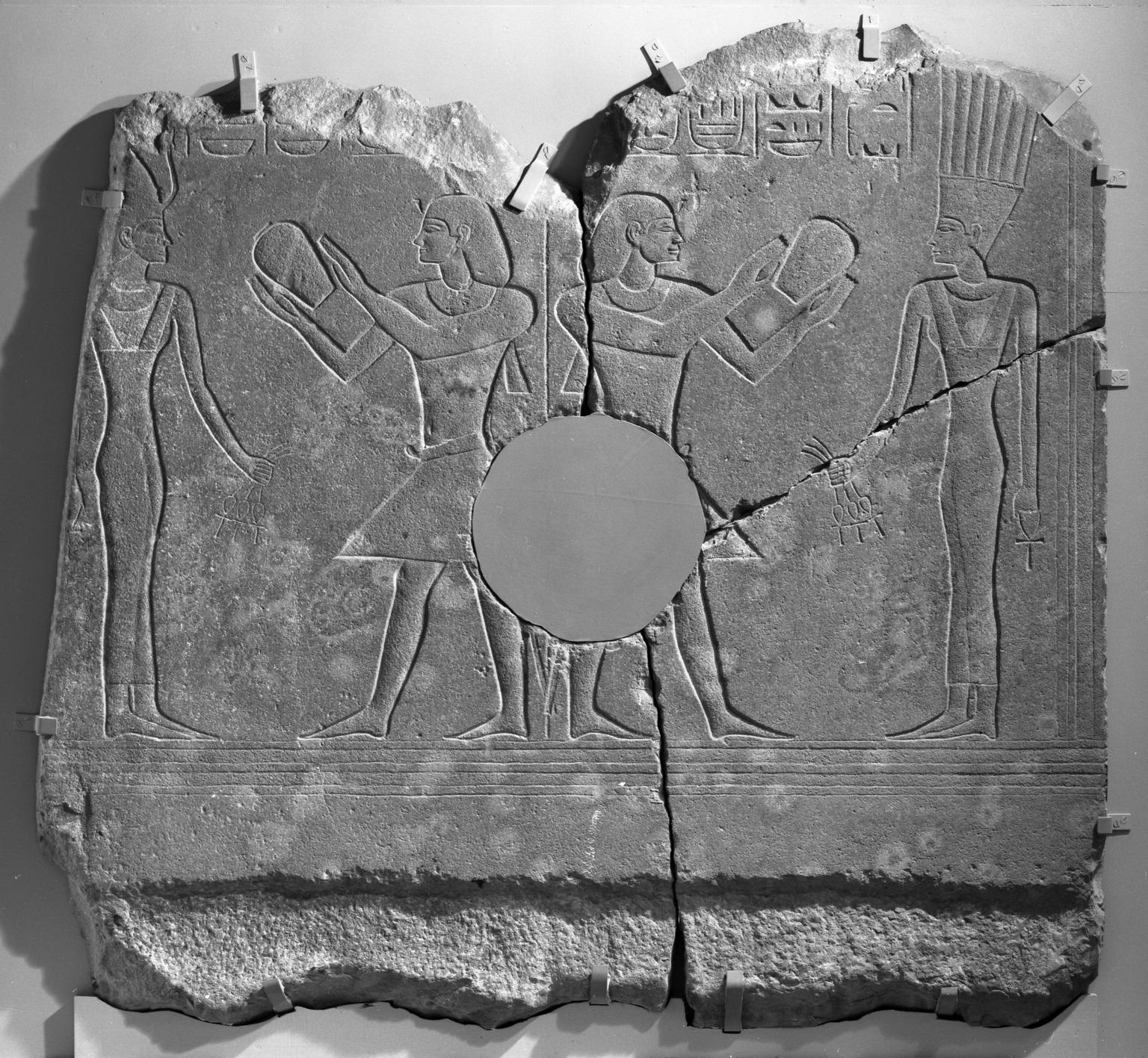
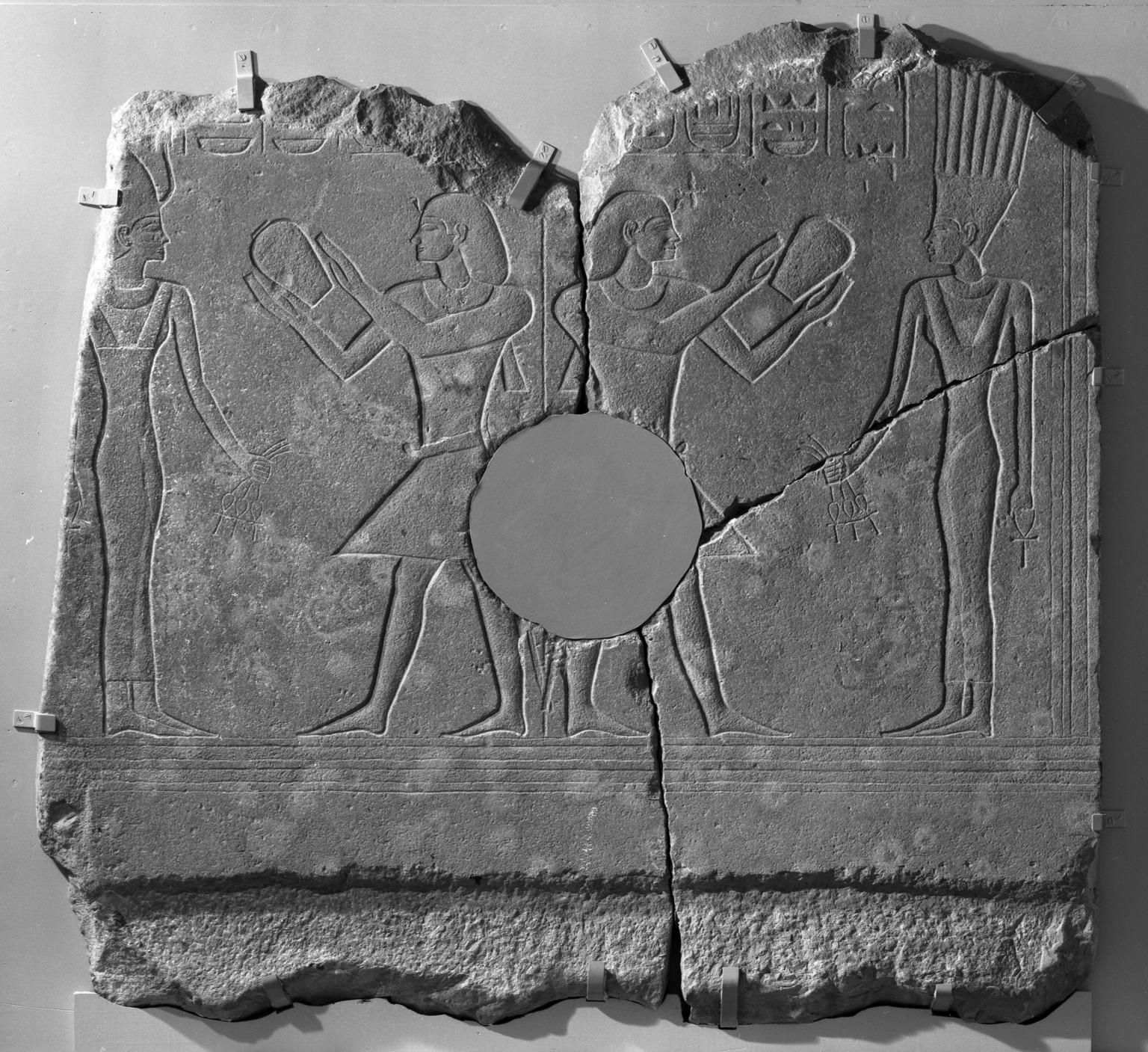
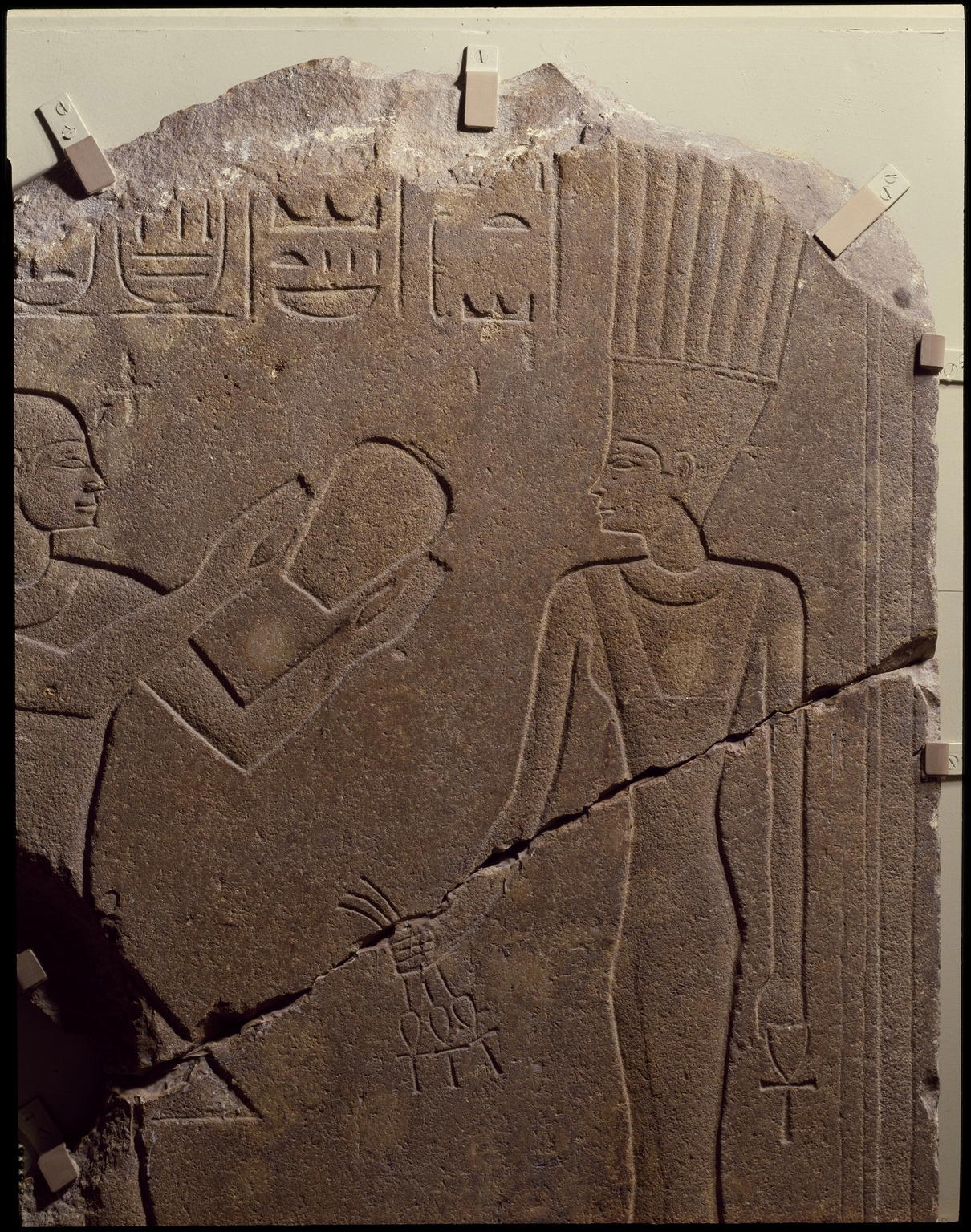
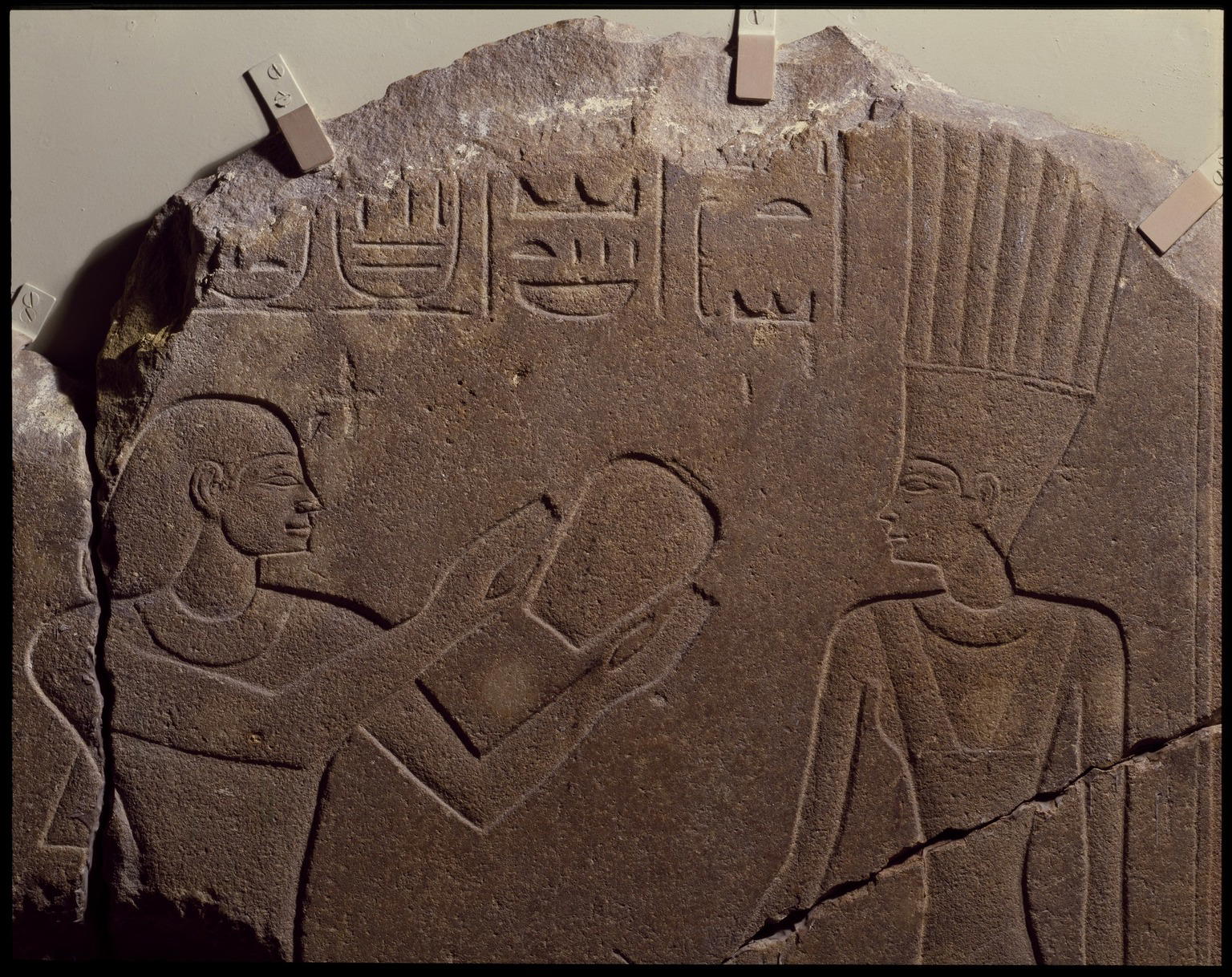
This relief depicts Sobekhotep III offering vessels to the goddesses Satis and Anukis (left and right, respectively). This was a common motif of temple decoration. The king, who theoretically conducts the cult’s rituals in every temple every day, offers to deities who in turn bless him and, through him, Egypt. Both goddesses extend to the king three “life” hieroglyphs (the ankh). This relief probably formed part of a naos, or shrine for a cult image. The scenes, devoid of indications of time or setting, intend to convey a timeless and universal religious truth.
Caption
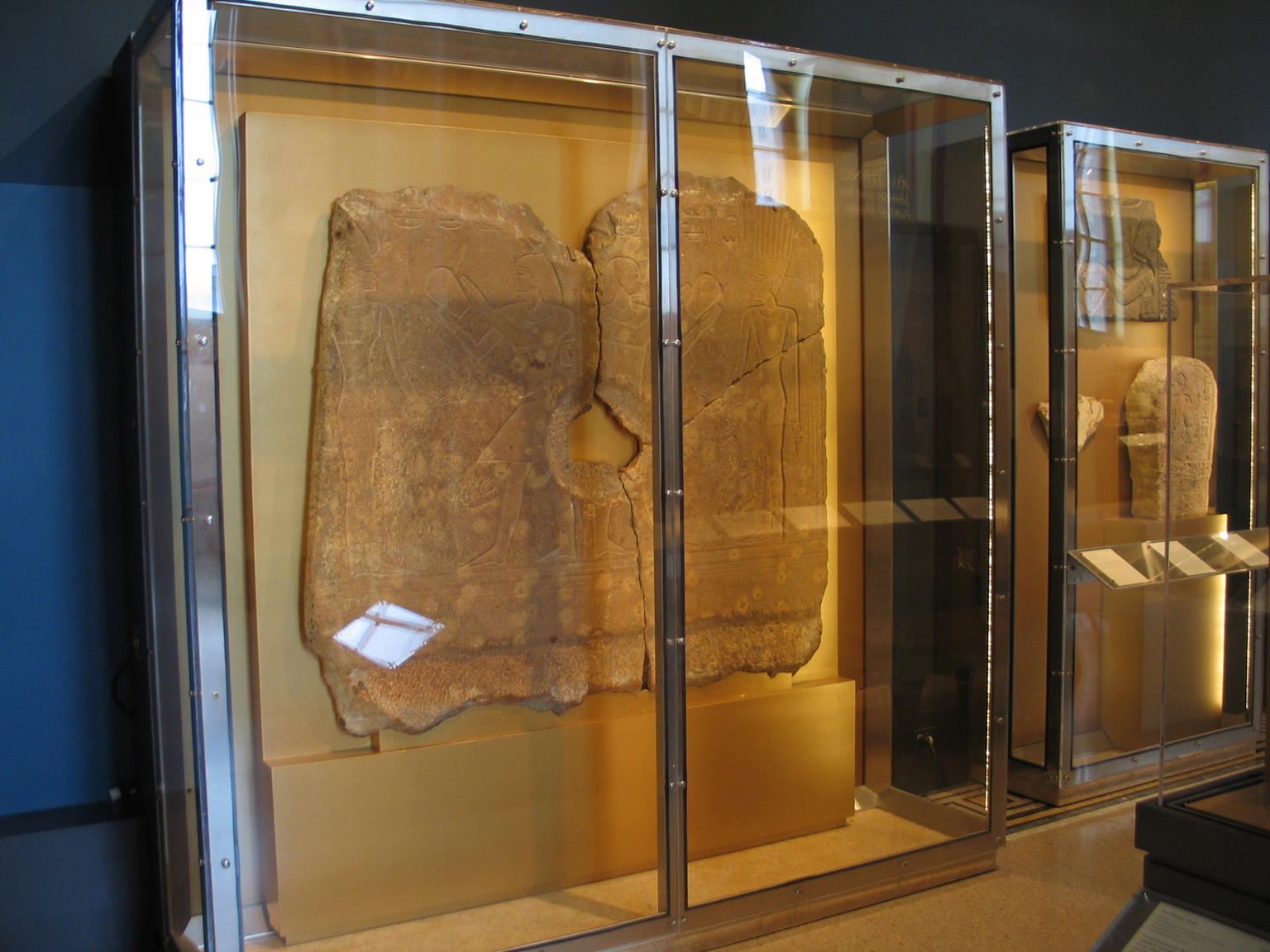
Relief of King Sobekhotep III, ca. 1744–1741 B.C.E.. Quartzite, 63 1/2 x 66 x 4 in., 765 lb. (161.3 x 167.6 x 10.2 cm, 347kg). Brooklyn Museum, Charles Edwin Wilbour Fund, 77.194a-c. (Photo: Brooklyn Museum)
Title
Relief of King Sobekhotep III
Date
ca. 1744–1741 B.C.E.
Dynasty
Dynasty 13
Period
Second Intermediate Period
Medium
Quartzite
Classification
Dimensions
63 1/2 x 66 x 4 in., 765 lb. (161.3 x 167.6 x 10.2 cm, 347kg)
Credit Line
Charles Edwin Wilbour Fund
Accession Number
77.194a-c
Frequent Art Questions
What is this? Why is there a hole in the middle?
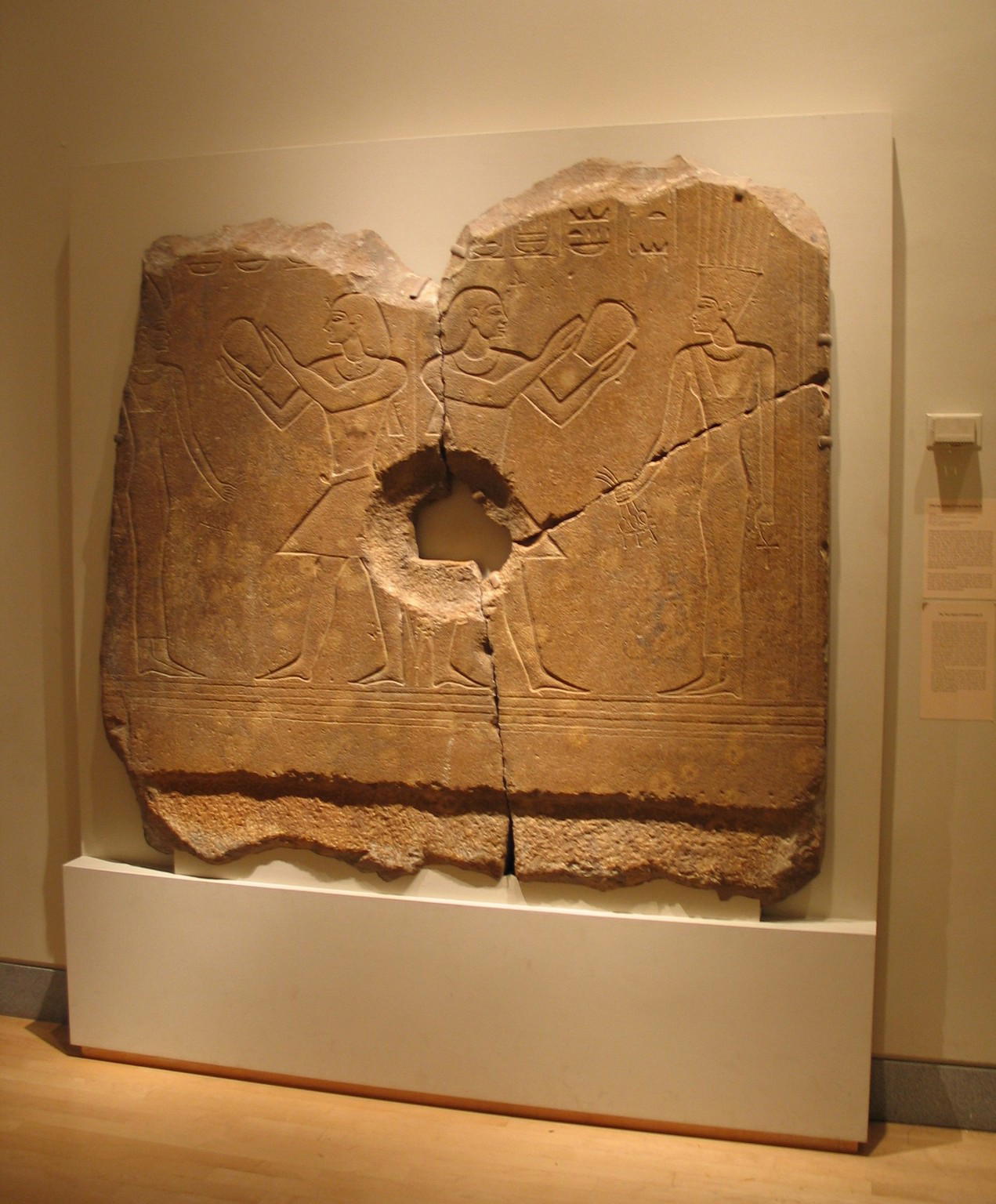
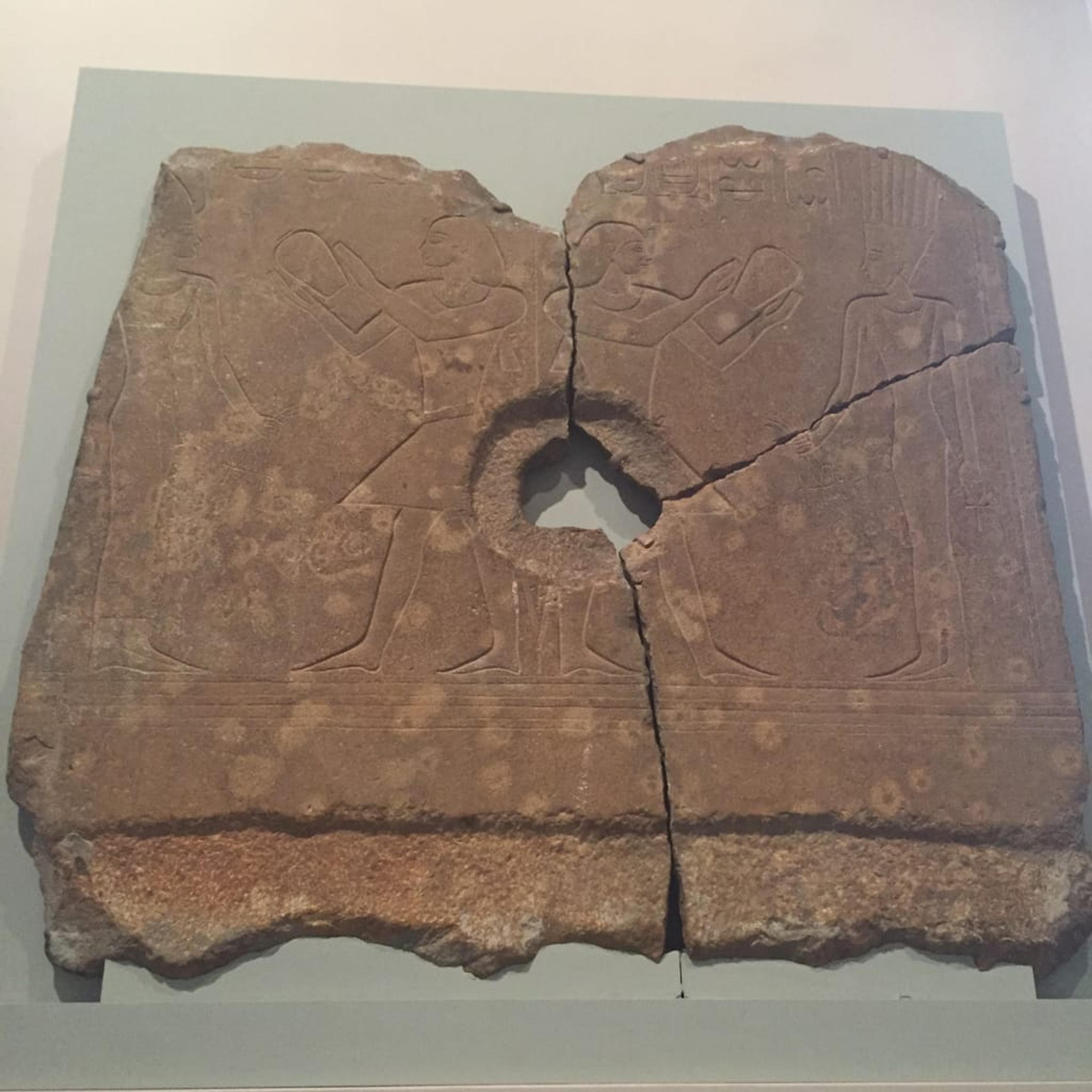 This relief is remarkable because it depicts Sobekhotep III, one of fifty kings who reigned during the disorganized period known as the 13th Dynasty in ancient Egypt. It's rare to see monuments to these kings!The large hole at the center is from an attempt in the 19th century to use this slab as a grinding stone. Luckily, in a way, the stone was too thin and cracked quickly so none of the remaining carving was rubbed away.
Tell me more.
What's remarkable about this piece is the king depicted. Sobekhotep III only reigned for a few years and was one of fifty kings that made up the chaotic 13th Dynasty. Little physical evidence of any of them remains. Even more remarkable is that this was a brand new relief carved for Sobekhotep III. Most known references to his cartouches that were re-carved from someone else's.The two goddesses he is shown making offerings to are Satis and Anukis, local deities of the First Cataract Region (near the modern Aswan Dam) where this relief is believed to have been part of a temple.
Have information?
Have information about an artwork? Contact us at