Whistle in the Form of a Bird
800–1350


1 of 3
Object Label
Birds are among the most often portrayed animals in the pre-Columbian art of Central America. Their song and ability to fly were greatly admired traits, and whistles like the charming examples seen here would have reproduced a bird’s melodic call almost perfectly. The polychrome whistle on the right has a painted lattice design, and the one on the left is adorned with incised lines, triangles, and circles filled with white pigment. Both types of decoration suggest bird feathers.
Caption
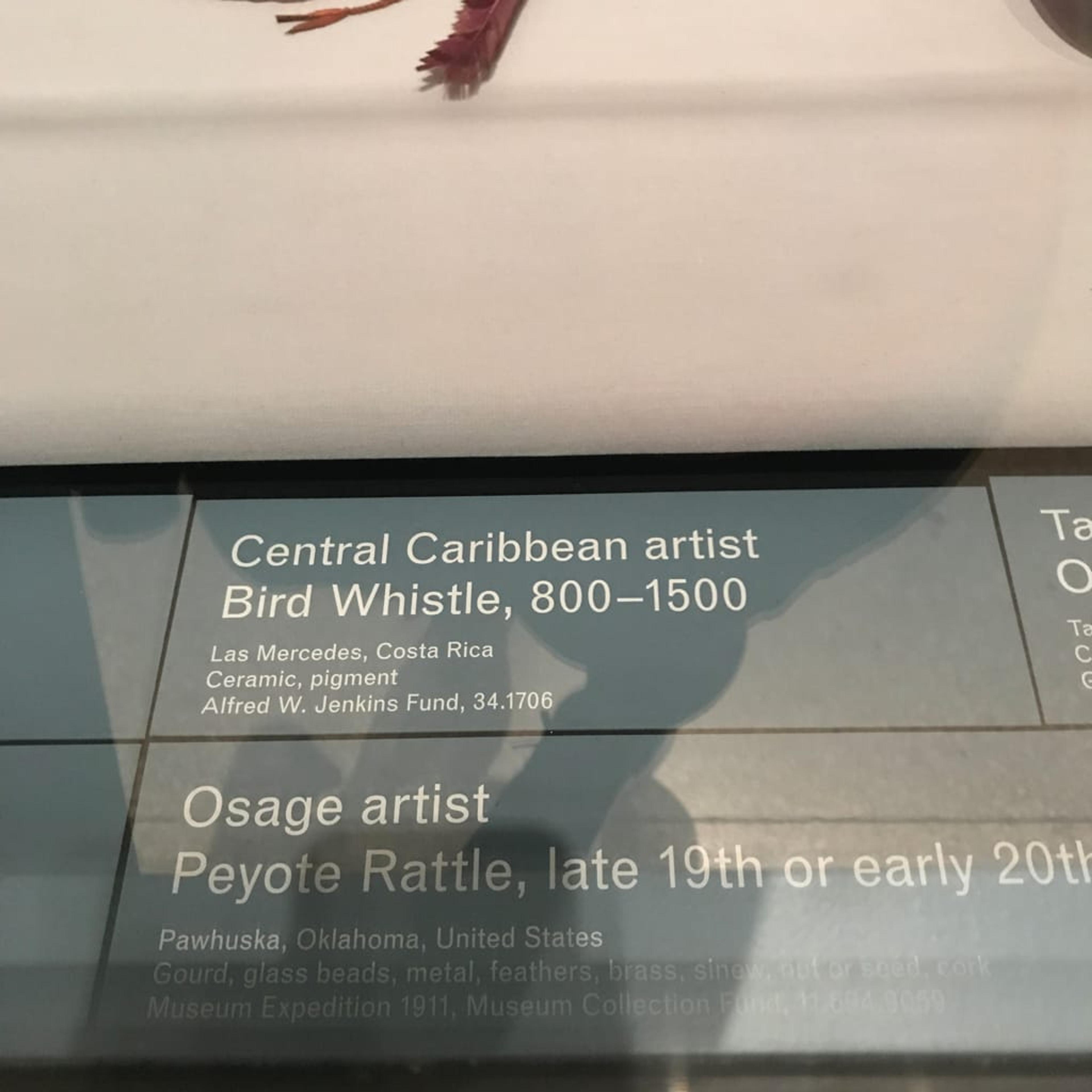
Whistle in the Form of a Bird, 800–1350. Ceramic, pigment, 3 1/8 x 3 x 4 in. (8 x 7.6 x 10.2 cm). Brooklyn Museum, Alfred W. Jenkins Fund, 34.1706. (Photo: Brooklyn Museum)
Gallery
Not on view
Collection
Gallery
Not on view
Collection
Title
Whistle in the Form of a Bird
Date
800–1350
Medium
Ceramic, pigment
Classification
Dimensions
3 1/8 x 3 x 4 in. (8 x 7.6 x 10.2 cm)
Credit Line
Alfred W. Jenkins Fund
Accession Number
34.1706
Frequent Art Questions
To create the sounds that each instrument makes, were the actual instruments on display used or were replicas made?
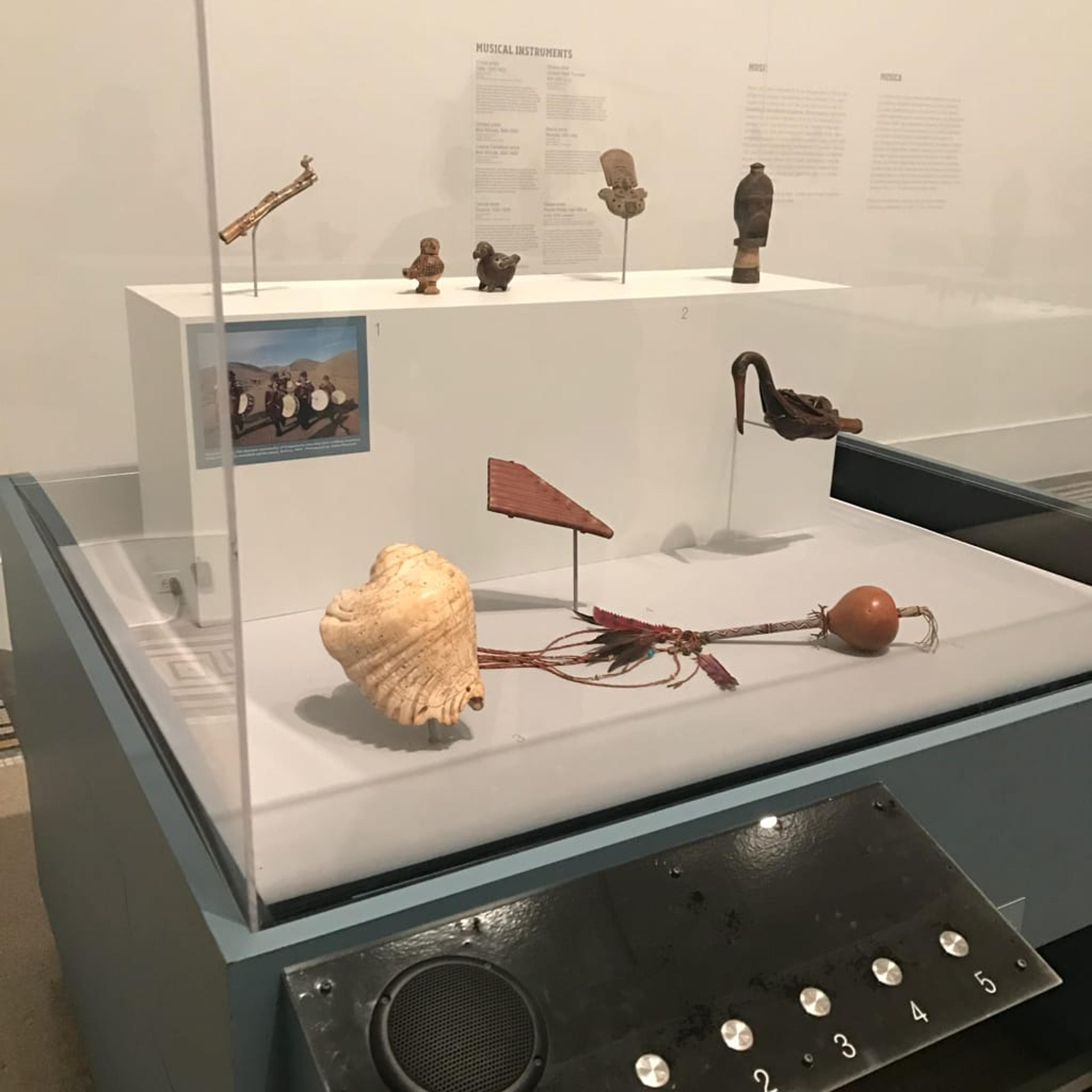 The sounds were sourced from soundtracks of similar types of instruments being played such as Dale Olsen’s Music of El Dorado and Peyote songs from the Smithsonian’s Folkways Records.
Why would they have stopped making this in 1500?
 1500 was around the time that European first made contact with indigenous populations in the region which is generally regarded as the end of this "pre-Columbian" culture.
Have information?
Have information about an artwork? Contact us at