Export Portable Desk (Bargueño)


1 of 3
Object Label
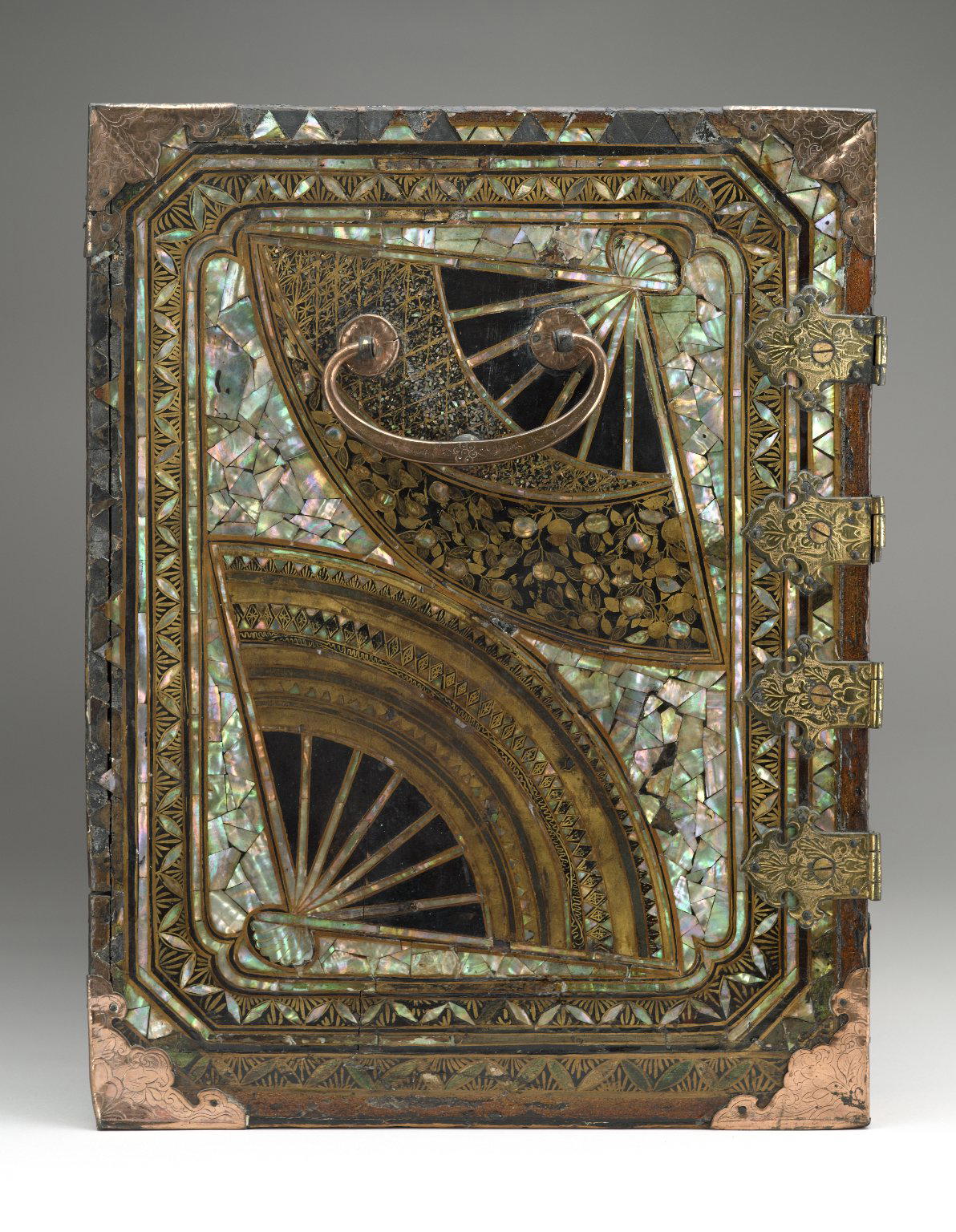
Catering to the demand for export lacquerware, the Japanese manufactured objects to Western specifications of both function and design. This lacquer cabinet is an example of a piece made in the namban style, for nambanjin, or foreigners—in this case the Portuguese. It displays a synthesis of indigenous Japanese elements of technical virtuosity together with forms adapted to the Western market and decorative motifs that are obviously non-Japanese in inspiration. When opened, it has drawers ranged around a recessed niche. The architectural motif appears to have been derived from the arch of a mihrab, the prayer niche of a mosque in the wall facing Mecca. A tree of life, painted in gold with pearl-shell inlay, meanders over the interior and exterior surfaces. These motifs can be traced to Gujarat, India, and were most likely transmitted eastward via the Portuguese trade.
Caption
Export Portable Desk (Bargueño), late 16th–early 17th century. Lacquer with gold flecks, mother-of-pearl inlay, metal fittings, 17 5/16 x 24 7/8 x 13 9/16 x 24 1/2 in. (44 x 63.2 x 34.5 x 62.2 cm). Brooklyn Museum, Gift of Dr. and Mrs. John P. Lyden, 84.69.1. (Photo: Brooklyn Museum)
Collection
Collection
Title
Export Portable Desk (Bargueño)
Date
late 16th–early 17th century
Period
Momoyama Period
Geography
Place made: Japan
Medium
Lacquer with gold flecks, mother-of-pearl inlay, metal fittings
Classification
Dimensions
17 5/16 x 24 7/8 x 13 9/16 x 24 1/2 in. (44 x 63.2 x 34.5 x 62.2 cm)
Credit Line
Gift of Dr. and Mrs. John P. Lyden
Accession Number
84.69.1
Have information?
Have information about an artwork? Contact us at