Face from the Lid of a Sarcophagus
ca. 1336–1250 B.C.E.


1 of 3
Object Label
The broad, flat character of this face indicates that it came from a sarcophagus. The fillet with lotus flowers is a symbol of light, life, and rebirth.
The work's dating is based on its style: the organic modeling, heavily lidded eyes, and full, sensuous lips turned up in a smile find their best parallels in art of late Dynasty XVIII and early Dynasty XIX.
Caption
Face from the Lid of a Sarcophagus, ca. 1336–1250 B.C.E.. Sandstone, 18 × 17 × 5 in. (45.7 × 43.2 × 12.7 cm). Brooklyn Museum, Charles Edwin Wilbour Fund, 85.166.
Frequent Art Questions
Tell me more.
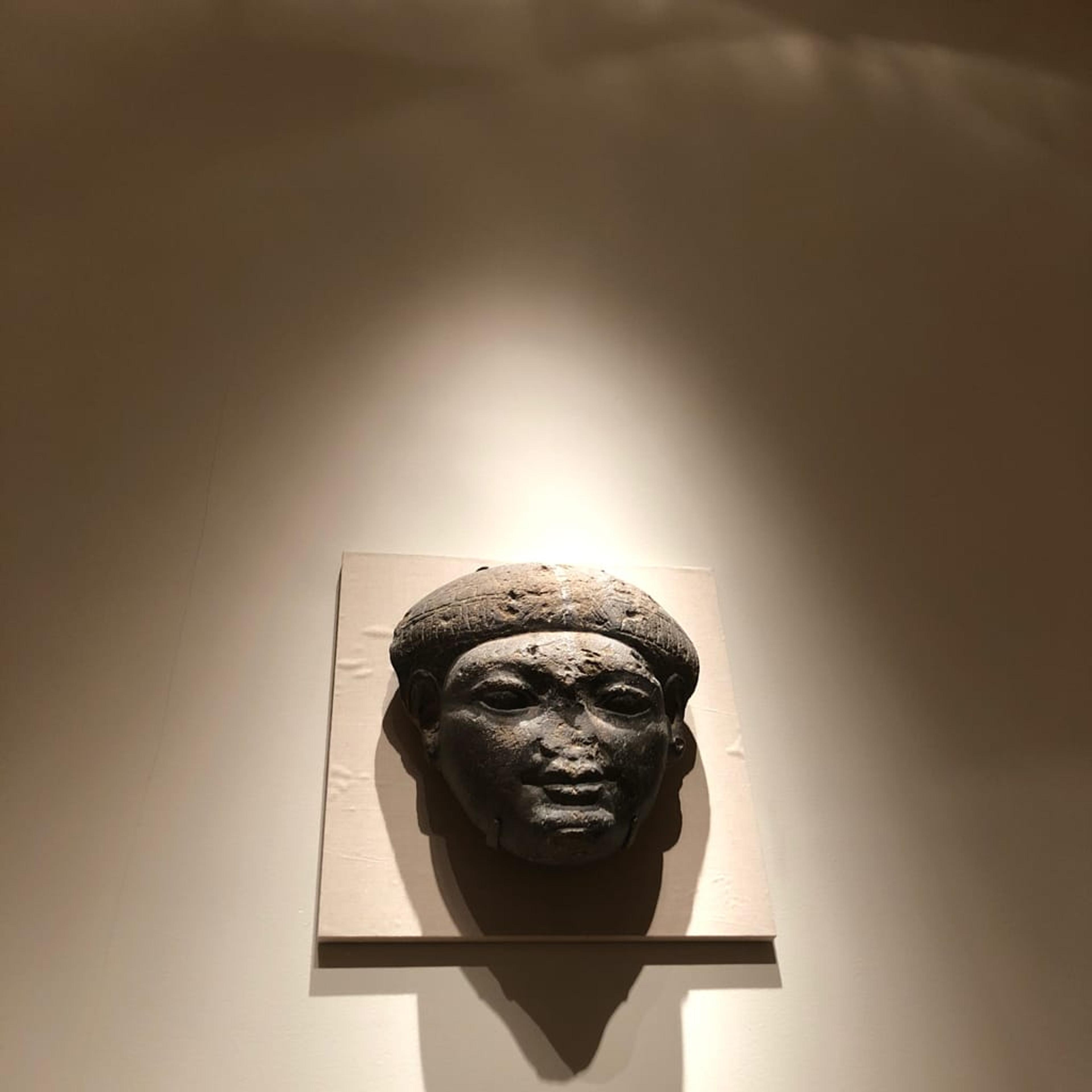 One detail I especially like from this sarcophagus fragment is the way that the figure's ears are being pushed forward because the hair is so heavy!
Tell me more.
Can you see the markings on the hair? Those represent a floral head band.Floral imagery was important in ancient Egyptian funerary equipment because it had connotations of rebirth since flowers die and come back each year.Thanks for info!
Have information?
Have information about an artwork? Contact us at